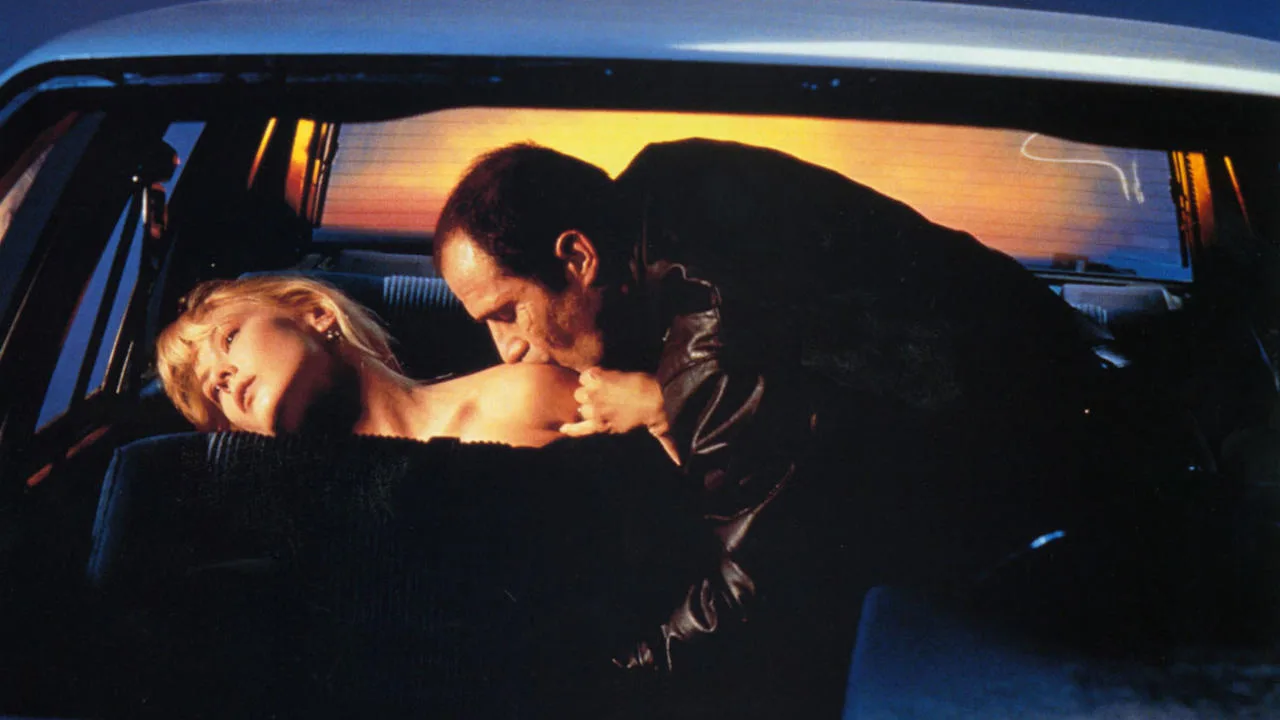
On the rain-slicked streets of Toronto one evening, a trio makes their way through a 24/7 car wash. The woman in the backseat reveals her breast to the man sitting next to her. As the convertible car they have taken over to get cleaned closes up around them in anticipation of the wash, the driver, her husband, adjusts the rearview mirror to get a better view. The other man grabs the woman’s face, eventually thrusting his fingers into her vagina. The thrum of the soapy ribbons of the car wash and the pair’s strained noises are the only sounds. She pushes him away once, twice, but eventually stops. Once the man is done, the woman’s hand grabs the driver’s headrest—her fingers are covered in semen. The car exits the wash. The next day, her body is covered in bruises.
This is “Crash,” David Cronenberg’s chronicle of car crash fetishists. When it premiered at Cannes in 1996, the impact was immediate. One audience booed after a showing. The same daring that earned the contempt of that audience also earned the film a Special Jury Prize for its audacity. Because the protagonists can’t connect in any other way, it takes a grotesque offering to conjure it: metal, blood, and sweat.
Thirty years out, “Crash,” while still shocking, has earned a dedicated fanbase. It makes sense that people would resonate with a film where human connection feels dangerous in a world where we are increasingly losing our ability to connect. “Crash” isn’t the only film of Cronenberg’s that has felt somewhat prophetic in its assessment of human relationships. Across his career, the director has depicted the complexities of being human in visceral detail. In films like “Crash,” “The Fly,” “Videodrome,” and “Dead Ringers,” the Canadian director does not shy away from depicting the reality of relationships with other human beings as necessary, messy, and sometimes catastrophic.
“Crash,” in particular, approaches its main characters and their sexual exploits with an almost removed sense of non-judgment. At this point in Cronenberg’s filmography, bodily concerns have turned inward, examining the psychological warp that can make people’s minds as unfamiliar as any goopy mess of viscera throbbing onscreen. J.G. Ballard, the British author of the novel the film is based on, shares many of the same preoccupations with Cronenberg, and a name with the film’s protagonist. Ballard’s novels and short stories dive into anxieties about emergent technologies, psychosexual impulses, and dystopias with a removed, almost clinical voice.
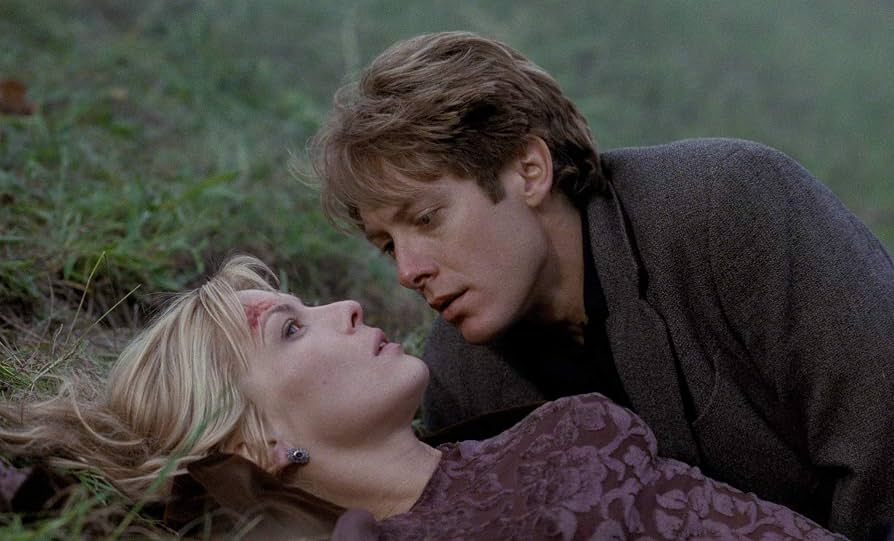
James (James Spader) gets roped into the larger world of car crash fetishists after being in an accident that kills Helen Remington’s (Holly Hunter) husband, and he inevitably delves deeper into the group’s distinct dynamics. On its face, it’s an absurd and masochistic fetish. And yet, there is something distinctly human in the actions of the band of deviants, played with outstanding commitment by Spader, Deborah Kara Unger, Elias Koteas, Hunter, and Rosanna Arquette. It’s been proven that in the face of trauma, the human brain tries to heal through repetition, allowing ourselves a kind of control over what nearly destroyed us. We can see the group trying to reclaim control every time skin brushes up against steel.
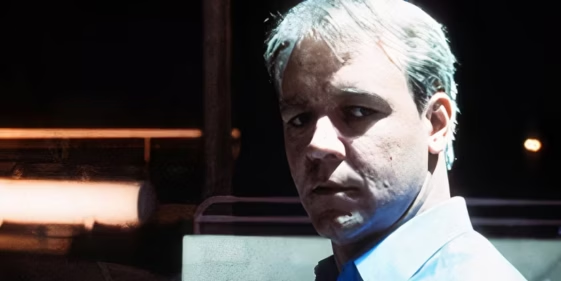
The performances emphasize the group’s hunger for control, camaraderie, and release at any cost. Vaughn (Koteas) is the unofficial leader of this group, and at first maintains that their connection goes beyond each other. “It’s something we’re all intimately involved in: the reshaping of the human body by modern technology,” he explains to James at one point in the film. While Vaughn is a menacing force at times, Koteas gives him a soft-spoken voice and demeanor that masks something urgent and intense underneath. Similarly, Spader’s performance matches Koteas’ well as he follows along, with a curious kind of hunger that comes through in the smallest gesture, like a hungry glance.
The pair share a sex scene later on in the film that showcases their connection, and reverses how the film has established them as foils to each other: James is the dominant force here, while Vaughn takes a more submissive role. There is no dialogue, and the physicality of both Spader and Koteas communicates the vulnerability and bond they’ve developed over the course of the film. In a film like “Crash,” though, there is no room for sentimentality. Vaughn and James meet, have sex, and help each other learn about themselves—until Vaughn decides to take his own life by plunging into a passenger bus from a highway overpass. (Years before “Brokeback Mountain”; it’s hard to overstate how rare it was for the time period to see explicit gay sex on screen, especially with a star like Spader as a participant). The way their relationship plays out is emblematic of the necessary, brief, and often painful nature of any relationship—it all has to end, with a whimper or a high-speed collision. It’s only a matter of time.
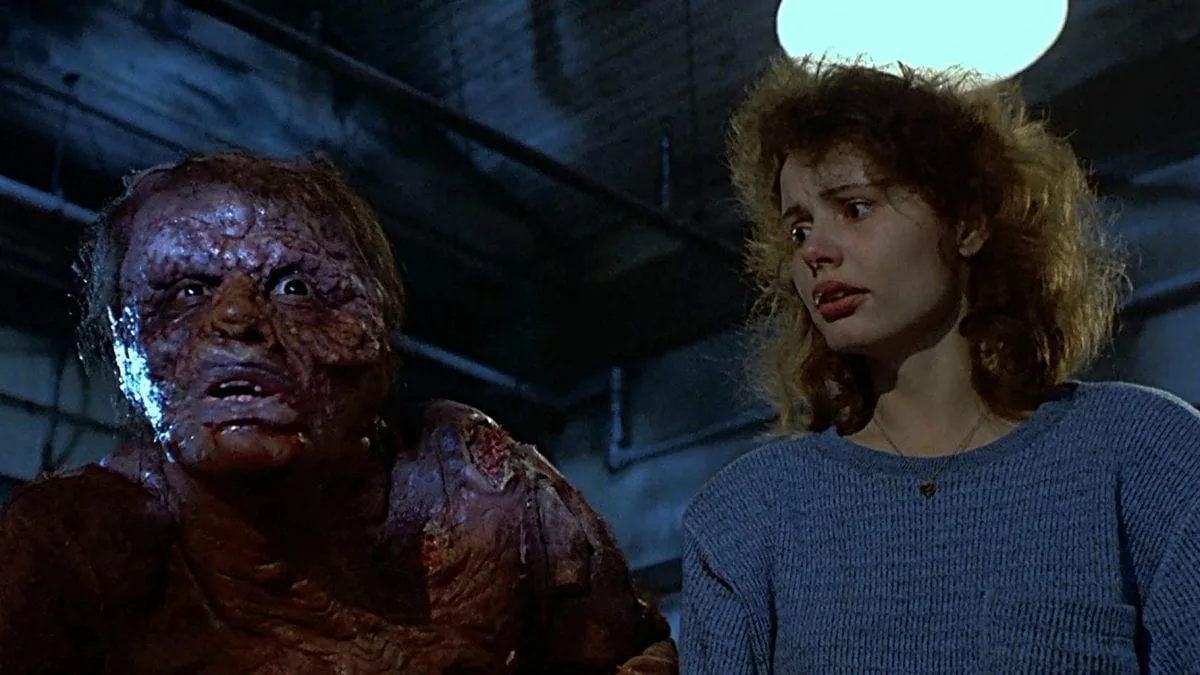
That is not to say that there can’t be real romance or feeling behind the connections in Cronenberg’s films, even if it can feed our best and worst impulses. Indeed, one of his most outwardly brutal films (physically and emotionally) is also his most romantic. “The Fly” is a remake of the 1958 film of the same name that follows scientist Seth Brundle (Jeff Goldblum) and journalist Veronica “Ronnie” Quaife (Geena Davis) as they discover that the physical teleportation of living beings might be possible. Along the way, despite Brundle accidentally merging himself with a stray fly that flew into the wrong teleportation chamber, what starts as an infatuation at the beginning of the film turns into messy, real love. Brundle gets merged with the insect because he gives in to his worst impulses—he is jealous and drunk, and puts himself in a teleport pod to impress Ronnie after she leaves his apartment to settle things with her sleazy ex. As Brundle becomes more arrogant in his transformation, their relationship becomes strained—and, after some time apart, he calls her to come over.
Decomposing, gooey flesh sits on the face that once covered Ronnie in kisses. Ronnie doesn’t care, and Davis’ performance, embracing and listening to Brundle as he explains his plight, is moving. Every messy bit that happened before is gone, and she sees him and his humanity fully despite its rapid disappearance. A new kind of vulnerability emerges as Brundle explains his deterioration. With a beseeching look, he explains how his humanity is fading away: “I’m an insect who dreamt he was a man and loved it. But now the dream is over… and the insect is awake.” Goldblum’s performance breaks through the pounds of makeup and prosthetics to communicate his pain and fear. “The Fly” posits connection as a powerful force that can make us lean into our most human instincts, for better or worse. Elsewhere in Cronenberg’s filmography, when connection is substituted or merged with technology, or created without boundaries, the results become truly catastrophic.
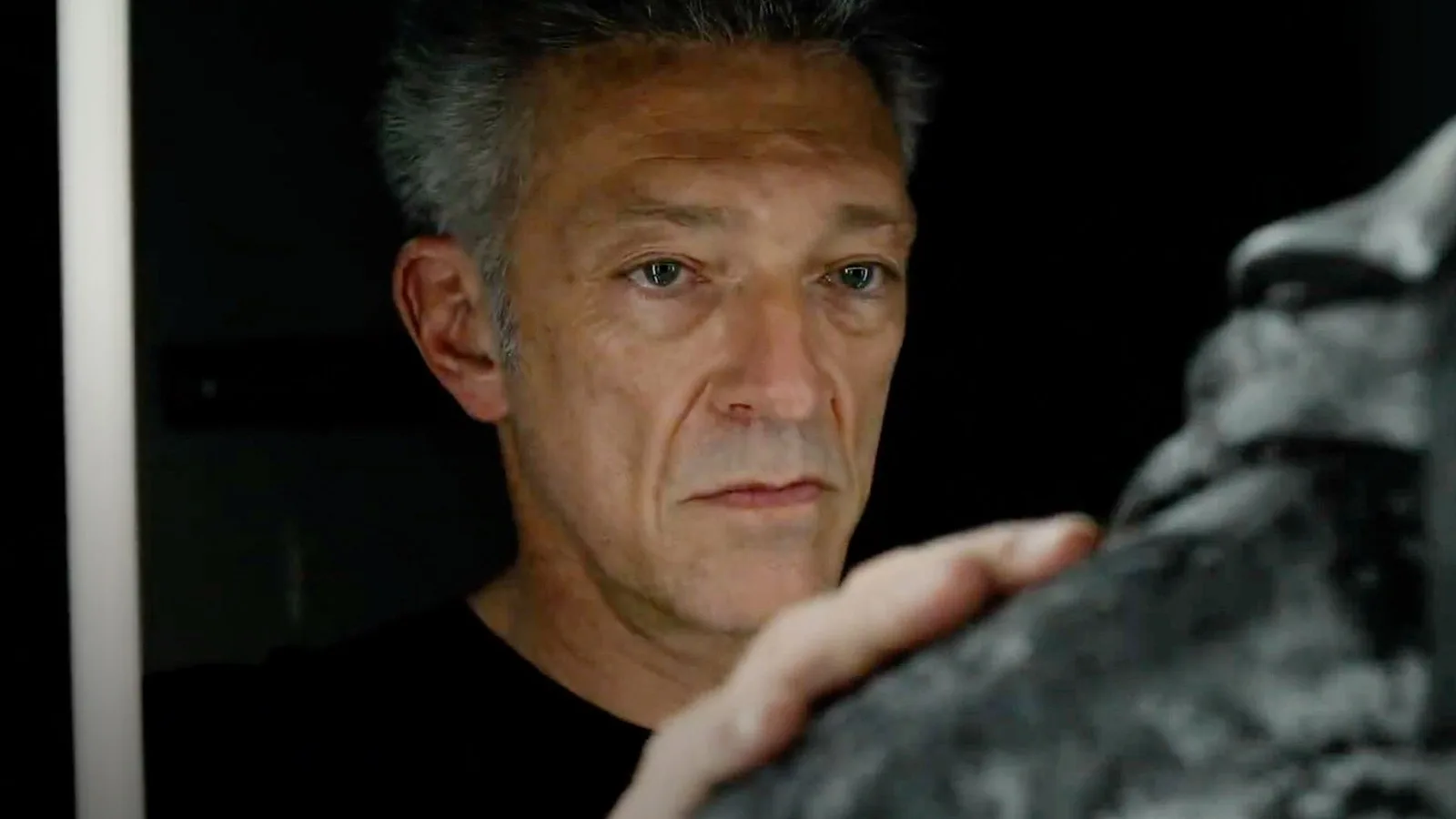
The connective tissue of technology can haunt the living as well as the dead. In “The Shrouds,” Vincent Cassel plays a sort of stand-in for the director, physically styled the same way and with a different connection to tech and the human body. Karsh (Cassel) is a man who, as one character puts it, “has made his career in bodies.” The creator of GraveTech, Karsh owns multiple cemeteries where people can keep watch over the decomposing remains of their loved ones thanks to the titular “shrouds” that stream the progress of decay 24/7. Screens on tombstones serve as windows into the afterlife (but of course, there’s an app for remote check-ins, too). For Karsh, it’s one of the ways he grieves for his late wife, Becca (Diane Kruger). He also stays in touch with his wife’s identical sister Terry, and uses a personal “AI” assistant made up to look like her (Kruger plays all three). One day, his Canadian location is vandalized, and he soon gets wrapped up in a number of potential conspiracies that involve foreign entities and espionage. Ultimately though, “The Shrouds” is more concerned with the personal consequences of grief; how trying to maintain connections to the dead via technology (much like how folks use AI bots to resurrect their loved ones for comfort) can make it nearly impossible to move forward in a healthy way.
Even in early films that are less technology-forward, connection is a key preoccupation. In “The Brood,” rage over divorce manifests as growth and a throbbing, external womb that gives birth to a destructive brood. “Scanners” treads a bit more into technology and the body, specifically how the repression of the body or mind can lead to violent radicalization. Among the plots about telepathy and repressive drugs, heads explode, and viscera fills the screen as the titular Scanners walk a tight line between rebellion and assimilation. Later period works, like “Crimes of the Future,” continue to be preoccupied with the repression and regulation of unusual bodies. The emergence of those who can grow extraneous organs leads to the development of a “National Organ Registry,” but also a subculture where sexuality takes on new tones and practices, like tonguing the wound of a lover and stimulating their internal organs.
Technology today offers us artificial connections with no real boundaries or friction, but in a film like “Dead Ringers,” it’s clear that codependent relationships that mirror the same dynamic can be equally destructive. Twin doctors Elliot and Beverly Mantle (Jeremy Irons) are essentially (emotionally) conjoined, to the point that Beverly’s romantic relationship with actor Claire Niveau (Geneviève Bujold) threatens to tear them apart. The brothers have shared everything throughout their lives. When they can’t share Claire, their relationship begins to fragment until they reach the point of mutual destruction. In “Dead Ringers,” relationships without boundaries can be just as harmful as the absence of meaningful connection.
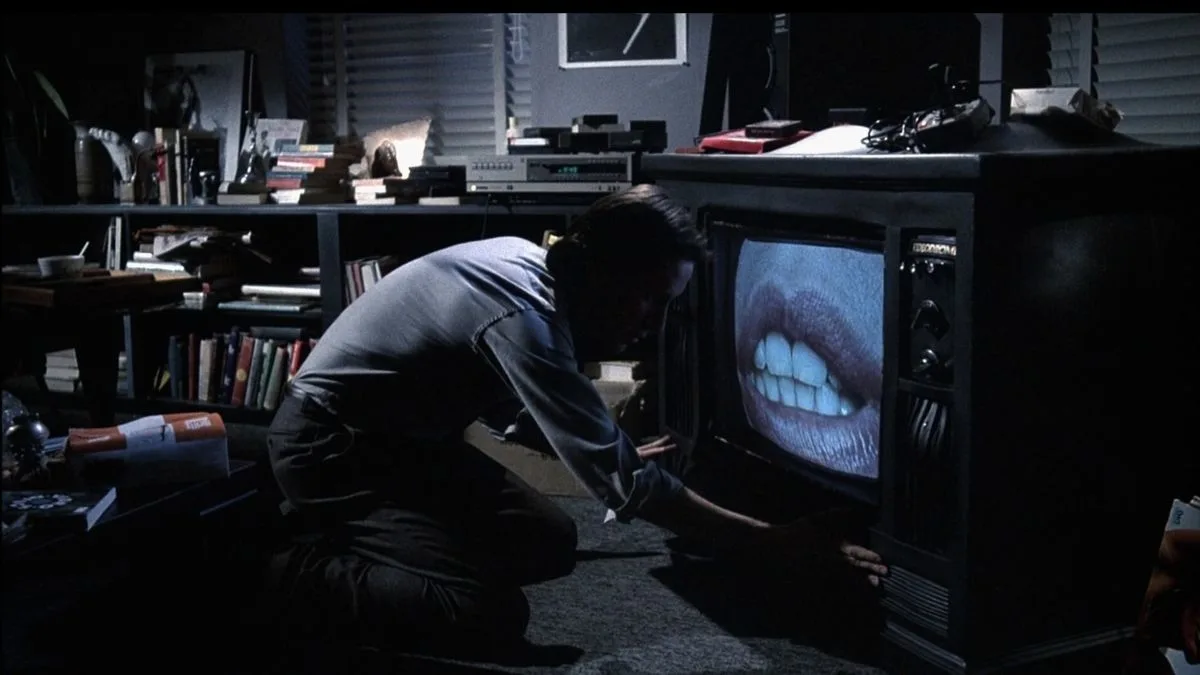
The inability to connect and anxieties about media and what it’s doing to us emerge fully in “Videodrome.” The filmmaker’s most prescient film, and the one that fully articulates his ideas about sex, technology, and society, it suggests that the artificial connections and voyeurism technology provides us can seduce us into something much more terrifying. In the world that slimy TV producer Max Renn (James Woods) inhabits, stimulation for stimulation’s sake is the name of the game, as Debbie Harry’s Nikki states early on in the film. Watching Renn in the film’s final scene, ready to embrace the new flesh through suicide, it’s hard not to think about the people who have sought connections with AI chatbots in recent years and instead found oblivion. Nikki beckons Max through the CRT screen to join her in death, the one way they can be together and take down Videodrome, and he obliges.
Watching Cronenberg’s work feels like standing at the edge of a precipice. He shows us our realities, our futures, and our desires, even when they feel monstrous and impossible. Of course, the craftsmanship behind the bloody on-screen messes is its own, worthy spectacle, but it’s not the only focal point of his movies. The humanity, grotesque and vulnerable and sometimes all-too-familiar, is what really makes his films indispensable works of art. His characters and their inability to connect, or ability to connect too much, give us a mirror into our own feelings and anxieties, even when the reflection can be hard to stomach.
“Crash” understands the necessity and the messiness of human connections. In a world where governments are actively policing trans people and their bodies, where sex on screen is seen as something vulgar and unnecessary, where people with uteruses are robbed of their choice to be pregnant or not, his work feels not only relevant but necessary. The new trends towards a puritanical, near-sterile society in which differences are a blemish are more startling than anything the director has put onscreen. When milquetoast depictions of life that avoid its important messiness are dominant, it’s more important than ever to champion the visceral, the vile, and the grotesque.