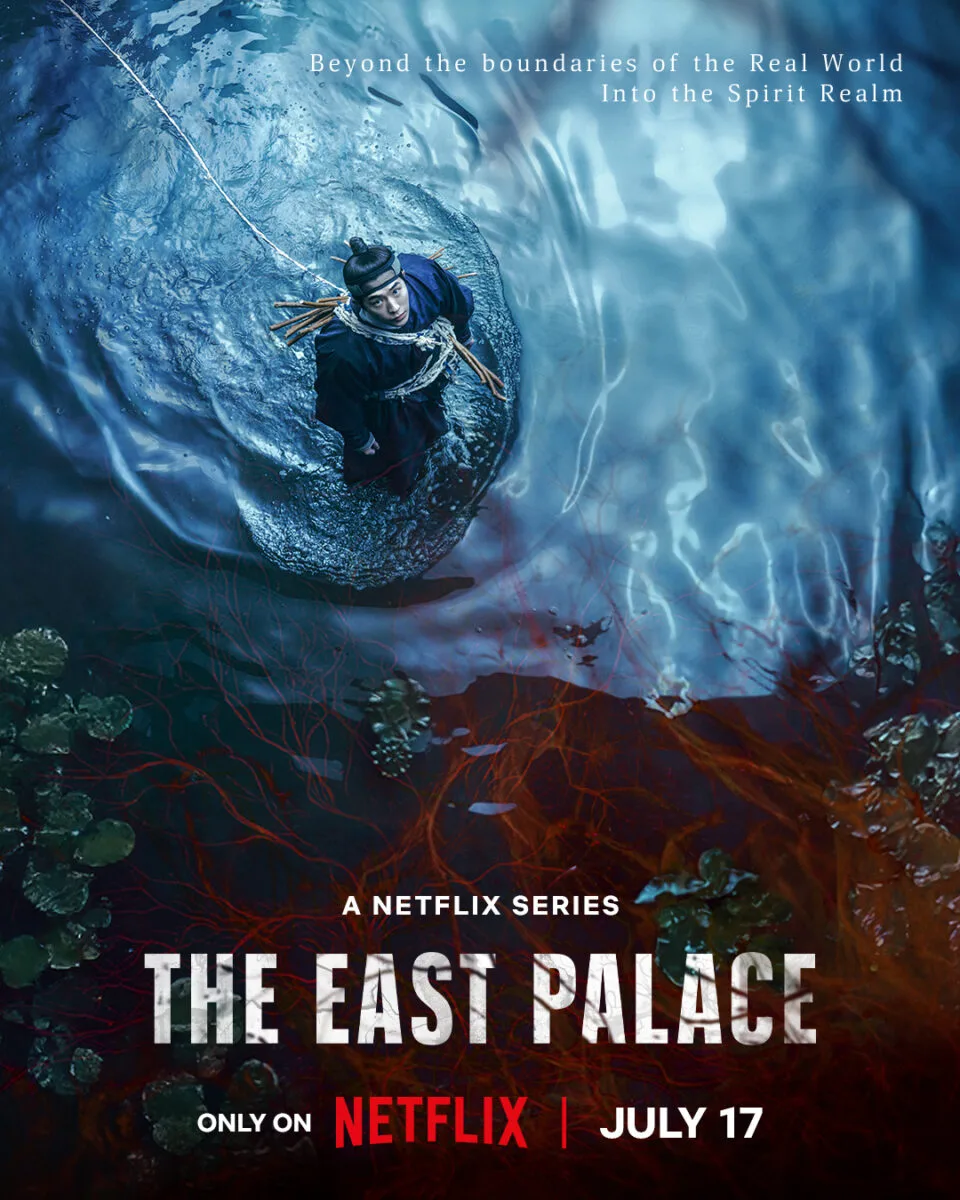

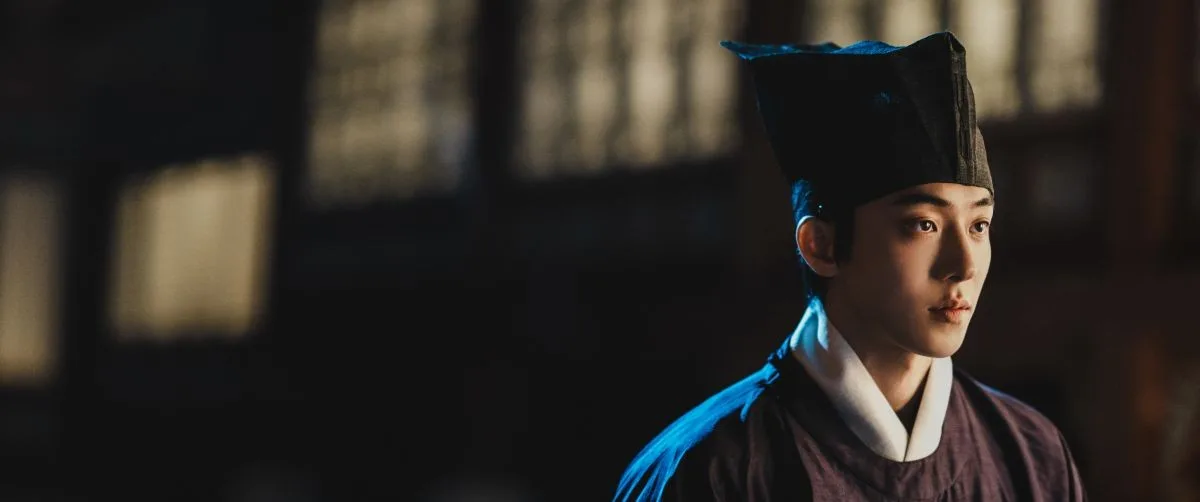
Netflix’s latest K-drama series, “The East Palace,” intends to fill the void left by the streamer’s other fare, such as “Squid Game” and “Kingdom.” Focusing on a demon slayer and a court lady clairvoyant having to save their kingdom, the series slashes through many genres. It blends the supernatural with political intrigue against a period backdrop.
Think of a live-action version of “Demon Slayer: Kimetsu no Yaiba,” with all of its over-the-top violence, and a bit of “Phoenix Wright: Ace Attorney,” but make it set in a royal court.
Set during the Joseon dynasty, when shamans were influential to royalty, the pond spirit claims the life of one of the crown princes. Marking the first in 30 years since the Queen Dowager’s (Jang Young-nam) loss of her sons, the pond spirit haunts her remaining son, the king (Cho Seung-woo), and warns him that his entire bloodline will soon end.
A monk advises the king to seek Gu-cheon (Nam Joo-hyuk), a malcontent and lazy demon-slayer with the ability to traverse the spirit realm, or the Realm of Gwi. Despite his disinterest, the king forces him to slay the demon and save his son or face his blade. Per the king, Gu-cheon is paired with Saeng-gang (Roh Yoon-seo), a headstrong, lowly court lady, and with his estranged daughter, who can hear and speak to spirits. But the real horror they face, beyond the supernatural, is a generational chain of damning secrets they gradually uncover—affecting their relationship with the monarchy and with themselves.
“The East Palace” bears a robust spirit (pun intended), rooted in its anime‑styled storytelling structure and visual flair. Across its eight‑episode first season, writers Kwon So‑ra and Seo Jae‑won strike a decent balance between Korean folklore‑driven worldbuilding and the overarching drama between the living and the dead.
The dead truly come alive in its ultraviolent, bloody action sequences, which are exhilarating, hyperactive, and fast-paced. The show’s director, Choi Jung-kyu, infuses a heightened, imaginative, animated energy, especially in Gu-cheon’s action scenes and in the interconnection between the two realms—resulting in pretty intense and disturbing scenes. It also boasts a solid mix of impressive practical and CG work, outshining other big Netflix fare like “Stranger Things.” Then it also impresses in the makeup department, bringing the humanoid spirits to life in rich detail or human characters’ physical repercussions from encountering its occult creatures (as everyone has a certain amount of yang energy).
The relationship between Gu-cheon and Saeng-gang fuels the emotional core of “The East Palace.” Their dynamic leans more toward an entertaining older‑brother/little‑sister rapport than romance, full of oppositional bickering and struggle, though they perfectly mirror each other. Emotionally guarded by their respective traumatic upbringings, they’re at a standstill from the start: the sarcastic Gu-cheon is so exhausted by the weight of his responsibilities as a ghost-slayer, while the lonesome yet loyal Saeng-gang blames her abilities for the loss she faced in her youth. But their spirit-crossing mission brings them closer to allies. Nam Joo‑hyuk and Roh Yoon‑seo texture their characters’ respective burdens with nuance while sharing great comedic banter.
As their relationship gradually deepens, both characters grow beyond their internalized isolation—and it’s triumphant watching them come into their own, especially when faced with the monarchy withholding information from them. One powerfully performed scene between Yoon‑seo and a scene-stealing Jang Young-nam well into the run is so riveting, it made me cheer “Fight the power!”
Midway through the season, the fiery spirit starts to lose its luster. At a certain point, it becomes overly reliant on its surprise twists. They start to feel more shocking than logically earned, leaving you to question more about the actions of several characters even after they make their confessions. The story becomes more convoluted than it should be. In its latter half, much like the narrative twists, cracks begin to show as more rules governing the spiritual elements are introduced or bent, ultimately disrupting both pacing and narrative urgency.
Ultimately, “The East Palace,” in all its genre‑bending, demon‑slaying glory, does a fine job as a fun genre K‑drama. If something like “KPop Demon Hunters” was your gateway to Korean folklore and mythology, this makes for a solid follow‑up to expand your palette on the creatures rooted in the culture. Granted, it’s not for the little ones still singing “Golden” right now, but it shares that same animated visual zest and endearing characters (just in live‑action form). It makes for a hauntingly fun binge.
All episodes were screened for review. Currently streaming on Netflix.