My final dispatch of KVIFF features some heavy hitters. There’s the Crystal Globe winner, the festival’s top prize. There are also two coming-of-age stories about how kind the world can be and how unflinchingly harsh it actually is. Each work is led by a lonely, misunderstood protagonist whose mental health is at stake. They’re all deeply beautiful films to look at too, featuring some of the best photography and sense of place and mood of the festival.
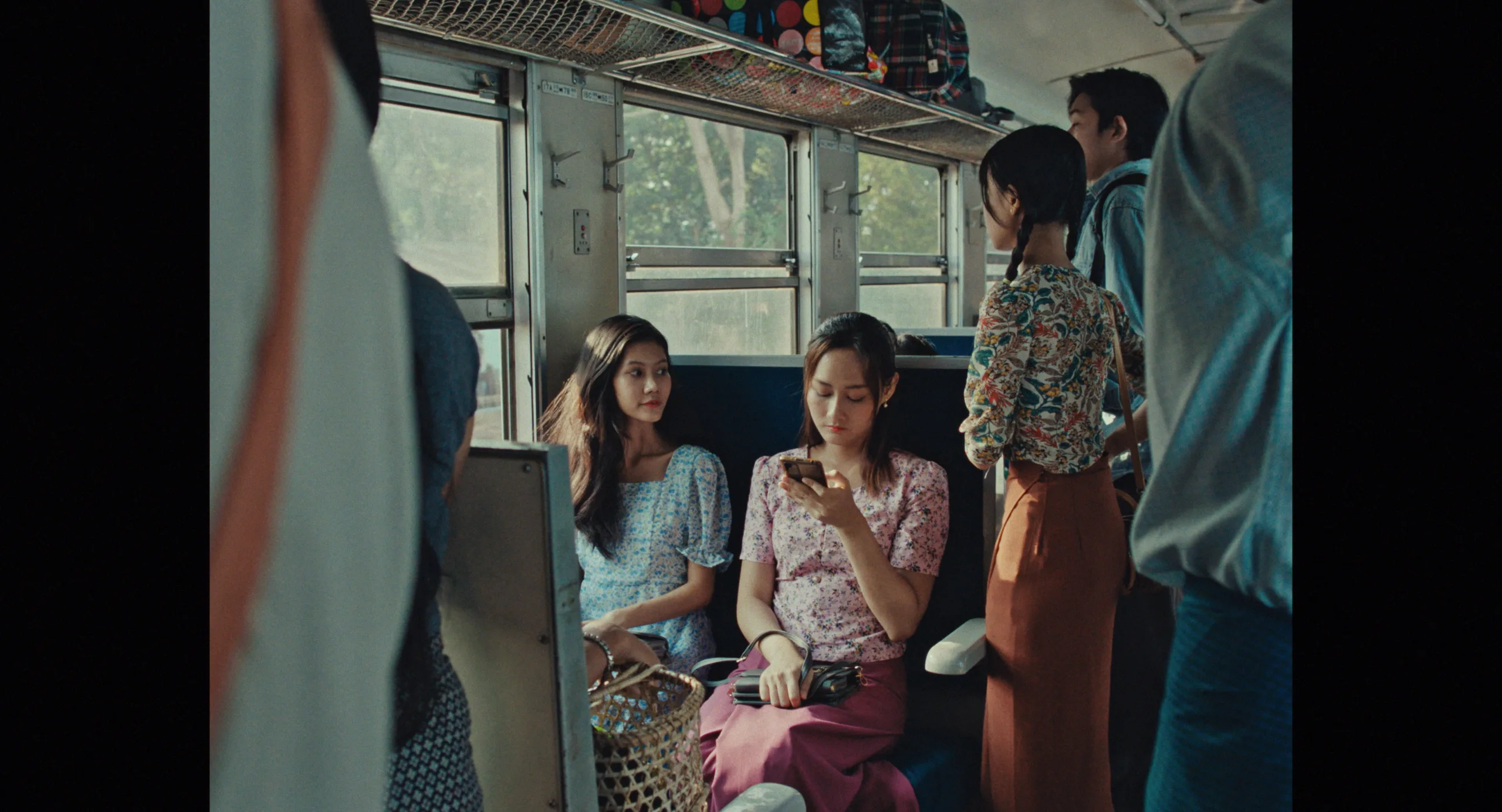
There’s a foreboding, dreamlike quality to “Fruit Gathering,” writer/director Aung Phyoe’s feature directorial debut, which won the Crystal Globe. The queer film’s imaginative feeling doesn’t offer unwavering bliss, but a stoppage in time, in life, and in romance.
Set in Yangon, Myanmar, the film concerns San Kyi (a spontaneous Nandar Myat Aung), a seamstress at an overcrowded garment factory who becomes emotionally entangled with a new hire: Theint (an observant Nandar Myint Lwin). The pair forms a fast bond that borders on parasitic. San Kyi envisions Theint as her ticket toward independence, away from her domineering mother and her ill grandmother. Conversely, to Theint, San Kyi’s steady presence suggests a financial lifeline and a kind ear to be used when necessary and discarded when convenient.
Phyoe harvests great rewards from this dynamic when he narrows his focus on San Kyi and Thient’s turbulent relationship. Eloquently composed shots of a sensorial Yangon that stretch on for an eternity are juxtaposed with San Kyi’s stolen glances of Theint; patient pans across intimately small rooms and sensual tilts down lithe bodies run counter to the cavernous sterile confines of factory life. Cinematographer Thaid Dhi’s visual acumen heightens the Sirkian tension between San Kyi’s desires and Thient’s limits, allowing the film to stretch beyond this romance to explore further themes.
Unfortunately, “Fruit Gathering” moves with less assuredness outside of its central relationship. Phyoe gestures to the necessity of worker solidarity under exploitative conditions, showing how San Kyi’s reticence to sign a petition is emblematic of why unionization efforts struggle to gain momentum. But he can’t do more than finger-wag. Similarly, Phyoe attempts to contrast the urban and the rural through dream sequences that at once elucidate San Kyi’s painful past and her ideal future of picking mangos with Thient. By never fully embracing a Thoreauvian fantasy, Phyoe wrestles through several complexities about where and how queerness can thrive.
Consequently, when “Fruit Gathering” aims for the intimate, Phyoe’s vision finds clarity in the collision of obsession and care. And while he does waver in translating the broader themes that interest him, he remains committed enough to this beautifully shot, longingly acted queer romance to plant its seeds deep within one’s memory.
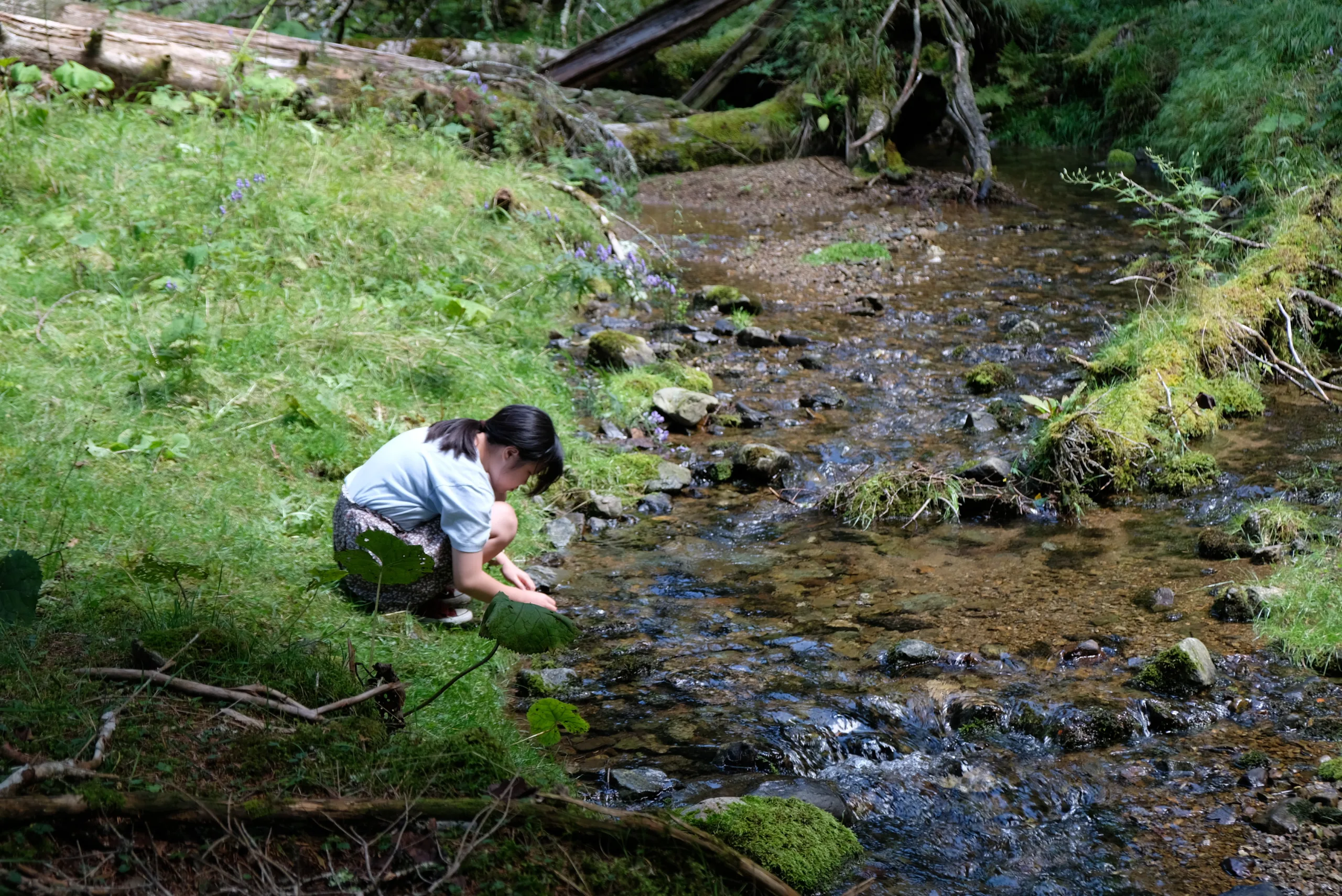
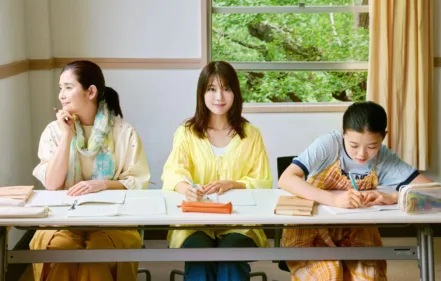
Told with similarly deliberate pacing, Shuntaro Uchida’s visually evocative coming-of-age film “Incinerator,” an adaptation of Kaori Ekuni’s same-titled short story, takes place over an endless summer experienced by a reserved nine-year-old, Kozue (Karin). The young girl has a shaky family life: her father Kenji (Takuma Nagao) is a ne’er-do-well musician bordering on an alcoholic; her mother Yoko (Akiko Kikuchi) works heavy hours in a bookstore to support the family; her grandmother is ill in the hospital. Kozue’s only place to let off steam is the incinerator located at the back of her school. While the crucible was installed to burn disused papers, Kozue placed objects in it that she connected with bad memories.
Her world is brightened, however, when Jinta (Taikia Shinozuka), an equally reserved university student, visits her school to perform a shadowplay. While the vibrant mix of lush colored backgrounds and black silhouettes excites Kozue, she’s equally enthralled by an attentive Jinta. She develops a crush on him. Their unrequited friendship—Jinta, of course, treats her as a little sister—gives Kozue greater confidence to express herself.
Though “Incinerator” runs at 97 minutes, it’s certainly not a brisk watch. That’s intentional. Uchida and his editor, Takaki Yokohama, rely on long takes whose meditative expressions recall how children experience the world, not in a blinding rush but as a seemingly never-ending desire to finally grow up. Uchida, nevertheless, never speeds up Kozue’s clock, so to speak. In fact, as the film continues, he and Yokohama almost appear to elongate their takes, as though to visually tell Kozue to literally slow down. In that way, “Incinerator” often recalls Chie Hayakawa’s “Renoir,” a film similarly concerned with giving a young girl cinematic space to live, grieve, and grow.
Uchida and his cinematographer Shin Yonekura also craft immersive pastoral scenes, such as a motorbike ride between Jinta and Kozue out to nowhere, to suggest the slower pace necessary for Kozue’s survival into adulthood. Karin shoulders this distant character with a similarly assured process, suggesting Kozue’s myriad disappointments without relying on loud dialogue. Instead, every emotion—from petulance to sadness—arises from Karin’s slightly bent posture and her dynamic face: giving a performance, ironically, that feels far beyond her years.
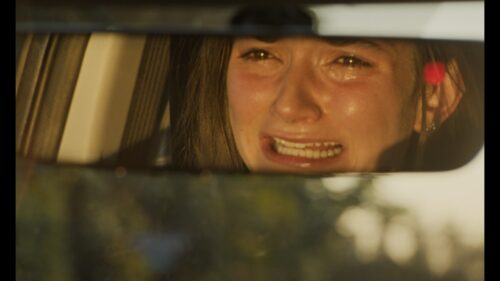
Miroslav Terzić’s brutal and unsettling psychological drama “3 Weeks After” has one of the strongest openings of the year. It begins on a static frame showing an apartment complex where one flat is engulfed in flames. The sound of the raging fire fills the frame with equal intensity. A downtrodden teenager, Tzotza (Jovan Ginić), enters the shot to observe the blaze before walking away, followed on a track through his tranquil neighborhood, now filled not with crackling sounds but with the natural ambiance of birds tweeting. He meets up with his friend Darija (Andjela Alavirević), who is surprised but happy that he’s taking this school trip.
See, something happened three weeks prior that’s rendered Tzotza a social outcast. The two incompetent teachers—Milica (Tihana Lazović) and Markuš (Branislav Trifunović)—whisper about its consequences: new articles and cold calls from reporters dominate their phones. His classmates, united in their vitriol, mercilessly tease him. The situation becomes more unstable when Milica (Klara Karaulić), a vapid popular girl with a clearly rich father, sneaks her sadistic boyfriend Miloš (Andrija Marković) onto the Serbian class’ Bulgaria-bound bus. During the short sojourn, we will discover the truth: Tzotza’s best friend, Andrija, died by suicide three weeks ago. The question that looms over the trip is who’s to blame.
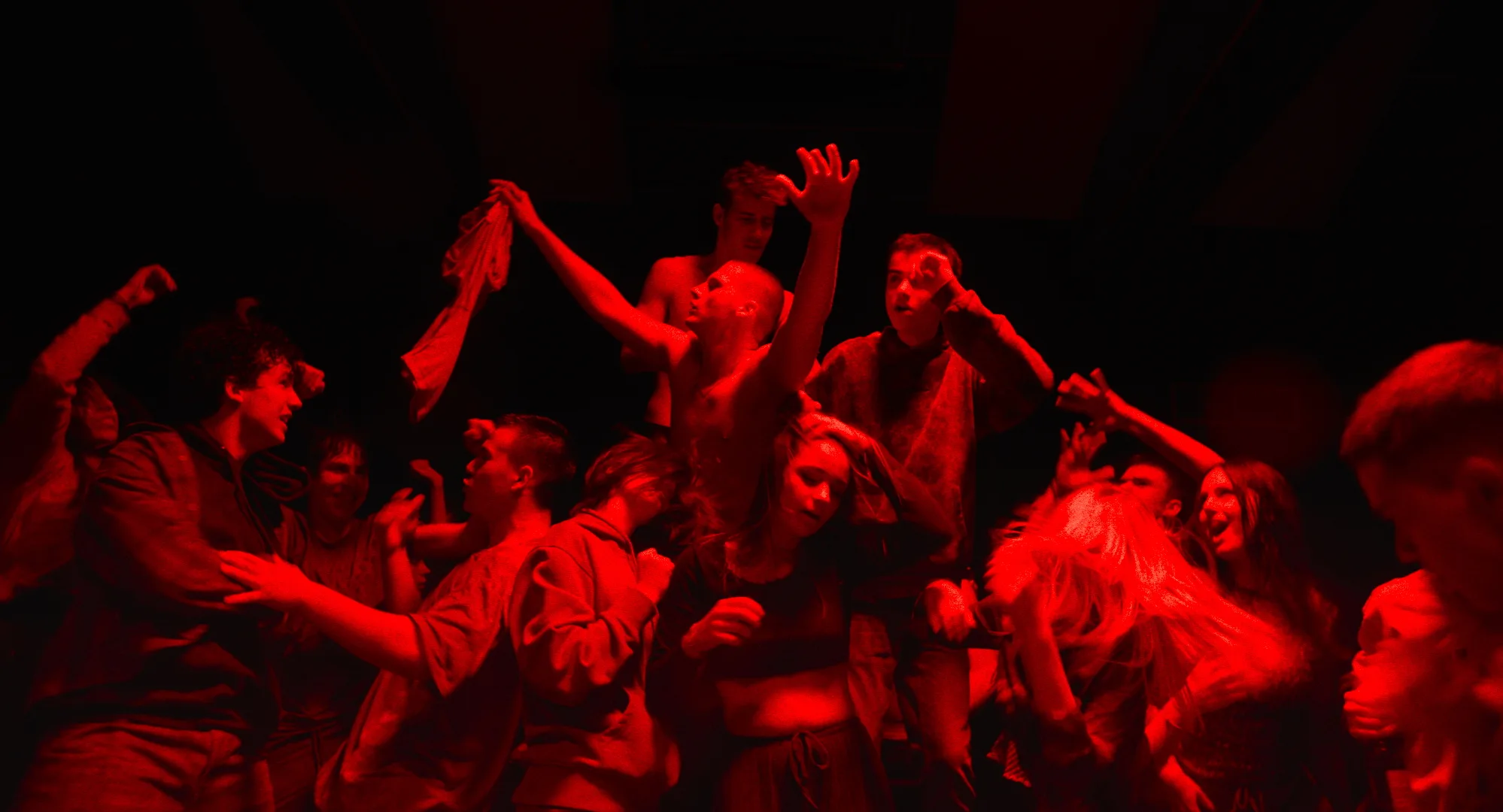
For a time, Terzić’s film is acutely controlled. The aforementioned sound evocatively flips between the character’s interior perception of the world and the exterior reality, while cinematographer Damjan Radovanović’s evocative compositions, which often utilize negative space on barren fields and in mammoth caves to visualize Tzotza’s aloneness, provide a visual counterbalance. He juxtaposes those wide spaces with cramped hallways whose perspective can often feel ghostly. LP Duo’s thrumming score modulates between brooding, shaking, and overwhelming ecstasy, particularly during an animalistic, red-drenched party scene that recalls Gaspar Noé’s “Climax.” But mostly, it’s Ginić’s close-to-the-vest performance—which sees his swollen face drained of all life—that keeps this work grounded as Tzotza endures near-homocidal abuse from Miloš and his gang that only intensifies once the class’s bus breaks down, stranding them in an empty hotel.
It’s a shame then that Terzić dispenses with that hard-fought control in the film’s final minutes. It’s as though the director and his fellow screenwriters—Vladimir Arsenijević and Bojan Vuletić—thought they needed to end with a bang to make the moody trip worth it. Terzić and his DP therefore reach for visual profundity to balance the film’s hellish turn, composing shots of sleeping teenage bodies into a decadent, painterly scene. And while the final push-in toward Ginić certainly holds a haunting quality, an edge has been lost in the film’s bluntness, making “3 Weeks After” a terrifying, albeit flawed, commentary on bullying and violence.