Though I have departed from Karlovy Vary after a week and a half of taking in promising films in the picturesque spa town, I remain in Czechia. I’m currently in Prague taking stock of the festival (more on that in the near future) and finally wandering away from cinemas. And while I always love getting the entire expanse of central and eastern European moviemaking represented at KVIFF, I’m always keen to remember to seek out the many Czech works that populate this cinematic celebration. In this dispatch, I’m thinking back to three regional films I watched at Karlovy Vary, a couple of which were honored at the festival’s conclusion.
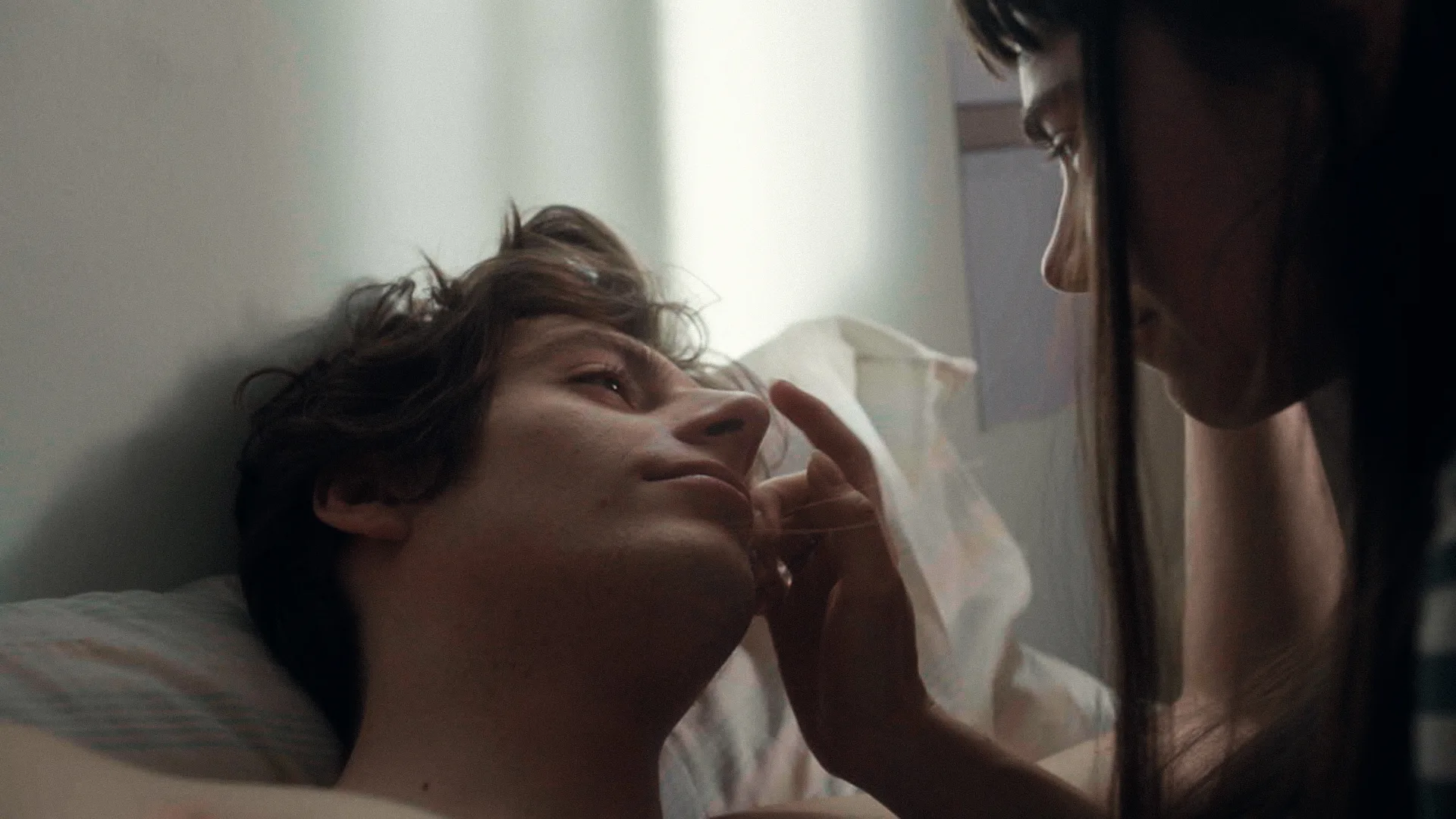
The winner of the Proxima Competition, Slovak writer/director Martina Buchelová’s “Lover, Not a Fighter,” is a modern screwball romance that acutely captures a kind of youth culture that’s struggling to navigate gendered clichés, modern isolationism, and personal loss. It concerns the obnoxious but ultimately vulnerable Andrej (Adam Kubala), who is working through his feelings for Miša (Michaela Kostková). But certain hang-ups get in the way of Andrej expressing his love to her: his immature 20-year-old moodiness, his alcoholism, and his unstable home life, which involves living with his caring grandmother while his debt-ridden father dates a significantly younger woman. These tribulations accumulate into a frank and endearing coming-of-age work whose visual acumen and intimate realism make for a surprisingly poignant, bleak, adolescent rom-com.
“Lover, Not a Fighter” moves with the rhythm of a digital world. Vertical videos, often mimicking cellphone footage, though sometimes flexed to wide screen to bring us back into classical film language, populate the movie. In the opening, we see a drunk Andrej and a sober Miša enjoying a meet-cute at a tram stop: She tries to help him, but he is too unstable to manage (a theme that’ll recur throughout Buchelova’s incisive picture). They will not meet again until Miša’s father, who’s worried she might be a lesbian because she hasn’t gotten over her previous break-up, brings her over for a dinner date with Andrej’s sensitive cousin Pet’o (František Beleš). Rather than falling for Pet’o, Miša gravitates to Andrej.
The aforementioned vertical compositions will eventually record Andrej and Miša’s many dates, their growing comfort in one another, and their difficult split. From there, though the pair aren’t wedded, the film follows the marriage-remarriage screwball form, albeit with some wrinkles.
What’s especially refreshing about “Lover, Not a Fighter” is how loose yet tightly conceived its writing is. The film is broken into several chapters that move back and forth in time and often shift focus from the story’s protagonists to side characters. It also includes subheads that could either be mimicking texts or internal monologues.
Moreover, Buchelová doesn’t feel the need to make every scene ladder up into a grander theme. She allows seemingly extraneous moments: Andrej imagining a boyband in his closet, Miša’s father stealing spoons and investing in building an underground bunker, Pet’o‘s dimwitted friend coming over and causing havoc—to solely further the emotional groundedness and realism of these characters. By the end, we perceptively know every figure with the familiarity of a close friend.
“Lover, Not a Fighter” is further uplifted by its game ensemble. Each actor plays every scene, no matter how nonsensical, with a sincerity that reaches above the moment’s inherent comedy. By treating youth culture, particularly modern romance—in all its instability and nervousness—with great respect, Buchelová crafts a delightful feature debut built on honest relatability.
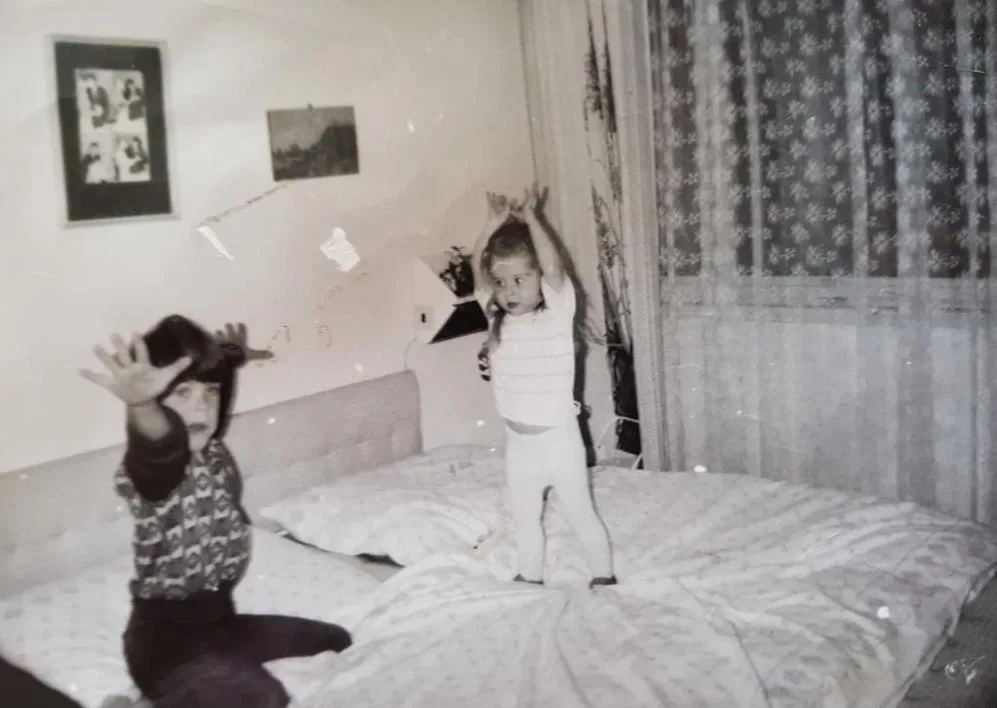
Taking a decidedly darker turn through Czechia is the writing/directing of Pepa Lubojacki’s abrasively personal documentary “If Pigeons Turned to Gold,” which premiered prior to KVIFF at the 2026 Berlinale. Formally experimental and ruthlessly raw, the documentary sees Lubojacki considering the intergenerational trauma and cyclical drug addiction of her family. She primarily focuses her attention on her brother, a jovial houseless alcoholic man living in a ramshackle shack, and she also follows her similarly troubled cousins. Through their unhoused lives, she considers her own mental health and the well-meaning impulses that compel her to go through cycles of supporting, denouncing, and cajoling her brother into sobriety.
Lubojacki employs a chaotic sonic and visual language, composed of grating outbursts of thrumming techno music, intertitle cards denoting soul-searching topics, like “have you ever grieved somebody who isn’t dead yet,” and childhood photos brought to “life” by AI animation. The latter, which puts voices to the photos of Pepa and her cousins, causing their mouths to move with English as their output, is notably off-putting.
One could see this uncanniness being intended: Haunting and fractured conceptions of an upbringing filled with turmoil and pain hiding behind a kid’s smile. All of these components are emblematic of the shambolic effect of addiction to substances and to other people—ultimately, Lubojacki’s repeated confessions that she can’t quit her brother mirror her brother’s resignation that he just can’t help but drink—that can cause a life to spiral into oblivion.
Such an emotional whirlpool presents the opportunity to pull Lubojacki down too. As the film marches toward its end, her voice becomes more and more prominent, revealing the personal struggles, including a recent bout with suicidal ideation, that have troubled her during the saving of her brother and the making of such an intense project.
Her difficulties evoke the documentary’s thesis, uttered by an AI pigeon with a fedora in a bar: “What if pigeons could turn to gold?” The idea being: what if those we dismiss, ignore, and push aside were treated as treasures? Would it lead to harmony, or would it turn the now valuable pigeon into something to be hunted and possessed? What if a filmmaker saw every tragedy, hurt, and regret through her lens with a purity that could cause them to lose themselves in the meaning-making conjured by the memories and buried anxieties these very images inspire? Could any filmmaker, or film for that matter, withstand that kind of unraveling of the soul? In that regard, “If Pigeons Turned to Gold” flies headlong toward the sun of its subject, wings be damned.
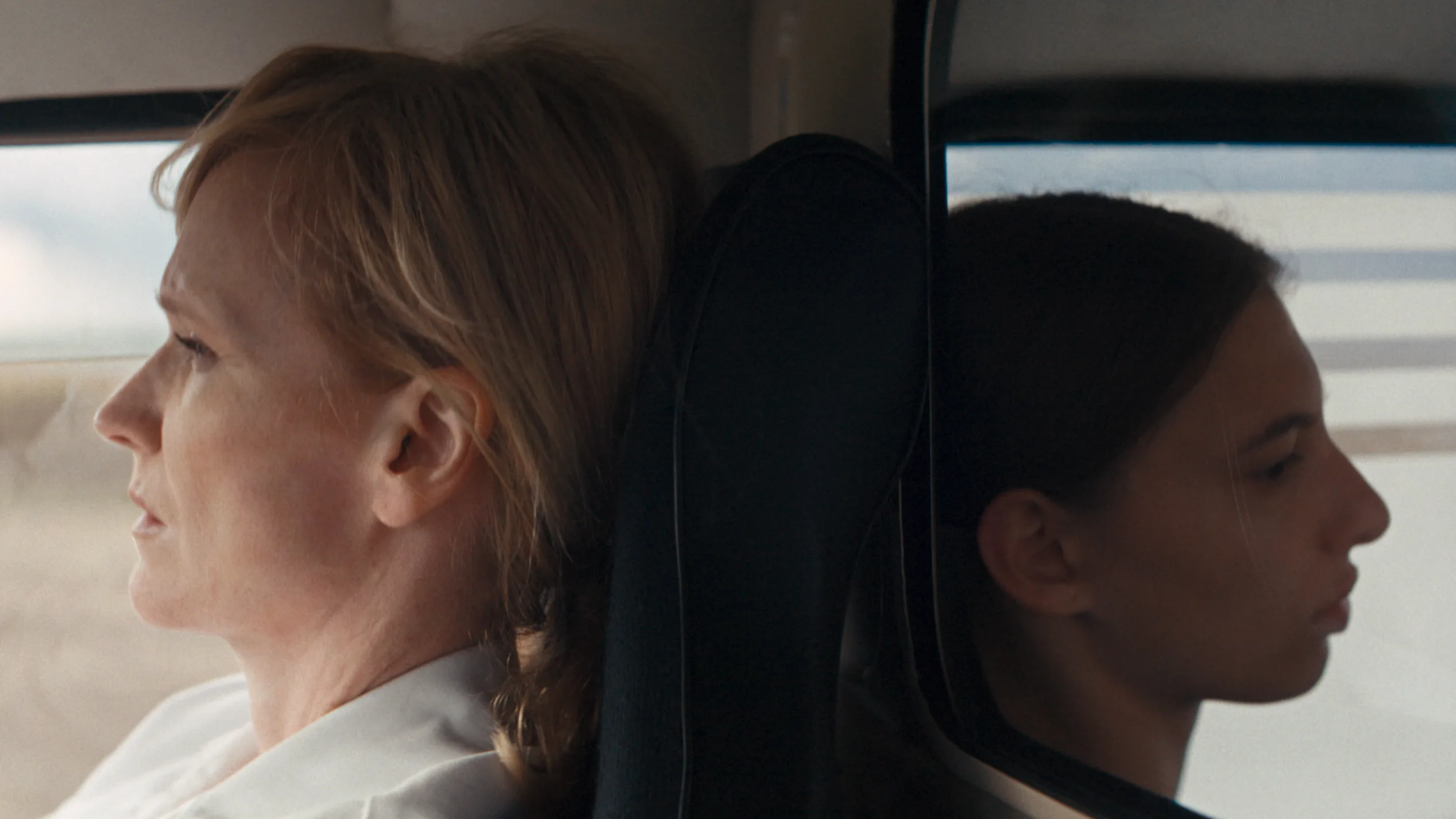
“Only Beautiful Things to Look At,” from writer/director Ivan Ostrochovský, is the kind of well-meaning film that’s difficult to pull off. A winner of the FIPRESCI Award in the Crystal Globe competition, the detailed period piece takes place in the 1980s and follows Ingrid (Anna Geislerová), a pragmatic doctor hoping to become chief surgeon at her hospital. To those ends, she collides with two barriers: she’s a woman and not a Communist Party member.
More troubling to viewers, however, is that she dutifully carries out a policy in Czechoslovakia that seeks to sterilize Romani women. Ingrid doesn’t question the directive. In fact, she’s quite skilled and efficient at carrying it out. That is, until a new orderly, Agáta (Simona Boledovičová), a half-white, half-Romani woman somewhat passing as the former, begins working at the hospital.
Before long, Ingrid and Agáta become close friends—developing a surrogate mother-daughter relationship. They share their days lounging together in the sun and going to the movies. As they grow closer, Ingrid begins to question her medical career and the inherent bigotry in her state-approved surgical practices. Ostrochovský’s film, therefore, is about an oppressor, told mostly from the oppressor’s point of view, as they discover they were an oppressor and that the people they were oppressing are actually human. Once again, pulling off these kinds of narratives is a kind of high-wire act that can often feel like empty-calorie progressivism.
The intimate performances do keep Ostrochovský in balance: Geislerová smoothly forms an icy exterior with the intent of melting it away, while Boledovičová intimates the knot of hiding one’s identity in hopes of being embraced by the dominant culture. But because so much of this film is told from Ingrid’s point of view, Agáta often feels distant from the primary narrative. Since we already know where Ingrid’s internal struggle is headed when we reach her realization, it comes with very little payoff. Worst yet, in a final cathartic scene, it’s not a joyous Agáta we see last but a delighted Ingrid—making it appear as though Agáta’s hopes and health are secondary to Ingrid’s self-awakening. It’s a tremendous stumble in a film that never really finds its footing in its journey toward a statement.