The first thing you need to know about comedian-turned-actor-turned-filmmaker John Early‘s performance in “Maddie’s Secret” is that it is, at its core, deeply serious. It is also, at least in Early’s estimation, not drag, despite the central character at the heart of Early’s feature directorial debut being played by Early in a wig and women’s clothing.
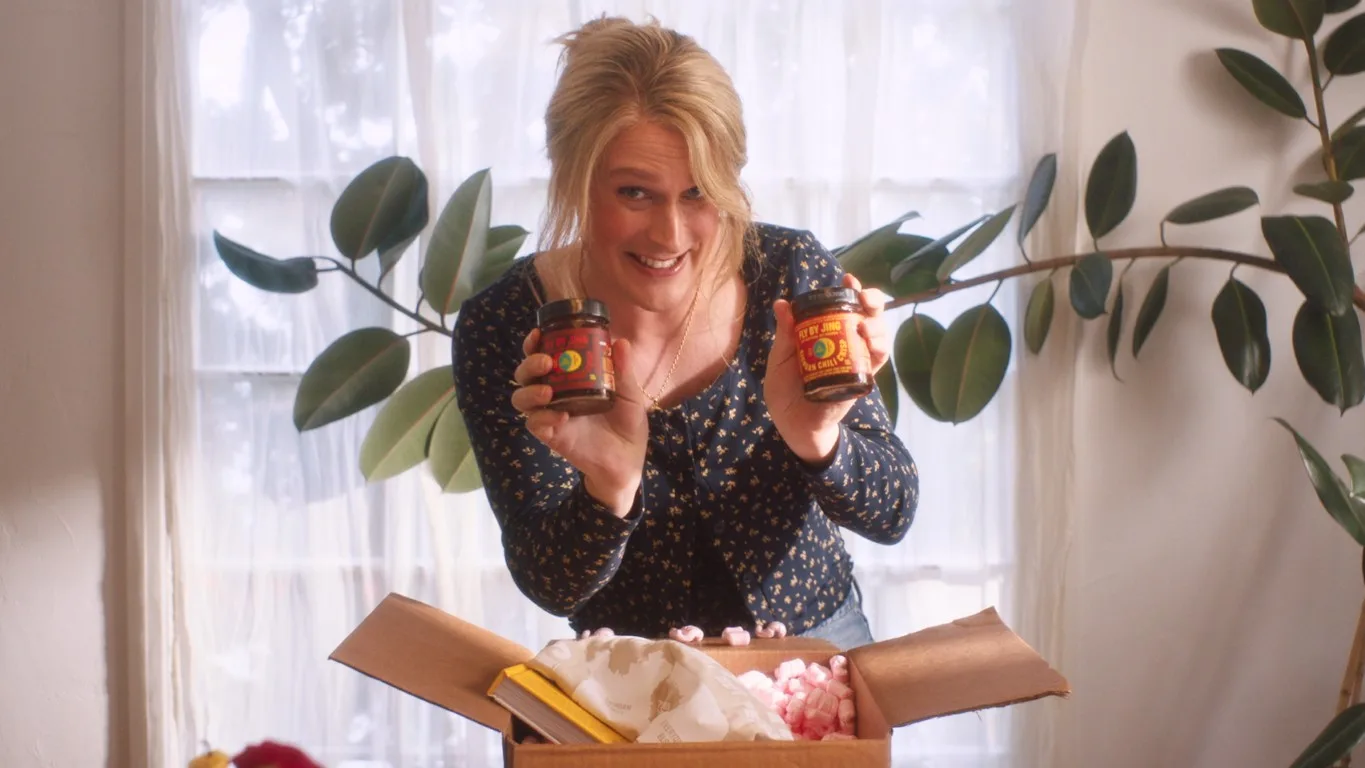
That’s the tonal tightrope that “Maddie’s Secret” (and Early) walks: the film sits somewhere between sincere pastiche of the woman’s pictures of the 1950s and the NBC TV movies of the week (like the Meredith Baxter Birney-starring “Kate’s Secret,” from which “Maddie’s” borrows several core concepts and plot beats) and the camp irreverence of John Waters. In the film, Maddie is a thirtysomething woman struggling to balance her newfound notoriety as a food influencer with the eating disorder that has plagued her since her youth; along the way, we just so happen to get jokes about trendy condiments like Fly By Jing and Conner O’Malley as an unhinged producer for a Bon Appetit-like food content mill.
But then, “Maddie’s Secret” gives way to its protagonist’s emotional fragility, and her attempts to gain a sense of control over her life even as everyone around her—from best friend Deena (frequent Early collaborator Kate Berlant) to her husband Jake (a supportive, sweaty thicc hunk played by Eric Rahill)—land her in a rehab facility for adults suffering from eating disorders. Even there, she deals with the wacky quirks of her fellow addicts (including Vanessa Bayer) alongside surprisingly probing conversations about the nature of disordered eating.
It’s a curious project for the Nashville-born Early, 38, who started out in stand-up before landing standout guest roles in shows like “Broad City” and “Difficult People.” Not long after that, he starred for four seasons of HBO’s “Search Party” as Elliott, the flamboyant, selfish gay mess who was frequently willing to sell out his values for another crumb of notoriety. Add to that Terry Goon in Theda Hammel’s cult COVID-era movie “Stress Positions,” and Early has proven his penchant for self-absorbed characters on the verge of a nervous breakdown.
In Maddie, Early finds a new evolution of those roles, channeling his love for the numerous films that influenced his debut into every thread of this picture. Squint hard enough, and you’ll see the flamboyant fight for fame in Paul Verhoeven’s “Showgirls”; the psychosexual mother-daughter drama of Hitchcock’s “Marnie”; virtually every role Divine ever played, but chiefly in Waters’ melodrama satire “Polyester.” The bra fits, so Early wears it.
Shortly after the film’s wide release, Early sat down with RogerEbert.com to talk about his relationship to his deepest media references (and his relationship to our relationship to them), the way his film talks about food, and how melodrama can sometimes bring out our deepest, most painful truths.
This interview has been edited for length and clarity. Some spoilers ahead for the end of “Maddie’s Secret.”
This is a film deeply steeped in reference, a recurring marker throughout your career—from lip-syncing in “The Characters” to shot-for-shot remakes of “Showgirls.” You seem to have such a unique relationship to reference, and I wondered how you, as a creator, work to go beyond reference and turn it into something new?
You know, I don’t know. It’s kind of an unconscious instinct I just end up doing. I think I’m a very devotional person and artist, and part of why people are devotional is that you lose yourself in the act of devotion to another person, a piece of work, a being. That’s very appealing, but it’s also an illusion. In the case of “Maddie’s Secret,” I thought by doing this kind of “Supermarket Sweep” approach to reference and pastiche, just grabbing at anything that excited me and throwing it in, I guess I felt protected. That I was making something so far out of the realm of me.
It almost feels like, if you’re grabbing from a gumbo of references and tones, you have a security blanket. “Maddie’s Secret” doesn’t have to live or die on how well it emulates “Kate’s Secret” or “Showgirls.”
Yes, certainly with the budget level I had. I would never be able to truly emulate some of the more…well-funded references. But I quickly realized, as I was writing the movie, that through referencing all these things, I kind of ended up leaking out all over the place. It was surprisingly personal in ways I couldn’t even explain, and still can’t. I really thought I was getting away with it; I thought I was making a totally safe, leaning tower of camp. But actually, it’s a profoundly personal piece of work.
That makes sense for people who love film, media, and culture—in a way, we sort of are the product of those influences. For this project, you’ve been able to wear those influences on your sleeve by talking about the films that inspired “Maddie’s Secret” and even programming some of them at places like Metrograph. What’s it like to get the chance to use this movie as a showcase for the things that you love?
It’s very nice… I get a little frustrated with how much the media ecosystem is obsessed with reference; it feels a little surveillance-y sometimes, the Letterboxd thing of “What are your four favorites?”, the Criterion Top 10, what do you pick in the Criterion Closet? Interviews these days seem to be very focused on references. This is ultimately a net positive, mind you; I think there’s a cinephilia in the air that is driving people to older movies, and that’s really cool, and to my movie as well. But I get a little….
And the thing is, I’m such a willing participant in it because I love talking about the movies I love, and I want people to see some of the ones I feel are underseen. I fall right into the trap, and I don’t think it’s all bad. I want to be very clear. But there’s this weird kind of gamifying or math-equation approach we’re trying to take with the references, where we’re not also acknowledging the fundamental mystery of what we’re doing or making. It’s a weird trap I find myself in right now.
But the truth is that I love that I’ve gotten to program these things. The Alamo Drafthouse let me program a few movies as “Maddie” inspo, and American Cinematheque did too. The fact that I got to put “The Brady Bunch Movie” on the big screen, are you kidding? That’s my life.
You mentioned that so much of you came out of this process, and I wonder how that translates to your relationship to Maddie as a character. What was it in the soul of her that you really wanted to inhabit? There’s this camp element, of course, but there’s a sincerity that comes with knowing her struggle, even if the stuff around her is a little over-the-top.
At the end of the day, I’m a deeply feeling, schmaltzy kind of person; to quote Deena, “It’s cool that you care.” And then Maddie goes, “It’s pathetic!” That’s the two sides of me, you know? I care, and I’m embarrassed that I care. So I try to layer on, I don’t know how many layers of irony, to mitigate the caring—to make less of a firehouse of sincerity and intensity. So I chose an archetype and a sensitive issue to work from, I think. This all moved so fast that it really felt like I didn’t know what I was doing.
But as time went on, and the more distance I got from it, I think I deliberately chose something so hot-button. It’s not relevant, of course; people have been talking about bulimia since the ’90s. But it is sensitive. I knew the only way through was to approach it with total commitment and sincerity. So, without realizing it, I created a project where I would be at the proverbial gunpoint and tap into the part of me that is a deeply feeling person who cares and is very sentimental.
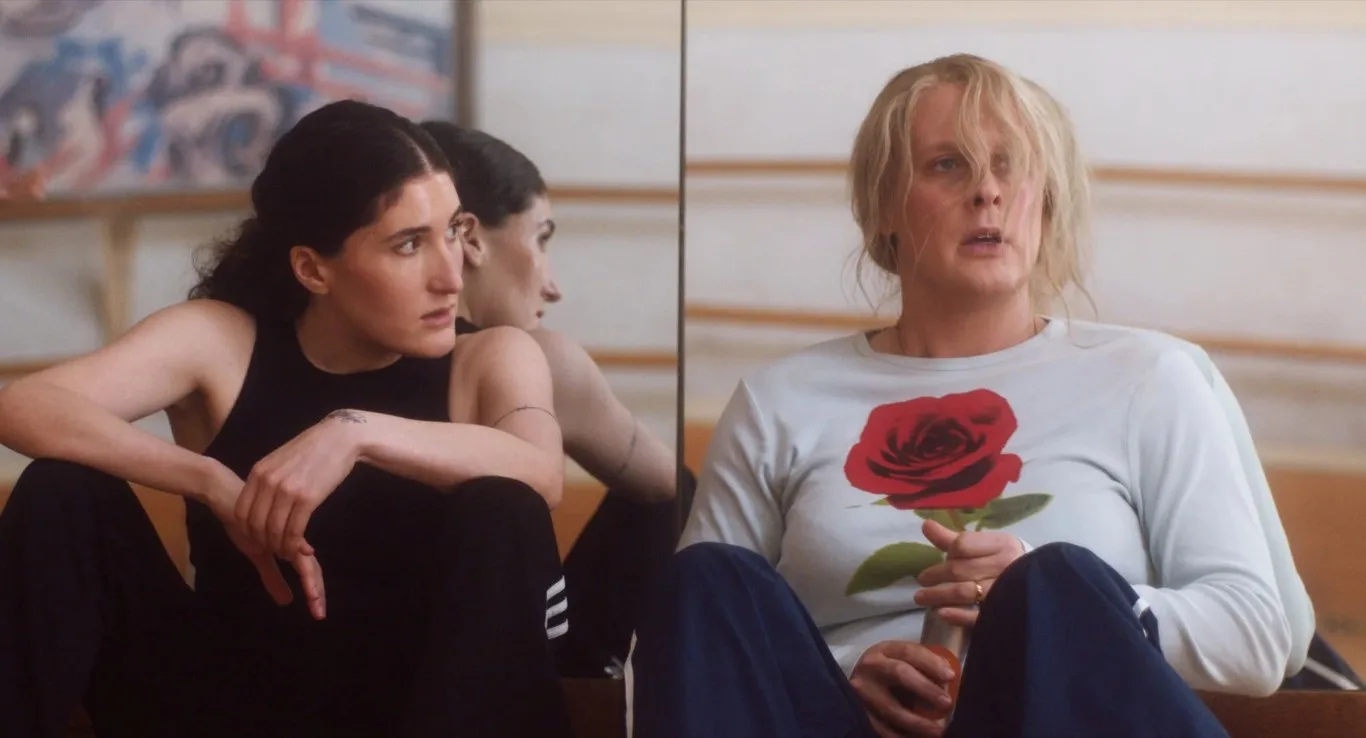
I think that’s what modulates the tone of “Maddie’s Secret,” especially in the scenes between Maddie and Deena. I’m curious how your longstanding collaboration with Kate Berlant informed those two characters, especially Deena, who sits between Maddie’s sincerity and a more overt parody of these kinds of pictures.
Those two sides of Kate are so integrated; there’s the broadness, the physical comedy, her proficiency in clowning. Then there’s the wetness of her eyes; there are so many moments in this movie when she looks at Maddie, and she’s like a child. I don’t know, I think her performance elicits such big laughs, which is so necessary for this movie to balance out so much of my trackiness. But at the same time, her performance is so full of longing.
I’ve always been of the school that likes expressive performances—not because I like fakeness or artificiality, but because I actually know those people. I’m one of them. I had the great displeasure of seeing some interview I did to promote this movie this morning, and I saw myself roll my head back and laugh so heartily at something that was not funny. I saw myself do that, and thought, oh, you poor baby, why are you laughing so hard? Who are you trying to please?
I know so many people and friends like that, and Kate does it with total abandon in this movie. But it’s all balanced by these tiny flickers of pain and humanity.
There’s a pathos to her, too, because of this unrequited yearning for Maddie that she lets take her so far in these extreme directions.
Deena breaks my heart, and so does Kate’s performance.
One of the other more presentational elements in the film is these dance sequences at the queer gym, which obviously have a lot of “Showgirls” in there. I’m curious about those, because they go so far beyond the gym movement classes in “Kate’s Secret” that clearly inspired them, from this very severe, theatrical movement to the expressive camerawork. Talk to me about that tonal tightrope you had to walk.
Dance is so amazing; if you’re like me, and you write dialogue that is so blunt, you find that dance can express the inexpressible. It’s also very efficient, and it’s such a quick path to feeling. I knew I was working in a very blunt, pedestrian, low-culture style, and I was missing this dreamlike or expressive element. I didn’t want to so rigidly say I was doing a parody of a TV movie. So I was excited when I realized there could be a narratively motivated five- to eight-minute dream ballet at the center of this movie. Like in “Oklahoma!”
Of course, it’s absurd, but queer dance classes are a real thing. There are queer gyms in LA, and when Deena says, “It’s radically inclusive, no toxic gym bro stuff,” that is directly lifted from the website of queer gym. I have friends who attend these classes; I’ve seen footage of them leaning into vogue-inflected choreography. It’s all in the name of cardio, but it’s not as pragmatic as an aerobics class. There’s this other level of self-acceptance, almost like social justice kind of thing. Anyway, it’s actually real.
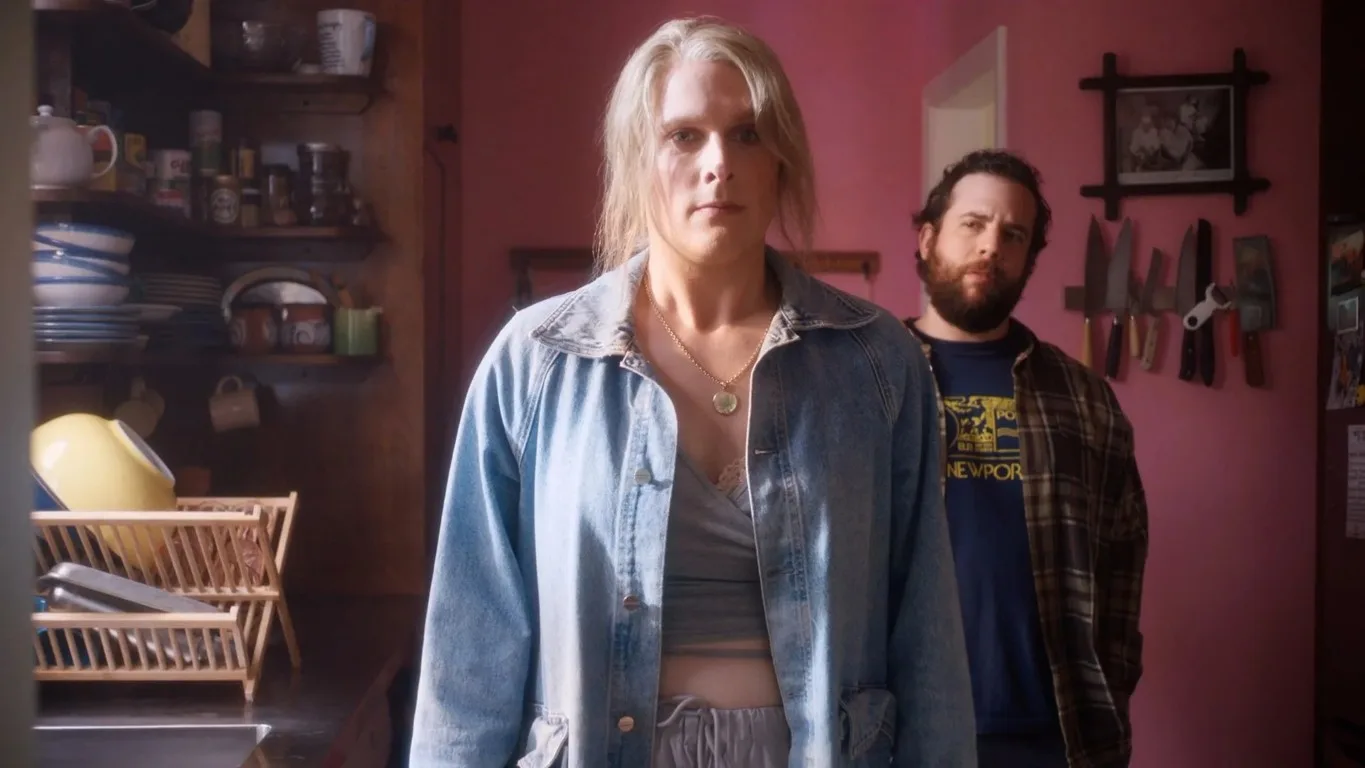
I have to imagine it was exciting for you, as a filmmaker, to get the chance to work both in the dance sequences and, more broadly, to find creative ways to hold and move the camera. I’m even thinking of some of the early scenes at Gourmaybe, where long tracking shots follow you and Deena, and even dolly around you to a comically dizzying degree.
I worked with Max Lackner, an incredible cinematographer. This is his first feature, and he’s a friend of mine; it’s a beautiful relationship that I hope will last forever. Because of our amateurishness, we were really ambitious—maybe if we were more experienced, we could have convinced ourselves not to be so visually expressive. But because our budget made that hard, we naively, like Nomi Malone herself, were like “why not? Let’s make this look like ‘Showgirls’!”
We had a gigantic whiteboard where we broke down every scene and tried to distill each one into a single key word, so every scene felt like it had a very clear aesthetic or tonal goal. The first word in the first scene was “horse!” because she’s jogging, and we wanted to be off to the races. The style was always in service of the larger pacing, and this feeling of getting on a train and it not stopping until you’re careening off the cliff.
Maddie’s relationship with food is also complicated by her work pressures at Gourmaybe, which lets you kind of rib at the kind of programmatic, performative way that a lot of food creators talk about food—even the way Maddie would rattle off trendy ingredients and describe a dish in this formulaic manner, even in casual conversation, is really fascinating. What’s your relationship to that school of food culture?
I like that kind of food. I go to the places they go, and I shop at the places they shop. I’m right at the epicenter of it here in LA, and when I’m in New York, too. Even where I’m from, in Nashville, they’ve become very orange wine-y. I’ve passively absorbed it through ironic consumption.
Plus, it gives Maddie job pressures that Kate of “Kate’s Secret” doesn’t have, because she’s just trying to survive as a mom and deal with an emotionally unavailable, potentially philandering husband. Maddie, meanwhile, has no kids and a supportive husband in Jake; one curious deviation from “Kate” is that Jake is the perfect gentleman to Maddie, to the point that it’s stifling.
To me, what that’s about is that, by presenting this angelic image to the world and hiding these darker parts of herself in her self-presentation, Maddie inspires a kind of simplistic devotion that proves unsustainable. If she’s perfect, she’s gonna have Deenas and Jakes in her life go, “You’re perfect.”
And there’s pressure to maintain that perfection.
Yeah. Maddie plays a huge part in what’s wrong with those dynamics.
It’s that need to curate an impossible version of yourself to appease people.
Maddie reminds me of another character you’ve played recently: Terry Goon in “Stress Positions.” They’re both such inwardly drawn characters who are riddled with anxiety. What draws you to roles like that?
Here’s me saying “I don’t know,” while I bite my nail. [Laughs.] I don’t know, really. I think the truth is both Terry and Maddie are presenting as housewives, in that archetypally, they’re both neurotic. They’re very different, though. Terry is bitter and has this cancerous kind of rage, whereas Maddie is more hopeful and sweet. But they do both fall into this woman’s picture archetype of the troubled housewife.
I think they want to find security in the domestic. But I do think there’s a little bit of rage burning at the core of Maddie, too.
Oh, Maddie’s got some rage for sure. But she doesn’t direct it at other people, just at herself.
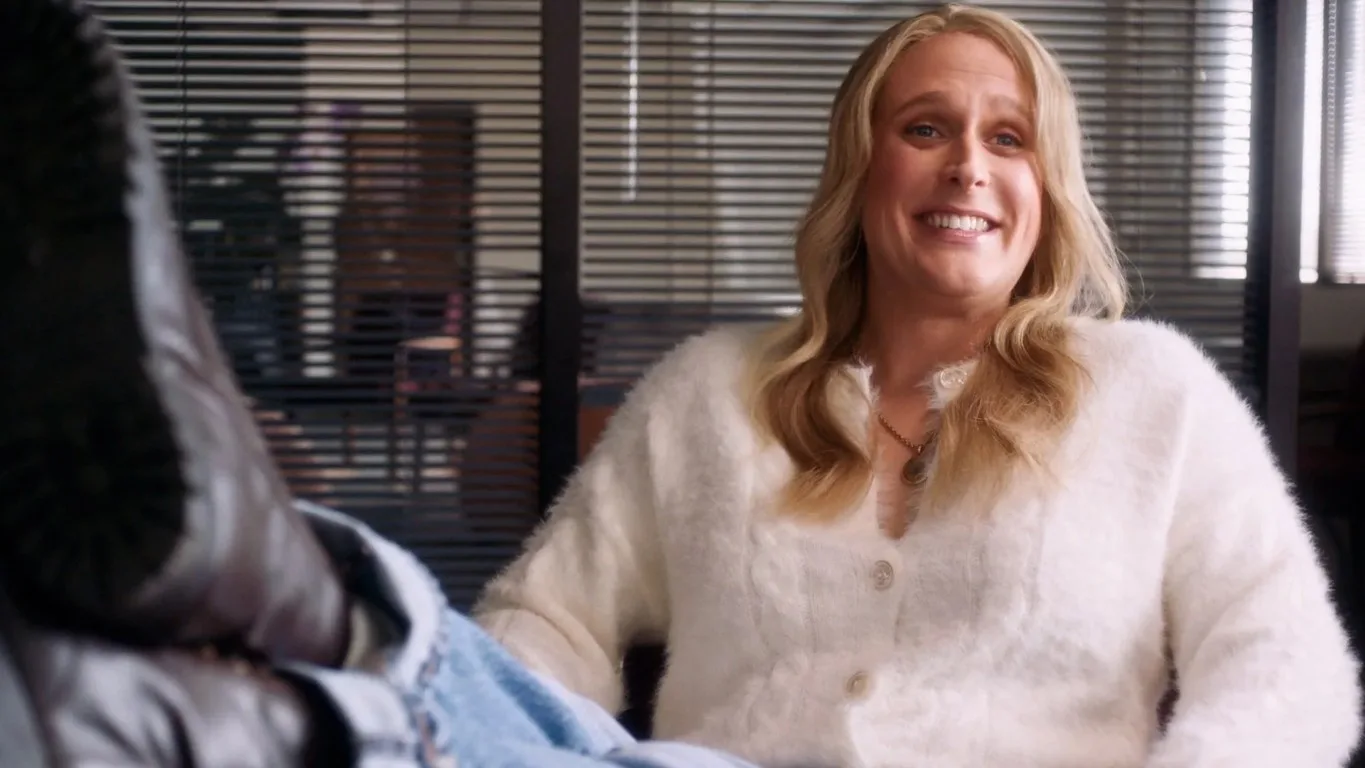
Which we see more of in the film’s back half, when she’s in treatment. That section seems to have the most work to do to straddle the dramatic and the comedic; as you got to these places in the story where you’re in a clinical, rehabilitative setting, what considerations did you have about toeing the line one way or the other tonally?
The main thing I told myself was not to be scared, to throw myself into the Greek stakes of these TV melodramas. That’s every eating disorder movie: They go into treatment, there’s no avoiding it. And there’s always rebellion, resistance to the treatment, and some kind of escape. I also watched this movie “Thin,” which is a very harrowing documentary about an eating treatment center I got a lot from.
There’s the “Cuckoo’s Nest” of it all.
Yes, and “Girl, Interrupted,” and my friends’ experiences, who have been in treatment centers for eating disorders. They gave me beautiful details. I knew the biggest mistake I could make was, once I got there, to suddenly seize up and feel I had to handle things delicately. I have been totally shocked by the emotional responses to it from people who have been in treatment programs, who tell me, “It’s so accurate.” That’s thrilling to me, but it’s not necessarily what I was going for.
I was having a lot of imaginary fights with people on Twitter while I was writing this movie, and imagining these terrifying Q&As. None of that has happened, but I had to really try not to get lost in those thoughts, be an artist about it, and not forget the tonal needs of this style. My north star with the treatment center was to still go for it and not pump the brakes on the intensity, the crudeness, or the fun. That was a big thing, too; I didn’t want the audience to feel betrayed, as if we were suddenly in this grim, punishing part of the story. I wanted it to still be full of bright characters, soft colors, and adventure. I think we achieved that.
The film ends with Maddie jogging just as she did in the beginning, but it feels so different, and she feels so different. Where do you feel like Maddie’s running to?
I wanted that last shot to have a feeling of freedom—her hair is no longer half up, half down; it’s now fully down. There’s a little smile right at the freeze frame. I think Maddie has no immediate plan, but….I don’t think they’re long for this world, Maddie and Jake. What they go through in this movie is a tough thing to bounce back from. But by the end, she’s an integrated woman, and she wants to see what her life would be like elsewhere.