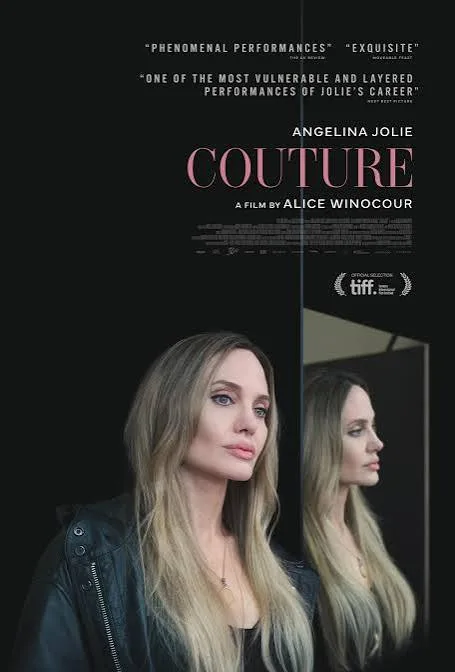
French writer/director Alice Winocour has a rare gift for exploring the lives of women with delicacy and sensitivity, in both the visuals and the narrative. The three main characters in “Couture” are from three different countries, at very different stages, confronting very different challenges, but their stories intersect, echo, and overlap. Set in the world of high fashion, including first-time on-screen behind-the-scenes settings at Chanel, the characters’ experiences touch on issues of expectations, bodies, loss, beauty, agency, family, and the passion for creation.
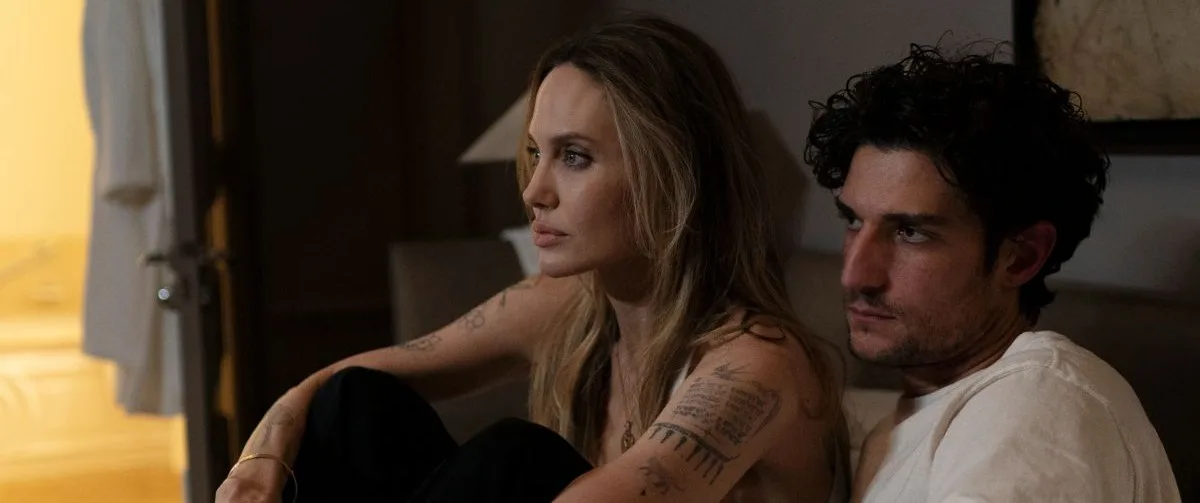
For the first time, Chanel allowed a fictional film to be shot in its showroom and atelier on Rue Cambon, lending authenticity to a story set in Paris during Fashion Week. Angelina Jolie plays Maxine, an American director of small, independent horror films who has been offered a lucrative job creating a short film to set the mood before the models walk down the runway. As she leaves De Gaulle airport, we see that she is under pressure, as evidenced by a testy phone call with her soon-to-be ex-husband and a teenage daughter who is distressed about the divorce. The executive who hired her insists that they support artistic vision, but suggests perhaps less pointy teeth and less blood in her movie? Maxine explains that “a female vampire avenges violence against women” in horror movies. There is also a call we understand better than she does. Her doctor tells her about concerning test results and wants to see her right away. “It’s not serious, right? It’s not a thing?” she asks, explaining she is in France. He says it cannot wait until she gets home; he arranges for her to see a colleague in Paris the next day.
Meanwhile, Ada (Anyier Anei) is a naïve 18-year-old who has just arrived from Kenya. She was in pharmacy school in Nairobi when she was offered a job as a model, and is there because she needs the money. She is curious and willing to do her best, but it is all new to her, and she gets very little welcome, help, or even direction.
The only sympathetic figure in the midst of the “war machine” leading up to the show is a makeup artist named Angèle (Ella Rumpf). Patient and encouraging, she dabs foundation to cover the scrapes on Ada’s feet from the high-fashion heels she has been using to practice her runway strut. Angèle wants to be a writer, but her manuscript is rejected over the phone by an editor who says her stories are set in the fashion world. “Just because they’re real doesn’t make them interesting.” This is another comment from Winocour on the too-often dismissive attitude toward stories about women’s experiences and feelings.
Parallel visual cues provide subtle links between the stories. Contrary to the fashion house’s initial objections, there is a lot of blood in Maxine’s film, and she relishes what she calls “a really good red, reflective.” As Angèle is applying make-up to Ada’s legs, she gently wipes away drops of menstrual blood. A seamstress at the fashion house (Garance Marillier) pricks her finger on a needle. The French doctor prepares Maxine for an MRI with a bright red marker on her torso and around her breasts. It almost exactly matches the red markings showing the measurements on the seamstress’s dummy. In her first take for Maxine’s short film, Ada is supposed to scream as the camera comes in for a close-up. But she laughs instead. Later, Angèle writes, “They all wanted to scream someday, like me.”
The performances are all wonderfully natural, and the real-life locations and people from the fashion world in supporting roles give the film an intimate, documentary feel. Jolie, who has been very open about her mother’s death from breast and ovarian cancer and her own decision to have a preventive mastectomy, is especially compelling in the scenes where Maxine finally begins to understand that her diagnosis is “a thing,” and in the layered emotions of her phone calls with her daughter.
Winocour, who spent a year and a half observing the world of haute couture to prepare for this film, depicts the contrast between the fantasy world of high fashion, where a gown can take over a thousand hours of expert sewing and cost up to the mid-six figures, and the real worlds of the models and workers, many of whom come from places of poverty and violent conflict. She reminded the audience at TIFF that in French, “couture” means “stitches,” and she thought of the characters in this film as each having to stitch something together or repair it to move on. This film is less about moving on than about inviting us into the moments of these women’s lives, presented with insight and compassion.