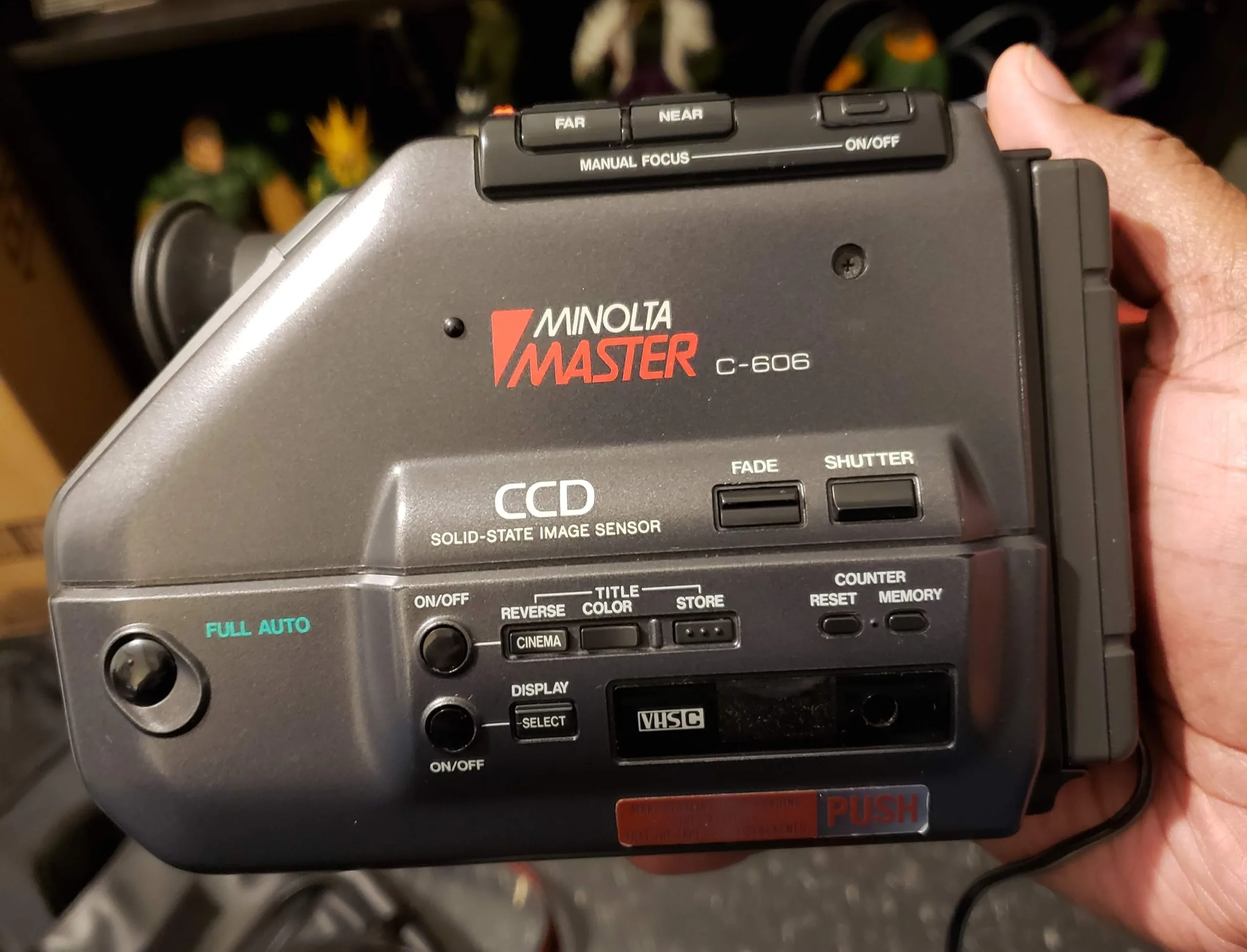
In August of 1990, I had dreams of becoming a filmmaker, in part because of the films Spike Lee and John Singleton made. Following in my parents’ footsteps, I enrolled at Howard University to learn how to make films. By my second year, my dad gifted me a Minolta camcorder for Christmas to help me pursue the goal of becoming the next great Black filmmaker. I have not been able to check that box off my list just yet, but something else happened that allowed me to make my own mark. I was documenting history at an HBCU when doing so on video was not as common as it is today.
I did not realize it at the time, but I have always had a gift for holding on to and preserving things. It’s my genetic superpower. My paternal grandparents shared many stories with me about family history, including that I am a distant cousin of Frederick Douglass through my grandmother, and a single picture I have of my grandfather’s family around the turn of the twentieth century. Because parts of my family tree have transitioned into becoming ancestors, a Civil War rifle musket with the year 1862 inscribed on it is in my possession.
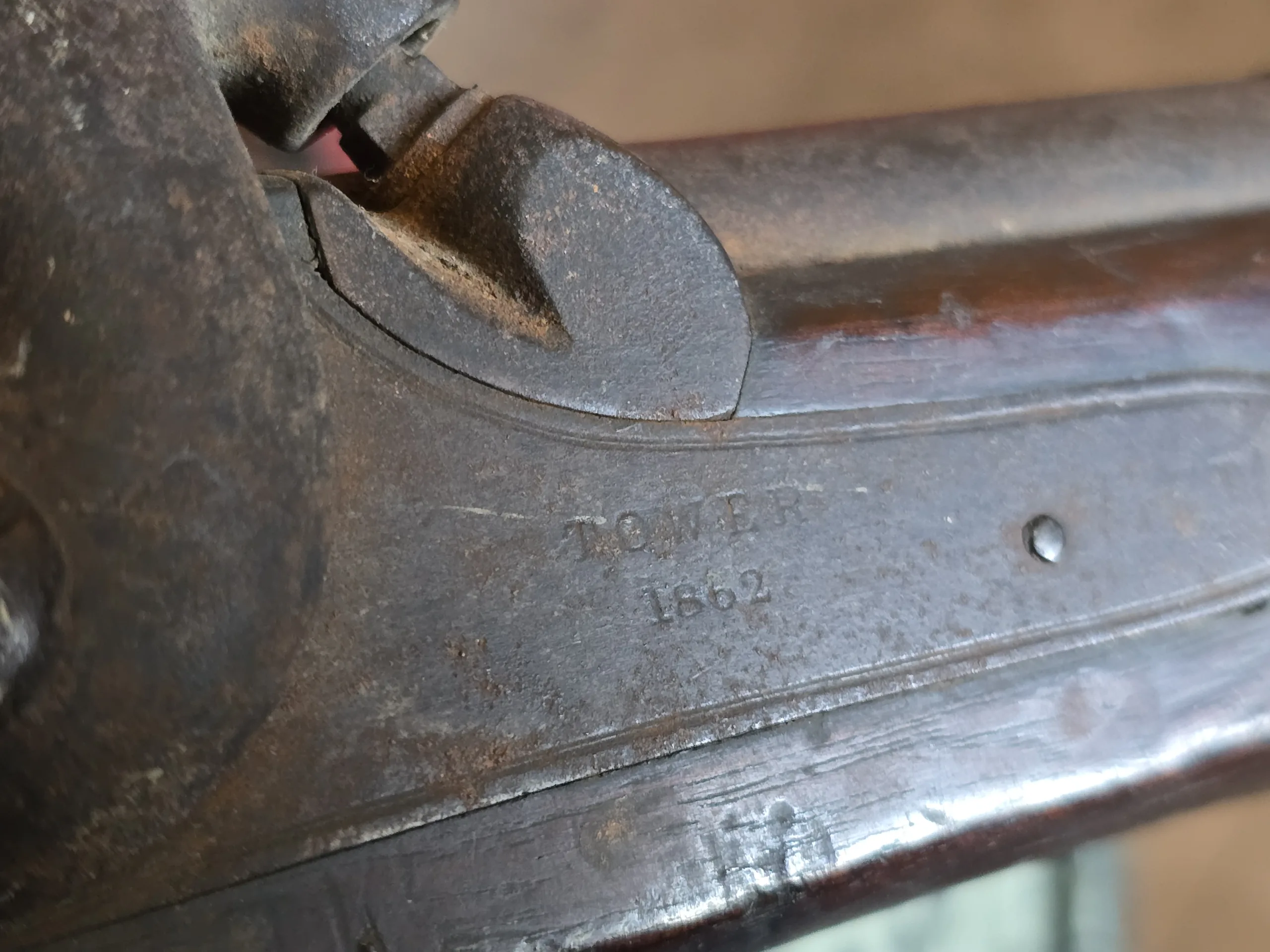
My grandfather used to talk about this musket and its having “Confederate bodies on it.” I wish I knew more about it, but that’s all I know. All of this is to say I grew up with lessons about the importance of holding on to things, preserving them, and sharing that history at a later date. Going to Howard with the intent of becoming a filmmaker ultimately led me to become an archivist.
The camcorder stayed in my backpack right alongside my class notes and textbooks. I never wrote scripts for what I recorded. I just shot everyday life in and around Howard: Students hanging out on a nice spring day on the Yard, lectures in classrooms, working at the student-run radio station WHBC, or partying at local clubs with the hottest NYC party rockers like DJ Kid Capri, who came into town. There was no real rhyme or reason for what I recorded. It was just something I did because I had this amazing device that could capture whatever was going on around me at any given moment.
Coinciding with my time at Howard, a student-run conference dedicated to Hip-Hop culture and the ins and outs of the music business took place. In 1992, I was able to capture extensively on video, and did so in an unofficial capacity, meaning I was never tasked with actually recording the conference. Like everything else I recorded back then, I just did it because it felt right, and I had the means to do so. In the years since, I have uploaded some clips from this event onto YouTube. Chances are, if people have seen any videos of this conference anywhere online, it came from my camera. I have not seen videos from this event anywhere else.
The videos also offer glimpses of students “Before They Were Famous,” such as Marlon Wayans, who was a classmate of mine from freshman year. In the years since this footage was originally recorded, I would occasionally upload pieces of it to YouTube. Most likely, any clip that shows Marlon at Howard standing in front of the Blackburn Center, the main student hub on campus, was shot with my camcorder. Fiber artist Bisa Butler is another classmate who appears on film. The shot of her that has circulated on social media is where my gift for holding onto things would pay off.
In 2023, Bisa was honored at Howard’s Charter Dinner, which commemorated the founding of our alma mater in 1867. As an honoree, a bio reel about her was put together to play for attendees at the dinner. The people putting the reel together actually saw the clip of Bisa as a student on my YouTube channel and reached out to ask if they could use it in the Charter Dinner reel. Bisa and I have been like family since we attended Howard, so of course, I obliged the request.
Two years later, I received an email inquiring about the footage of Bisa used in the Charter Day honoree video. As fate would have it, a traveling exhibit about HBCUs was being organized by the Smithsonian’s National Museum of African-American History and Culture (NMAAHC). Bisa did an interview with NMAAHC about attending Howard, and the goal was to pair that interview with some of the footage I had captured as a student, showing off a historical look at Howard. I was being asked for permission to include my 90s footage of Howard University in this exhibit. I considered this a tremendous honor, to say the least.
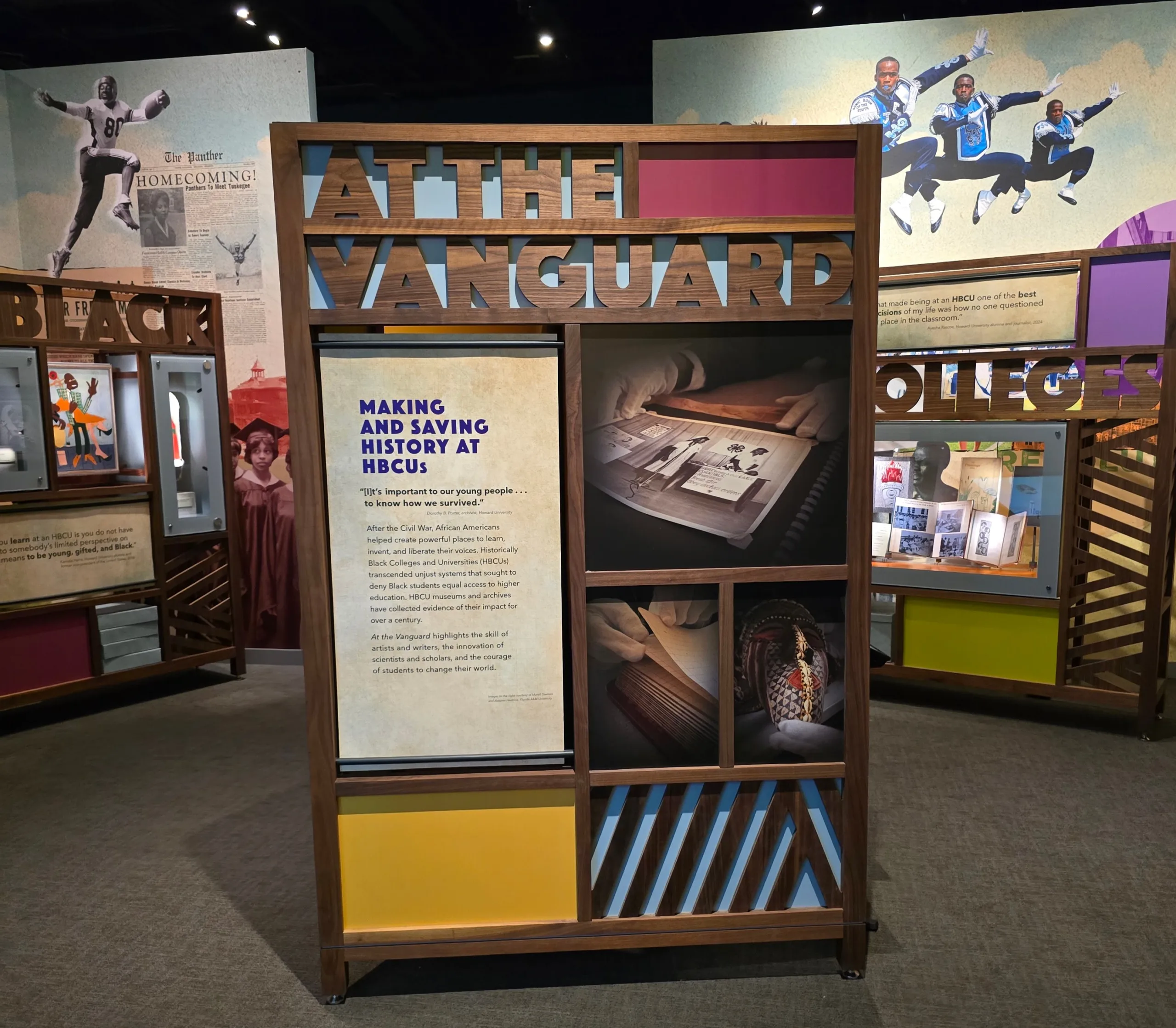
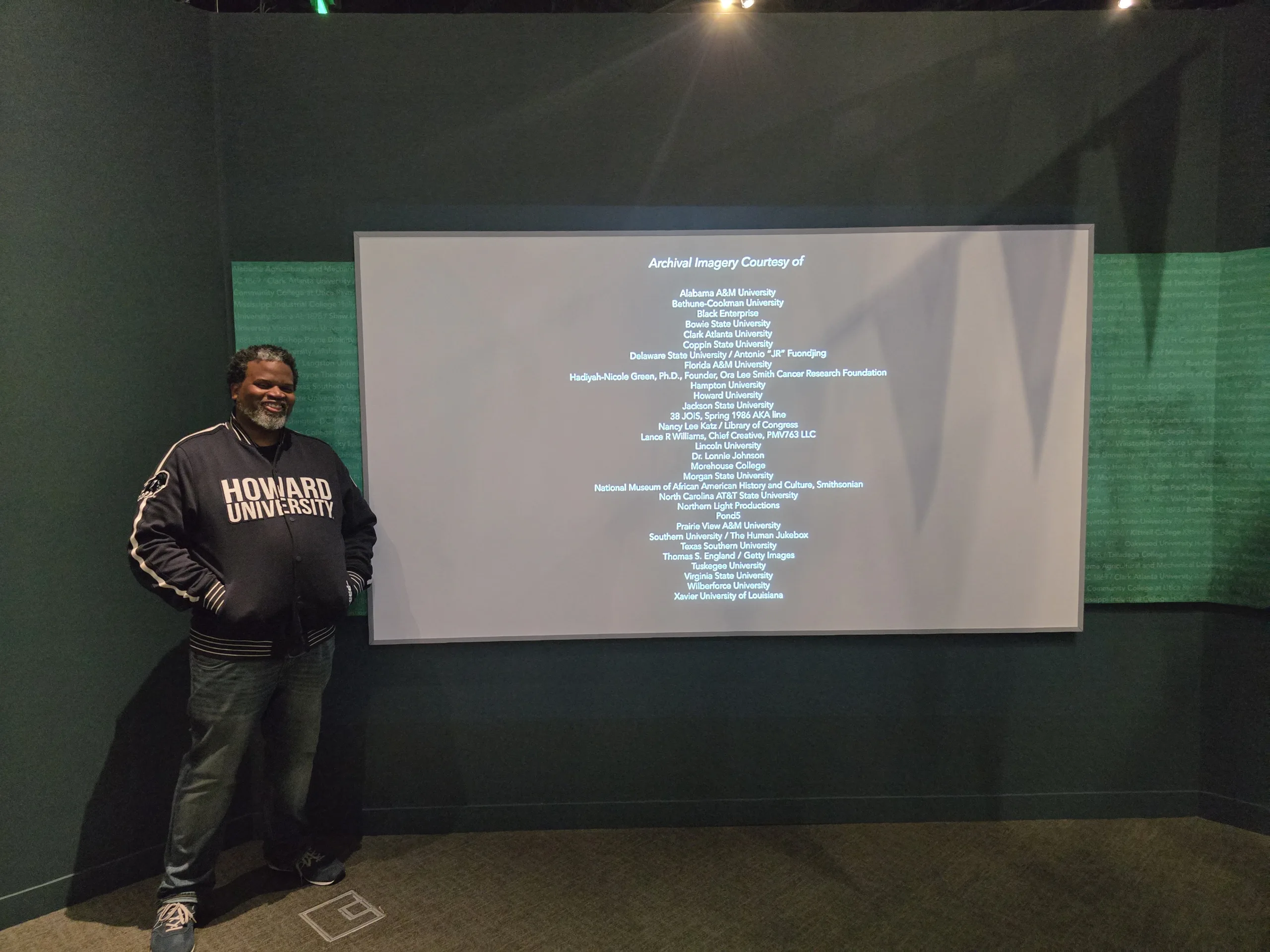
The exhibit is called “At the Vanguard: Making and Saving History at HBCUs”. After some delays, in part due to the government shutdown, the exhibit finally opened in January of 2026. It is a very powerful exhibit that makes the case for its imperativeness the moment you enter. The phrase “It is important for our young people to know how we survived” appears on a gateway panel as soon as visitors enter the exhibit. Pictures, interactive displays, TV screens with videos that play are just some of the items that are seen making your way through this amazing experience
And right before exiting the space, on the biggest screen in the exhibit is where a reel plays that starts with an interviewer asking a question, “So when did you decide to go to Howard” followed by Bisa’s voice “so rolling up on Howard’s campus” synched to some of my shots; my boy Bertrell holding his hands up wearing a skully hat and a bright orange jacket, followed by a shot of Marlon Wayans standing in front of Blackburn Center, while my homie Jay gestures toward the camera. A few scenes later are shots from the Hip-Hop Conference with my other homie Johnny at the 1st DJ Contest held at Howard, doing some turntable wizardry standing over a table while cutting and scratching a record on his way to becoming the winner of the contest (I should also point out that Bisa and Johnny are married today).
Coincidentally, everyone who registered for the 1992 Hip-Hop Conference received a welcome packet containing an insert written by Louis Romain, a senior contributor to The Source Magazine, titled “Never Throw Out That Kangol.” In it, Romain stressed the importance of preserving hip-hop culture through “old school battle tapes” and “rare 12” singles.” More than thirty years later, that message resonates with me even more than it did when I first read it.
The intimate and personal aspects of Black history are just as important as those that enter the mainstream. Local newspaper clippings, cassette tapes with “Mr. Magic’s Rap Attack” written on Side A from a late-1980s New York radio broadcast, or VHS tapes labeled “Jones Beach Greekfest ’93” all have stories to tell. These artifacts may seem ordinary at the time, but they become invaluable windows into how people lived, celebrated, communicated, and documented their lives.
The beauty of personal archives is that they reveal how Black life can look different from place to place, even during the same moment in history. The story preserved by someone in Long Island, New York, will not necessarily look like the story preserved by someone in Shreveport, Louisiana, yet both are equally worthy of being remembered. When viewed together, these individual records create a richer, more complete picture of Black history than any single institution could preserve on its own.
To say that I am humbled to be a part of an exhibit of this magnitude would be an understatement. When I originally recorded this footage, I was not thinking about 30 years in the future or about being part of a Smithsonian traveling exhibit. Recording them at the time was one thing, but saving and preserving them through the years, which included various moves, up and down the East Coast, keeping the VHS tapes intact, eventually gaining the means to digitize them, and ultimately uploading bits of them on YouTube, turned out to be just as important. Providing visual evidence that supports the first area of the exhibit, “It is important for our young people to know how we survived,” means everything to me.
I’d like to dedicate this to the memory of Mrs. Gobetz, my favorite elementary school teacher, and my high school buddy David Ffrench. As long as people remember you both, neither of you will ever be gone.