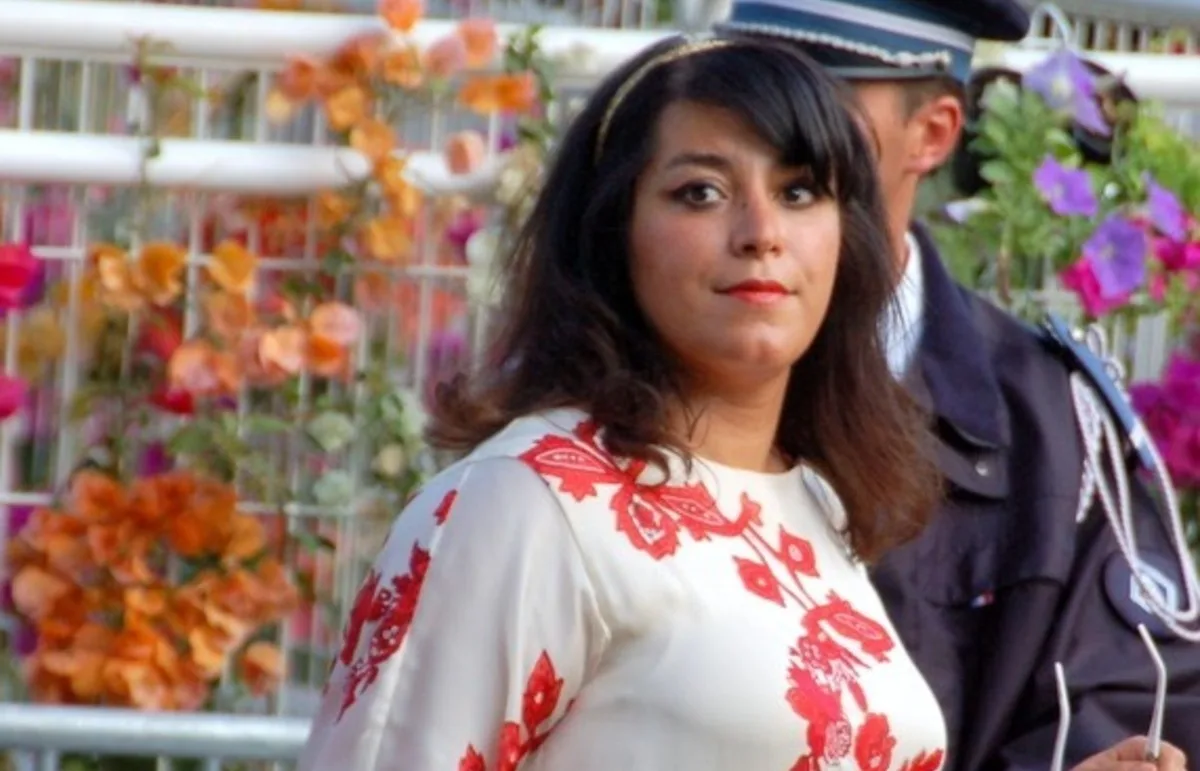
In a 2006 interview with The Believer, multi-talented artist and activist Marjane Satrapi said, “nothing is scarier than the people who try to find easy answers to complicated questions.” Satrapi built a career using imagery and dark humour to explore the nuances of modern life, often from the lens of the Iranian diaspora.
Born to an upper-middle class family in Rasht, Iran a decade before the 1979 Islamic revolution, Satrapi’s most well-known work is the graphic novel series “Persepolis,” a semi-autobiographical tale of a girl also named Marjane, aka Marji, who was born to an upper-middle class a decade before the 1979 Islamic revolution. Released in the early 2000s, Satrapi adapted the novel into a feature film with her friend and fellow artist Vincent Paronnaud.
Traditionally hand-animated and filmed mostly in black-and-white to mirror the pen-and-ink style of the novel, the film follows Marji as she comes of age—and gets into heavy metal and rock music—during the revolution and the Iran–Iraq War in the 1980s, eventually finding herself alone in Vienna at the age of 14, where she gets strung out and has visions of God. Returning home, she discovers that she was homesick for a place that no longer exists, and must now find a new place for herself in the world.
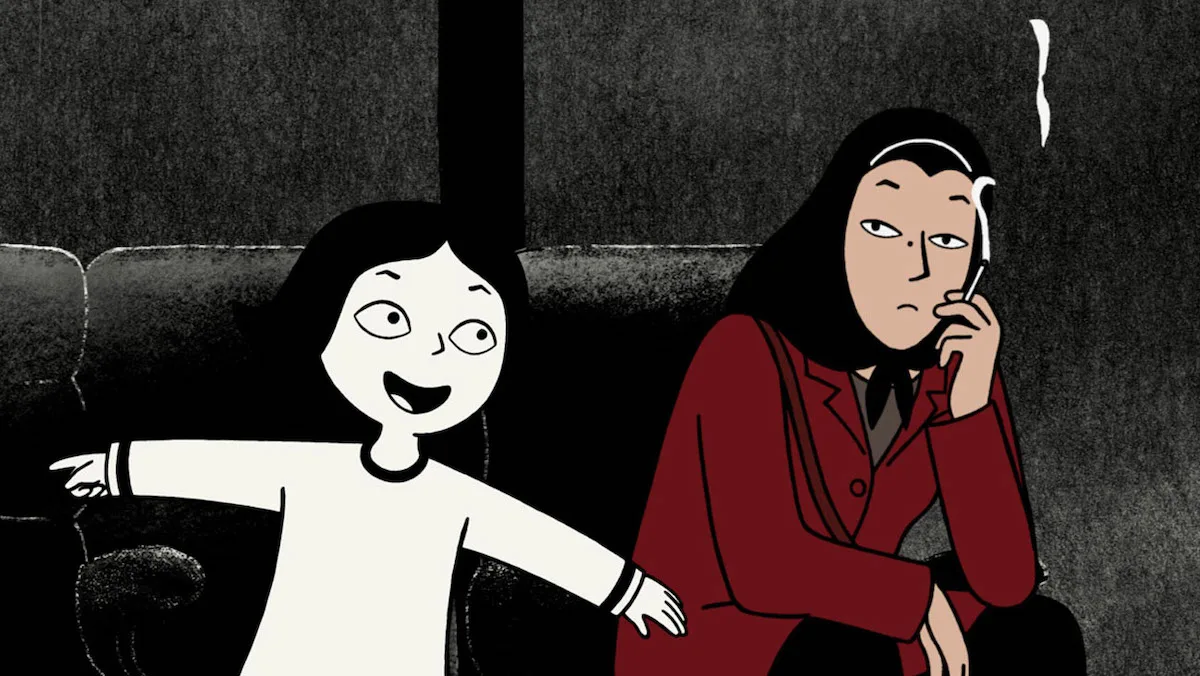
Directed by Vincent Paronnaud, Marjane Satrapi
The film premiered at the 2007 Cannes Film Festival, where it tied for the Jury Prize. In her acceptance speech, Satrapi said, “Although this film is universal, I wish to dedicate the prize to all Iranians.” The film went on to be nominated for the Best Animated Feature at the 80th Academy Awards, making Satrapi the first woman nominated in that category since its inception in 2001.
It’s no wonder Satrapi found her voice in both graphic novels and later cinema. Speaking to The Believer about the popularity of her novel around the globe, Satrapi addressed the universality of images, saying:
“Words also are filters. They have to be translated. Even in the original language, there is interpretation and some ambiguity. If there’s a cultural difference between the writer and the reader, that might come out in words. But with pictures, there’s more efficiency…I always thought the image and the text, writing and imaging, that there is no separation between them.”
Along with the “Persepolis” series, Satrapi wrote a handful of graphic novels, including 2004’s “Chicken With Plums,” about her distant relative Nasser Ali Khan, a musician living in 1950s Tehran who decides one day to stay in bed until he dies. The dramedy, which features a stand-out performance of melancholic brilliance by Mathieu Amalric, is both a personal story about a man whose heart is broken beyond repair, but also an elegy for the lost world of a pre-revolution Iran, one that Satrapi had a taste of as child, though she mostly knew from family lore and photographs. The film debuted at the 2011 Venice Film Festival, opening in the United States the following year.
This was actually my first introduction to the work of Satrapi, whose “Persepolis” I would discover afterward. I was covering my very first film festival—the 2012 San Francisco International Film Festival, where “Chicken With Plums” was set to screen with an introduction by Satrapi.
I remember very distinctly seeing her in the window-filled, sun-dappled lobby of the Sundance Kabuki, a group of fans eagerly surrounding her. She was puffing away at a cigarette, looking almost too stereotypically French with a chic black outfit and eyeliner. Someone from the festival was desperately trying to get her to put out the cigarette.
It was an indelible image of confidence and defiance, one that would stick with me every time I thought of Satrapi and her work for years to come.
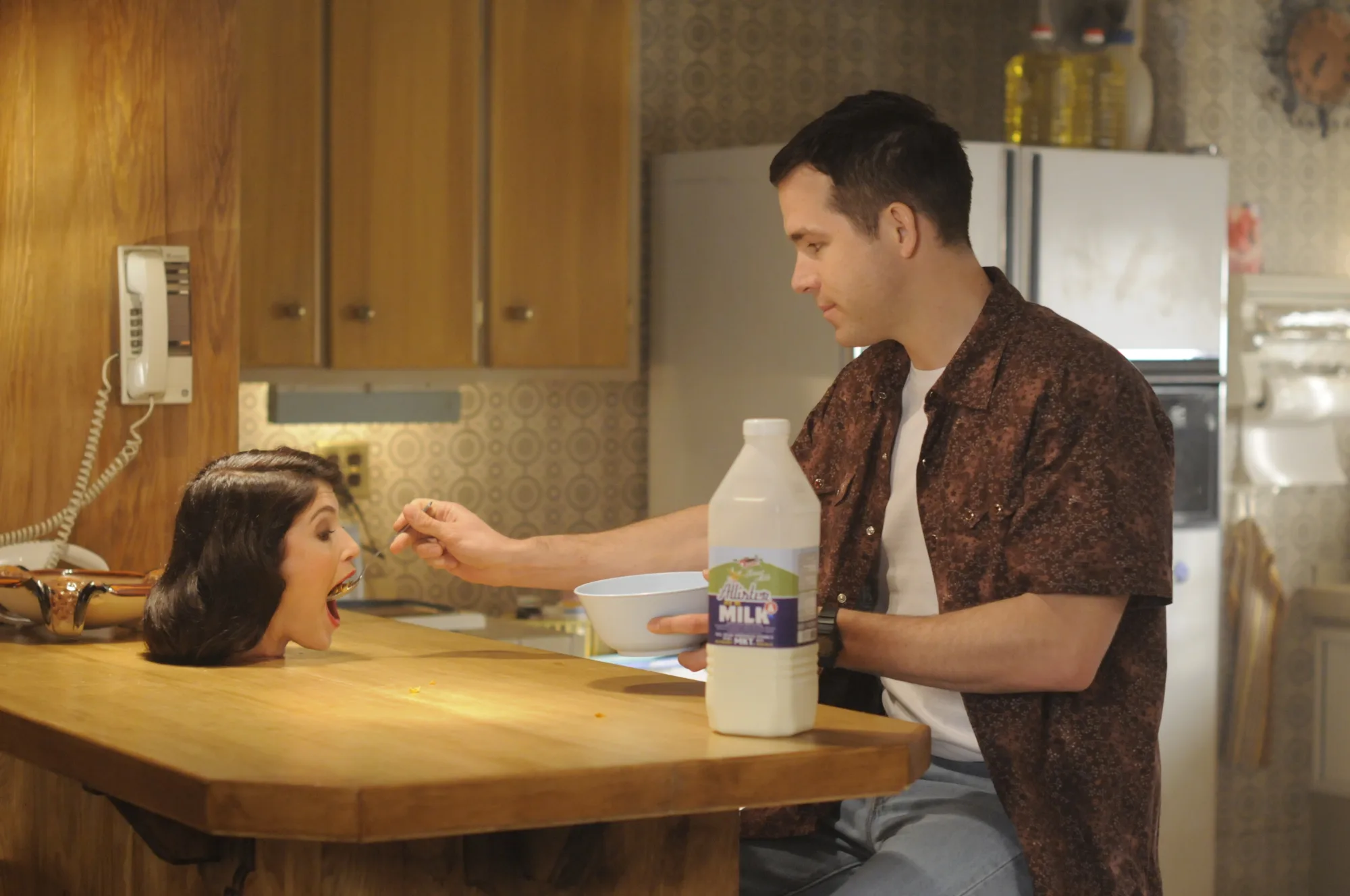
Over the next fifteen years, Satrapi directed several more films, including “The Voices,” a black comedy psychological horror starring Ryan Reynolds, “Radioactive,” a biopic of Marie Curie starring Rosamund Pike and Anya Taylor-Joy, and “Dear Paris,” a dark comedy starring Monica Bellucci and Rossy de Palma.
Although she only lived eighteen of her fifty-six years in Iran, Satrapi always considered the country her home. In a 2009 essay for The New York Times she wrote, “I call Iran home because no matter how long I live in France, and despite the fact that I feel also French after all these years, to me the word ‘home’ has only one meaning: Iran.”
One of her last creative projects, the collective work “Woman, Life, Freedom” takes its name from the Kurdish slogan which became a rallying call for feminist activists in Iran after the September 13th 2022 arrest and murder of Mahsa Jina Amini, a young Kurdish-Iranian student whose only crime was not wearing a headscarf. Calling herself the director of the work, Satrapi brought together seventeen Iranian and international comic artists, along with Iranian academics, to craft a work that honored Amini, while also exploring this new generation of protests.
Discussing the work with The Guardian in 2024, Satrapi said of the new youth movement, “I call it a revolution. It’s not a revolt, it’s not a movement, it’s a proper revolution. I’ve said it many times and nobody says the contrary: I think it’s the first really feminist revolution…and it is supported by men.”
Last April, her longtime husband and creative partner Mattias Ripa passed away. This morning news broke that Satrapi had joined him. A statement released from her close friends reads: “Marjane Satrapi died of sadness a little over a year after the death of Mattias Ripa, her husband and the love of her life.” President Emmanuel Macron of France added that Satrapi’s passing “marks the loss of a leading figure in French culture and a freedom-loving artist whose work carried a universal message and earned her immense international acclaim.”
In her 2024 interview with The Guardian, Satrapi left readers with one last thought, one that I would like to leave with you as well. She said “human nature is made for freedom. With this youth, we might have better days.”
If you are someone you know is in a crisis, you can reach out to the 988 Suicide & Crisis Lifeline.