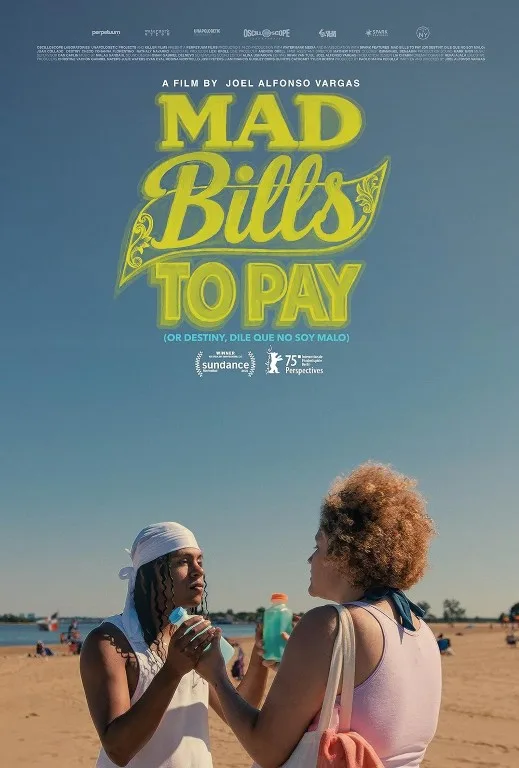
Watching writer/director Joel Alfonso Vargas’ “Mad Bills to Pay (or Destiny, dile que no soy malo)” might make you reflect on every place your body has ever inhabited, and the stories, arguments, and interactions that those spaces hold. It might make you think back to the places that you no longer frequent but have borne witness to past versions of you, or about the conversations that linger in a room after you’ve left it. That’s the staying power of Vargas’ sobering debut, a film that’s about the cruel struggle to hold onto dreams even as life forces you to mature quickly. His eye places viewers directly into the beautiful mess of its characters, reminding us that there’s nothing more powerful in cinema than bearing empathetic witness.
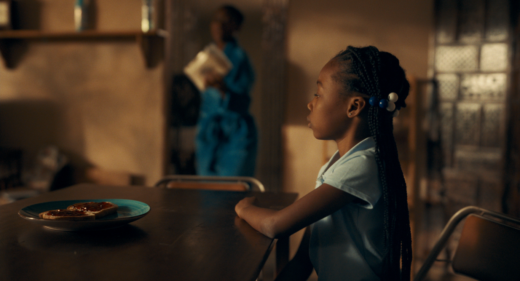
The vessels for restless questions about an uncertain future are protagonists like Rico (Juan Collado). The 19-year-old Dominican lives with his mother (Yohanna Florentino) and sister Sally (Nathaly Navarro) in the Bronx, and it would be an understatement to say that their house is one where tenderness and aggression rule the day. In one of the very first interactions, Rico snitches on Sally’s escapades to their mother, causing the siblings to erupt in a vociferous shouting match that becomes a three-way audio assault once their mother joins in. Rather than opt for coverage or other angles to showcase different angles, Vargas and cinematographer Rufai Ajala keep the camera idle. The shots are static, and the placement feels simultaneously far and close, and the rest of the film consists of these sequences of fixed beholding. These long, unbroken takes celebrate the ways we can live in a given space, with the family dining table forming an arc in the film all its own, serving as a place for argument, lament, and feasting.
We never know how long a scene will last, and to Vargas’ credit, he often lets these moments play out in their uncomfortable entirety, capturing the nuances of the way people argue. Other on-screen depictions of conflict might have trained us to expect more “cinematic” presentation of this type of bickering, but these long takes capture the awkward, multiple forms that such clashes can take. Sometimes people trip over their words or even keep quiet about their frustrations, and Vargas displays something authentic rather than choreographed.
His calm direction wouldn’t be effective if his performers weren’t up to the challenge of moving through a range of emotions in a given take. Every cast member has such an acute awareness of the camera, and uses the fact that viewers are locked into one mode of watching them by the camera to their advantage. Vargas exorcises primal emotions from his actors, making each of them feel well-rounded even if we only see glimpses of their inner lives.
For example, these first fights between Rico and Sally are so relatable in their rawness, and Vargas captures the ways that siblings can say the worst insults at each other in one moment and then go back to tenderly cutting each other’s hair the next. At that age, siblings are bound by the secrets they keep from each other and their parents. Once one sibling tattles, it’s just mutually assured destruction, and Juan’s and Nathaly’s flit between peace and war feels all too relatable for people who have no choice but to resolve their conflicts quickly due to being so physically proximate.
Also giving the film its sense of chaotic, uncertain rhythm that characterizes its protagonist’s lives is the work of editor Irfan van Tuijl. The film is told in chronological order, but we never quite know when Tuijl will cut to the next scene. It gives the film a sense of tension, in which a peaceful moment is undercut by a transition to a more harrowing scene, and vice versa. It mirrors the family’s tumultuous, uncertain future: they have only the present to focus on, even though they wish they could plan for what comes next.
The already tempestuous dynamic in the house is uprooted again when Rico learns that his girlfriend, Destiny (Destiny Checo), is pregnant with their baby. Begrudgingly, Rico’s mom allows Destiny to move in. Checo is perhaps the film’s MVP, transitioning from a morose, quiet guest to someone who tries to rebuild her life despite logistical challenges. She realizes that despite her baby daddy’s best intentions, she’ll be the one who has to mature in their relationship. Once Destiny moves in, Vargas introduces a striking new technical element: occasionally, a character will knock the camera off center, quite literally forcing us to see things from a new perspective. It speaks to the ways life disrupts the plans we try to make and how the messiness we try to keep at bay invades our lives, whether we want it to or not.
As Vargas’ film flips between the Bronx home, the subway, the sun-kissed beaches, and everywhere in between, it recalls the art-historical term “Beholder’s Share.” “Beef” creator Lee Sung Jin articulates this better than I, but to summarize: it refers to a theory in which we judge a piece of art by how much the beholder is invited to “participate.” The beauty of Vargas’ film is its sense of invitation: in presenting the lives of its characters so nonjudgmentally and plainly, it encourages us to be present with them and participate in their lives. We don’t just walk in their shoes, but move in their clothes, too.
This is an exhilarating debut that courses with an all-enveloping urgency and life, even if you may occasionally want to look away. We all have bills to pay, responsibilities to take on, and dreams to hold on to amidst the grind of life; Vargas’s film asks whether we can remember to cling to moments of grace in between.