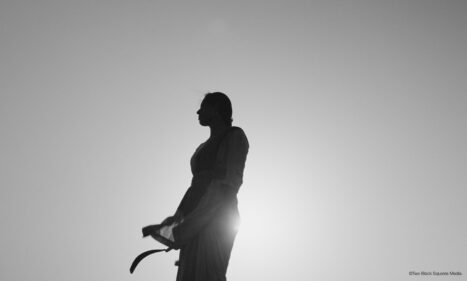

Sophy Romvari’s “Blue Heron” exists in that space between home movies and art, between reality and memory. This devastating drama is an act of remembrance for its filmmaker, who has been open about how much of this story is her own. It’s also a reminder of the power of filmmaking to turn the deeply personal into relatable art, and an announcement of a major talent, one who has made the best film of the year to date.
From the beginning, Romvari works with strong attention to detail in a way that’s never forced but amplifies the shared experience within her story and the memories of people watching it. It’s the sound of a lawn mower in the distance, the crack of blinds being opened by a kid, the crunch of Fruit Loops around a nondescript kitchen table: the production and sound design of an ordinary suburban home. It’s an effective way to transport us into the world of this film, one that’s mundane on the surface but hides a truly painful family dynamic.
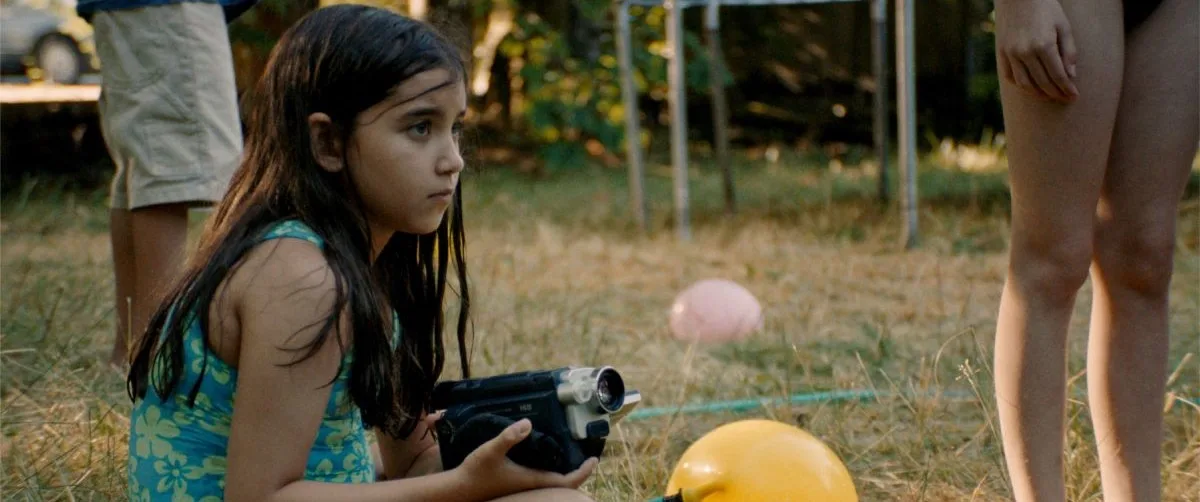
In this ordinary home, we meet the young Sasha (Eylul Guven), who has just moved to Vancouver Island with her three brothers, the eldest of whom is named Jeremy (Edik Beddoes). Through glimpses of key moments in this family’s life, we see Jeremy’s behavior increasingly darken. He wanders off one day; on another, he comes home in handcuffs; and he’s seen once on the roof, implying he might hurt himself. We later learn that he had threatened to burn down the house and kept a bit of gasoline in his room. Imagine living under that roof; imagine being his parents.
Unnamed and played by Iringó Réti and Ádám Tompa, Jeremy and Sasha’s parents face every new development with Jeremy with love and concern, but there’s only so much they can do. Especially back in the ‘90s, when this film is set, there were fewer outlets to understanding a kid like Jeremy, and often no idea what to do to help.
Sasha notices Jeremy’s issues more than her brothers. She sees Jeremy steal a keychain from a gift shop and notices the subtle changes that her brothers ignore. Of course, she’s a stand-in for Romvari, but also for us. Her memories are our window into understanding Jeremy and his impact on the family, and they’re not always reliable. “Blue Heron” tells you from the beginning that it’s an insufficient telling of a heartbreaking story: memories never fill in all the gaps; they only give us glimpses of what happened, images shaped by the emotion of what would come later.
Every choice Romvari makes about how this story is told feels important. For example, we often stay outside the house or a room, eavesdropping on conversations the way that a child would casually overhear her parents having an important conversation. We also see the influence of art in these flashbacks, starting with dad taking family photos that are then shown on screen—art within art. When Jeremy comes home in handcuffs, Dad hands Sasha the video camera he was using, the memory connected to the expression of filmmaking that would produce what we’re watching a generation later.
“Blue Heron” takes its most formally daring turn when it jumps forward to reveal an adult Sasha (an excellent Amy Zimmer) making, well, sorta the movie we’re watching. And then Romvari takes it a step further in a way I won’t spoil other than to say that it obliterates the line between fiction, filmmaking, and memory. It’s a breathtaking choice by an artist revisiting a formative chapter in her life, a pain that has become intertwined with her passion in a way that has made the two inseparable.
It culminates in a scene that reveals the true purpose of “Blue Heron” for this viewer: an act of understanding not just for her brother but for her parents, two people stuck in choppy waters they couldn’t have imagined how to navigate. It is an act of forgiveness, too, one that tells all of us who have struggled with both troubled childhoods and difficult parenthoods that it’s OK not to have all the answers. It hit me like a punch to the chest. But it also allowed me to breathe easier afterward.