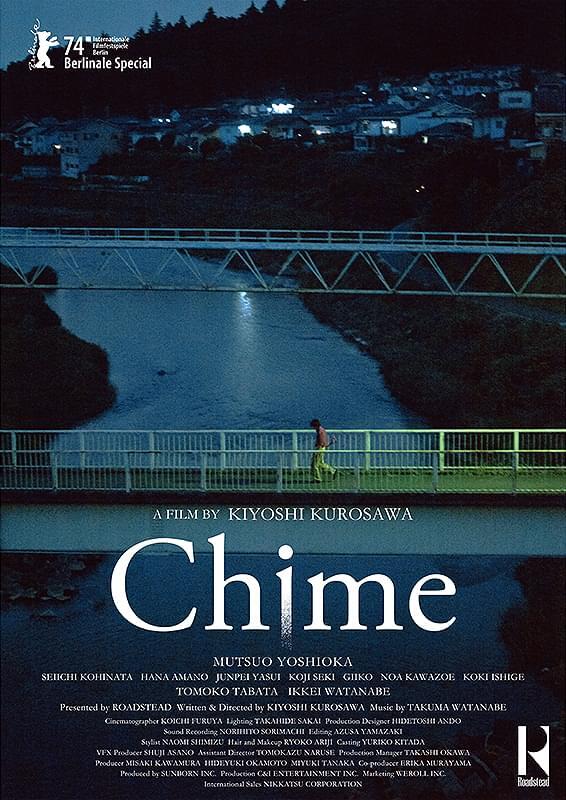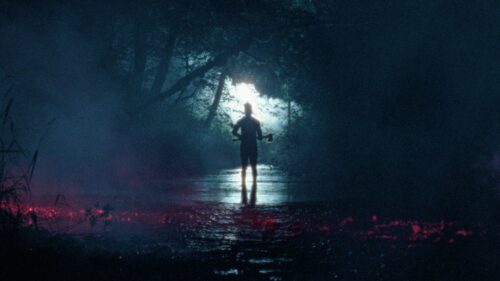
There’s a murder in Kiyoshi Kurosawa’s “Chime” that is one of the coldest and most disturbing things in horror in a very long time. It’s the simplicity of the scene. The casual violence, the sound of the knife entering flesh, someone fighting back, the sterility of the environment as blood stains a white floor—all of it blends together into the chilling centerpiece of this short film (45 minutes) from the director of “Cure” and “Pulse” that is finally getting a U.S. theatrical release this week in New York City. “Chime” is yet another reminder that Kurosawa is one of the world’s masters when it comes to unpacking the remarkably fragile line between good and evil. Our relatively mundane existence can hide the threats that exist in so many interactions, like a chime that your ears can barely make out in the distance.
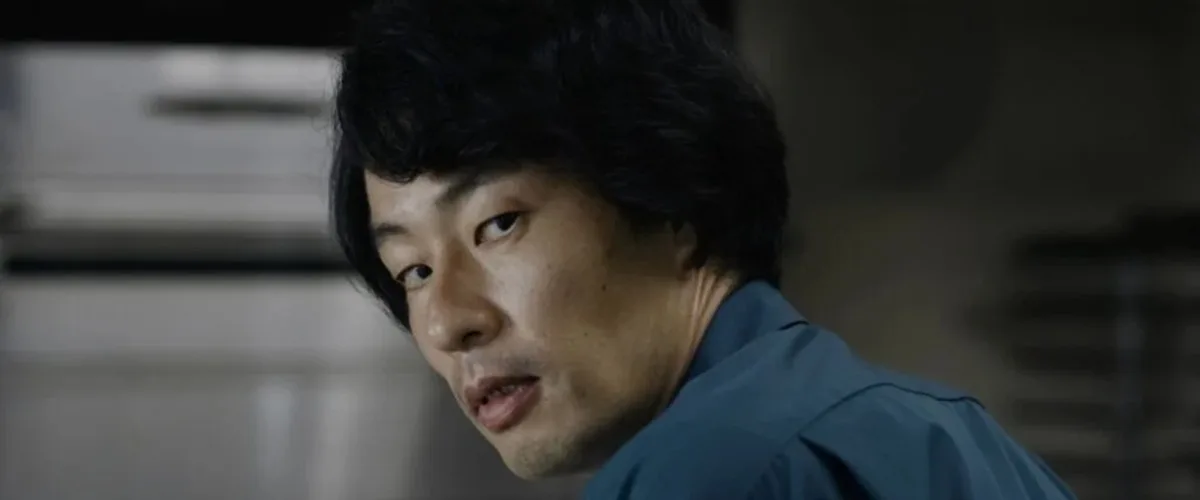
Mutsuo Yoshioka, also great in the upcoming “Never After Dark,” stars as Takuji Matsuoka, a cooking teacher who encounters a very unusual student named Ichiro Tashiro (Seiichi Kohinata), who asks him if he hears a distant chime, a noise that the young man says is “screaming” at him. While Ichiro is a bit odd, Matsuoka writes it off as just another eccentric student until the young man takes a knife and chillingly inserts it into the base of his own head, under his chin. It’s one of several sudden beats in “Chime” that take your breath away. It’s not the last.
As he has been his entire career, Kurosawa is so careful with his framing in “Chime” and his design choices. It unfolds in only three locations: Matsuoka’s class, his home, and a restaurant where he conducts job interviews as he tries to leave teaching behind for a job as a chef. Kurosawa has been increasingly interested in the impact of capitalism—it’s a main thread of the excellent “Cloud”—but its inclusion here says as much about our protagonist as the broken system. Matsuoka is restless and unhappy, and the end of his interview also feels like a commentary on an increasingly isolated population of angry, self-centered men, all competing for jobs that don’t exist.
As for the film’s look, it’s almost terrifyingly sterile, as most cooking classrooms probably are. There’s something about the film’s evil bursting through even this perfectly ordinary, heavily sterilized world that gives it more power, as Kurosawa and his team carefully declutter their imagery, understanding that Yushioka’s fascinating face is enough to hold the viewer’s eye. Yushioka is great, first seeming confused by the horror that has befallen his classroom before becoming part of its current one, which Kurosawa seems to imply flows beneath everything we do.
While “Chime” has echoes of other Japanese haunting films wherein mundane life is shattered by supernatural repercussions, it completely avoids the common screenwriting habit of explaining away things like cursed videotapes or haunted cameras. In fact, some might argue that the 45-minute “Chime” is the first half of a film like “Pulse” or even “Cloud,” but it’s that brevity that helps give it so much power. The final images offer no real release or conclusion, leaving viewers hanging in its world of unexpected violence. There’s no videotape to destroy or ghost to vanquish this time. Just pray you don’t hear the chime.
“Chime” opens today at the IFC Center in New York, along with a 4K restoration and first U.S. theatrical release of Kurosawa’s “Serpent’s Path.” Like “Memoria,” it will reportedly never be available on streaming or physical media, so take this chance to see it.