
In October 2018, an article appeared in the Seattle Times with the headline: “A $21,634 bill? How a homeless woman fought her way out of tow-company hell“. Written by Danny Westneat, the article told the improbable—and infuriating—story of Amanda Ogle, a woman who had been living out of her 1991 Camry when it was stolen and then towed. When she tried to retrieve her car, the tow company charged her $427, which she, of course, couldn’t pay. They then sold her car for $157. What followed was a byzantine maze of bureaucracy, which Amanda fought her way through, all while living in a church shelter. It took Amanda 369 days to get her car back. Westneat got wind of the story and interviewed Amanda for the Seattle Times. At one point, Ogle says: “They thought I would break and go away. They ignored the wrong person.”
The publicity of Westneat’s article rallied the city behind Amanda. Everyone resonates with a story like hers, even if the specifics vary. Everyone has faced the frustration of trying to get a company to right a wrong. Whether you’re fighting with your health insurance company over “approving” your life-saving medication, or trying to get a towing company to return your beat-up car … the fight is the same. Rich people run a racket, and you are handed bills you cannot pay. Amanda’s story stirred equal parts sympathetic outrage and admiration.
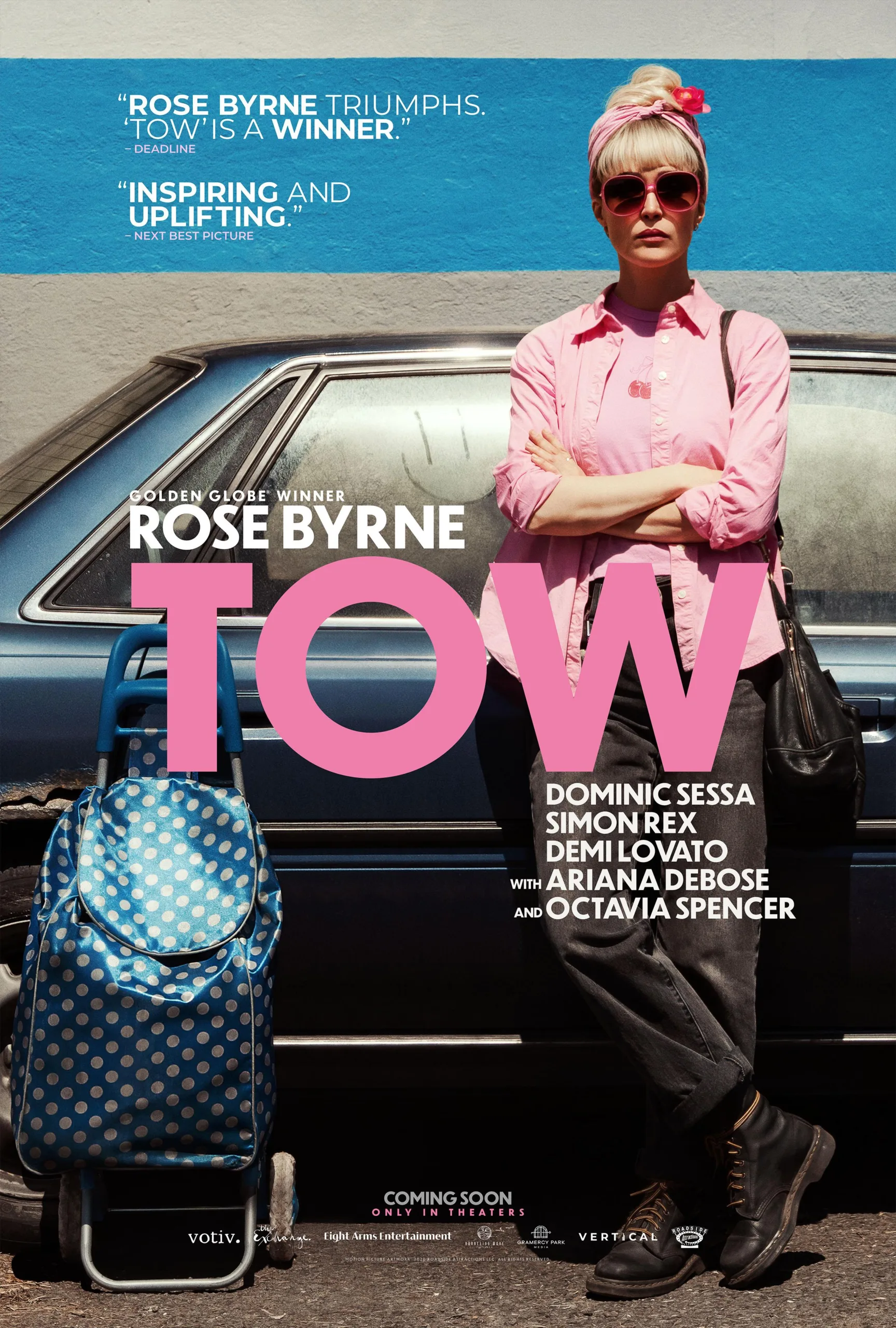
Rose Byrne plays Amanda in “Tow,” the film adaptation of this true story, written by Jonathan Keasey and Brant Boivin, directed with a light touch by Stephanie Laing. In less deft hands, the film could have been a clichéd affair, featuring Amanda delivering an impassioned courtroom speech that brings the judge to tears and the onlookers to a burst of applause. “Tow”’s distinct tone avoids these clichés—the film is often quite funny—turning the expected into the unexpected.
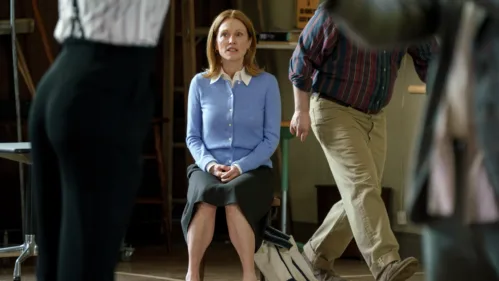
Amanda is first seen in a job interview. She has a vet tech license but no college degree, making her unemployable. The opening scene echoes the opening scene in “Erin Brockovich,” where Julia Roberts attempts to sweet-talk an off-screen potential employer. Amanda, her platinum-blonde hair tied back with a pink bandana, speaks in a quavery, eager-to-please voice, trying for a jokey “light” tone. Her “affect” is slightly off-putting, a perky demeanor with very frayed edges. She can’t quite pull off the impression she wants to make. She lives in her car, charging her phone in coffee shops so she can speak to her daughter, Avery (Elsie Fisher), who lives far away in the Southwest. The two have not seen one another in years.
Amanda’s backstory is revealed slowly. She was already an alcoholic when she was prescribed opiates after a car accident. In the ensuing addiction, she lost everything, including custody of Avery. Avery is a hopeful costume designer, always working and creating. Avery has the same dyed platinum blonde hair and individualistic fashion sense as their mother. Amanda lies her way through these calls, telling Avery she has a job, she’s busy, but she’ll be there for a visit at Christmas, she promises. You can feel Avery’s impatience and broken heart.
When her car is towed, Amanda pleads with the nice guy behind the counter (Simon Rex) to return it to her. Cliff will be a repeat character, since Amanda continues to circle back to harangue and plead. After a stint sleeping on the streets, she moves to a shelter run by the strict Barbara (Octavia Spencer), who warns Amanda no drugs, no booze, no second chances. The other residents at the shelter run from hostile to friendly. Two of the shelter residents are played by Demi Lovato and Ariana DeBose (both of whom were executive producers). Some of the shelter scenes are a little wobbly, feeling like add-ons rather than an organic part of the whole. Another key figure is Kevin (Dominic Sessa), a young lawyer at a small consumer protection firm who runs himself ragged trying to get the wealthy tow-company owner (Corbin Bernsen) to stop ignoring the court orders.
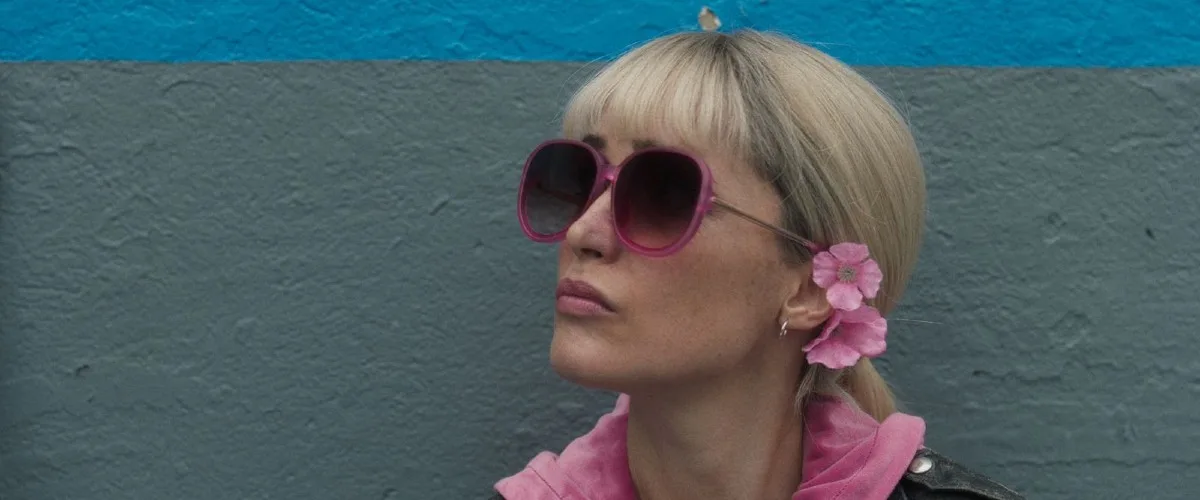
Byrne, who gave an Oscar-nominated performance in last year’s “If I Had Legs I’d Kick You,” avoids the trap of either sentimentalizing or condescending to Amanda. Amanda is a very specific person. Her look is attention-getting and a little strange at first: a pink shirt, huge pink sunglasses, and a pink bandana (Barbara calls her “Rosie the Riveter”). When you see a picture of the real Amanda, it all makes sense. Byrne’s voice is high and lilting, skipping off the surface, untethered to interiority. Eventually, you understand the voice covers what she’s avoiding. Far into the film, when Byrne “lets it out,” the catharsis is earned (and beautifully done).
“Tow” takes place in a real world where Amanda doesn’t have time to be a rousing heroine, make inspiring speeches, or state the film’s themes. Amanda needs her 27-year-old car back so she can go see her daughter and also have a place to live until she gets back on her feet. The real Amanda Ogle said, “Everyone assumed that because I was a homeless person, I would just give up and say screw it.”
One name in the film’s final credit roll was surprisingly moving: the artist who designed and made the fantastical costumes Avery is seen working on and sometimes wearing was Avery Ogle, the real-life daughter of the real-life Amanda. Westneat wrote a follow-up story on Amanda this week, providing an update on Amanda’s life and the strangeness of having her experience turned into a film. On a peripheral but essential note, “Tow” is a reminder of the importance of local newspapers and the functions they serve. Corporations want to take that away from us, too, if the waves of layoffs and closures are any indication. Westneat’s excellent reporting is a great example of why a local press matters, why community matters.