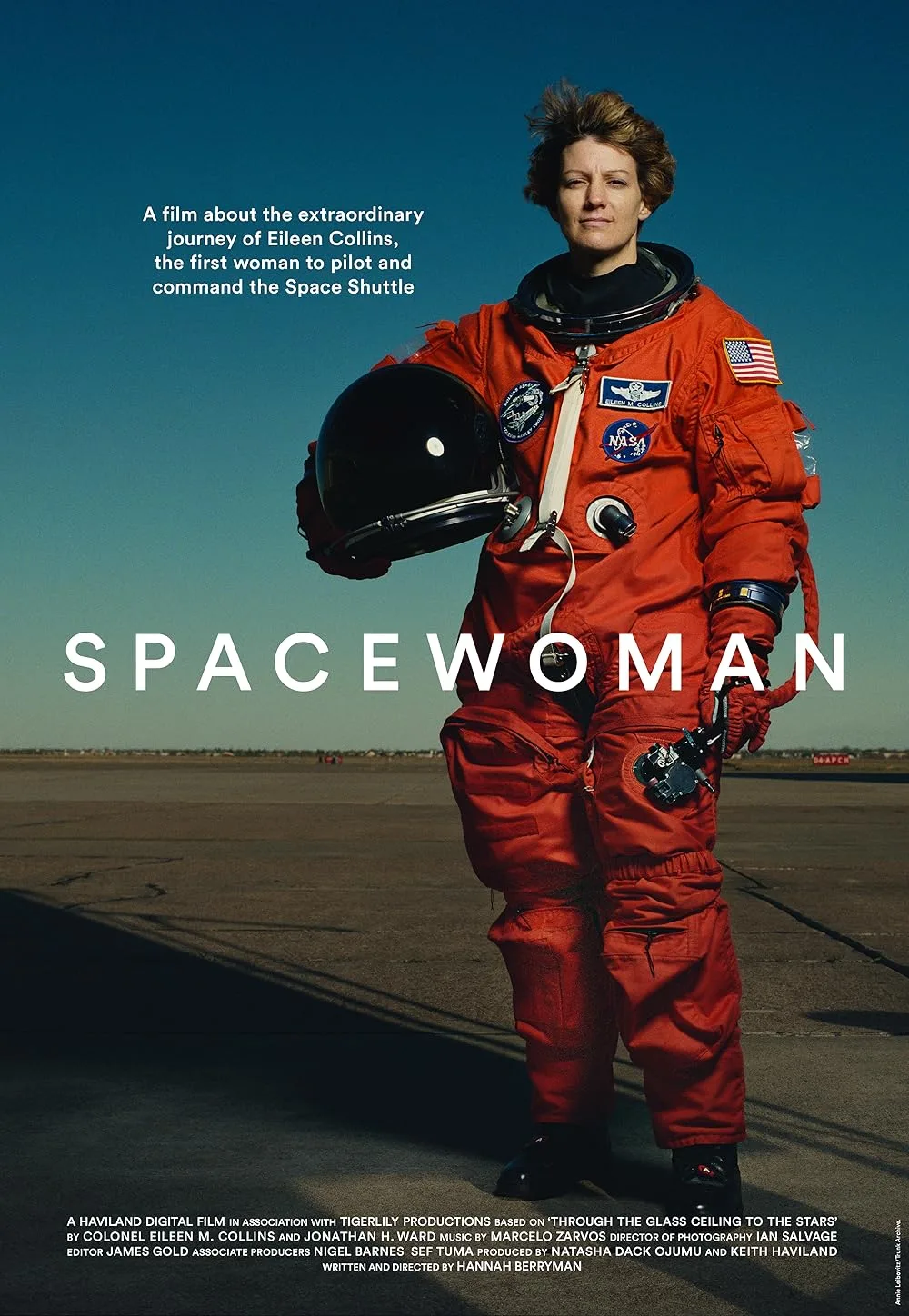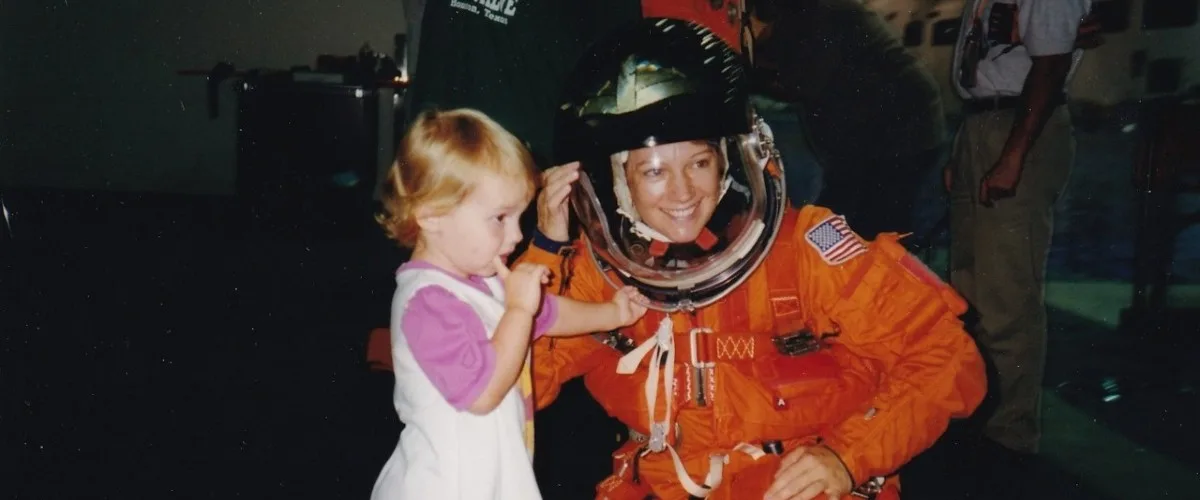
Going boldly where few others had gone before, Eileen Collins made history as the first woman to command a space shuttle in 1999. It was a record shattered less than 30 years ago, and yet, it looks like it’s already lost to the history books. But Hannah Berryman’s moving documentary, “Spacewoman,” aims to introduce Collins’ achievements to a new generation of viewers and to remind us of how hard women have fought for a seat at the table, even in recent decades.
Born and raised in the quiet working-class town of Elmira, New York, Collins was a quiet child who took an early interest in flying. “I wanted to be like Captain Kirk,” she remembers. She joined the Air Force in the 1980s before moving to NASA, where she became the first woman commander of a shuttle. It was a precarious time in the space program, just a little over a decade after the Challenger explosion, and Collins felt the pressure to succeed not just for the sake of NASA but also to prove that women were capable of everything their male colleagues could do.
Based on Collins’ memoir “Through the Glass Ceiling to the Stars: The Story of the First American Woman to Command a Space Mission,” Berryman’s “Spacewoman” explores both her professional achievements and her personal sacrifices juggling work and home duties. Throughout her time in space, she had a family waiting for her back home. Collins candidly shares in Berryman’s film that it was tough to be there for her family as much as she wanted, but she did the best she could while her husband, Pat Youngs, cared for their two children when she was away. This becomes even more difficult in the aftermath of the Columbia explosion, which Collins says shook her daughter’s trust in her ability to come home.
“Spacewoman” is built out of an impressive assortment of home movies, taped NASA footage aboard shuttles and space stations, and illuminating interviews with Collins, her daughter Bridget Youngs, husband Pat Youngs, and son Luke Youngs. Colleagues from her NASA days like astronaut and engineer Charlie Camarda, mission specialist Cady Coleman, astronaut Dr. Mike Foale, engineer Wayne Hale, NASA mission controller Paul Hill, and reporter Marcia Dunn explain some of the more challenging times in Collins’ career, like navigating back home when the tiles of her shuttle were damaged, compromising their ability to return to earth safely.
Together, they create a fuller narrative of her life’s achievements, both professional and personal, like Collins’ stories about life at home with her family, reconciling with her daughter after years of resentment, and the community of astronauts supporting each other. Some of the intriguing parts of the film include hearing firsthand accounts of how NASA handled the risk of a tragic accident after the Challenger disaster by relocating the astronauts’ families to a secluded beach house. To a child, what seemed like a fun time on Florida’s east coast was actually a preventative measure to spare them from the throngs of prying journalists.
Like last year’s crowd-pleasing documentary, “Sally,” “Spacewoman” is a heartwarming and inspiring story of a woman defying the odds, sexism, and workplace danger to make history. At times, it’s also a reminder of the casual sexism women face in their day-to-day lives, be it from others in their industry who doubt their judgment or capabilities, or dull reporters asking questions about how they manage both their work and domestic responsibilities. For some women, working through motherhood isn’t an option; it’s survival.
To an extent, we see Collins’ determination to work through her impoverished childhood as a means of taking care of herself and those she cares about, mitigating risks as calmly as she can while also accepting what is beyond her control. While the story of a historical figure who happens to be a woman must almost always wrestle with gendered expectations, it’s sobering to see how much (and at times, how little) progress we’ve made in recent history.