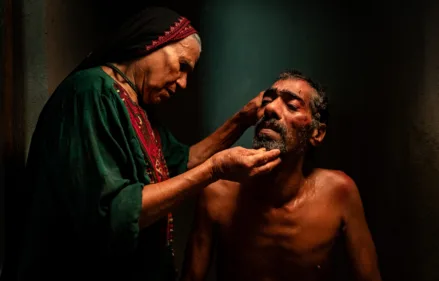

In “The Last Days of Pompeii” (1913), a silent film directed by Eleuterio Rodolfi, the complicated love story of a couple in Pompeii unfolds in the fateful year 79 A.D. The people go about their daily lives, gossiping, shopping, and falling in love. These scenes of intimate life are haunted by what we know is coming. This love story will be buried in ash before nightfall.
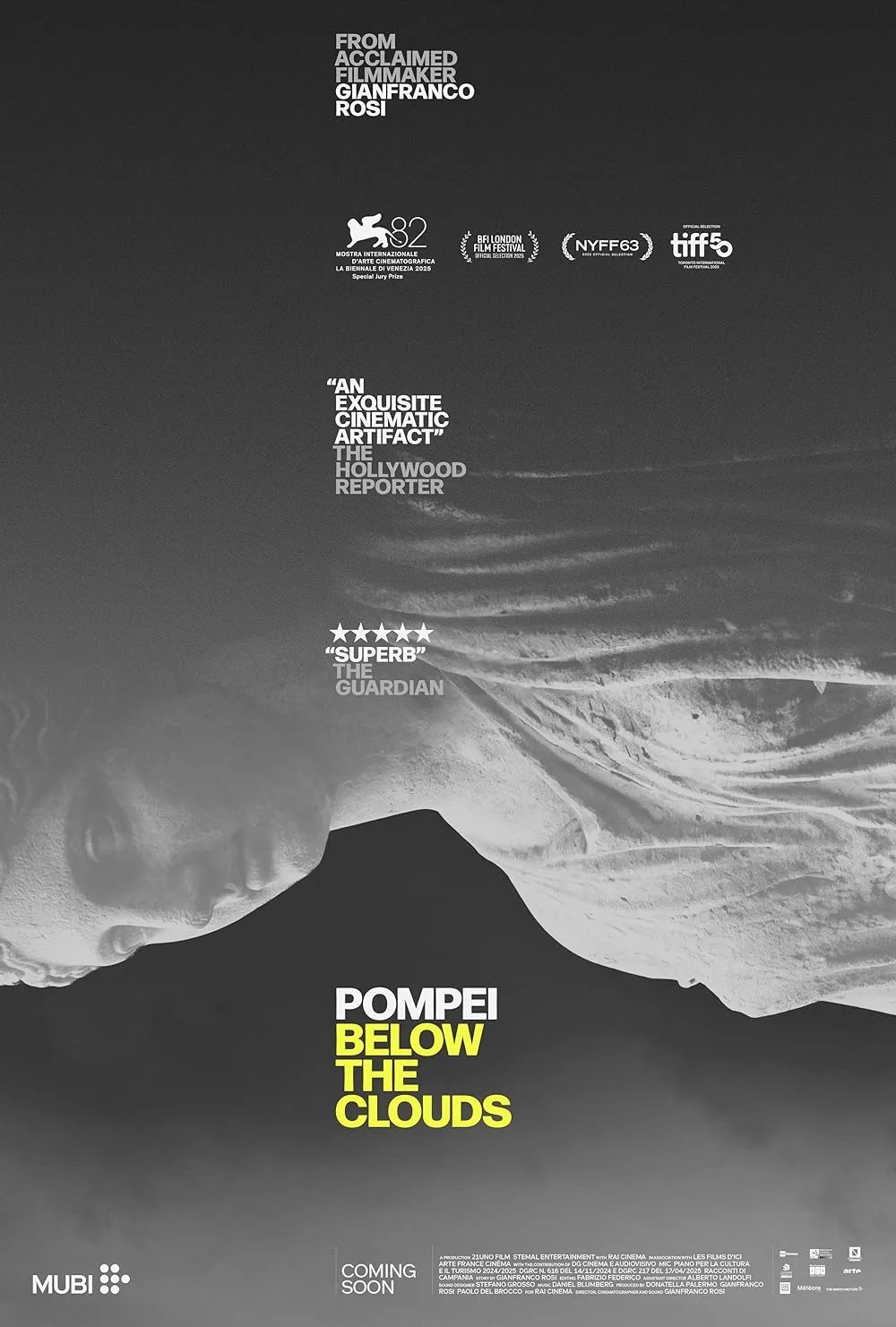
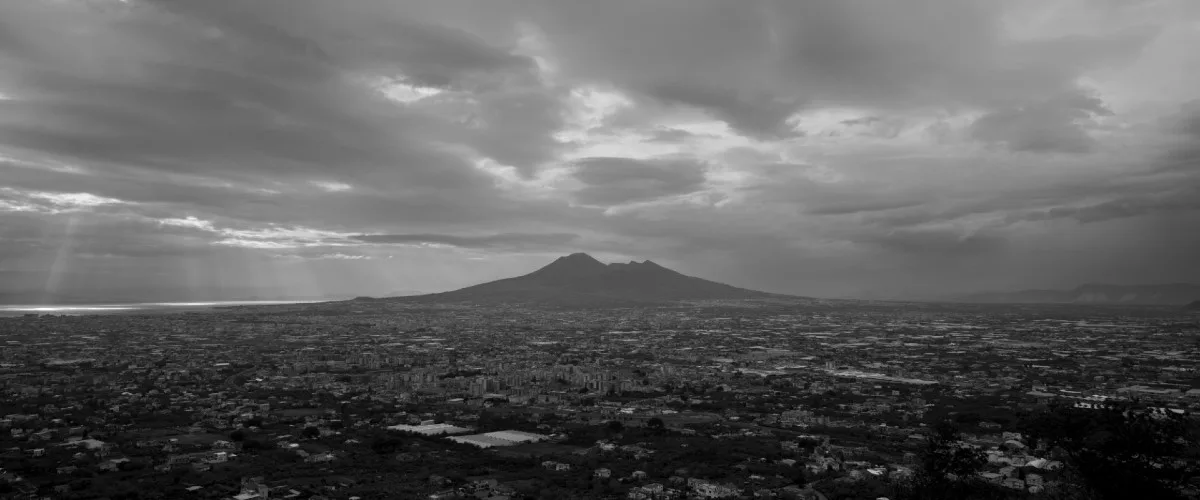
Gianfranco Rosi’s gorgeous black-and-white documentary “Pompei: Below the Clouds,” shot in the shadow of Vesuvius, is an effective companion piece, showing the everyday lives of Neapolitans alongside the ghosts of history still being discovered underground.
“Time destroys everything, preserves everything, and then returns to us in an unexpected way.” So says an archaeologist in “Below the Clouds,” working to dig up the ruins. There isn’t much talking in the film, but what is said—by archaeologists, merchants, sailors, by people calling the emergency dispatch center to report earthquake tremors—resonates, subtextually and otherwise. Time is a continuum, yes, but linearity is too limiting a concept for what time is and does. Living on top of and in the vicinity of a destroyed city, buried for centuries, citizens literally frozen in place while fleeing, can’t help but affect the psyches of regular Neapolitans, even if it’s subconscious. It’s impossible to hear the voices of worried citizens reporting tremors and not think of the unsuspecting people in 79 A.D., as the underground rumbled to life.
Rosi, who also shot the film, creates an ongoing dream-like collage, shown in rich contrast: the volcano a black silhouette, sometimes smudging into the clouds like smoke, the ancient statue fragments underwater in billows of disturbed silt, the waves above on which the Syrian merchants move through the Gulf of Naples … there’s a liquidity to all of it. Each image creates a space for contemplating things we all should probably spend time contemplating: the ravages of history, the lessons people in the past might provide, the beauty of everyday life, the kindness of ordinary people, and the ever-present threat of disaster.
Vesuvius erupted again in 1944, an event captured in horrible detail by Curzio Malaparte in his novel The Skin, about the occupation of Naples by WWII Allied forces. Malaparte is the opposite of a reliable narrator, but the eruption sequence is a vivid nightmare: “Vesuvius was screaming in the night…A gigantic pillar of fire rose sky-high from the mouth of the volcano–a vast, stupendous column of smoke and flames, which penetrated deep into the firmament, so that it touched the pale stars.” The collective memory of the past exists, and to the terrified people in 1944, 79 A.D. felt like it happened yesterday.
Juxtaposing the past with the present calls to mind Stephen’s famous comment in James Joyce’s Ulysses: “History is a nightmare from which I am trying to awake.” Walter Benjamin’s “angel of history,” moving forward while looking back in horror, is also relevant, especially in times of global peril like ours. But “Below the Clouds” encourages an in-between space where history exists alongside the present, where artifacts are preserved but do not anchor us to the past. Another archaeologist in the film observes, “Time is overlapped, mixed, abandoned.” Alice Rohrwacher’s “La Chimera,” a story of contemporary Italian grave-robbers seeking ancient artifacts, ends with an image symbolic of this “overlapped” idea, a slim red thread connecting two disparate timelines.
One of the visual motifs Rosi includes is shots of a Neapolitan movie house, where scenes from Roberto Rossellini’s Naples-based “Journey to Italy” (1954) and the aforementioned “Last Days of Pompeii” flicker through the dark. These films, still vivid and preserved, contrast with the rundown theatre. Since “Below the Clouds” is, after all, a film, thoughts of not just film preservation but the destruction of the movie-going business—particularly the theatrical experience—engineered by tech giants, are unavoidable. These are anxious times, and a lot of things are disappearing from the face of the earth, things we, the people, the regular citizens, did not agree to abandon.
Vesuvius might erupt again. The angel of history keeps moving forward. Time destroys, preserves, and then returns (one hopes, at least). Rosi’s film is a meditative and moving document showing that process and possibility.