Anyone who found themselves at a checkout counter in May of 2003 might have had occasion to flip through Entertainment Weekly, having spied the tantalizing cover story: The 50 Greatest Cult Movies of All Time. Smack in the middle was a picture of a Black man in striped bellbottoms, a white hat, an open leopard-print shirt, a vest, snakeskin boots, and two guns, his posture suggesting something between a soul singer’s body drop and a rehearsal for a bank robbery.
If, like me, you were 14 when you opened that edition and saw Jimmy Cliff’s photo above the words “Don’t. Fuck. Wit. Me.” it was as if you were seeing the Matrix. This was the coolest, most immediate, most touched image of a person I’d ever seen. Who was he? What was “The Harder They Come”? From what cultural galaxy did this meteor emerge? The name was dimly familiar to me, but I’d never considered that there was more to him than the music I knew so little about. Forty years into his career, The Right Honorable Jimmy Cliff, Order of Merit, activist, actor, pioneer, producer, Grammy award-winning singer and writer, was about to change my life.
James Chambers was born in the eye of a hurricane one Jamaican summer, in St. James parish, to a family with seven siblings, with another on the way. The Chambers were dirt poor. Jimmy spent some of his childhood with his aunt when his parents couldn’t afford to feed him. His angelic voice lit up the church every Sunday. A fortuitous move to Kingston set him on a course for fame. He went from basking in the soundtrack of his neighbor’s window radio, his only exposure to new music, to performing his own songs in talent shows with a bamboo guitar he carved himself. After adopting his stage name, his first singles were “Hurricane Hattie” and “Miss Jamaica.” He was 17.
The song that would get him off the streets and into a recording studio, however, was “Dearest Beverly.” He sang it for record producer and Island Records co-founder Leslie Kong in 1961, a song written specifically to catch the Chinese-Jamaican entrepreneur’s ears. He had a shop called Beverly’s, from which he ran his business. Cliff was the first major artist on Beverly Records, Kong’s solo Jamaican label, and he was soon working for the label’s A&R department. Jimmy’s first discovery was a young singer named Bob Marley.
The rest of the world got its first taste of Cliff in 1964. He was sent to represent Jamaica at the World’s Fair in Queens, and a crew was sent to Jamaica to film a program called “This is Ska!” Ska was just one of a dozen Caribbean musical forms that collectively evolved into Reggae. West African folk music was brought to the islands, and its essence has remained consistent for hundreds of years, making it unique among popular genres. What became the Blues in America became Mento, Calypso, Dancehall, Roots, Rocksteady, Dub, and finally Reggae in Jamaica.
Cliff, as he renamed himself, was enticed to London to record with Kong at Island HQ, their resources better suited to handling a star. Cliff was asked to tailor his sound for the audience paying to see Jimi Hendrix (who became a friend), Spencer Davis (for whom he opened), and The Rolling Stones (for whom he sang in the 80s). The result was Hard Road to Travel, in which Cliff did his best impression of a rock singer. You can see Cliff’s rock efforts in clips from TV performances, like his cover of “When a Man Loves a Woman.” You could easily forget that the man howling and shaking like James Brown in 1967 was the same man so coolly feeling his way through “The Harder They Come” in 1972.
If “Time Will Tell,” the song that opens his 1969 self-titled album, isn’t the first pop reggae song ever recorded, it sure sounds like it is. So complete and rich, so clear and joyous; the Jimmy Cliff we all know was standing in the studio with a cigarette waiting for the playback, waiting for his truest self to arrive. The upbeat sounds are a Trojan horse for Cliff’s pained lyrics about poverty, the Vietnam War, and capitalism; heady topics he renders human. Cliff brought this to the top of the charts worldwide. In particular, his song “Wonderful World, Beautiful People,” about a soldier’s death, was so popular that they renamed the album after it in its re-release.
Song two was his monumental hit “Many Rivers to Cross,” his answer to American soul and Motown, and was inspired by Procol Harum’s “Whiter Shade of Pale,” which Cliff covered on his forgotten second album “Jimmy Cliff in Brazil.” It was haunting and melancholy. It transcended genre. Harry Nilsson, Joe Cocker, Linda Ronstadt, The Walker Brothers, and fellow Beverly Records artist Desmond Dekker all covered it.
It was 1972’s “The Harder They Come,” a movie tailored for him by Jamaican director Perry Henzell, that ensconced Cliff in the annals of pop culture. The film starred Cliff as Ivanhoe Martin, a real criminal killed by police in 1948 at age 24. Updating the story for the early 70s, Henzell made the first ever Jamaican movie, the island’s very own “Breathless,” complete with chases, crime sprees, and trips to the cinema.
Cliff’s Ivanhoe arrives in Kingston looking for work but quickly finds the streets an inhospitable place. After a screening of Sergio Corbucci’s “Django” (“The hero can’t die until the last reel!” the crowd screams) and taking in the local sounds, Ivanhoe decides he’s going to be a rock star. When that doesn’t pan out, he starts stealing, dealing, and shooting his way out with a gun in each hand. The movie ends with a beachfront shootout, as in the real Ivan’s life, cut with footage from “Django,” turning real violence into an essay on the representation of violence.
Cliff’s title song, which grows more popular with every crime he commits, plays next to needle drops from other luminaries like Dekker and The Maytals. The soundtrack was added to the National Recording Registry in 2021, having been praised by Robert Christgau, Time, Rolling Stone, and Pitchfork. The movie was a rare grindhouse film with a coherent political perspective and cultural sympathy, and the soundtrack was a rare album as rich as its inspiration. Michael Dare: “The Beatles had already done “Ob-La-Di, Ob-La-Da,” Paul Simon had already sung “Mother and Child Reunion,” The Rolling Stones and Jefferson Airplane had both recorded in Kingston, but it was “The Harder They Come” that really put reggae on the map.” Roger Corman bought it and sold it, The Clash wrote a song about it, and Spike Lee called it one of the best musicals of all time.
When I first saw the image of Cliff in EW, I tracked down the film immediately, on a now long-out-of-print Criterion disc. I’d never seen a hero who draws up his violent self-actualization from the earth. Having only seen the Caribbean in tourist cinema (including, ironically, the Steven Seagal movie “Marked for Death,” which features an extended Cliff cameo), seeing the poverty on screen, reflective of Cliff’s own experience, was a revelation. This was his Jamaica. This gorgeous outlaw, with the sweet upper register (he sounds at times like Michael Jackson), who could write perfect pop songs, showed me (and millions more) a world I’d never seen. The idea of shooting a film on the streets you knew, the bands you knew, the people you knew; “The Harder They Come” went from stylish post-pop war cry to one of the most important films I’d ever see. It could be done. Jimmy Cliff did it.
Having grown up with so little, Cliff left none of his life out of his music. In his downtime, he sired 19 children. He became involved in the fight to end apartheid, playing benefits, organizing festivals (chronicled in the documentary “Bongo Man”), taking part in Little Steven’s Sun City fundraiser, incorporating Afrobeat into his reggae music in the late ’70s until the ’90s, and writing lyrics about the reality of living in violent, segregated societies. Even when he became a cultural legacy and a staple of late-night television, working with famous artists like Joe Strummer, Tim Armstrong, Wyclef Jean, and Bruce Springsteen inspired him; he never lost his empathy for the oppressed.
A string of bad reviews in the ’80s (not, it’s safe to say, unrelated to his holding the West’s feet to the fire regarding South Africa) pulled Cliff from the spotlight he’d worn since he was a teenager. A lead part in the disastrous, embarrassing “Club Paradise” changed little about his perceived slide into irrelevance. Cliff wore it all humbly, going with the flow and staying true to himself.
Years after giving up religion (“…now I believe in science.”), Cliff spoke out on behalf of the gay community, condemned the violence in “The Harder They Come” after it had been cited as a model of black-on-black violence, and released his final album in collaboration with the UN Refugee Fund. When Jamaica named a street after him in Montego Bay, it was as much for his early triumphs as his enduring commitment to his homeland, and to people everywhere in need of a powerful voice. He loved his life and changed the world with it.
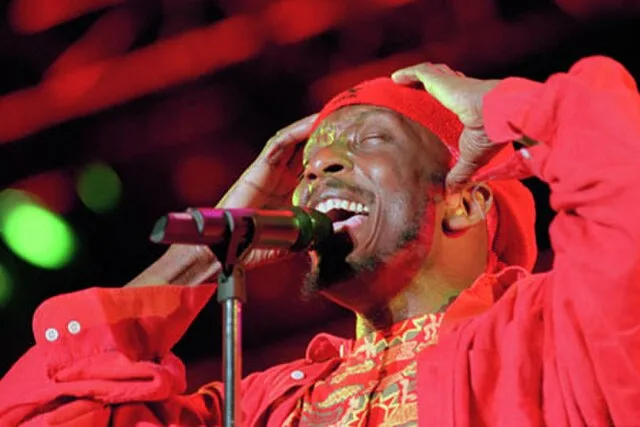
To me, the gentleness of the real man, the care and love and empathy he brought to the world, will always compete with the bolt of lightning that struck me when I saw him for the first time in that photograph: a real man and an immortal idea. In a 2006 documentary, he thoughtfully muses, “What I’ve learned to do…is turn that bitterness into sweetness. Maybe I could have been a better person in this life…but what I know is what I am.”