Unbroken: Path to Redemption
It is good to see Pureflix attempt a more ambitious mainstream story, and, in a few scenes like Zamperini’s first nightmare at home, a more…
A heartfelt but scattershot documentary that tries to get inside the mind of Donald Trump's America, but mainly succeeds as a snapshot of the 2016…
Roger Ebert on James Ivory's "Howards End".
"The Ballad of Narayama" is a Japanese film of great beauty and elegant artifice, telling a story of startling cruelty. What a space it opens…
A look back at my Telluride Film Festival Journal from August 28th to September 1st, 2008
An article about Project Involve's 25th anniversary fundraiser on Saturday, September 22nd, honoring "Crazy Rich Asians" director Jon M. Chu and others from the entertainment…
A thriller that feels new, in many different ways.
Jason Statham versus a very big fish.
A look back at one of the best films of all time.
Far Flung Correspondent Omer Mozaffar talks about his experience as a consultant on the new Amazon series, Tom Clancy's Jack Ryan.
On how the Oscar race gained focus after Venice, Telluride, and TIFF.
An interview with the writers behind "The Front Runner," a new film about Senator Gary Hart's scandal in 1988.
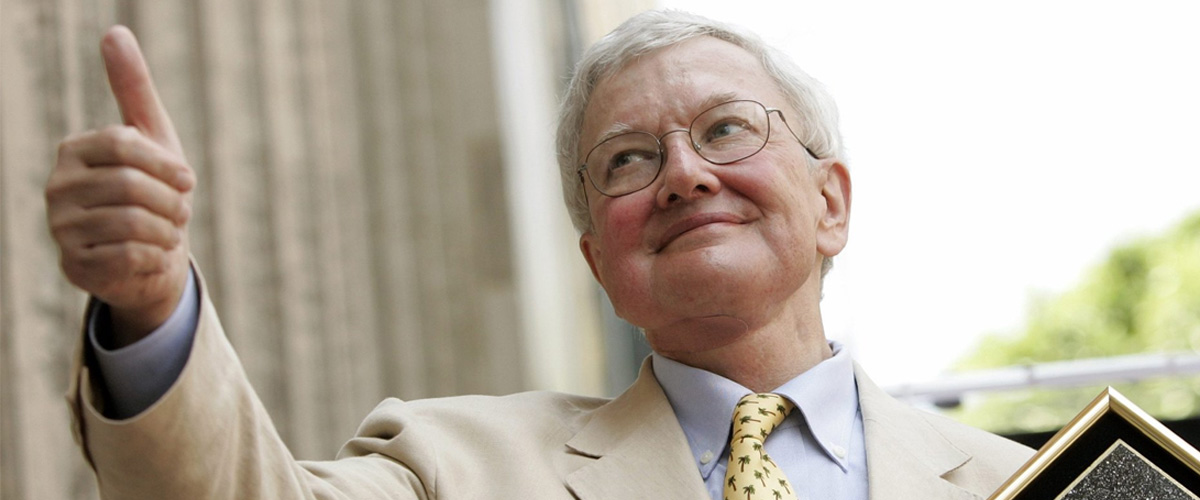
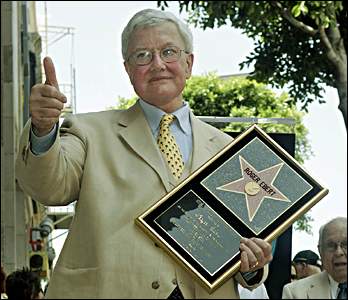
Roger Ebert became film critic of the Chicago Sun-Times in 1967. He is the only film critic with a star on Hollywood Walk of Fame and was named honorary life member of the Directors' Guild of America. He won the Lifetime Achievement Award of the Screenwriters' Guild, and honorary degrees from the American Film Institute and the University of Colorado at Boulder.

Sun-Times columnist Bill Zweker on Roger Ebert's Hollywood star status
A poem for Roger by Richard and Mary Corliss
When I started, I was asked, how long do you think you can remain a film critic? I said I should be able to hold out about five years. Now I’ve been film critic for 38 years and I think it's a worthy way to spend a lifetime, writing about films. They're not only entertainment. When they are entertainment that's not a bad thing, but sometimes they're more than entertainment.
We are born into a box of space and time. We are who and when and what we are and we're going to be that person until we die. But if we remain only that person, we will never grow and we will never change and things will never get better.
Advertisement
Movies are the most powerful empathy machine in all the arts. When I go to a great movie I can live somebody else's life for a while. I can walk in somebody else's shoes. I can see what it feels like to be a member of a different gender, a different race, a different economic class, to live in a different time, to have a different belief.
This is a liberalizing influence on me. It gives me a broader mind. It helps me to join my family of men and women on this planet. It helps me to identify with them, so I'm not just stuck being myself, day after day.
The great movies enlarge us, they civilize us, they make us more decent people.
That's what I've tried to support and that's what a great many of the people in this audiences have tried to support especially the many filmmakers who are here, the film artists who are here, the filmgoers who are here. It makes a difference, and what's why we do it and that's why this is wonderful day for me.
The above is a transcript of Roger Ebert's remarks as he was awarded a star on the Hollywood Walk of Fame, Thursday, June 23, 2005.
Next Article: Scanners Previous Article: Ebert rates Spielberg's movies
Not only would Idris Elba make a great James Bond, the franchise has been building towards casting an actor of color ...
Having once made the statement above, I have declined all opportunities to ...
A review of Amazon's new series, "Forever."