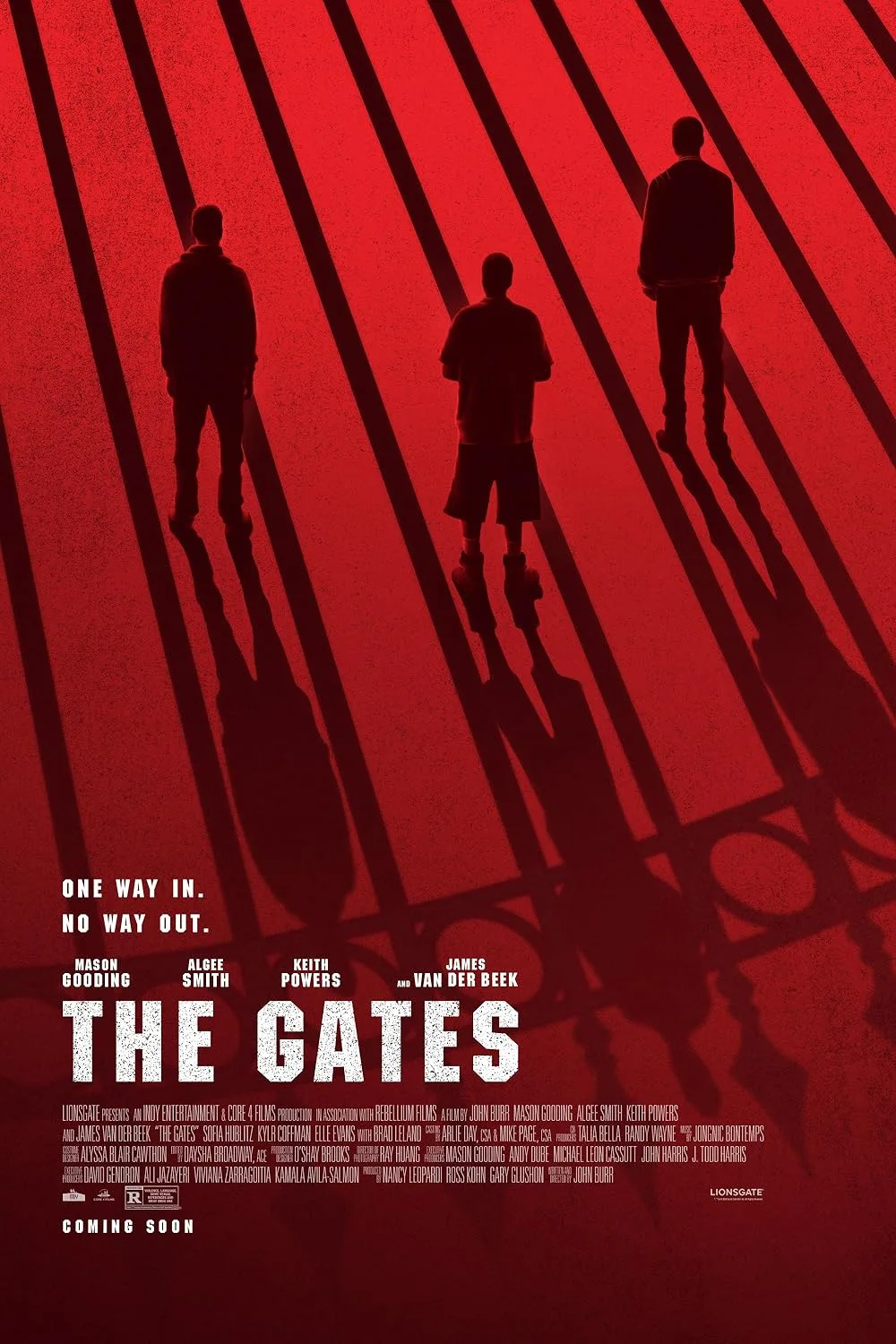
In writer/director John Burr’s socially conscious thriller “The Gates,” three friends go out for a night of reverie, only to find themselves trapped in a gated community where a local pastor, Jacob (James Van Der Beek), has made it his mission to hunt them down.
The broad set-up is fairly common; teenagers in movies are always poking their noses into grim but avoidable situations. The wrinkle in “The Gates” is that the trio of young men—Derek (Mason Gooding), Kevin (Algee Smith), and Tyon (Keith Powers)—are Black men in Texas. The neighborhood they’re in is almost entirely white. You get the picture.
Nevertheless, the problem with “The Gates” is that the picture is all too readily clear. We know every twist in this dirt road of a movie before it plays out: the motivations are obvious; the talking points arrive with haste. That doesn’t mean the film’s journey is unnecessarily laborious or overworked, more that it doesn’t require much effort on the part of the viewer to sit with the complex themes this film’s attempting to wrestle with.
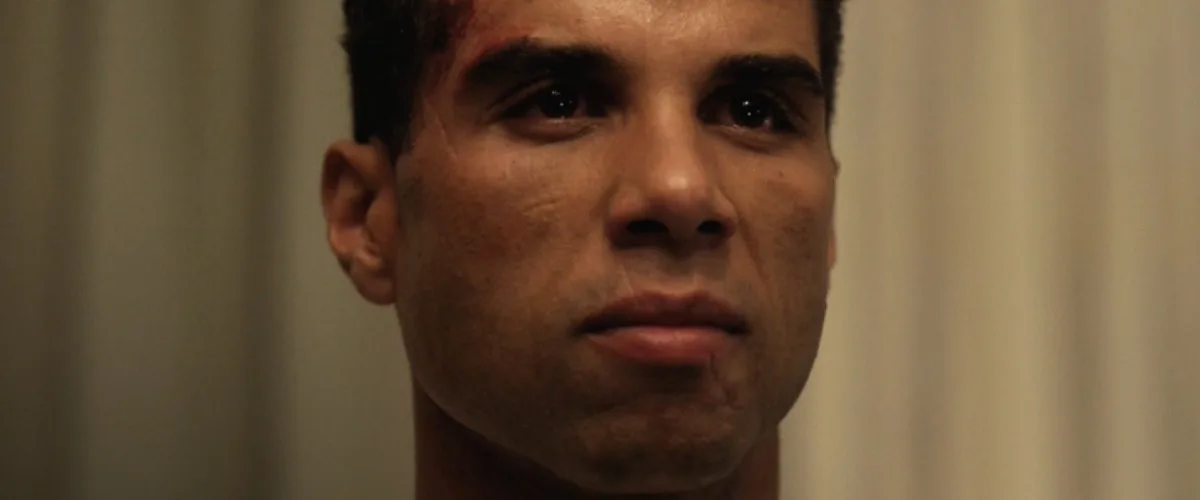
It opens with some menace: A blood-stained Derek intensely looks into the camera, then we’re pushed back to eight hours earlier. Derek is at home, studying for the LSAT, when Tyon, his friend since childhood, arrives. A football player whose scholarship is under threat due to some dalliances with a stripper, Tyon promises Derek the night of his life. There’s a party going on, and it’s begging for them to roll through. Awaiting the pair outside is Kevin, a car salesman, who’s driving a vehicle earmarked for a buyer the next morning. Now, it must be said that these aren’t financially disadvantaged Black men. Derek lives in an affluent neighborhood. In fact, when a local cop stops them, an oblivious Derek sweet-talks the trio out of a warning. Derek believes that if you just follow the rules, everything will be fine. As you can guess, pretty soon nothing will be fine, and Derek will learn a valuable lesson, which apparently he didn’t already know, about being Black in America (especially in Texas).
Their night begins to fall apart when, on their way to the party, the trio hits heavy traffic. Rather than wait, they take a random country road where they come across tall, ornate gates blocking their path. A drunk blonde woman in a red car clicks them in—they find nothing suspicious about her—but upon entering this uber-rich community, they find out they need a resident to let them out as well. Amid the spread of mansions, they search for help, when they come across the biggest home. In there is that same blonde woman and Pastor Jacob. They’re fighting. Violence between the two ensues, leading Jacob to throw her to the floor. The trio not only witnesses the assault, but Jacob sees them too.
From that point on, “The Gates” becomes a filmic opportunity to consider the many ways young Black men are hunted and disbelieved. Along the way, the trio comes into contact with a frank football coach (Brad Leland), a teenage partier (Sofia Hublitz), and a Black woman (Natacha Ellie), who all serve as opportunities for character growth while also exploring each young man’s insecurities. As Derek, Kevin, and Tyon careen across the neighborhood, the cracks between them also grow as each one of them comes under threat for a specific reason: Derek is a privileged kid afraid of losing his future in law; Kevin comes from less money and is afraid of plain in fact losing his life; Tyon considers the prospects of losing his football career. One wishes the film had explored these fears more eloquently, especially since it so often feels as though Kevin is unfairly portrayed as selfish. Derek isn’t all pulled together either. By the end, it’s not that Derek is now fearful of a racist system; it just feels like he thinks he chose the wrong tools to combat it.
Of the many moving parts here, the highlight is Van Der Beek in his final film role. Though he’s playing with a broad character—a white man who believes himself to be a kind of messiah—he does so with an edge. He effortlessly translates the internal calculations, moral tiptoeing, and vicious aims of Jacob onto his face and into his frame (in many ways, it’s a performance that’s reminiscent of Josh Hartnett in “Trap”). Van Der Beek keeps the film interesting and guarded, even when it tries so hard to blurt out its every theme and lesson. So while “The Gates” itself isn’t a total smash, it’s a more than sturdy final effort from a beloved actor.