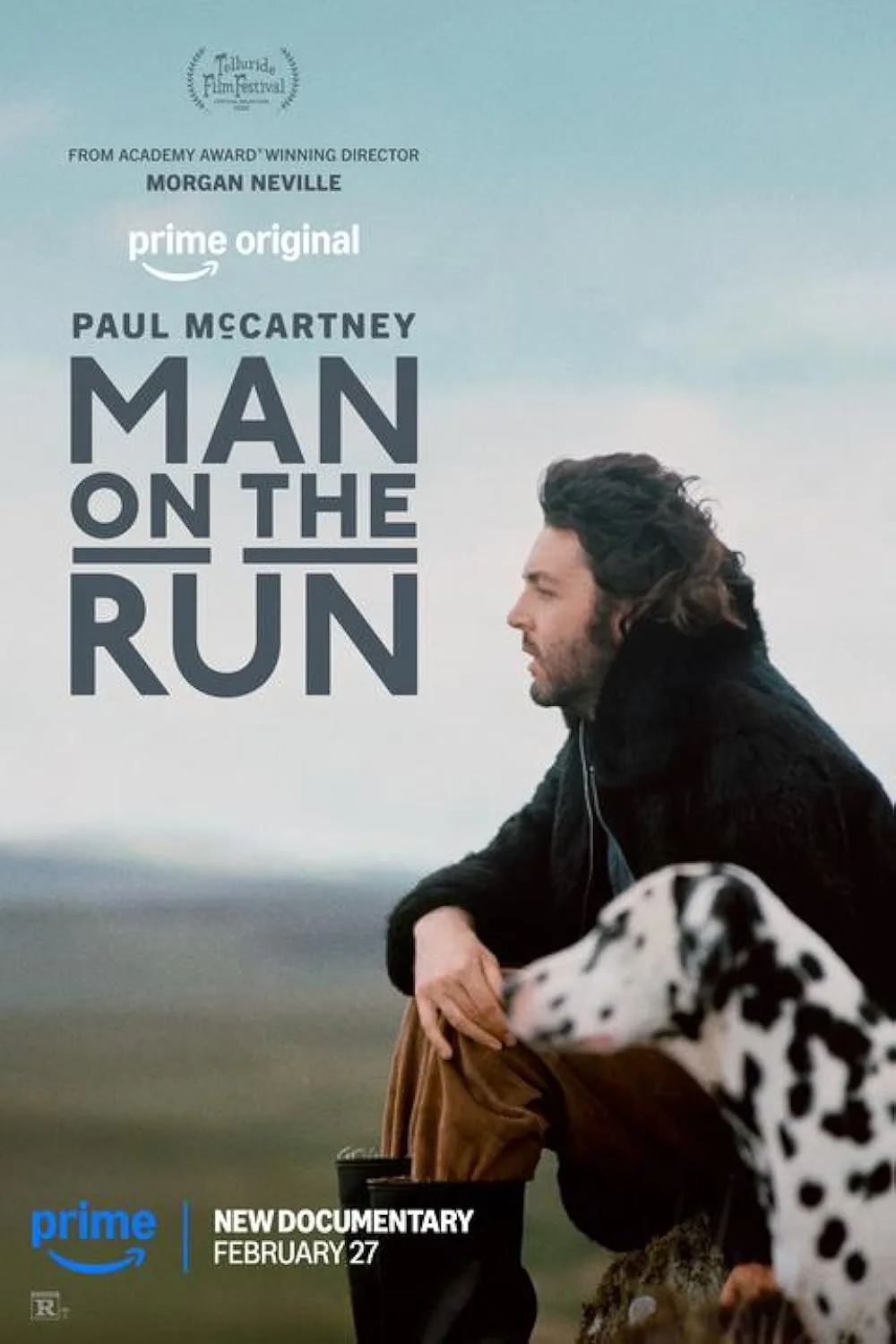

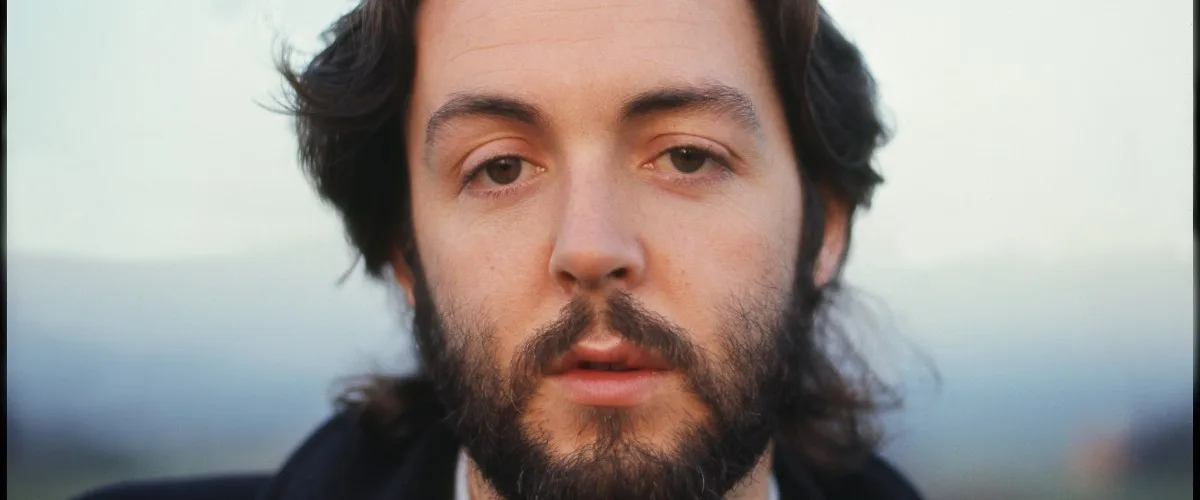
High Park Farm was unremarkable—just another piece of Scottish farmland. Beatle Paul McCartney and his wife Linda didn’t change it much after moving in, save for turning the barn’s interior into a recording studio. But as the film’s director, Morgan Neville, tells it, to Paul, the farm house is not just a home, but a physical manifestation of the fondest ideals of home, and its relationship to family. The property’s symbolic power grows throughout the running time of “Paul McCartney: Man on the Run,” until it stands for those moments in life that we think of as ordinary but deepen in the memory as we age, until we realize we were happy then, and should have appreciated it more at the time.
Throughout, Neville and his editor Alan Lowe juxtapose home movies and photos of the McCartney family in locations all over the world against footage of the McCartneys on the farm, singing, taking pictures, and goofing around. The editing is fast and imaginative. Some sections are nearly idyllic, but in others, the McCartney’s home lives and professional lives seem to be battling it out in the cuts to see which one will survive till the end of the film. There are no on-camera interviews with anyone of note, except the ones in pre-existing TV and newsreel footage. But there are audio-only interviews with witnesses to that time: Paul, Linda (archival, of course; she died of metastatic breast cancer in 1998); daughters Stella and Mary; Paul’s brother Michael; Paul’s fellow Beatle John Lennon (also archival; he was assassinated in 1980) and members of McCartney’s post-Beatles band Wings, including drummer Denny Seiwell and cofounder Denny Laine (formerly of The Moody Blues). As in other recent docs with no on-camera interviews, the audio becomes a commentary track on everyone’s lives.
Before going any further, we need to establish that, like seemingly every feature-length portrait of a famous musician being made these days, this one tells an involving story (for fans, anyway) but serves mainly as advertising and image maintenance for its star, and an investment for parties that represent the star’s music, past and future.
Paul McCartney is the executive producer. Pre-credits title cards say the film is a joint effort by companies that have financial stakes in making Paul’s solo music more valuable. One is Neville’s Tremolo Entertainment, which specializes in documentary-advertorials that, whatever their artistic merits, exist mainly to add value to existing intellectual properties. He also made “Roadrunner: A Film About Anthony Bourdain,” “20 Feet from Stardom,” the Disney+ special “Mickey: The Story of a Mouse” and last year’s “Piece by Piece,” a Lego animated memoir celebrating Pharrell Williams.
The other key players are MPL, a music licensing company that places Paul’s music in films, TV shows, commercials, and the like; and Polygram Entertainment, a division of Universal whose holdings include Capitol Records, where McCartney has had a worldwide deal since 2016. (This movie also has an official companion bo ok, Paul McCartney and Wings, drawn from interviews conducted for this project; refreshingly, however, it was produced not by another division of Universal but an independent company, W.W. Norton.)All told, “Man on the Run” feels like an extra-long podcast episode featuring a celebrity promoting the latest project, coupled with a 90+ minute montage cut together so there’s something to look at on YouTube.
It’s sort of frank, as artist-controlled portraits go. McCartney briefly comes off as a control freak who stumbled around without a plan or vision after the Beatles broke up, and underpaid and underappreciated his band. An effort has been made to set it apart from more overtly self-flattering documentaries in this genre by virtue of Paul’s honesty. But it’s not convincing. A promotional interview at PaulMcCartney.com has Paul saying he asked Neville to delete some “embarrassing” bits, but his only examples are “me doing ‘Mary Had a Little Lamb’ with a red nose on, and the band in silly outfits.” That’s like when someone asks you to name your biggest flaw and you reply, “I’m a little cranky before I have my coffee.” In fact, a fair portion of the movie’s running time finds Paul setting the record straight, from his viewpoint, on matters that have nagged at him for decades. He’s generally polite as he goes about this, but sometimes there’s an edge in his voice, and you get a glimpse of the man behind the smiling, bouncing Beatle, the Paul McCartney who the first British musician with a net worth over over a billion dollars.
Paul denies he drove the Beatles breakup, insisting it was John. Complaints that his early post-Beatles albums “McCartney” and “Ram” were saccharine, inconsequential, and poorly recorded get rebutted as well; journalist Peter Doggett even calls him the father of alternative rock and credits him with “more or less inventing lo-fi recording.” The most painful subject is Beatles’ fans dislike of Linda. They said Paul never have let his wife participate in his music projects because she was a total amateur, barely a musician (Paul’s defense is that he loved Linda’s flat, quavery singing because it gave the songs “a special sound”). This type of stuff makes portions of “Man on the Run” feel like score-settling by a legend whose accomplishments and virtues aren’t up for debate, except in the most contrarian circles.
None of the above will likely matter to viewers who just want to marinate in what could be called the Beatles’ Expanded Universe, even though they’ve heard most of the stories and all of the songs before. The main draws are the impressively diverse archival materials from Paul’s own possessions (including handwritten lyric sheets, doodles, and a profane letter to onetime Beatles manager Allan Klein) and the home movies and personal photos chronicling life at High Park Farm.
The latter is edited as an ongoing reverie, a mental sanctuary to which Paul regularly escapes because he now recognizes it as the site of the happiest period in his life. His love for Linda and Linda’s love for Paul are certified over and over, in words and images. So is John and Paul’s brotherly bond, which transcended their disputes and became warmer and more appreciative once they no longer had to compete for control of the Beatles. It’s moving to hear an 83-year old still grieving the loss of his most important life partners, John and Linda, neither of whom he expected to die so young.