In its 51st edition, the Toronto International Film Festival’s Special Presentation category comprises stories of complex parents, recentering their identity as individuals. Interestingly, the focus on selfhood is overshadowed by a much broader conflict. Of these movies, it’s most peculiar how it explores motherhood versus fatherhood, emotionally and morally.
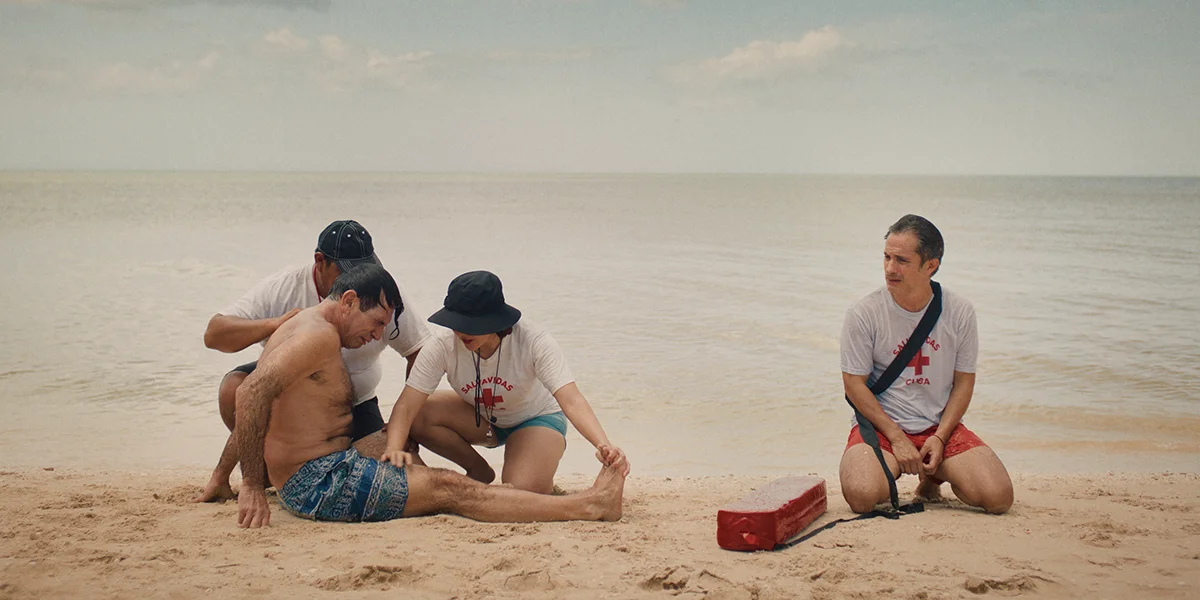
Set in rural, suspiciously tranquil Mexico, “Hombre Al Agua” gets gritty with its characters and their relationships. Parents and lovers, Juana (Esmeralda Pimentel) and Camilo (Gael García Bernal), don’t make much sense together, which becomes increasingly obvious as their paths of personal growth diverge throughout the film. As Camilo integrates into Juana’s family, working for her power-hungry father (Jorge Salinas), the more he loses his grasp on what’s right and what he should be true to.
To help the audience better understand this surrealist story, Bernal, who also wrote and directed the film, weaves in voiceover narration. Peppered with a nature-forward sound design, with the breeze blowing and birds chirping, we, too, are immersed in the countryside silence that Camilo and guests are acclimating to. The backdrop of their estate is beautiful but intentionally lacks that lived-in feeling. Everyone who stays there is untethered from their surroundings, blowing with the wind, leaving loose ends that are written off as fever dreams. “This is a thriller, not a melodrama,” a man utters to Camilo after he’s caught sneaking around their property, a meta proclamation of Bernal’s vision for his story.
Albeit scattered, “Hombre Al Agua” is weirdly entertaining. Each new idea is presented clearly, and most interestingly, the cultural and class themes give the movie more body than the simple character arcs at its center. Camilo’s Cuban heritage poses some political assumptions; the running joke about his radicalism due to his ethnicity highlights certain microaggressions with nuance. His career at his father-in-law’s factory is also compromised by his true beliefs, but he does his best to tread lightly as the tides shift. Bernal’s development of Camilo, behind and in front of the camera, is strongest, making the supporting characters feel like figments in the reality he’s trying to build.
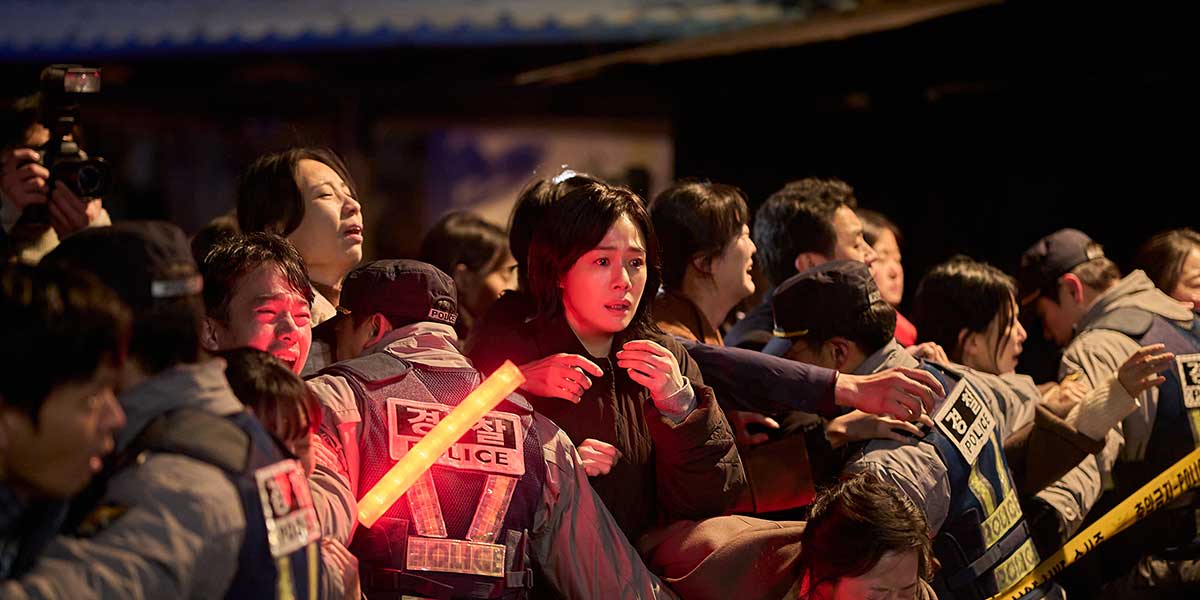
Dissecting and dissolving grief is an endless experiment, certainly one of the most difficult matters for humans to digest. Yeon Sang-ho’s newest film, “Paradise Lost,” moves through multiple realities where a single mother navigates loss. Quaking with nuance that feels drawn from some variation of firsthand experience, “Paradise Lost” achieves a striking, gutting feeling because Yeon’s mother wrote it.
A lack often forces reflection or regret; what could have been done differently? What would one give to get their heart’s desires? These questions swirl at the film’s center. After So-young (Kim Hyun-joo) loses her son, Seon-wu (Bae Hyeon-seong), in a camping trip kidnapping along with 12 other kids, grief consumes her. After several years, an AI company, TransHuman, invents a virtual reality that recreates the lost children. This concept isn’t exactly original, but it’s eerily close to our current technological state. Shockingly, this anecdote is only a stepping stone to the film’s true conflict: Seon-wu resurfaces almost 10 years later.
Bae’s sinister performance chills every scene. At no point do we trust this older version of Seon-wu, but our faith in So-young’s morality deteriorates most after her son returns. Her inability to connect with her virtual or real son proves that these two beings (or entities) spiral into putting others in danger. Knowing the story is written by a mother-son duo provides some reasoning for the way the story unfolds and resolves, but there is a looming carelessness, an absence of logic.
However, the story’s subtlety and significance lie in how it positions single mothers as the most vulnerable. Other parents who lost their children began to move on from their virtually recreated children, relying on their partners and other children. For So-young, this was never an option, therefore catalyzing the audience’s (eventually limited) empathy for her.
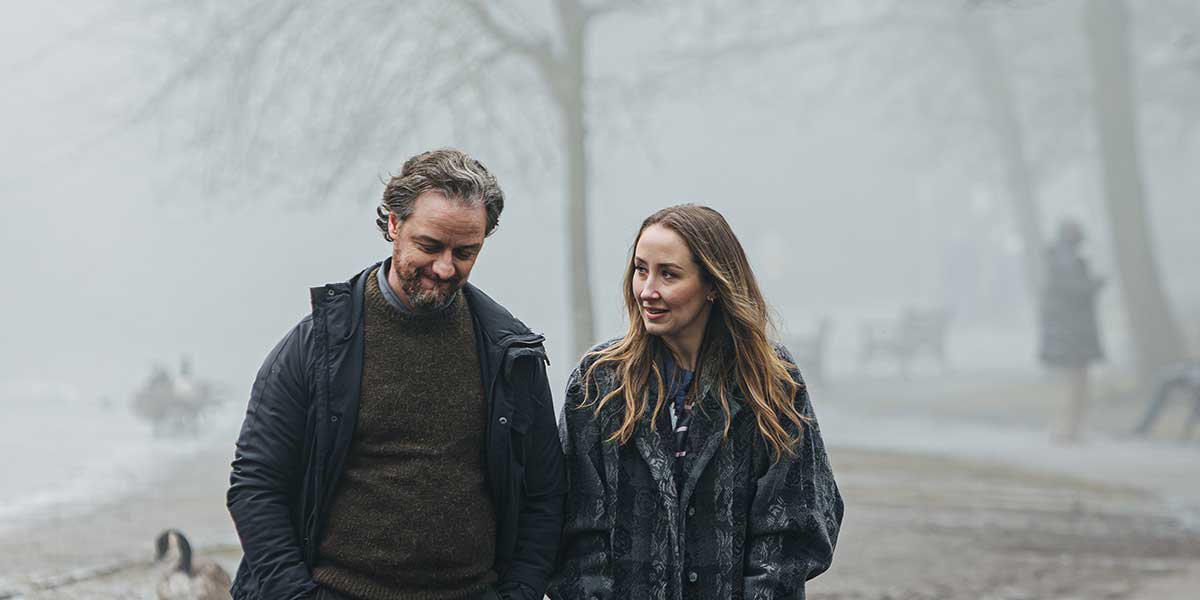
Faith is more often than not associated with some form of religion; regardless, faith is rooted in a foundation at the intersection of trust and belief. Director Paul Andrew Williams titles his new film, “Faith,” after the concept, and puts his audience to the test till the very end.
Gina (Erin Doherty) is a single, spunky mum of an almost 10-year-old boy. She cares about him fearlessly, but that doesn’t dull her youthful nature; she plays trivia at the pub and craves a good hook-up every now and then. Enter Michael (James McAvoy), a mysterious new man at the bar, whose gentlemanly politeness squashes Gina’s hopes of a one-night stand. The two of them only ever simmer, keeping their distance until tragedy strikes.
Like the mother of “Paradise Lost,” Gina loses her only son, leaving her devastated and unable to function. In this state of grief, Doherty’s raw and unwavering performance creates unpolished conditions for how a grieving person treats those around them; misguided cruelty to those closest to you is easy to throw around in the wake of such pain. Michael remains patient with Gina, and McAvoy embodies this creepily kind demeanor with ease, a role he has often been cast in lately.
A memento of a bejeweled bird that Michael carries constantly in his pocket is the first symbol that spirituality is at play. In the most ghostly moments, the score haunts with humming vocals of a Sunday service. Every day is overcast in Gina’s small town, and this gloom, underscored by tolling bells, suggests that something unseen lurks and pulls secret strings. Williams lets Doherty carry the film’s deeper meaning by having her lean into cult-like behavior without question, but “Faith” ultimately misfires in its attempt to fictionalize religion’s real-world capacity to help people heal.