The Battle Hymn of the Tea Party

var a2a_config = a2a_config || {};
a2a_config.linkname = “Roger Ebert’s Journal”;
a2a_config.linkurl = “http://blogs.suntimes.com/ebert/”;
a2a_config.num_services = 8;


var a2a_config = a2a_config || {};
a2a_config.linkname = “Roger Ebert’s Journal”;
a2a_config.linkurl = “http://blogs.suntimes.com/ebert/”;
a2a_config.num_services = 8;
This is a short film by Krishna Shenoi, one of my Far-Flung Corespondents, who is a first year student in a design school in India. He was a guest at Ebertfest 2010.
The eve of the birth of the great horse Secretariat, as recounted by William Nack, his bigrapher:
The story of Grandpa Joe and
Secretariat.
I was never, however, as sentimental about Yo-Yos as I later became about movies and Yo-Yos –as this earlier blog entry makes clear
var a2a_config = a2a_config || {};
a2a_config.linkname = “Roger Ebert’s Journal”;
a2a_config.linkurl = “http://blogs.suntimes.com/ebert/”;
a2a_config.num_services = 8;

Portrait of a projectionist from Philip Bloom on Vimeo.
A film by Philip Bloom. A story being mirrored all over the world.
Thanks for the suggestion to Bill Stamets.
var a2a_config = a2a_config || {};
a2a_config.linkname = “Roger Ebert’s Journal”;
a2a_config.linkurl = “http://blogs.suntimes.com/ebert/”;
a2a_config.num_services = 8;
Amazon.com Widgets
var a2a_config = a2a_config || {};
a2a_config.linkname = “Roger Ebert’s Journal”;
a2a_config.linkurl = “http://blogs.suntimes.com/ebert/”;
a2a_config.num_services = 8;
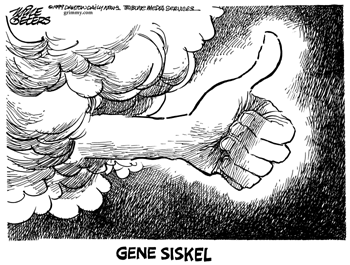
January 26, 1946 – February 20, 1999
var a2a_config = a2a_config || {};
a2a_config.linkname = “Roger Ebert’s Journal”;
a2a_config.linkurl = “http://blogs.suntimes.com/ebert/”;
a2a_config.num_services = 8;
Amazon.com Widgets
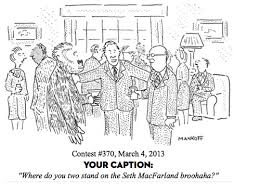
Enter this week’s contest.
A group of my losing entries, plus my one Winner, and the entry the cartoon editor said online that he liked but it didn’t quite clear the bar on New Yorker’s taste standards.
Our house in Michigan is close to one Carl Sandburg lived in for 20 years on the shore of Lake Michigan. On his birthday, I went searching on the web for footage of him reading his poetry, and to my surprise found none. I know he appeared often on television. Something will probably turn up. I did however find this video, put together from photographs of a meeting between Sandburg and Marilyn Monroe. Photo montages don’t often do much for me, but this one had something. A sweetness. Two lovely people.
My introduction to the film criticism of Carl Sandburg.
Carl Sandburg: The Harbert Years .
Then I found this. The voice is Sandburg’s.
More than 150 of my TwitterPages are linked in the right column.
var a2a_config = a2a_config || {};
a2a_config.linkname = “Roger Ebert’s Journal”;
a2a_config.linkurl = “http://blogs.suntimes.com/ebert/”;
a2a_config.num_services = 8;
var a2a_config = a2a_config || {};
a2a_config.linkname = “Roger Ebert’s Journal”;
a2a_config.linkurl = “http://blogs.suntimes.com/ebert/”;
a2a_config.num_services = 8;
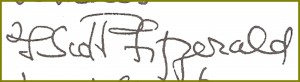
The last page of The Great Gatsby contains some of the best writing in American literature. Here it is in Scott Fitzgerald’s handwriting
I first heard Bill Nack recite these words 40 years ago, over our coffee one morning at the University of Illinois. Sooner or later I knew I had to make this video.
This is too neat not to share wit.you
First, the respected team of David Bordwell and Kristin Thompson of Madison, Wis., weary of best ten lists, decided to issue something different: The Top Ten of 1922.
Now, the famous critic and video essayist Kevin B. Lee of Chicago has awarded the Oscars for 1922, based on their “nominees.”
Now, Kevin Lee has posted this priceless video featuring the ten films, on Fandor.com.
And online at Fandor, if you follow this link, you will find links to five of the nominees, in full length. Fandor offers a free trial. I think of it as a Netflix for those whose quests for films range more widely than most.
Kevin’s video:
Not only is he terrific in “Young Adult,” but…
I did a review for our TV show this week of a new film named “I Will Follow,” written and directed by Ava DuVernay. I admired it very much. It told the story of a woman who spends a day packing up the house where her beloved aunt has recently died. It was inspired by the director’s Aunt Denise, who the film is dedicated to, and stars Salli Richardson-Whitfield as the “favorite niece” who must therefore be inspired to some degree by DuVernay.
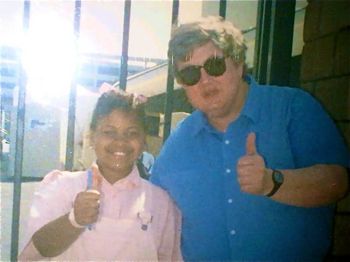
Writing the review, I assumed I had never met Ava DuVernay. It turns out I had, back in the 1980s. Today she sent me an e-mail with this photo:
She explained: “When I saw you look into the camera with a smile and give your ‘thumbs up,’ I felt a joy and a pain, desperately missing my aunt, my love Denise, on whom the film’s central relationship is based…and celebrating the approval that I’ve hoped for. Both emotions at the very same time. I didn’t know that was possible.
“I just wanted to let you know. And to show you the attached picture of us, from many years ago. I was a little girl whose aunt took her to stand outside the Shrine Auditorium to watch the stars go to Oscar rehearsal. It was one of our many silly rituals.”
I wrote her back that the dedication of one of my books reads, “For my Aunt Martha, who took me to the movies.”
Here is my Sun-Times written review for “I Will Follow.” The film opens March 11 in AMC theaters in New York, Los Angeles, Seattle, Atlanta and Philadelphia, and March 18 in Chicago. It will then open wider.
var a2a_config = a2a_config || {};
a2a_config.linkname = “Roger Ebert’s Journal”;
a2a_config.linkurl = “http://blogs.suntimes.com/ebert/”;
a2a_config.num_services = 8;
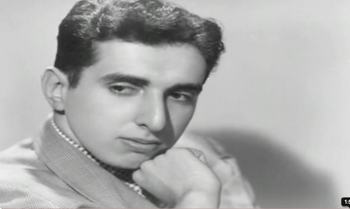
I first saw Tiny Tim very early in his career, in Greenwich Village in the winter of 1962-63. There was a convention of college newspaper editors, and a few of us — I remember Jeff Greenfield coming along — went to the Black Pusssycat and found ourselves being entertained by a man the likes of whom we’d not seen before. He was already locally popular.
In another year, Tiny Tim was famous. I believe no one remembers how famous. The Beatles asked him to sing “Nowhere Man” on a bootleg Christmas recording. He did a night at Royal Albert Hall. He was married to Miss Vicki on the Tonight Show, still one of the top-rated TV shows of all time.
I lived at the Sunset Marquis on Alta Loma, half a block down from Sunset, while I was writing “Beyond the Valley of the Dolls.” Tiny Tim was a fellow resident, along with Van Heflin, Roy Scheider, Elaine May, Jackie Gayle and Harold Ramis. Tiny Tim kept very much to himself. The one or two times I saw him, he was polite and formal. The friendly all-night desk clerk confided, “I don’t think he’s much like you see on TV. He seems more serious.”
He was very famous for a long time, and then faded from view. He continued to perform all the time. Money was not the object. Dare we speculate he simply loved the songs and the singing of them?
After the videos (there are dozens online), I’ve included much of the biographical essay by Wikipedia.
From Wikipedia:
Herbert Khaury (April 12, 1932 November 30, 1996), better known by the stage name Tiny Tim, was an American singer, ukulele player, and musical archivist. He was most famous for his rendition of “Tiptoe Through the Tulips” sung in a distinctive high falsetto/vibrato voice (though his normal singing voice was in a standard male range). He was generally regarded as a novelty act, though his records indicate his wide knowledge of American songs. He had no official middle name, though some web sites report it to be “Butros”, his father’s first name, while during his televised wedding his middle name was given as “Buckingham”. His headstone reads “Khaury/Herbert B/Tiny Tim/1932-1996”.
Throughout the 1950s and early 1960s, Tiny Tim developed something of a cult following. In the 1960s he was seen regularly near the Harvard University campus as a street performer, singing old Tin Pan Alley tunes. His choice of repertoire and his encyclopedic knowledge of vintage popular music impressed many of the spectators. One admirer, Norman Kay, recalled that Tiny Tim’s outrageous public persona was a false front belying a quiet, studious personality: “Herb Khaury was the greatest put-on artist in the world. Here he was with the long hair and the cheap suit and the high voice, but when you spoke to him he talked like a college professor. He knew everything about the old songs.
Between 1962 and 1966 Tiny Tim recorded a number of songs at small (almost microscopic) recording companies, with several of them being made as “acetates” and one actually released as a 45 record. These songs illustrate that even very early on he had a decided drive for success and was getting noticed in a positive way, despite his looks and unusual manner. However he also recorded one entire batch of songs that would come back to disastrously haunt him at the peak of his greatest fame.
Tiny Tim appeared in Jack Smith’s Normal Love, as well as the independent feature film You Are What You Eat (his appearance in this film featured him singing the old Ronettes hit, “Be My Baby” in his falsetto range; also featured was a rendition of Sonny and Cher’s I Got You Babe, with Tim singing the Cher parts in his falsetto voice, along with Eleanor Barooshian reprising Sonny Bono’s baritone part. These tracks were recorded with Robbie Robertson and the other members of what was going to become known as The Band. The latter performance led to a booking on Rowan and Martin’s Laugh-In, an American television comedy-variety show. Dan Rowan announced that Laugh-In believed in showcasing new talent, and introduced Tiny Tim. The singer entered, blowing kisses, and sang “Tiptoe Through the Tulips” to Dick Martin.
This stunt was followed by several more appearances on Laugh-In and a recording contract with Reprise Records. He made a name for himself as a novelty performer, guesting with Johnny Carson, Ed Sullivan, and Jackie Gleason. At the height of his career, he was commanding a weekly salary of $50,000 in Las Vegas, Nevada. “Tiptoe Through the Tulips” became Tiny Tim’s signature song. He sang it in homage to its originator, singer-guitarist Nick Lucas. He invited Lucas to sing at his wedding in 1969.
In 1968, his first album, God Bless Tiny Tim, was released. It contained an orchestrated version of “Tiptoe Through the Tulips”, which became a hit after being released as a single. The other songs displayed his wide-ranging knowledge of the American songbook, and also allowed him to demonstrate his baritone voice, which was less often heard than his falsetto. He did his second recorded version of “I Got You Babe”, this time singing a “duet” with himself, taking Cher’s part in falsetto, and Sonny’s part in the baritone range. “On the Old Front Porch” extends this to a trio, including a boy (Billy Murray), the girl he is courting (Ada Jones), and her father (probably Murray again). Another notable song was a cover of “Stay Down Here Where You Belong”, written by Irving Berlin in 1914 to protest the Great War. It is written from the standpoint of Satan talking to his son, and is a powerful condemnation of those who foment war: “To please their kings, they’ve all gone out to war, and not a one of them knows what they’re fighting for… Kings up there are bigger devils than your dad.” (The comedian Groucho Marx also used this song as part of his own act, at least in part to irk Berlin, who in later years tried in vain to disown the song.
Reprise followed up “Tulips” with another single, “Bring Back Those Rockabye Baby Days”, in which he sang this “mammy song” in baritone in the style of Harry Richman, and lapsed into his higher register only for a few moments near the end of the song. The record did receive some radio exposure in America but was not nearly as successful as the novelty song “Tulips”. “Rockabye Baby Days” fared better in the UK, where music hall songs were still remembered fondly.
Before another legitimate Reprise Tiny Tim album could be released a small record label got hold of some of his very early recordings and overdubbed them with canned applause, creating a fictional “live concert” recording to cash in on Tiny Tim’s popularity with an album, Concert in Fairyland.[citation needed] This release damaged Tiny Tim’s recording career and sales of his next two albums. Regardless, Tiny Tim recorded and released two more albums for Reprise, Tiny Tim’s Second Album 1968, and For All My Little Friends, 1969, a collection of children’s songs. the latter was nominated for a Grammy Award. In addition, he recorded six more songs, which Reprise released as his final three singles.
On December 17, 1969, Tiny Tim married Victoria Mae Budinger (aka “Miss Vicki”) on The Tonight Show Starring Johnny Carson, a publicity stunt that attracted some 40 million viewers. Tiny wrote his own marriage vows, including the promise to be “not puffed up.” He and Miss Vicki made even more news a month later with the announcement that they were expecting a baby, with comedians at the time suggesting the name VicTim. The baby was miscarried, but a subsequent child was born healthy and survived. In contrast to the romance-oriented publicity of their wedding, Tiny Tim and Miss Vicki mostly lived apart, and divorced eight years later. Their daughter, Tulip Victoria, is now married and living in Pennsylvania with four children.
In August 1970, Tiny Tim performed at the Isle of Wight Festival 1970 in front of a crowd of 600,000 people. His performance, which included English folk songs and rock and roll classics, was a huge hit with the multinational throng of hippies. At the climax of his set, he sang “There’ll Always Be an England” through a megaphone which brought the huge crowd to its feet. This can be seen in the 1995 movie of the event, Message to Love.
After the career highlight in the UK, however, Tiny Tim’s television appearances dwindled, and his popularity began to wane. He continued to play around the United States, making several lucrative appearances in Las Vegas. When he lost his Reprise recording contract he founded his own record label, and humorously named it Vic Tim Records, as a pun on the combination of his wife’s name with that of his own. In 1971 and 1972 his Vic Tim label would release his next five singles, but then it ceased to exist. A lone single followed on Scepter Records in 1972. In 1973 he founded another record company which he dubbed Toilet Records, but this also folded. It was three years before he was able to record and release another record in the United States, but he did release two singles on the Bellaphon label in West Germany in 1973, a combined single from these was released by Polydor Records in the UK and Belgium in 1974. In 1976 he recorded again in the US and, from that point on, one or more virtually every year through 1990.
Also in 1976 a young teenage boy (and aspiring punk-rock musician) named Richard Barone succeeded essentially on the spur of the moment on getting Tiny Tim recorded onto a number of cassettes and then into a local recording studio, and thus recorded two whole albums of material. One of these albums finally saw release only in late 2009.
In 1979 and 1980 Tiny Tim went to Australia where he was able to record his first fully planned studio albums since 1970. Three albums were produced by record producer Martin Sharp. Only a few hundred copies were made of the first and only 1000 of the second. None of these were ever released in the U.S. at the time they were made. These would be Tiny Tim’s last albums until 1986.
In 1985, he hired a teenage disc jockey named Rick Hendrix from WHKY in North Carolina to manage his dates. Living at the Olcott Hotel in New York City, the duo began to revive the once-famous icon. Tiny Tim released the song, “Santa Claus Has Got the Aids This Year”,and joined the Alan C. Hill circus. In 1986/87 he starred as a ukulele-playing psycho clown in the cult B-grade horror film Blood Harvest (1987), directed by Bill Rebane.
In 1988, Tiny Tim released a country single for the Nashville-based NLT records entitled “Leave Me Satisfied”. He spent time promoting it to country radio and fans that year, and made a visit to Nashville during Country Music Fan Fair, now called the CMA Music Festival. He actually recorded an entire country album in 1989 but this has to date never been officially released. Additionally he recorded a follow-up country album which seemingly true-to-form has never yet been released.
In the 1990s, as interest in Tiny Tim picked up, he released several albums, including Rock (1993), I Love Me (1993) and Girl (1996). He also recorded his last music video with New York’s punk rock band, Ism.[6] The recording was a remake of “Tiptoe Through The Tulips” but was never officially released. He made several appearances on The Howard Stern Radio Show, made a cameo in Stern’s film, Private Parts (1997), and occasionally appeared on other television programs. Tim also worked with a number of other artists, including Brave Combo (his backing band on Girl) as well as Sydney based rock band His Majesty with whom he recorded the albums Tiny Tim Rock and Tiny Tim’s Christmas Album, both of which were produced by Sydney artist and writer Martin Sharp. He was also championed by, and collaborated with, the bands Current 93 and Nurse With Wound.
Toward the end of his life, Tiny Tim became a fixture at “Spooky World”, an annual Halloween-themed exposition in Shakopee, MN , just outside Minneapolis He also appeared in tongue-in-cheek television commercials for area merchants. He befriended a young musician and neighbor, Conductor Jack Norton, acted as his mentor, and taught Norton how to play the ukulele.
In September 1996, he suffered a heart attack just as he began singing at a ukulele festival at the Montague Grange Hall (often confused in accounts of the incident with the nearby Montague Bookmill, at which he had recorded a video interview earlier that same day) in Montague, Massachusetts. He was hospitalized at the nearby Franklin County Medical Center in Greenfield for approximately three weeks, before being discharged with strong admonitions to no longer perform, due to his frail health and the difficulty of proper dietary needs for his diabetic and heart conditions. While playing at a Gala Benefit at The Woman’s Club of Minneapolis on November 30, 1996, he suffered another heart attack on stage. He was led out by his third wife, Susan Marie Gardner (“Miss Sue”, whom he had married on August 18, 1995) who asked if he was okay. He responded, “No, I’m not.”
He collapsed shortly thereafter and was rushed to Hennepin County Medical Center, where he died after doctors tried to resuscitate him for an hour and fifteen minutes. He is interred in the mausoleum of Lakewood Cemetery in Minneapolis.
In 2000, the Rhino Handmade label released the posthumous Tiny Tim Live at the Royal Albert Hall. This recording had been made in 1968 at the height of Tiny Tim’s fame, but Reprise Records never released it. The limited-numbered CD sold out and was reissued on Rhino’s regular label. In 2009, the Collector’s Choice label released I’ve Never Seen A Straight Banana, recorded in 1976. The album was a collection of rare recordings of some of Tiny Tim’s favorite songs from 1878 through the 1930s, along with some of his own compositions.
Tiptoe through the window
By the window, that is where I’ll be
Come tiptoe through the tulips with me
Oh, tiptoe from the garden
By the garden of the willow tree
And tiptoe through the tulips with me
Knee deep in flowers we’ll stray
We’ll keep the showers away
And if I kiss you in the garden, in the moonlight
Will you pardon me?
And tiptoe through the tulips with me
var a2a_config = a2a_config || {};
a2a_config.linkname = “Roger Ebert’s Journal”;
a2a_config.linkurl = “http://blogs.suntimes.com/ebert/”;
a2a_config.num_services = 8;
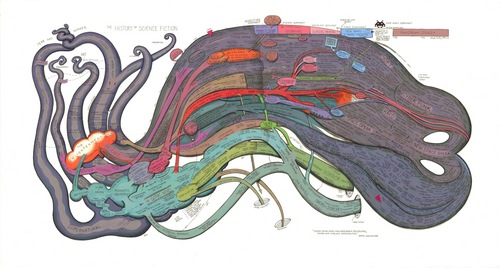
You’ll definitely need to click to expand.
Sent to me by Chris Swanson, who blogs on science at wily badger. He found it here, where, incredibly, there is no credit line for the artist. Let me know who drew it.
var a2a_config = a2a_config || {};
a2a_config.linkname = “Roger Ebert’s Journal”;
a2a_config.linkurl = “http://blogs.suntimes.com/ebert/”;
a2a_config.num_services = 8;
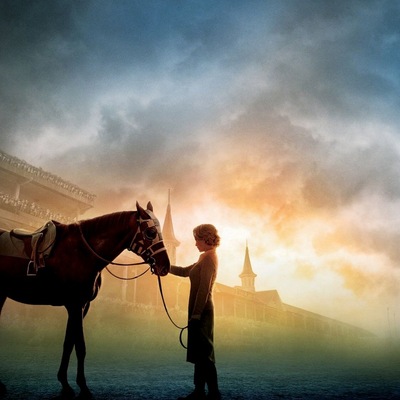
I received this comment on my blog entry about “Secretariat” the movie, Secretariat the horse and the discussion about Andrew O’Hehir’s review of the film at Salon.com. It appears under the blog, as do comments by O’Hehir and Bill Nack, author of the Secretariat biography that informed the film. But it is so well-worded and wise that I wanted to call particular attention to it. RE
October 9, 2010
As Penny Chenery’s youngest son, I am fascinated by “Secretariat’s” reception by critics, and the dialogue between Ebert and O’Hehir is to me the most interesting so far. Rather than taking sides about whether the movie is “good” or “bad” (I am far too close to evaluate its merits), I want to comment on the value I see in both reviewers’ perspectives. From their conflicting angles, each shines a light on something I believe to be true about both the movie and the events that gave rise to it.
I understand O’Hehir’s perception of something relentlessly, indeed forcedly, upbeat about the story, perhaps masking a troubling reality underneath. The movie does, indeed, glamorize and improve on my family’s situation in the early 1970s, as it sanitizes the cultural context of that era. In real life, we Tweedys were more riven and frayed by the large and small conflicts of the time, and by the pressures of celebrity into which we were suddenly thrust. The wars between our parents were more bitter, the marriage more broken, and we kids were more alienated and countercultural than the movie depicts. During the pre-race CBS broadcast at the Belmont, Woody Broun interviewed my dad, my siblings and me, asking Jack whether he was the “power behind the throne.” He gamely (and for me now, poignantly) replied that he was proud of his wife, his kids, “and the horse.” Mom had wanted us to be all together for that interview, but away from the cameras we were each living in a separate world. The movie navigates this terrain with a combination of erasure, gentleness, and tact, and from the point of view of my family’s privacy, I am grateful.
But Ebert is right that there is something more — and something better — at work in the movie than simply airbrushing over painful truth. My mother has always known that the “Secretariat story,” and her role in it, filled a deep cultural need. While the country was convulsed by feminism, Watergate and Vietnam, Penny took pains to present as a wife and mother, offering a wholesome, western, maternal female image that paired beautifully with the heroic, powerful male icon that Secretariat was becoming. Our President may have been a Machiavellian liar, our soldiers denounced as baby-killers, and our fathers excoriated as chauvinist pigs as they commuted grimly to work. But here came Secretariat, deeply male, muscular and graceful, his chest lathered with sublimated sex. And on that day in June 1973, when he blew away the field in the Belmont Stakes, he transcended argument, rivalry, even transcended sport itself. In that moment Secretariat gave my family, and gave the public, something like grace.
Now we are again in a cultural moment of war and dissension. My sense is that the movie’s creators didn’t feel the need to portray the convulsions of the early 1970s, in part because today’s audiences carry the burdens of our current convulsions into the theaters with them, hoping to escape briefly to a world they can believe in and admire. I think the movie is offered to satisfy the old hunger for a kingly male and a queenly female, who together strive for something beyond themselves, who seek victory, and achieve grace. Disney has long been in the business of telling this kind of story. The best such films rise to the level of archetype, while lesser ones sink into the mire of cliche, or worse. Whether “Secretariat” succeeds in this mythic leap is for critics to argue, and for audiences to decide. Personally, I’m enjoying the ride, as well as the critical dust it’s kicking up.
John Tweedy
Here is my blog entry, Secretariat was not a Christian.
My original review of “Secretariat.”
Andrew O’Hehir’s article in Salon.com.
var a2a_config = a2a_config || {};
a2a_config.linkname = “Roger Ebert’s Journal”;
a2a_config.linkurl = “http://blogs.suntimes.com/ebert/”;
a2a_config.num_services = 8;
The appeal of The Stroll is that (1) everybody could do it, and (2) it was the luck of the line who your partner turned out to be, unless you cheated and traded places in line.
Now here is the very same generation in 2010. I filmed this at a Platters revival concert in Three Oaks, Michigan. What a difference 62 years can make.
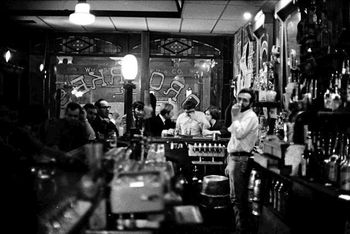
On St. Patrick’s Day in Chicago, back in the day, it seemed as if a good portion of the revelers cycled through O’Rourke’s Pub on North Avenue in Chicago. The juke box was loaded with the Clancy Brothers and Tommy Makem. No wonder. Their records were permanently enshrined in the box, and the regulars knew all the lyrics. Note: The blog software insists on displaying some of this content more than once. I can’t talk it out of doing that. I’m sure you will prove equal to the challenge.
