Celebrating its 30th anniversary, the Black Perspectives program at Chicago International Film Festival is always rich with indelible stories from the Black diaspora. This dispatch highlights two selections from the program that testify to its immense range, featuring characters grappling with impossible situations made all the more tenuous by systemic inequality. This dispatch may feature only two films, but it’s bursting with complexity.
Adapted from Todd Connor’s same-titled book, Sterling Macer Jr.’s “Liz Here Now” tells the true story of Connor’s indomitable Black maid and her refusal to let him and his sister fall to the violence of their neglectful parents. What could’ve been a mash-up of “The Help” and “Driving Miss Daisy” ends up a bit knotty, yet still too neat and broad.
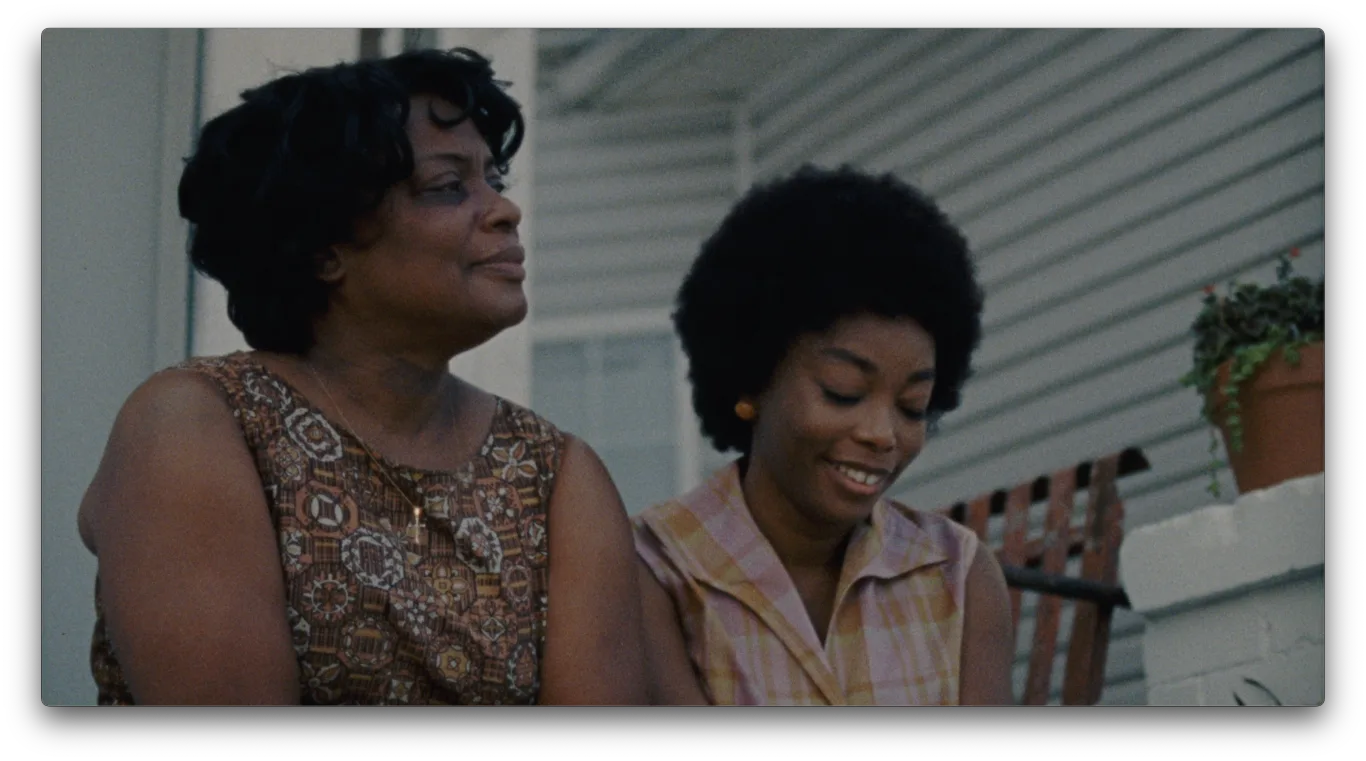
Aunjanue Ellis-Taylor plays Liz Baxter, a hardworking mother residing in Oakland in 1967 who recently lost her son-in-law’s life to oppressive white police but still believes her white employers, Jane (Rachelle Lefevre) and Frank (Ryan Wesley Gilreath), are truly nice people. When a Black Panther member pushes back against her assumption by telling her she should ask Frank to influence the mayor to not target Black people, she realizes, after the mayor’s rejection, that they’re no different than any other racist white people.
Instead, encouraged by her family, including her husband Clayman (Cedric Mays), Liz tries to open her own bakery so she can leave her job as Jane and Frank’s housekeeper. Her plans are diverted, however, when she discovers that Jane is brutally abusing her son Todd (Brady Wagner) and his sister Chrissy (Aniela Zeig).
“Liz Here Now” uses Liz’s conundrum to comment on the political strife of the late 1960s. If she tries to protect Todd and Chrissy, Jane and Frank will retaliate—the latter know no one will believe a Black woman like Liz. The presentation of the Black Panthers can still feel a bit safe, putting the group on the periphery in the same way the racist city officials are doing. But within the textured photography, one sees Ellis-Taylor’s committed performance as a woman compelled to help, not by race but by empathy for two defenseless children.
And while the film can be betrayed by its conventional source material, Ellis-Taylor’s range and depth give this historical drama’s overly familiar turns new resonance and incredible presence.
An earnest, thoughtfully rendered anthology film, “Three Colors: Pan-African” comprises a prologue and three separate films inspired by the trio of colors in the Pan-African flag: red, black, and green. Three directors—Elijah Davis, Tyler Ocasio Holmes, and Allison A. Waite—helm each respective section. Davis helmed the opening and the first chapter, which sees Loretta Devine as a grandmother telling parables to her trio of grandchildren about remembering what it means to be Black. Each segment centers on one of her grandchildren, giving these short films a clear throughline.
In the first section, “RED: Black Men Don’t Cry,” a young Ahmari (Tiberius Byrd) grows up to become a successful college football player (played in his older years by Peyton ‘Alex’ Smith) at the behest of his demanding uncle (Stephen Bishop). As Ahmari’s body begins to break down, he must consider whether his life can still have meaning outside athletics.
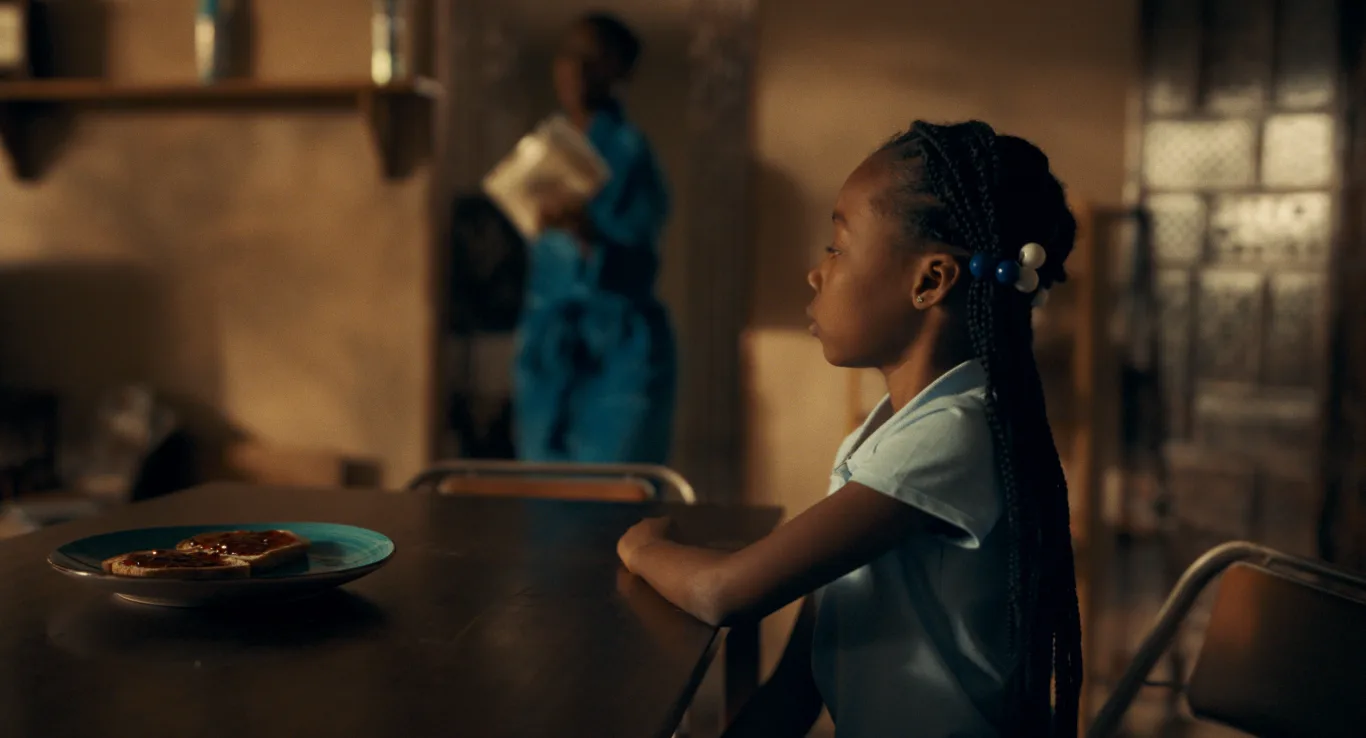
The second segment, “BLACK: Breadman,” features a Ghanaian migrant, Joana (Sibongile Mlambo), searching for a job to support her daughter (Lathan Ava) after a confrontation with a violent white man causes her to lose her in-home nursing gig.
In “GREEN: Meet The Greens,” the final part, Jontavious ‘John’ Rodgers (Bashir Salahuddin) is an actor in a Black-cast sitcom attempting to keep his role on a problematic show in the hopes of funding his son’s (Kel Kirby-Smith) expensive school.
Despite their obvious intent—each film concerns a Black person navigating exploitation—the well-crafted anthology never feels overly preachy. Some of the project’s influences suggest a similar restraint. The final segment, which features a Black British actress hired to be “ghetto” and ends with Rodgers’ cathartic scream, recalls “Hollywood Shuffle” without becoming pastiche. The films also envision community and family as tools for Black folks to survive the hurdles a predatory world throws at them. In “BLACK: Breadman,” her neighbors give Joana strength, and Ahmari’s uncle eventually inspires him to build a different future for himself.
Sometimes the anthology reaches for a dreamlike sheen in its photography that isn’t wholly flattering to its actors, particularly during the prologue, and the visual language surprisingly remains consistent between the filmmakers. The punch-the-air ending could also be accused of being too cute and saccharine, especially when it commits the egregious imagery of the three kids wearing paper crowns as they stare out to the sun.
And yet, it’s hard not to be taken with its intent, emboldened by a conception of Black joy that doesn’t feel like a buzzword but like something genuine and achievable.