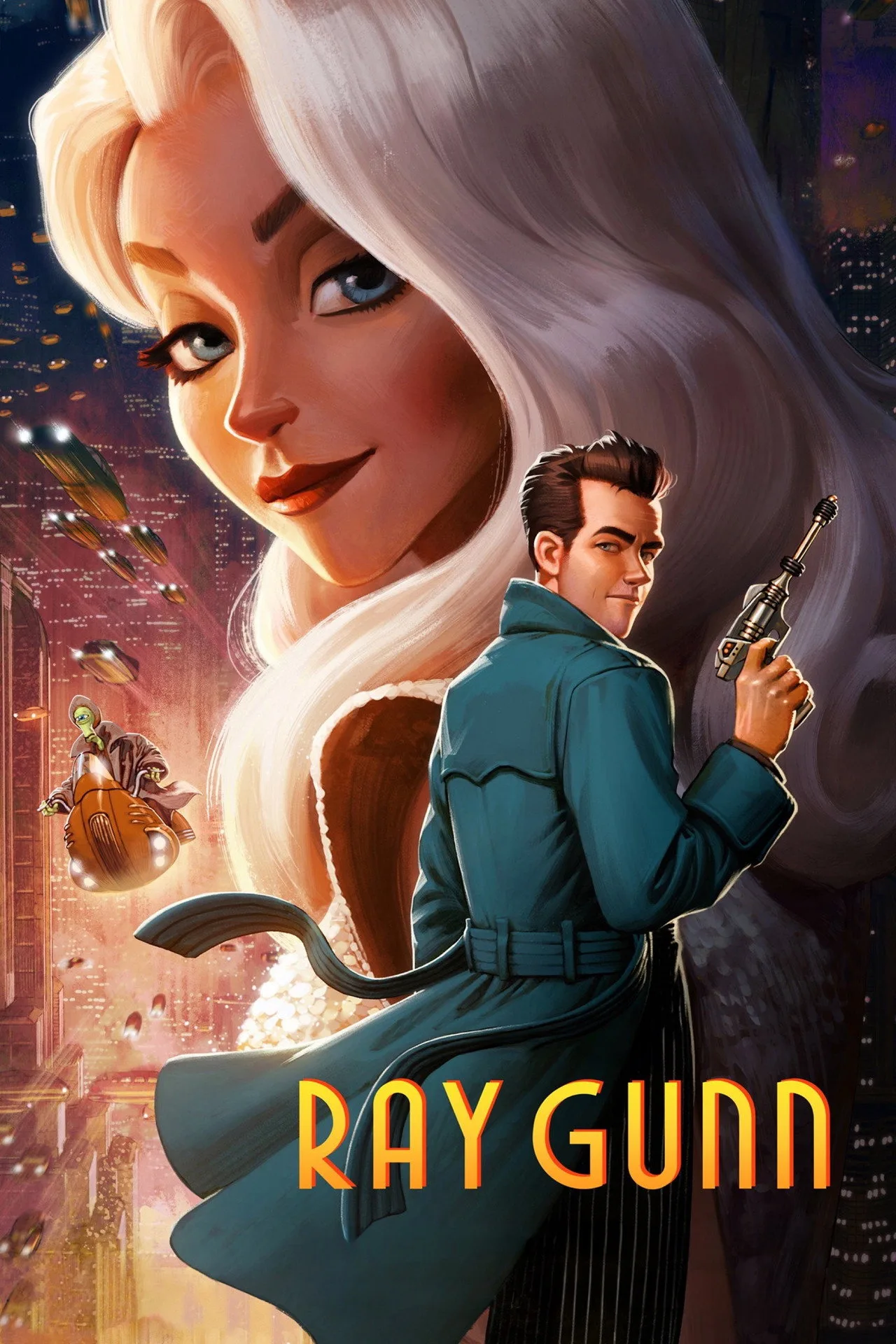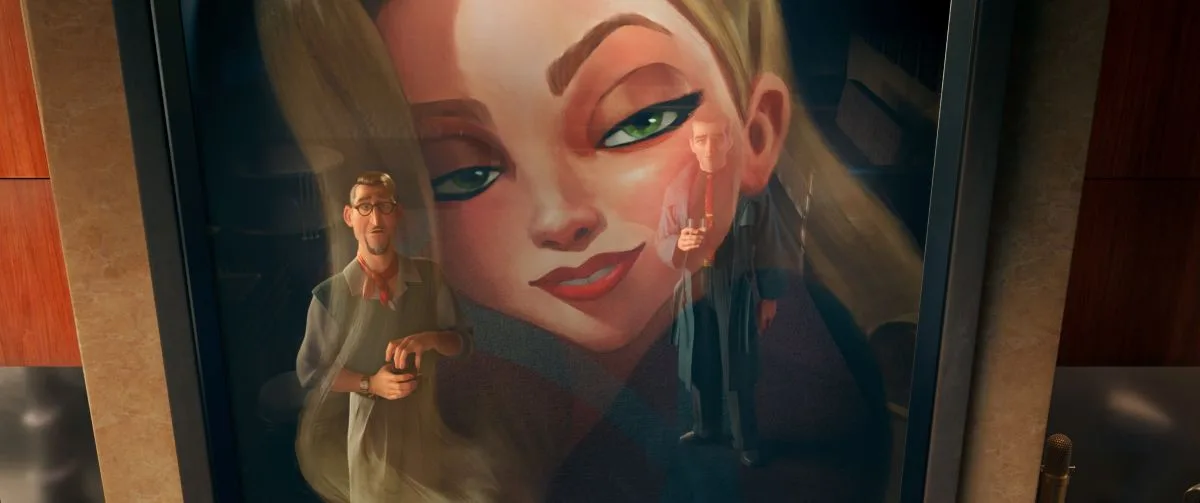
Brad Bird’s “Ray Gunn” is both a vibrant throwback and a clever vision of the future. The Netflix original that the creator of “The Iron Giant,” “The Incredibles,” and “Ratatouille” has been working on for four decades contains some of the form’s strongest visuals in years: images that recall everything from “Blade Runner” to “The Fifth Element” to the “Bioshock” video games, but it’s also refreshingly original and current, embedding themes about technology overreach, pop culture dominance, and identity into the fabric of a movie that never forgets to be fun. At over two hours, “Ray Gunn” can be almost overwhelming with its abundant style, plot, and detail but to say that an animated family film might actually leave viewers feeling stuffed should barely register as a criticism.
Sam Rockwell voices Raymond Gunn, a classic noir private dick with a square jaw and a moral code that he might describe as gray but is clearly stronger than most. For example, he’s partnered with an alien named Eye-ra Kadok (Tom Waits), which automatically causes clients and strangers to look at Ray differently. In this vision of the future where buildings shoot hundreds of stories into the sky, aliens are the outsiders, the people mistreated by the humans in charge. But Ray knows that Kadok is smart, loyal, and often the conscience on his shoulder.
Bird and co-writer Matthew Robbins also introduce us to Venus Nova (Scarlett Johansson), a universe-famous pop star with a temper issue. She’s often lashing out at the paparazzi or anyone else who gets in her way, which has made her manager Barry Vogel (Alan Tudyk) and the team of suits behind him nervous. When Nova’s husband Arnold Dom (Bobby Cannavale) hires Ray to spy on Venus, it sets a series of dominoes tumbling that include an alien mob boss named Slugsy (Matt Berry) and a bunch of other alien bad guys with laser blasters that often malfunction.
That last point is one of the great charms of “Ray Gunn” in that Bird’s vision of the future is one in which a world dominated by technology still requires old-fashioned human ingenuity to overcome its issues. One of Bird’s most impressive playthings in this vibrant sandbox is a gun that basically works as a teleporter, intaking what it’s aimed at and shooting it out with the next pull of the trigger. It’s just one of many witty inventions in this universe, devices or mechanics that Bird introduces with the clever wink that they’re going to return later and might not work exactly like they should. Let’s just say there’s a Chekhov’s High-Speed Elevator.
Bird and his team put so much love and care into their animated production design, but they’re smart enough that they never fail to center the characters and voice work that serve as the foundation of the piece. Yes, “Ray Gunn” is almost overwhelming eye candy and yet it also features some of the best animated vocal performances of the year. Rockwell is playful enough that you can see the Oscar-winning actor in the character’s face and body language; Johansson leans into a classic femme fatale that’s mysterious enough that she could be the victim or the hero; Waits might be the MVP in how he takes a gruff sidekick character and imbues him with world-weary humor.
Another absolutely essential element of “Ray Gunn” comes courtesy of an old Bird collaborator: Michael Giacchino. The composer behind the scores for “Ratatouille” and “Incredibles 2” provides one of his best soundtracks to date, giving “Ray Gunn” a bouncy rhythm that feels like both a throwback to the noir era that inspires so much of this movie without ever sounding dated or incongruent with the film’s futuristic setting.
Most importantly, this is a movie that doesn’t talk down to kids. If anything, it understands how it’s OK for them to struggle a bit to keep up. Honestly, the first few scenes of “Ray Gunn” introduce so many characters, concepts, and plot elements that it will be hard for the adults to find their balance, but that’s a feature more than a bug. So many animated films spoon-feed and belittle their viewers: Brad Bird movies know that one of the joys of fiction is catching up with a creator who didn’t pause to let you do so.
And even if kids can’t recap every plot detail, they will be wowed by the set pieces. Just as he has done with every film he’s made, Brad Bird nails the big sequences. Scenes like a zero-gravity dance number and a three-pronged fight in an elevator are among the best animated visions of this era. They are beats that reminds one of the wonder in Bird’s films: Wonder that makes you believe that an iron giant can fly, a rat can cook, and a family of superheroes can be just like yours. We sure could use more of it.
This review was filed from the Chicago International Film Festival. It opens in theaters on December 4, 2026, on Netflix on December 18.