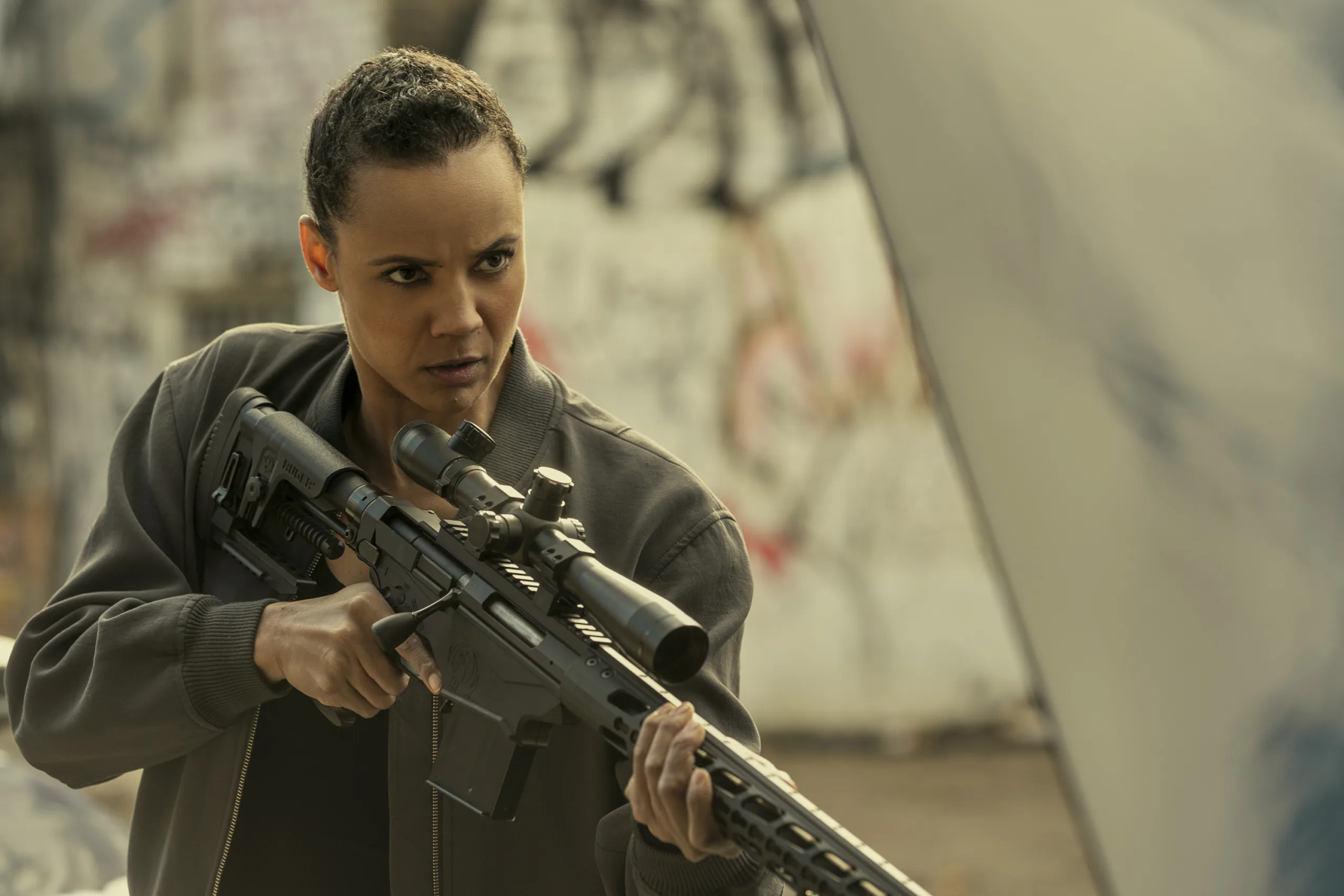
Danish-Congolese actor and Maria Sten has some big shoes to fill (literally). Granted, she’s spent three seasons on Prime Video’s hit action series “Reacher” playing no-nonsense private investigator Frances Neagley, frequent ringer and closest companion to Alan Ritchson’s itinerant titan Jack Reacher. She’s a fellow MP and compatriot who can throw down just as easily as Reacher can with half of Ritchson’s bulk, and her appearances in the flagship show have made her a household favorite. But in the upcoming spinoff “Neagley,” it’s her show through and through, which comes with no small amount of pressure.
Where each season of “Reacher” sees its bulky problem-solver in a new town, a new dilemma, and with a new supporting cast, “Neagley”‘s home is in Chicago, where she’s set up shop as a private eye. And this season uses the mysterious death of a childhood friend of Neagley’s to force her into uncovering a broader conspiracy, with the help of a conflicted Chicago cop (Greyston Holt’s Hudson Riley), a streetwise kid (Jasper Jones’ Keno), and her protege at her PI firm (“Mortal Kombat II” alum Adeline Rudolph as Renee Birdwhistle).
In the week prior to the show’s release, Sten sat down with RogerEbert.com during a press junket in Chicago (hours before Sten was to catch the seventh-inning stretch at Wrigley Field) to talk about expanding her role into a full-length series, the training required for such a show, and what the new series will teach us about Neagley as a person and a fighter.
This interview has been edited for length and clarity.
You’ve been playing Neagley since 2022, and the character’s been a big hit since the first season of “Reacher.” What were the first rumblings of a possibility that Neagley could sustain herself as the center of a spinoff?
Interestingly enough, that came up when I first booked the job. If it went well, and it was a success, we thought there might be a possibility of a Neagley spinoff. I thought, “Right, of course, because that happens, sure.” But I’m just so surprised we’re finally here, because I didn’t feel that was necessarily in the cards. Reacher is very much Reacher, and Neagley comes in to help him out, as is true in the books. But I’m so thrilled to be able to take her on her own little journey. Even when I read the books she’s in, I felt she had so much more hidden under the surface. So I’m excited we’re finally getting to see all of that now.
Yes, because Neagley hasn’t been the central focus of a Lee Child book to date, and all the “Reacher” seasons are based on a specific book. What were the challenges you guys had in building on that source material to craft more layers for her to delve into?
We have freedom in the sense that there is no specific book to work off. The writers just went off the cuff with whatever we wanted. But of course, it was important for me to carry on the skeleton and fabric that were initially in the books, everything we had built in the show, and stay true to and expand on that. That was super important to me.
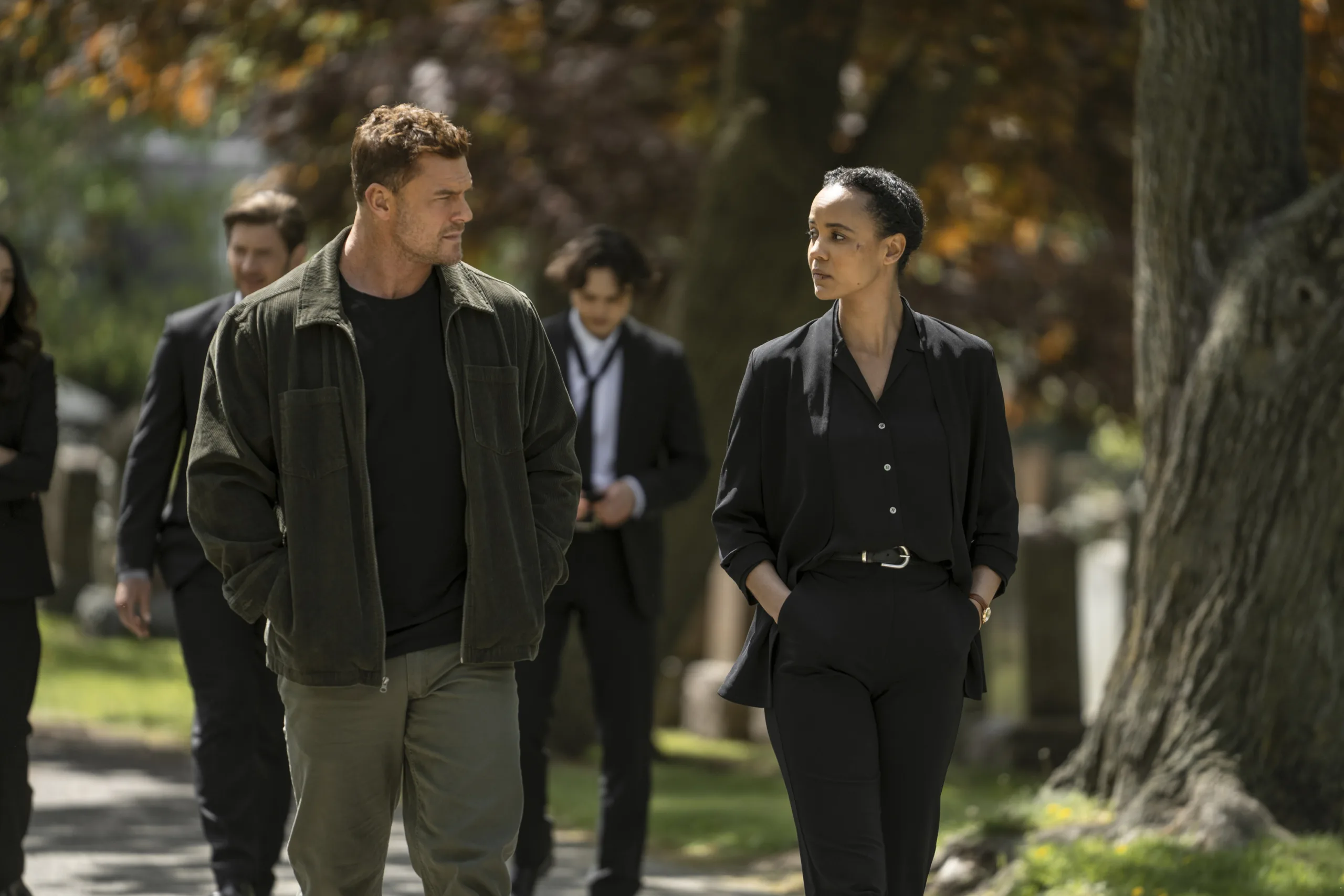
One of the most interesting things about Neagley as a character, and her relationship with Reacher, is that they’re so alike in so many fundamental ways: Tough, antisocial, uncompromising. But when it came time to build the show, what did you want to do to differentiate her from Reacher as a different kind of lead for a show in the same universe?
I think there are some key differences, even though they are so similar. One is that Reacher isn’t looking for trouble; trouble seems to find him. But Neagley is a PI; she’s always looking to solve problems. That’s a big difference in the show’s nature and thrust. Neagley is a dog with a bone, and you feel that in the show.
But she has a softness to her, especially around children, which we’ve seen in “Reacher,” and it’s something she’s hiding from the world. This show has more vulnerability. There’s a lot of heart, and there are some incredible character arcs, because we have these four main characters [Neagley, Keno, Riley, and Birdwhistle] who are going to hopefully hang around. They get to have their collective journey in this first season, which is different than Reacher, who treks around and gets into trouble with different people every year.
Speaking of those softer elements, it’s interesting to see how they peek through Neagley’s exterior, like her love of Kellogg’s cereal or the fun wrinkle of the shelf of action figures in her apartment. Did things like that, which come from production design or other elements, help you internalize those other aspects of Neagley?
I mean, the production design for the show is incredible. Even from the old-school noir vibe of Chicago, that’s the world that we’ve built, and there are these little quirks to Neagley that are things we set up in the prior seasons of “Reacher” and now get to expand upon. Everywhere Neagley is, there’s a little Easter egg of something in her office, in her house, in her car. She’s got these little gummy worms in a cup in her car, because those kinds of things are what make the character pop. I think that’s what makes her fun and interesting. I told them that there were specific trinkets I wanted from specific books in that apartment to make it feel authentic for her and they put it in there.
We get to dive a bit into Neagley’s backstory with this show, including her aversion to touching people (haphephobia) and where that comes from. How early was that seeded in Neagley’s character, and what’s it been like to build on that past to inform Neagley’s present?
It’s in the books, so it’s always been a character trait for her. But the books never explored the reason behind it, so we always felt a new show needed to answer that question. It’s a key element to her as a person, and in a lot of ways, without it being loud, it’s a huge part of her life. Walking around the world not being able to touch people is a huge thing to carry. We felt that was the thing we needed to dive into this season, and man, do we dive into it.
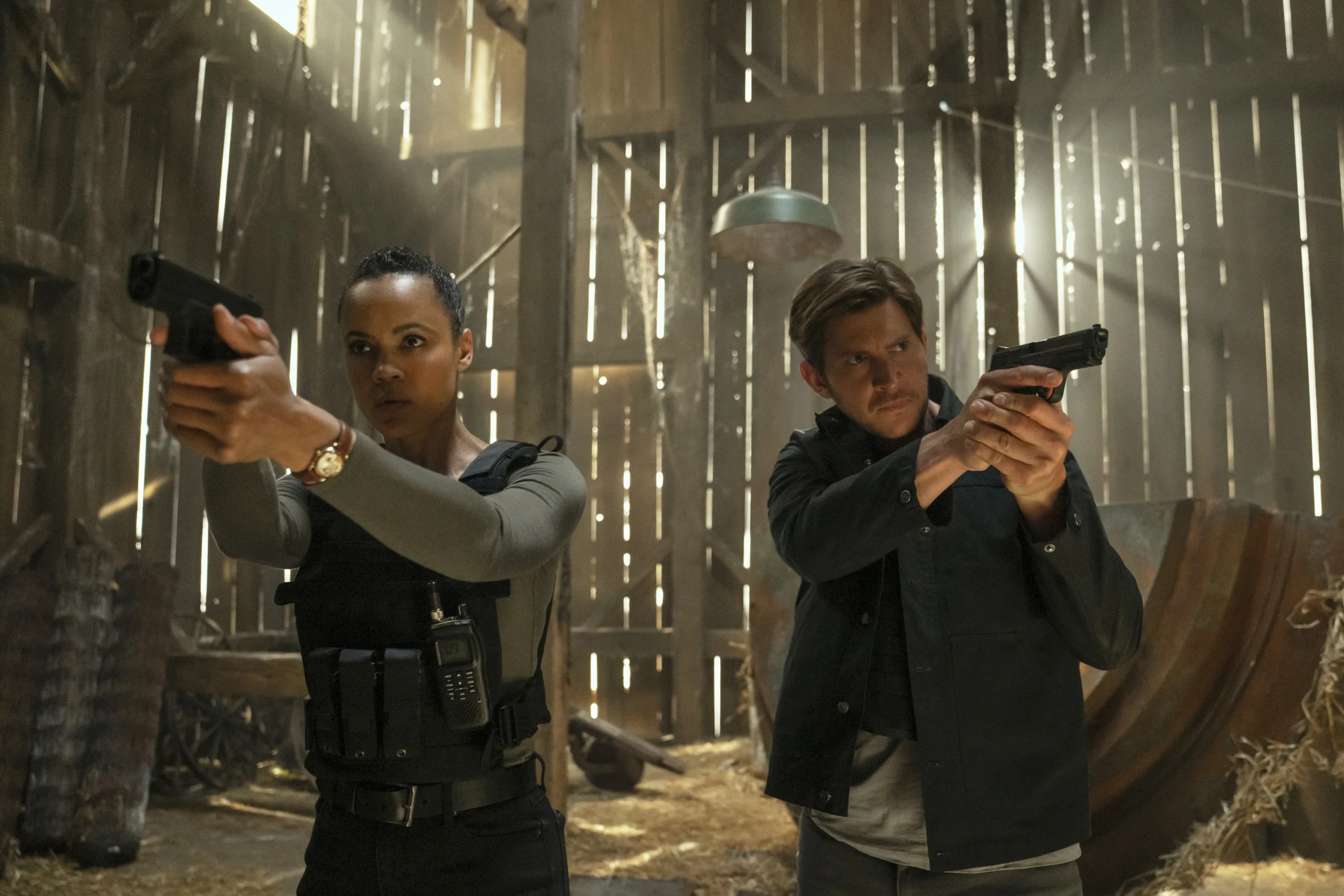
Neagley is obviously a very physical role, and has been for the four seasons of “Reacher” before this. But when it came time to take the lead, did you have to do additional work to sustain the level of action you’d need across eight episodes? What more did you have to do?
Once you get to episode seven, you’re really just trying to survive, because the schedule is just so intense. And of course, we like to ramp up the action towards the end of a season. And you have to be in good shape going into it. I think it’s just conditioning and making sure that you’re healthy and fit. I definitely got out of that experience saying, “Okay, I need to lift heavier weights. [laughs] My joints need to survive another season of this. That’s such a high priority for a show like this—not just for aesthetic reasons, but for health reasons, because I like to do as much as possible myself and give it authenticity.
What about things like gun training—did you need additional work on that for this show?
I’ve been working with the same armorer since season one of “Reacher,” who’s an amazing Canadian armorer. We have a shorthand now; he’ll watch stuff, and when I get up there every year, we’ll do drills. Remembering how you clear a room, how to disarm someone, how to take a gun apart, etc., to get that muscle memory back.
And before we started filming “Neagley,” I did a private session with an instructor to fire some live rounds. Because I think it’s really important to know what that feels like in your body versus just firing blanks. It’s a very different sort of bodily experience, just to make things as authentic as possible.
Spinning off into your own show, you have to shoulder the responsibility of carrying a series’ tone and to lead a cast to some extent. Did you talk with Alan Ritchson at all about those responsibilities, and did he have any advice?
Not specifically about that, because I’ve done that in the past. But I think the bigger thing is that it’s a property that is so well known and loved by so many, because Lee Child’s books have sold, you know, a billion copies worldwide, right? So you have a responsibility to those fans to pay homage to that and stay true to the universe he created. There’s a lot of expectation around these properties.
For my part, I felt a lot of pressure because “Reacher” was so successful, and I wanted to step into these shows, fill them, and not disappoint people. Everybody loves “Reacher,” so I felt the kind of pressure we both experienced when we signed on to these shows. I’m so thrilled for Alan, and he’s such a great Reacher; I hope I can continue and build on this show’s success.