
Jane Schoenbrun’s films examine how desires can only fester for so long. Now, with the release of “Teenage Sex and Death at Camp Miasma,” the director of the 2024 A24 hit “I Saw the TV Glow” has crafted a symbolic duology that functions as a desperate plea to the queer audience the director has amassed. Both films explore the dangers of repression and use form to show how this dissociation has affected their respective protagonists. While modern horror has a penchant for jump scares delivered through harsh editing and garish sound design, Schoenbrun crafts a haunting metaphor for queer and trans identity by imbuing their cinema with elongated silences, droning scores, and fantastical visuals.
The horrors of Schoenbrun’s cinema aren’t found within the dark rooms we watch these films in, but in the lives of the film’s protagonists, whose shame has become synonymous with their existence. In “TV Glow,” we watch as Owen (Justice Smith) grows from a child infatuated with the fictional television show “The Pink Opaque” to a despondent adult who buries the show’s impact on his gender identity. In “Camp Miasma,” indie darling filmmaker Kris has been tapped to reboot a slasher franchise that transformed her identity not only as a filmmaker, but as a queer adult. But while Owen is haunted by the awakening that came with his favorite show, Kris eventually becomes fascinated by the revelations her favorite series spawns.

In both films, viewers are confronted with a protagonist who has been sleepwalking through existence, stuffing their desires down each time they threaten to escape their lips. The similarities between Owen and Kris stop there, as each of them ultimately faces a significantly different path. Suspended by shame, Owen is unable to give the desire to transition a name, while Kris’ desperation to belong to a perfect version of queerness stunts her relationship with sex. The only time these two can truly be themselves is when they gaze up at the screens of their favorite television show or film.
Horror has long been a genre where queer audiences have found solace, understanding themselves and their desires through a small screen in their bedroom, or the overwhelming projections in a theater. These pieces of media can be foundational to how queer viewers understand themselves, yet Schoenbrun pleads for their audience not to get stuck on these versions of what being queer or transgender can feel or look like. Instead, they propose a different reality, one where we can extricate ourselves from these pieces of media and live an authentic life outside of them. While Owen feels trapped within the confines of both “The Pink Opaque” and his adult life, Kris is dropped into her own slasher film, which she eventually breaks out of and finds peace through destroying the very thing she once loved.

Throughout each film’s runtime, Schoenbrun maintains that Owen and Kris, much like the director’s audience, must embrace their desires not only when consuming media, but by embracing community. Kris achieves this with the help of former “Camp Miasma” Final Girl Billy Presley (Gillian Anderson), with whom she is able to achieve an orgasm, and subsequently escapes the confines of shame which she has previously been bound to. The film then shifts from a metatextual critique on the slasher genre into a film filled with fantastical visuals, as Kris and Billy cement their bond through this experience. The ending of Schoenbrun’s latest is wholly different from their second film, in which Owen is left alone, screaming in despair, unable to begin the journey Kris has been ushered to take.
Both protagonists have been warped by time, their authentic lives lost to shame and isolation, yet Schoenbrun doesn’t position their respective endings as simple conclusions. At the end of “TV Glow,” the image of text reading “There’s still time” is etched with colorful chalk onto a suburban street. While Owen’s story is imbued with sadness throughout, the director uses the final image of their sophomore feature as a gentle plea, similar to Kris’ ending in “Camp Miasma.” Struggling with one’s sexuality, gender, and desires is undoubtedly stifling, but Schoenbrun maintains that although it may be terrifying, small acts of bravery and sacrifice are needed to be made for life to truly be lived.
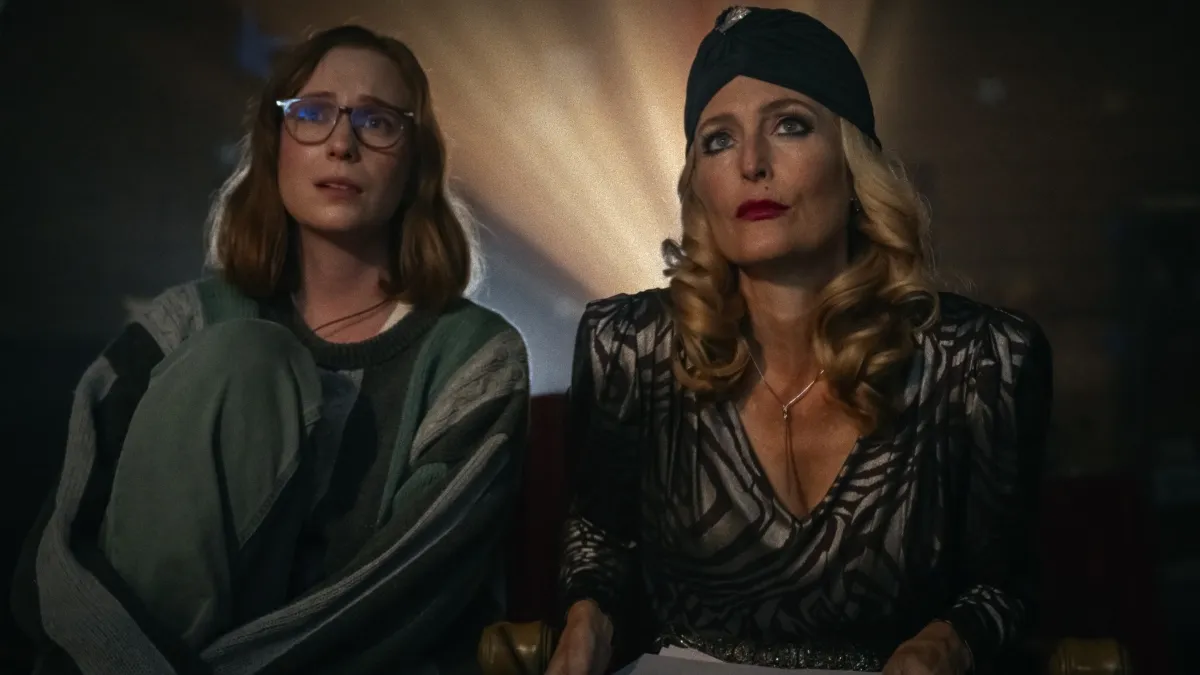
With their latest two films, Schoenbrun has created a cinema that feels like a rallying cry, one that pleads with its audience not simply to accept their sexuality or gender, but to embrace it fully, no matter how difficult the journey may be. If one film functions as a warning that showcases what happens when queer and trans people force themselves to assimilate to a heteronormative society, the other allows viewers to see what life can look like post-coming out and post-transition. When embracing a queer reality, Schoenbrun proposes that their audience can usher in a life filled with light, unlike the horror franchise and television series their protagonists are so obsessed with.
Both “I Saw the TV Glow” and “Teenage Sex and Death at Camp Miasma” coexist as seminal pieces of horror cinema which compassionately explore queer tragedy and queer joy. In each, Schoenbrun calls on dedicated viewers to see these films as a sermon that shows what life can look like for queer and trans people who succumb to shame and isolation, and those who embrace queer preservation. Searching for oneself can feel like a never-ending task, but Schoenbrun proposes that happiness can only be achieved by breaking free of the chains society wants us to assimilate into. When we do so, we take control of our desires and our lives, sparing ourselves from becoming lost to history like a low-budget genre film that collects dust on the shelves of an abandoned video store.