Though I have left Locarno, I haven’t finished writing about its many idiosyncratic offerings. The festival today announced its awards, including the recipient of the Golden Leopard (more on that in my final dispatch). And while I’m thrilled by many of the winners, in this dispatch I’d like to highlight a couple of films that I’m simply shocked didn’t take home a prize from the competition. One is a contemplative wartime flick set in Ukraine; the other is one of the more ambitious undertakings I’ve seen this year. Both deserved better. Along with those titles is another film that comes oh so close to brushing with something interesting only to get in its own way. But I’m getting ahead of myself.
The Ukrainian-Russian war has often been framed as an existential threat, one understandably requiring faithful nationalism on the part of Ukrainians and a ceaseless arms race between the two countries. Often documentaries about the conflict have either shown Ukrainian refugees fleeing their homeland or those who’ve stayed to fight for their sovereignty. That black-and-white contrast makes the earned drama of the semi-fictional LGBTQI+ narrative “I Rarely Wake Up Dreaming,” which premiered in the main competition, so refreshing.
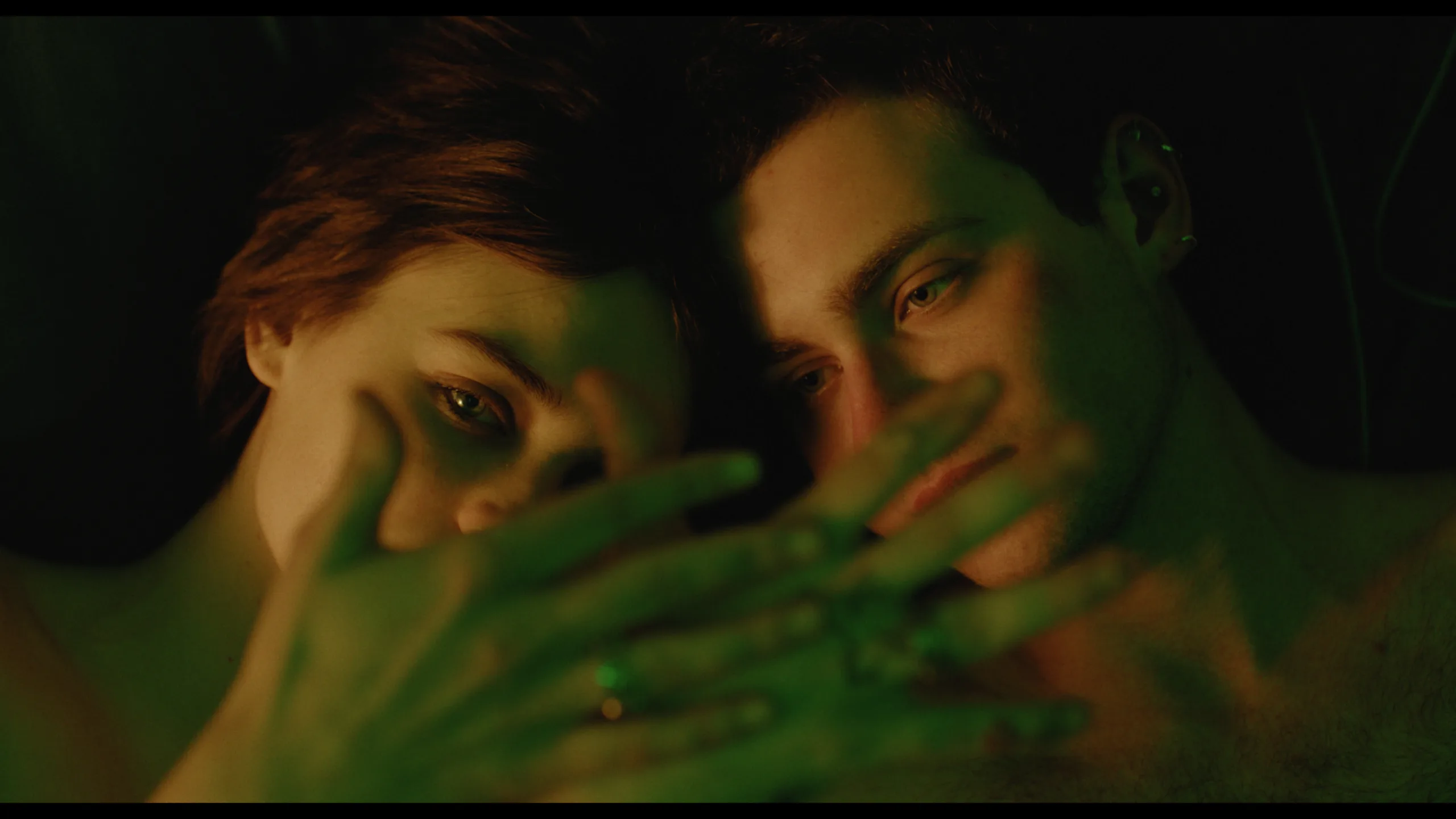
Produced by Tom Tykwer and Uwe Schott, Ukrainian writer Anna Melikova teams with her wife, director Isabelle Stever, to tell a story inspired by accounts from their Ukraine-based friends. The film concerns a trans man, Oleh (Markus Bright), and his fiancée Olya (Tania Myronyshena), whose New Year’s bliss is interrupted weeks later by real-world horrors when Russia invades Ukraine. The pair leave Kyiv, venturing to Olya’s parents home. And while her parents are initially supportive of Oleh not serving in the military, as the conflict wears on, their prejudice and nationalism get the better of them. Nevertheless, Oleh and Olya work to get the former out of their military transcription by showing that the government and Oleh’s doctor have already excused him from military service. But in a war that demands that its citizens choose sides, especially when it comes to speaking, which includes for some, their native Russian language, Oleh’s trans identity is quickly viewed by many around him as something he can choose to ignore. In one queasy scene, two transphobic women soldiers literally tell Oleh to choose whether he wants to have the excuse of being a woman so as not to serve or be a man and fight.
Bright shoulders the many slings thrown at Oleh with immeasurable sensitivity, rendering each hurt from each insult not as a single debilitating blow but as a piece-by-piece deconstruction of a once peaceful person. Stever’s lens is equally attentive to Oleh’s plight and Olya’s eventual desperation, positioning both characters in tender and sometimes claustrophobic frames. Some might find the ending, which sees the couple embracing a kind of normativity, difficult to square. But what’s on display is actually a great tragedy—one that depicts a casualty that’s rarely, if ever, captured on the nightly news. With its startling humanism and boundless empathy, “I Rarely Wake Up Dreaming” should shake viewers from their slumber to see how war touches every corner and every person.
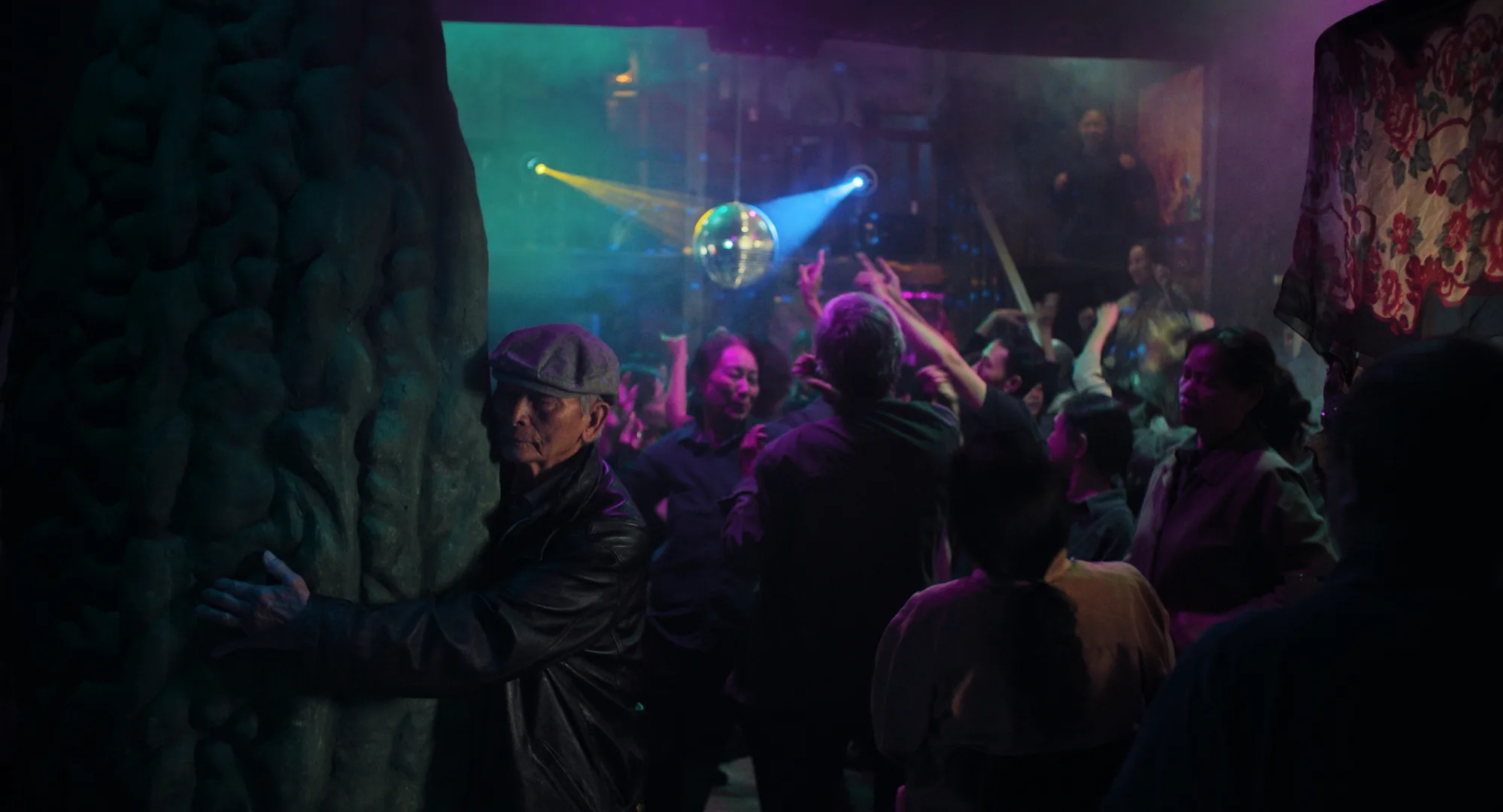
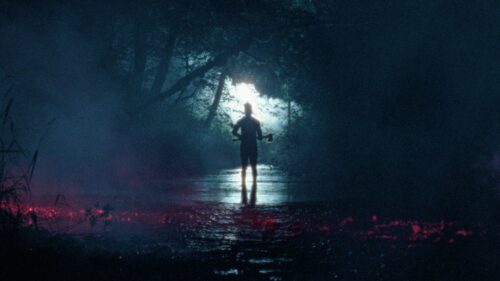
It’s difficult to apply one or even a few apt descriptors to Vietnamese director Lê Bảo’s atmospherically adventurous mood piece “Hearing.” The film, which premiered in the festival’s main competition, defies strict categorization. Rather, this multi-generational survey of a family beset by decades of an agreed-upon silence moves with a stunning clarity that recalls recent splendors like “Viet and Nam” and “Inside the Yellow Cocoon Shell.” Like those immersive works, “Hearing” relies on an excellent combination of hypnotic sights, penetrating sounds, and soulful evocations of unhealed fissures to whisk the viewers onto a woozy journey of discovery.
Such filmic playfulness is best displayed in the picture’s technically precise and wholly enveloping opening. There, we’re dropped into a lively restaurant whose clattering of voices inspires Ninh (Nguyễn Quốc Tuấn), a mechanic, to install decibel meters that light up blue (sometimes in the film it’s also violet and indigo) whenever it gets too loud. From there we’re transported to florists located on the floor above who appear to be frozen by the noise. One neighbor is so incensed by the racket, he throws a flower pot from his balcony, which only leads to a brief lull in the hubbub. Lê spends the entirety of his film juxtaposing scenes like these, particularly in smaller villages where the rank-and-file workers of all ages go to party to booming club music, with moments of austere silence. While the latter’s quiet appearance might suggest tranquil calm, plenty of buried angst still causes disquiet among our primary cast.
Ninh, for instance, lives with his elderly mother (Ngọc Tản) because his wife (Khánh Huyền) separated from him following at least one instance of domestic violence. While his wife lives nearby, suggesting the glimpse of reunion by her mere proximity—despite his own difficulties admitting his wrongs to her—Ninh’s unbothered father (Minh Hùng) lives far from them in a small rural village. He was also abusive to Ninh’s mother, but unlike his son, he doesn’t share reservations about his past actions. These cycles of aggression and distance, mixed with varied memories whose present lens offers comfort and shame, arise in the film’s quietest moments, when the act of listening is not only possible but also an inescapable terror.
Lê adds further hints of surrealism, particularly the ghostly presence that Ninh’s decibel lights bring to a jungle filled with nervous monkeys. In these moments, there’s no clear delineation between the troubles of the urban and the rural, making for a blurred line that Lê blends to imperceptible levels as the film wears on. Lê also flashes style and confidence with incredible dexterity, seemingly pushing the audience’s patience and the boundaries of his frames, filled with hallucinogenic images whose intoxicating energy overwhelms the senses to their widest possible limits. Consequently, “Hearing” isn’t merely worth listening to; it’s also worth finding, seeing and consuming.
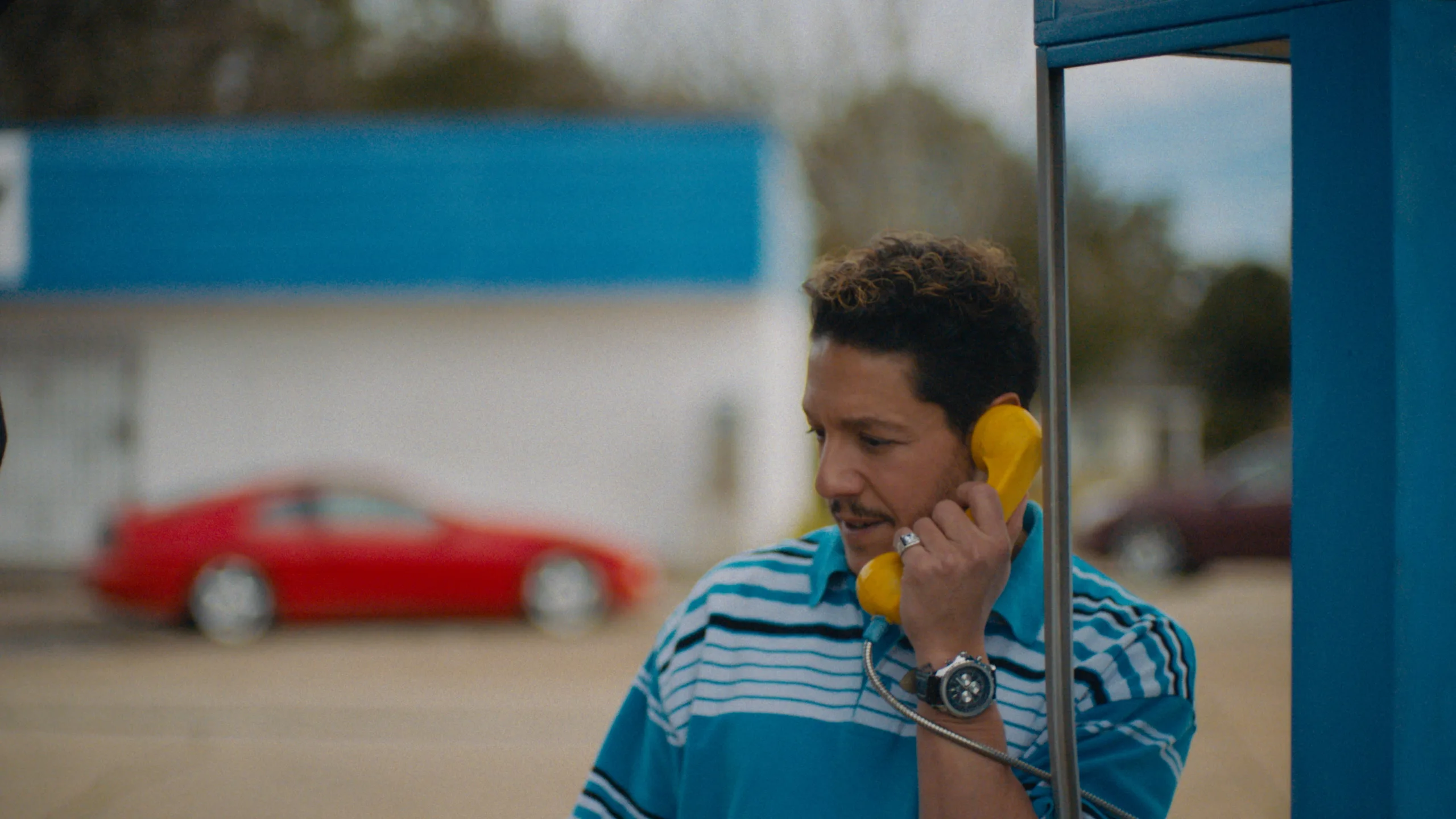
This is the third straight film, in the third straight year, from American director Vincent Grashaw to appear at Locarno. The first was the pugilist crime flick “Bang Bang” starring Tim Blake Nelson; the second witnessed Lou Diamond Phillips as a jaded Reservation cop mentoring a new trainee. His latest is “Bruton,” a first-person biography of a Miami dealer unfairly sent to prison, away from his devoted daughter, for an accidental death. It follows a lineage of Grashaw’s work that skirts the line between genre and message picture, relying on bruising, gritty settings to reveal the inequities of a system. Of his three attempts, “Bruton” might be his least successful.
As is often the case, the film begins with Bryan Bruton (Theo Rossi) alone in his prison cell, somewhat lamenting his fate. But unlike the other incarcerated men, one can tell that Bruton doesn’t necessarily think he’s wholly innocent, at least not in the moral conception of the word. The legal side, however, is quite the opposite. We then snap back three years; Bruton, a master at evading the cops, explains to us via voiceover his honed methodology. He switches cars often, which makes him harder to track, and when he’s pulled over, he dispenses pills and other paraphernalia into a half-filled chip bag knowing that they’ll either be overlooked or camouflaged among the contents. The cops also know him well enough to joke with him but not disrespect him. He’s even hoping to go straight, having just opened up a legitimate concrete hauling business.
Bruton risks all of that when he begins sweet-talking Elana (Dana Namerode), a young local daughter of a family he’s been supplying with drugs for years. That personal slip-up is contrasted with Bruton’s tenuous role as a family man. While he only somewhat cares for his wife Sienna (Aya Cash), he adores his daughter Crystal (played as a child by Alexandria Arnold and as a teenager by Kayden Brenna Tokarski). But when a jilted Elana falsely accuses Bruton of knocking her up and abusing her, inspiring the involvement of her enraged brothers, Bruton makes a decision to defend himself that lands him a 10-year sentence in the Lake Butler correctional facility.
“Bruton,” which was written by Grashaw, is based on a true story, which lends the film a truer-than-fiction quality. There’s a version of this film that could be a “Goodfellas” riff, especially as Bruton gives us the step-by-step of how to survive in prison, introduces us to the fast friend group he forms behind bars, and takes pleasure in explaining how he began skirting behind the rules and the abuses doled out by the guards by starting a sexual relationship with one of them: Maura Willis (Tammy Blanchard, who acutely understands the brokenness of this character). I won’t spoil the film by filling you in on all the wild happenings by Bruton, but it’s worth noting that Grashaw tries to toe the line between fun prison break flick and a serious conversation about the rotten, soul-breaking systematic trauma experienced by the incarcerated that makes recidivism all but impossible to avoid.
Rossi is game for those shaky tonal shifts, bringing his prototypical mix of charm and moxie to this juicy role. But Grashaw’s well-intentioned aims result in a mawkish final act that feels more like an overly formulated sprint to the end rather than a true reckoning. All of the groundedness he conjured through his unvarnished lens evaporates, and what we’re left with is something too willing to beg the audience for an emotional response via schmaltzy score and twee lighting to wholly feel as truthful as Grashaw hoped.