Identity, and our anxiety around it, is a ripe battleground for horror: Are we who we think we are, and are we terrified of the things we’re becoming? Or, conversely, should others be terrified of us? In one way or another, the next three films on our Fantasia Festival journey explore those neuroses: two in bloody, suspenseful fashion, the other in quiet, sensitive contemplation. The latter, in fact, might be the closest you might get to something downright cozy at a festival known for ghouls, ghosts, and gore.
Returning to Fantasia with the feature-length version of his short of the same name, Italian director Andrea Corsini’s “Ferine” channels, among other things, Paul Schrader’s remake of “Cat People” into a headier, more carnivorous entry in the motherhood-horror canon. “Oddity” standout Carolyn Bracken plays Irene, the daughter of a recently passed, acclaimed conceptual artist, whose string of miscarriages have left her choosing the surrogacy route. But when the surrogate mother has last-minute scruples about handing her child over, Irene flees with her baby from the fertility clinic in the middle of the night.
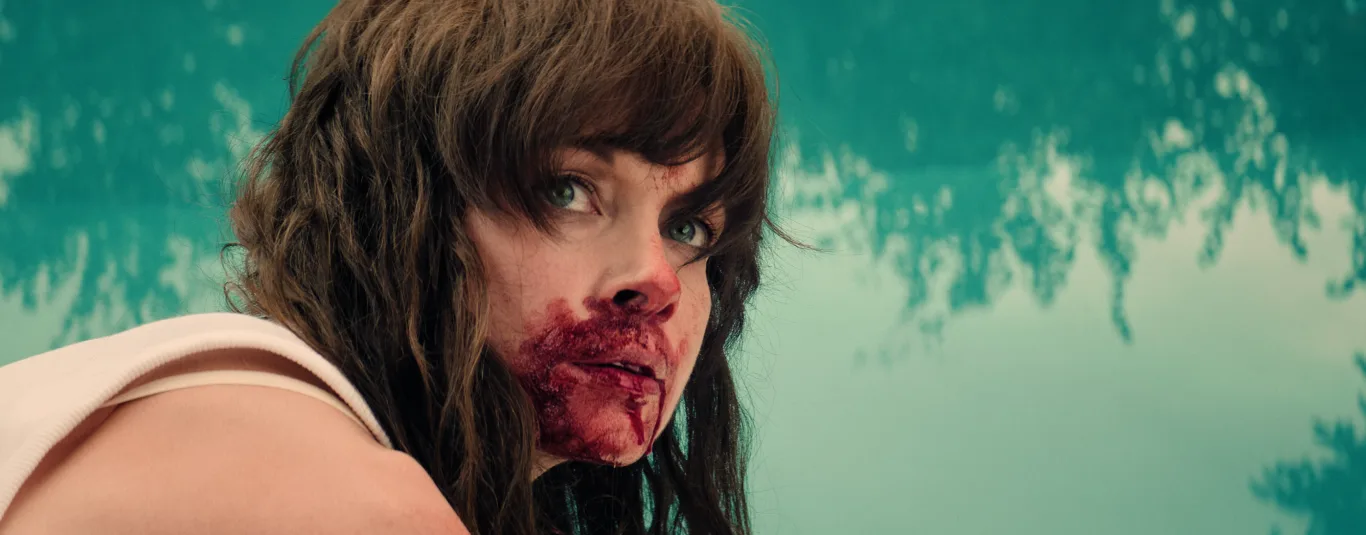
Problem is, we’ve just seen minutes before that a mysterious animal wrangler (Caroline Goodall’s Dama) has just lost a precious South American jaguar in the same woods she’s driving through. And in just the first ten minutes of “Ferine,” we see Irene’s car crash, the baby flung just out of her reach. In one of many shocking moments, Irene barely misses saving her infant from the cat’s bloody jaws.
This kind of tragedy would traumatize anyone, but Corsini takes his character down a darker, bloodier route than anyone could imagine, as “Ferine” tracks Irene as her shock and grief swiftly make her go downright feral. She starts behaving strangely, even to her best friend Rosa (Paola Lavini) and her art dealer Alfredo (Marco Gambino), and begins developing a curious taste for raw animal meat. When she can’t get it from the fridge, well, she starts seeking out more live prey. Despite this, Rosa, who runs the aforementioned clinic, tries to help Irene with her grief by offering to bring her Giulia (Elisabetta Caccamo), a young child under her care, and whose drug-addicted mother clearly can’t take care of her. But when the girl’s possessive father objects, Irene takes matters into her own hands.
We’ve seen this kind of basic story before: the pressures of womanhood and motherhood reducing women to their most primal instincts. There’s ostensibly a liberation teased here in the freedom Irene’s transgressions give her, placing her beyond the petty human concerns of those around her. Bracken plays this kind of wild-eyed ferocity well, even as Irene’s journey renders her increasingly nonverbal. But the mama-lioness in her comes raring in when she steals Giulia away, and the girl silently takes to her new mother’s animalistic protectiveness.
“Ferine” is, to pardon the pun, a curious beast: It looks gorgeous, with Fabrizia La Palombara’s crisp cinematography capturing each of Irene’s blood-soaked kills (and Carlotta Desmann’s brutalist production design) with clinical verve. Those images are paired nicely, of course, by the second Pino Donaggio score we’ve gotten this year (both have been featured in Fantasia); it’s suitably lush and haunting, though more anonymous than his work in “Her Private Hell.” But this formal feast feels like empty calories thanks to a script that barely explains what it’s doing, and works a little too opaquely to let you figure out exactly what’s going on from beat to beat. A final act, in which Dama captures Irene and studies her in a cage like one of her prizes, comes close to some thematic parallels about the thin line between human want and animal instinct. But Corsini is a little too precious for his own good, and “Ferine” could have stood to sink its fangs deeper into its material.
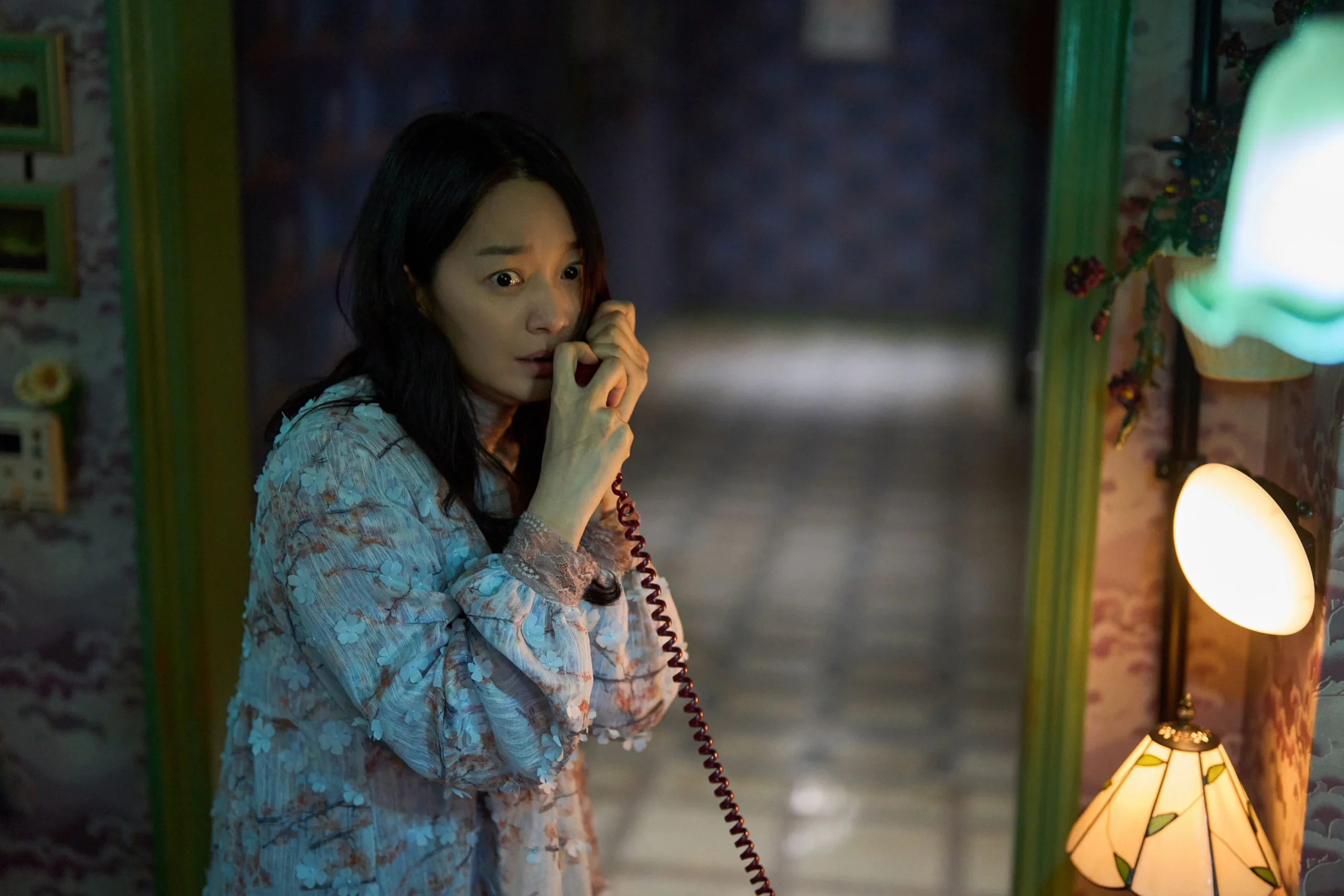
Similarly frustrating is Yeom Ji-ho’s derivative serial killer thriller “The Eyes,” not to be confused with the J-horror “The Eye,” about a woman who sees ghosts in her newly transplanted eyes. This film, however, feels similarly stuck in a previous era of East Asian horror, trudging steadily down the repetitive, sometimes problematic tropes of the ’90s serial killer flick without doing all that much to subvert them. (Since this is a remake of a 2010 Spanish horror film called “Julia’s Eyes,” maybe that old-fashionedness tracks.)
Seo-jin (Shin Min-a) is a photographer struggling both from her rapidly degenerating eyesight (a congenital condition) and the trauma from a years-prior run-in with her crazed ex-boyfriend, Kim Hyun-min (Lee Seung-ryong), who tried to kill her in her studio one day. But those haunting memories return when she discovers her twin sister, Seo-in (also Min-a), hanging from the ceiling of her apartment. She’s not convinced it was a suicide and recruits the help of a sympathetic detective (Kim Nam-hee’s Do-hyeok) to help her discover the truth.
Yeom slowly parcels out the information relating to their investigation alongside Seo-in’s true fate in ways that are effective, but derivative of everything from “Se7en” to “Psycho.” There are the haunting flashbacks to Seo-in’s life before her death, the slow dissemination of clues, the brief bursts of action to spice up the investigation. We even have a red herring in the form of Dae-ho (Son Bo-bseung), Seo-in’s burly neighbor, whose mental illness leaves him shambling and mumbling in ways evocative of all the ugliest tropes of the genre. Yeom makes judicious use of Seo-jin’s blindness in a few key moments of tension (particularly when she might have to pretend she’s more blind than she is), but it’s a shame such stylish imagery is in service of such a slog of a story.
Sadly, that’s not the only hokey depiction “The Eyes” gets up to, as its climax slowly builds to a confrontation with the eventual perpetrator, a ridiculous reveal that the film to this point does not earn. Suffice to say, we’re still doing “Psycho” in 2026, folks, and Yeom plays this twist straight enough that it’s impossible to reclaim as camp reappropriation and simply feels like queerphobia. Such a gonzo turn could have been salvaged if “The Eyes” had the foresight to justify it.
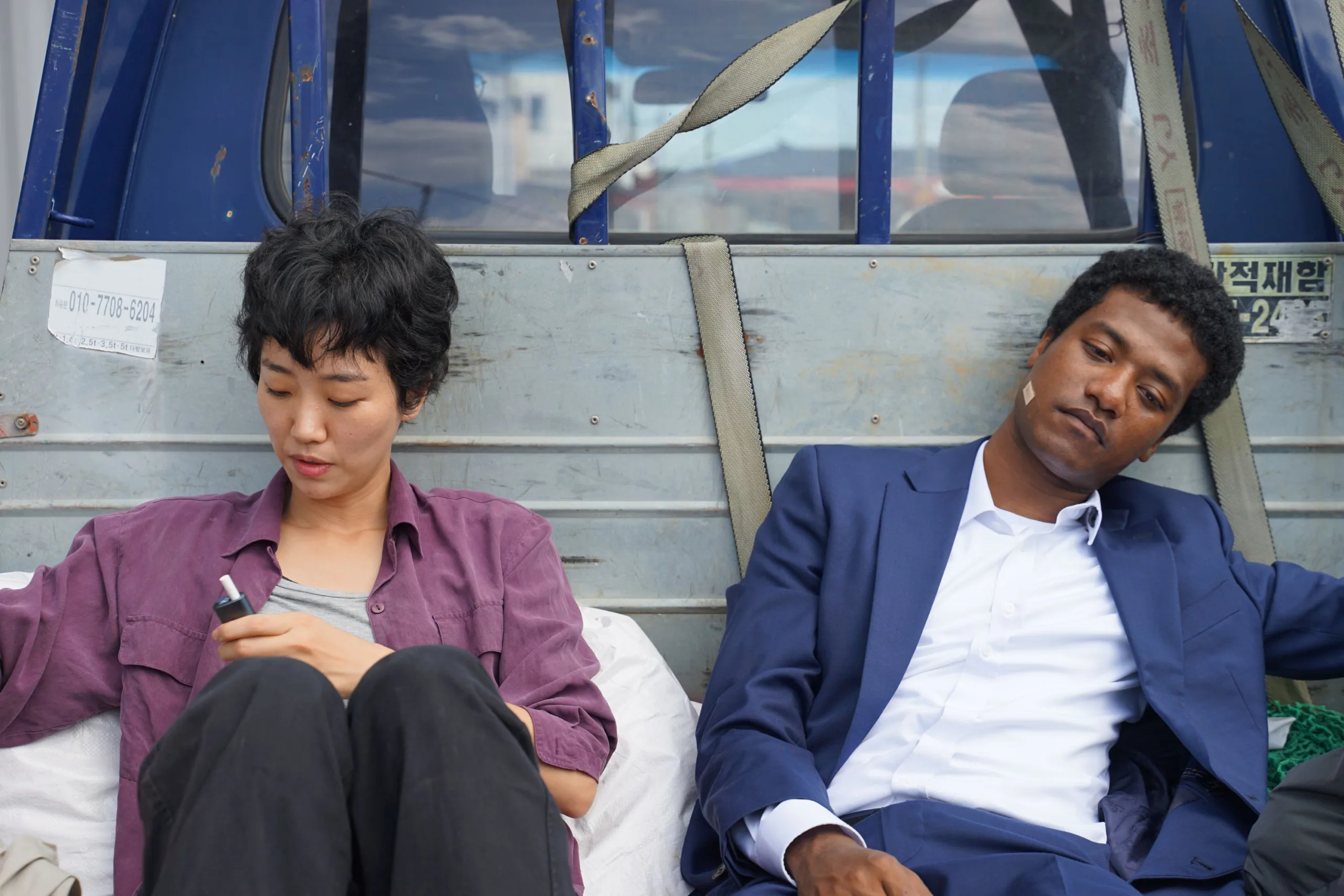
Enough with the cannibalism and serial killing; let’s get into more tender territory. Shin Su-won’s first film in three years, “The Mutation,” may sound like a Fantasia selection from the title alone, but its real aims are as human as they come. The title refers, curiously, to Se-oh (Han Hyun-min), a mixed-race Korean man who has lived a life being treated as an outsider. After quitting his job as a costumed entertainer at a local amusement park (fittingly, he is forced to play a white tiger, which furthers his feelings that he’s a “mutant”), Se-oh gathers all the money he has, buys a slick Armani suit and a pricey Louis Vuitton suitcase, and offers the latter (and its contents) to anyone who will travel with him for two days to his destination.
The only person who says yes is Sora (Lee Zoo-young), who struggles against her own marginalization: she’s a queer woman grieving the loss of her relationship due to her family’s homophobia. The two broken souls choose to travel together, hopping along trains, truck beds, and even hitchhiking, to reach whatever end Se-oh has in mind. (Our only clue is a mysterious blue vial he keeps on him. Is it a suicide pact? Is it something else? Shin keeps us guessing.
“The Mutation”‘s simple, gossamer charms come in its two sensitive central performances, Sora and Se-oh finding warmth and community in their respective struggles. As they go from place to place, healing old wounds and discovering new ones to open up, Hyun-min and Zoo-young find ways to bond over their experience of difference in Korean society, even if their struggles are not the same. Hyun-min has a chip on his shoulder over the obvious conclusions people reach based on his appearance, and Zoo-young stifles her queerness and identity, even as she yearns to connect. Her vocation is in constructing beautiful wooden tables, which she believes are best shared with others; she wants connection and community, but Korean society bars her from it.
Shin’s camera is generous and unobtrusive, capturing both urban and rural locales with a light, sensitive touch. There’s something of Ryusuke Hamaguchi’s expressive airiness in her camera placement and the subdued, wounded performances of her actors. It’s a film of immense yearning, of people struggling to find connection in a world that consistently rejects them. The answer, the film supposes, is just finding someone to take with you along the journey—even if your paths diverge at the end.