

Man of Steel
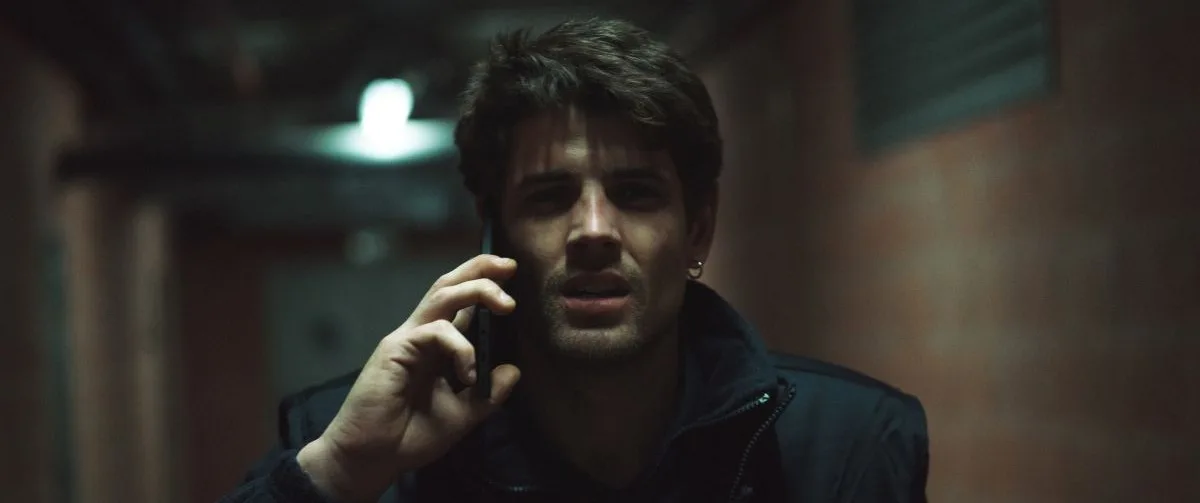
The title "Man of Steel" tells you what you're in for when you buy a ticket to this immense summer blockbuster: a radical break from…
Claustrophobia isn't often considered a cinematic asset beyond tales of suspense and horror. But "Fill the Void," an award-winning Israeli drama about a naive 18-year-old…
"The Ballad of Narayama" is a Japanese film of great beauty and elegant artifice, telling a story of startling cruelty. What a space it opens…
Patrice Leconte's "Monsieur Hire" is a tragedy about loneliness and erotomania, told about two solitary people who have nothing else in common. It involves a…
Here are some ways to celebrate Roger's birthday (a birthday shared by Sir Paul McCartney).
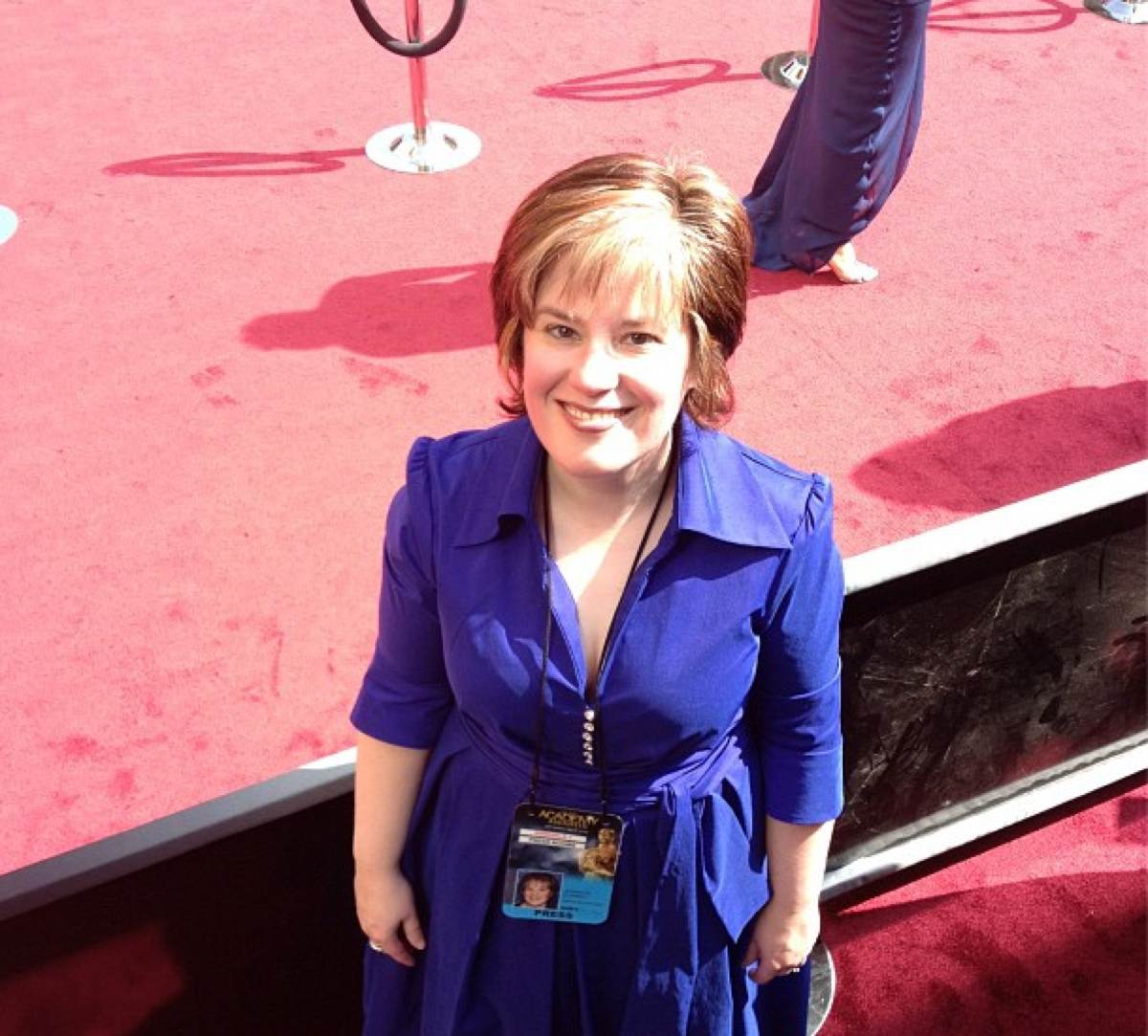
A remembrance by Roger Ebert's book editor Donna Martin: "I had never even seen "Siskel & Ebert" on television when I knew I wanted to…
Suicide glamour and magazine-shaming; how American textbooks dumb down Vietnam; remembering the late investigative journalist Michael Hastings; why sex on the first date is not…
Here are some ways to celebrate Roger's birthday (a birthday shared by Sir Paul McCartney).
Kevin B. Lee reports on the film series at MoMA that he co-curated.
Katherine Tulich talks to Julie Delpy, Ethan Hawke and Richard Linklater about returning once again to the characters from "Before Sunrise" and "Before Sunset" for…
This summer's Millennium Park screenings kick off with a dedication to Roger Ebert.
Craig D. Lindsey is on the warpath against jerk cinema, in which arrogant heroes trample all over everybody and the film celebrates them as righteously…
More moviegoers see films on video in some form than ever before -- whether streaming on demand, cable or satellite, instant download services, DVD or Blu-ray. Even high-profile pictures become available to home viewers before or at the same time as their theatrical release. Reviewing them is a job for... The Demanders!
Fandor.com will present "Sleep Furiously" along with the featurette "Sketchbook for the Library Van," for a free 24-hour On Demand window on July 29th. Details here. Also playing Aug. 12-18 at Facets Cinematheque in Chicago.
by Odie Henderson
"You've got to have characters to make a community."
What does it mean to a community when a school shuts down? Here in the U.S., it means either the state doesn't have any money to run it or the kids have burned it down. In Trefeurig, Wales, however, the dissolution of a school is something far more ominous, especially if it is the only school in town. "Sleep Furiously" uses Trefeurig's school closing as its central event yet only hints at its deeper implications: Youth may be wasted on the young, but the world can't continue to exist without them.
"Sleep Furiously" is not a conventional documentary. There are no talking heads, no narration, and no explicit point of view, pro or con, toward its subject. Like the Ross Brothers' "45365," "Sleep Furiously" is an observation of its director's hometown, specifically the people who inhabit it. They go about their business and the filmmaker records them. It is only after the final frames are projected that we realize this film is depicting the collateral damage that comes with technological change.
Filmmaker Gideon Koppel returns to Trefeurig, where his parents were refugees from Germany during World War II, but he is not there to interview anyone nor is he there to mourn or celebrate the changing of the tide. He's just a fly on the wall as the residents go about their daily routines armed with the knowledge that they may be the last to perform them. We meet the townsfolk, all of whom remain nameless, and follow them through a year of seasons. School events and county fairs are shown. Scenes are cut abruptly, and they are sometimes scored (by Aphex Twin) and sometimes silent. There is no explanation for any of this, and I had to be told by another reviewer that one of the people Koppel follows is his own mother. Viewers may find this narrative minimalism frustrating, or even pretentiously arty, but remember: It's only pretentious if it doesn't hold your attention. "Sleep Furiously" held mine; I was lulled by its meditative quality and taken aback by the director's occasional use of the entire canvas of the screen.
● Jackboots on Whitehall (DVD/VOD/Digital cable July 26) ● American Grindhouse (DVD/Hulu July 26)
by Steven Boone
The animated comedy "Jackboots on Whitehall" does its best to tweak every British stiff-upper-lip stereotype ever perpetuated in film and popular culture since World War II. This satire employs puppet animation techniques familiar from "Team America: World Police" and classic George Pal puppetoons, but with exquisite production design more akin to Wes Anderson's stop-motion "Fantastic Mr. Fox." Instead of marionettes or stop-motion, however, filmmakers Edward and Rory McHenry employ animatronic dolls enhanced with CGI.
The period detail in this account of Hitler's alt-reality occupation of London is stunning: a convincing re-creation of Whitehall, the road whose major landmarks comprise the seat of British government; the airship Hindenburg, which, in this reality, never blew up and now serves as a Nazi attack vehicle; Hadrian's Wall and the hills of Scotland; vintage fighter planes, palaces, tanks, luxury cars... Equally meticulous is the costuming, from Winston Churchill's pinstriped suit to the Raj soldiers' blue turbans.
While the McHenry brothers' puppets aren't articulated beyond some binary limb and neck movements, they are sculpted with such expressive character it's easy to suspend disbelief. Exuberant character voices help. Timothy Spall as a gruff Churchill, Alan Cumming as a fey Hitler and Tom Wilkinson as a simpering Goebbels play it lip-smackingly broad. Richard E. Grant portrays a tightly wound priest so perpetually furious that its possible he gave his entire performance through clenched teeth. Ewan McGregor lends the unlikely farm boy hero some warmth. Along the way, some downright filthy jokes fly by almost subliminally, under kids' radar (including a visual joke last seen in "Boogie Nights"). In fact, so much of the humor is adult, whether in raunchiness or complexity, that Jackboots on Whitehall is less a family film than one for liberal parents and their precocious teens. The DVD includes a fascinating behind-the-scenes documentary that details just how much love went into this handcrafted epic.
● "Ironclad" (2011) ● "Black Death" (2010)
"Ironclad " is now available on DirecTV and other on-demand providers (check your service listings) and from Netflix (DVD and Blu-ray) starting on July 26th. "Black Death" is available on Netflix (streaming, DVD and Blu-ray) and Amazon Instant Video.
When I was a kid growing up in the Seattle suburb of Edmonds, WA (aka "The Gem of Puget Sound"), my parents did everything that good, sensible parents should do to shield their kids from violence, both real and reel. I remember being innocently intrigued by the furor over "Bonnie & Clyde" in 1967, but they would never have taken me to see it with them (to their credit, since I was only six). The same held true for "The Wild Bunch" in 1969, by which time the debate over movie violence had reached a fever pitch in our national conversation. Over the ensuing decades, that conversation has become a moot point as movie violence proceeded apace, from Sonny Corleone's death in a hail of Tommy-gun fire in "The Godfather" (1972), to the slasher cycle of the late '70s and '80s (when makeup artists Tom Savini and Rick Baker reigned supreme as a master of gory effects) and into the present, when virtually anything - from total evisceration to realistic decapitation -- is possible through the use of CGI and state-of-the-art makeup effects. That's where movies like "Ironclad" and "Black Death" come in, but more on those later.
If you're looking for a rant against milestone achievements in the depiction of graphic violence, you've come to the wrong place. To me, it's a natural progression. Movies and violence have always been inextricably linked, and once opened, that Pandora's Box could never be closed. A more relevant discussion now is how the new, seemingly unlimited gore FX should be used and justified. Horror films will always be the testing ground for the art of gore, and it would be a crime against cinema to cut the "chest-burster" from "Alien" (or, for that matter, Samuel L. Jackson's spectacular death in "Deep Blue Sea"). But it's the depiction of authentic, real-life violence -- in everything from the "CSI" TV franchise to prestige projects like HBO's "Band of Brothers" and "The Pacific" -- that pushes previously unrated levels of gore into the mainstream.
Don't get me wrong: I'm not praising this progression so much as acknowledging its inevitability. If you really love movies -- and especially if you've been lucky enough to make a career out of watching them -- you have undoubtedly seen a violent film that was unquestionably vile, unjustified and miles beyond the boundaries of all human decency. I've seen violent movies that earned my disgust because (1) the context of the violence was as abhorrent as the violence itself and (2) the intentions of the filmmakers were clearly indefensible. (Context and intention: More on that later.) Tolerances and sensibilities may vary, but every critic has seen a film that appeared to have been written and directed by sociopaths. Check out Roger Ebert's review of "I Spit on Your Grave" (the 1978 version) and you'll see what I mean.