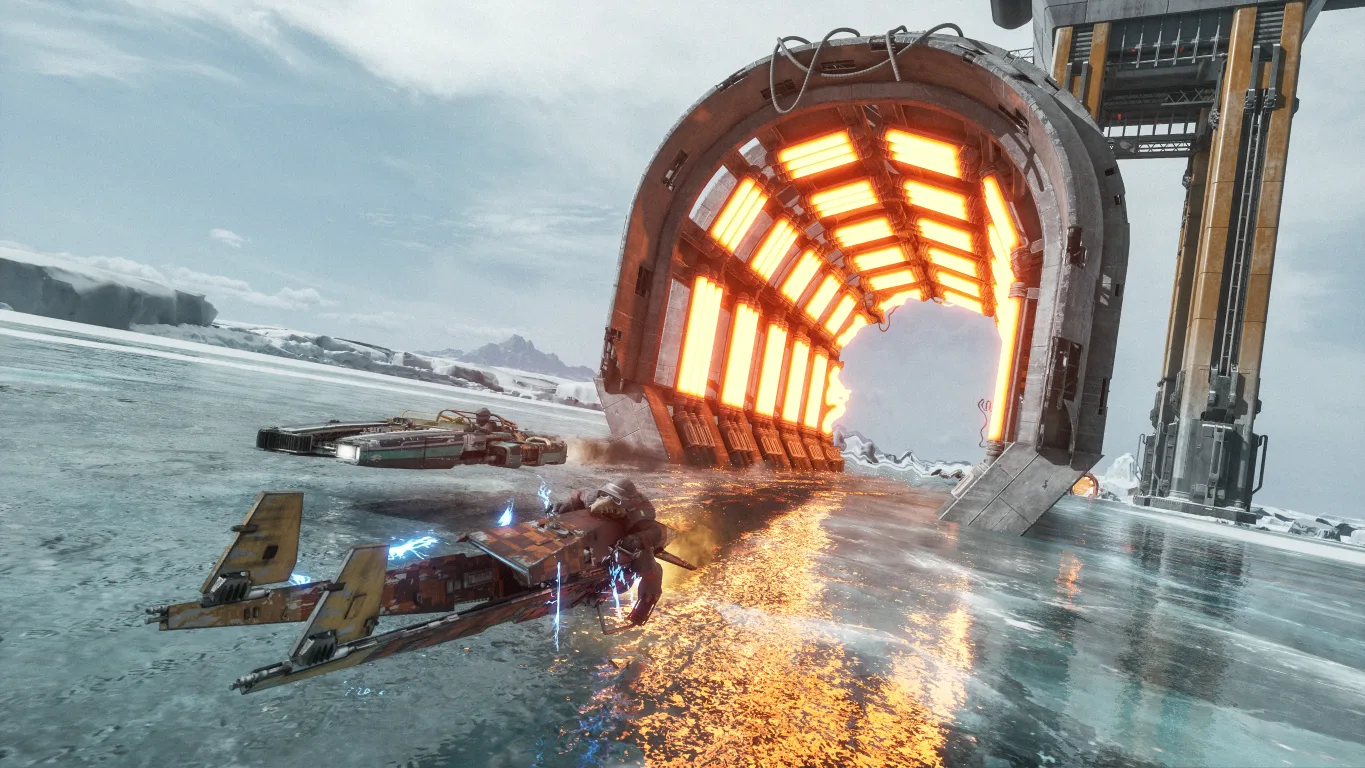
One of the joys of the Star Wars universe is that, really, you can imagine yourself being whatever you want to be. The vast galaxy of “Star Wars” games bears that out, especially recently: wannabe Jedi can imagine themselves in the boots of Cal Kestis or Kyle Katarn, blaster-wielding scoundrels have “Star Wars Outlaws” (after some much-needed patches), and amateur space pilots can try their hand at “Star Wars Squadrons.” But for those of us who still wax nostalgic for the “Ben-Hur”-like joys of the podrace from “The Phantom Menace,” Fuse Games has a new-generation game to scratch the itch that “Episode I – Racer” left decades prior: “Star Wars: Galactic Racer.”
“Galactic Racer” is a racing game first and a Star Wars game second, and that’s to its benefit. Sure, the window dressing screams a galaxy far, far away, with familiar-looking planets, a suitably rousing John Williams-ian score by Gordy Haas, and speeders and bikes that have that “used future” feel so central to George Lucas’ vision. But this is also from the minds behind Fuse Games, made of former developers at Criterion Games, who brought us “Burnout” and “Need for Speed”; the emphasis here is on gameplay, fast and furious and the right kind of frustrating.
The loose framework that undergirds the world, and its roguelite single-player campaign, is thus: You play Shade, a mysterious helmeted newbie to the freshly reformed Galactic League, a racing league founded by the gregarious Darius Pax. Pax wants to bring racing back to its pre-Empire glory days, which means hosting a dozen or so expert racers on dangerous, thrilling tracks around the Outer Rim. But Shade is here for more than racing glory—they’ve got a bone to pick with the League’s star player, Kestar Bool, whose past intersects with Shade in ways the campaign will reveal, and hopes to defeat him on the racetrack.
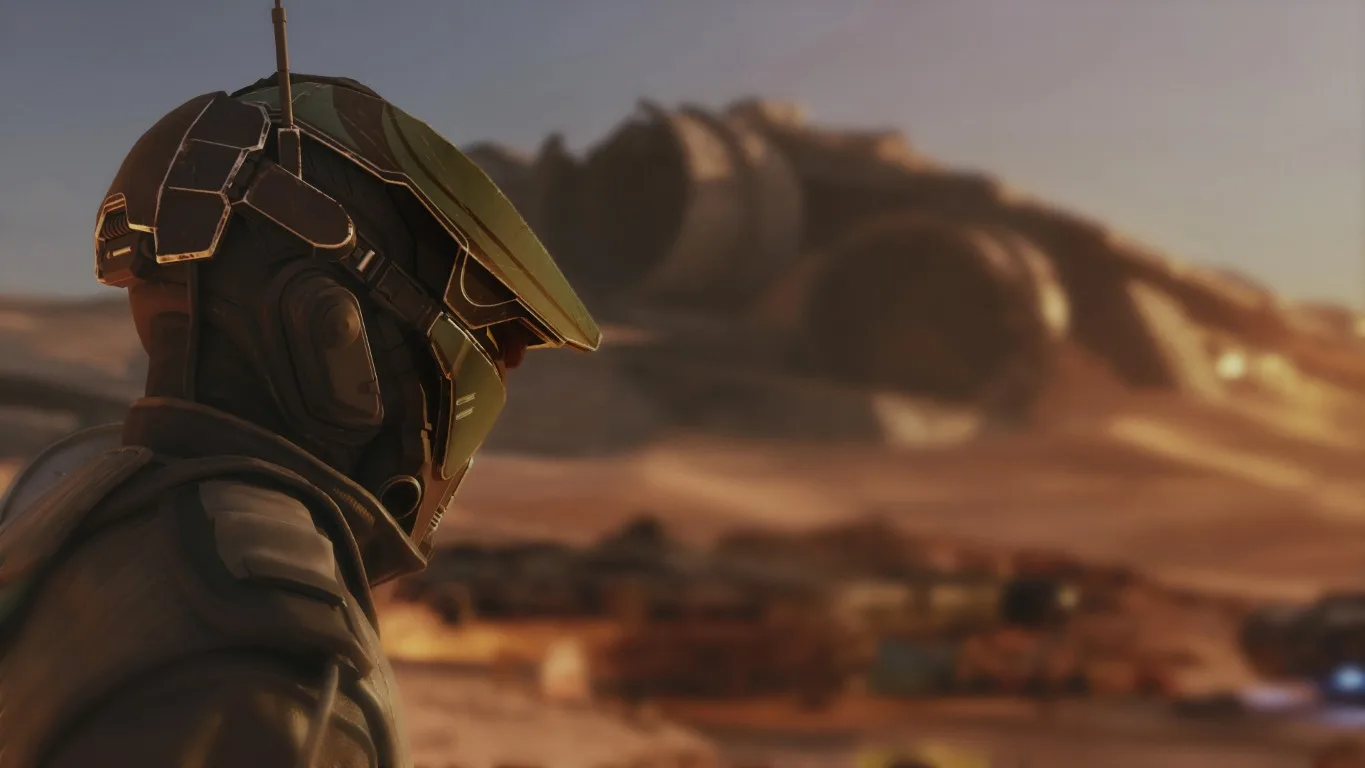
It’s a simple, straightforward narrative that offers just enough Star Wars flavor to feel like part of the universe, without requiring reams of homework to understand every little thing that’s going on. Sure, some familiar faces show up, including a run-in with an “Episode I” podracer who becomes an erstwhile ally in your quest to defeat Kestar. Some planets will make your nerd senses tingle, too, like “The Force Awakens” starship-graveyard Jakku or the salt-encrusted Crait from “The Last Jedi.” But even the new planets, and your fellow allies and competitors, make surprising impressions, as you form rivalries (and even alliances) with the various racers you’re pitted against.
But enough of the worldbuilding: How does it play? Well, prepare for a steep learning curve, especially if you’re less practiced in racing games: “Galactic Racer” follows the “Burnout” model, throwing you on treacherous tracks with traps, takedowns, and turns that will turn your speeder into scrap if you time them wrong. And crash you will, and often; “Galactic Racer” is a roguelite, whose short gameplay runs are balanced by high difficulty and even higher replayability. Crashing is the name of the game, especially in your first few runs, as you learn the controls, your speeder’s maneuverability, and memorize every hairpin curve the multiple tracks each planet has to offer.
Each time you restart your tour, you can upgrade the base stats on your craft (split between well-balanced landspeeders, speed-heavy speeder bikes that are brutal on turns, and finicky “skim speeders” that feel like the ultimate upgrade… if you can master them), cash in new “favors” that give you certain stat boosts, and pick a racing style that emphasizes everything from longer afterburners to brutal takedowns of your opponents. There are adventure game elements to spice up the campaign in between each sphincter-clenching race, as you figure out what powerups or abilities or aspects of the game you lean toward most, and double down on them. (Fret not, the infamous podracer makes its presence known as well, though mostly in its own separate game mode that doesn’t interact with the other speeders.)
But it’s the nanosecond-to-nanosecond thrills of the racing itself that “Galactic Racer” excels in. Once you get past that initial hump of frustration, and you win (or at least place) in your first race, the game becomes absolutely addictive. In addition to learning how each craft handles, you learn to manage the two different boosts the game gives you: a standard afterburner and a riskier “ramjet” that gives you nearly uncontrollable speed (and the risk of blowing up if you hold it down too much).
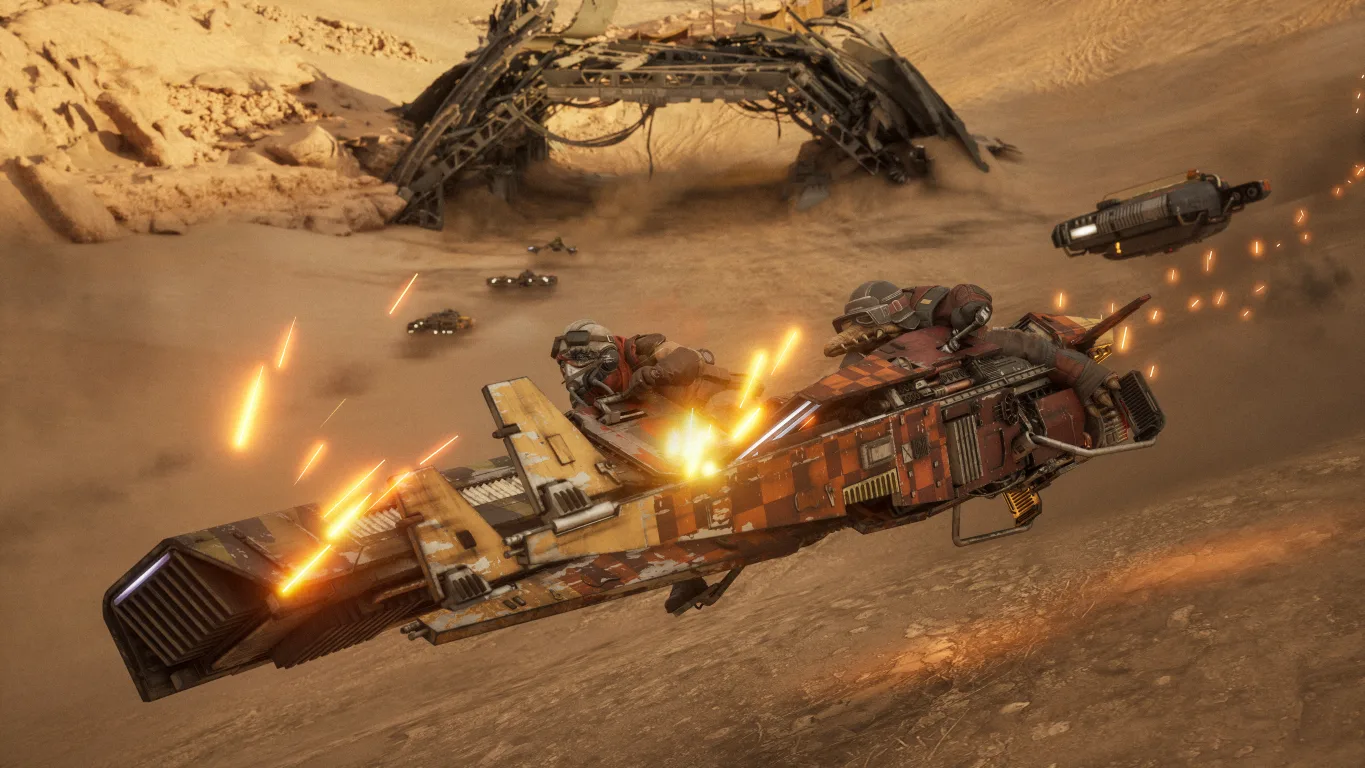
Those, combined with abilities ranging from speed boosts to autopilots to weapons you can use to disable your opponents, create a lot to manage when you’re simply trying to squint through each detailed map you whiz through. Is that junk Star Destroyer engine a shortcut, or something I’ll just smack into and lose crucial progress? That’s the calculus “Galactic Racer” forces you to make, and it’s as exciting as it is expletive-inducing.
The roguelite nature of each run gives you randomized parts to add to your speeder that assist with afterburners, make takedowns tastier, or turn status conditions like burning or cooling into advantages rather than drawbacks. If you bonk into walls too many times, you might damage these parts, which impairs you in other ways, and you have to wait till the next time you saunter past your rare parts dealer to get it fixed.
Outside the single-player campaign, “Galactic Racer” offers some arcade options, plus an online multiplayer element that feels relatively diverting, albeit missing some essential features that might cut down on replayability. (Currently, there’s no way to assemble a large group of friends and play a track together, or—most sinful—an option for split-screen multiplayer.) Granted, the roguelite mode is more than enough fun to be worth the price, but I couldn’t help feeling that “Episode I – Racer” fans will be kicking their heels in frustration at that omission.
Some small caveats aside, “Star Wars: Galactic Racer” is a shockingly addictive addition to the Star Wars games catalog, another winner in a year that already gave us the solid X-COM riff “Zero Company.” Some of the best stories in this universe live on the margins of the Skywalker saga, where the “war” in “Star Wars” thrums in the distant background. There’s no Empire here, no one brandishes a blaster; no one even really dies (at least, in the dozen or so hours I’ve spent on the campaign trail). It’s just “Days of Thunder” in Space, complete with smart-aleck mechanics, shady race sponsors, and a sneer-worthy ’80s bully of a villain you can’t wait to show up on the racetrack. Just look out for those acid lakes; they can get you if you’re not careful.