Organizing files for the launch of our new website, I came upon this. I grow old…I grow old…I shall wear the bottoms of my ski pants rolled.

January 25th, 1981
The 3rd Annual U.S. Film and Video Festival
Roger Ebert
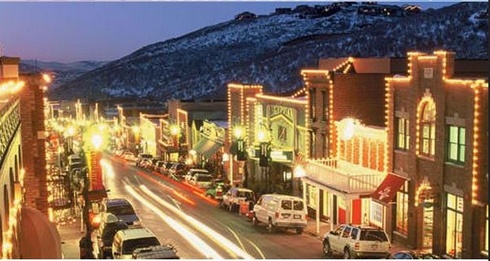
Park City, Utah – Up here in the mountains above the Great Salt Lake, everybody seemed to have a definition earlier this month of what an independent filmmaker was. It was just that nobody seemed to agree.
An “independent” was someone who worked outside the Hollywood studio system, obviously – except that such established actors as David Carradine and Ralph Waite thought of themselves as independents. An “independent feature” was one made on a low budget, obviously – but there was a large space between the $70,000 budget of “The Haunting of M” and the $700,000 budget of “Heartland”. An independent film had a unique personal vision, surely – except that films such as “Gal Young Un” were visualizations of classic short stories, and films such as “Impostors” looked like no reality anyone had ever seen before.
Maybe… someone suggested late in the afternoon during one of the long, rambling informal seminars around the fireplace… maybe an independent film is one that tells a story that the filmmaker believes has to be told, no matter what. No matter whether it’s “commercial,” no matter whether Hollywood will finance it, no matter whether anyone will ever want to pay to see it, it has to be told.
That was accepted as a provisional definition, during last week’s 3rd Annual U.S. Film and Video Festival, which was born in Salt Lake City and moved this year to the ski resort of Park City, not far from Robert Redford’s Sundance complex. This was the first film festival devoted solely to independent American features, and everybody here knew what an independent film was not: It was not a multimillion-dollar production, it probably had no major stars in it, it was not intended to flatter the lowest common denominator in its audiences.
Independent features have been around for a long time, but they probably never have been as numerous, as visible and as good as they are right now. They had their birth between the late 1930s and the early 1960s in the avant-garde films of such pioneers as Maya Daren, Kenneth Anger, Shirley Clark (“The Connection”), Jonas Mekas, and the young John Cassavetes who made “Shadows”. They have become more common in the last 5 or 10 years for a couple of reasons: idealistically, because film is the language of the new generation, and realistically, because the country is crawling with would-be filmmakers, the universities are turning them out by the hundreds, and there is little opportunity for them to work in overcrowded Hollywood.
Most of the people who graduate from college with degrees in cinema probably never make an independent film. Many of the people who do direct their own features may never have studied film. You don’t get to be a filmmaker by earning a degree. You make it happen for yourself, and in Park City, the countless stories of how independent films were financed and made began to add up into a litany of doing the impossible.
I was on the jury for the festival, which meant that during the week I judged eleven recent American independent features, some of them for the second and a few for the third time. I also saw several independent films that were outside of the competition. What I came away with, after the week, was a genuine sense of challenge and exhilaration. I’d just finished plowing through the commercial Hollywood movies of 1980¬ – the dreariest year in recent history for big movies. I’d survived the routine of the year-end “Best 10” lists, with all of their re¬minders of how few good films there had been all year long.
But now, in the darkness of a cozy little three-screen theater in Park City’s only shopping center, I was remembering how much fun the movies could be, and how easily they could open me up to new experiences and insights. There hadn’t been a week since the Cannes film Festival of… no, not 1980, but 1979… when I’d seen so many interesting movies. Here are some memories:
The first prize in the festival was shared by two features. Richard Pearce’s “Heartland” and Victor Nunez’s “Gal Young Un”. I’d heard of the Nunez film before; it won an award at the 1979 Chicago International Film Festival, but I’d missed seeing it there, and also at Cannes and Toronto in 1980, I finally caught up with it in Utah, and was enchanted. It’s a pointed human lesson based on a short story by Marjorie Kinnan Rawlings, about a rich spinster in the Florida of the Prohibition era, who is wooed and won by a sharpster who’s after her money and her labor. He immediately sets up an illegal still on her property, puts her to work running it, delivers the moonshine in a snappy roadster and brings about his own downfall by mortally offending the woman’s pride. The film is told with a droll sense of humor and a real empathy for the feelings of its heroine, who has a grave and sometimes funny dignity.
“Heartland” is one of the most ambitious independent features ever made. Produced by a group named Wilderness Women Productions in Missoula, Montana, it’s the story of a widow and her daughter who leave Kansas City and take the long rail journey West to where the woman will sign on as the cook and housekeeper for a widowed rancher. This sounds like it’s a setup for a romantic melodrama, but it’s not: “Heartland” is uncompromising in its portrait of frontier life. It is brutally realistic, and when the man and woman finally do get married and form a partnership, it is not a happy ending as much as a pact against nature. And yet the film is filled with a wonderful life, mostly because of the performance of Conchata Ferrell as the woman. (Rip Torn plays the rancher, a man of great silences.)
There were two documentaries among the eleven entries, and they were both given Special Jury Prizes. One was familiar to me: “The War at Home”, the documentary about the anti-Vietnam War protest movement in Madison, Wisconsin, which was compiled from the news film archives of Madison TV stations. It has played here commercially at the Sandburg, and I’ve written about it before.
The other was new: Jon Else’s remarkable “The Day Before Trinity”, which tells the story of J. Robert Oppenheimer’s project to develop an atomic bomb at Los Alamos, New Mexico. One of the reasons this movie was so powerful was that I thought knew the story already. I’d read about it, seen newsreels… It was part of history.
But Else located new footage taken at Los Alamos, and he also located a dozen or so veterans of the bomb project and lis¬tened to their memories. The resulting film is overwhelming, and saddening. We realize that the Bomb, that awful engine of destruction, was created by scientists in a wonderful intellectual summer camp, where all the research was subsidized and there was a heady wartime sense of adventure. Some of the memories are chilling: As scientists bet on how big the first explosion will be, Enrico Fermi takes side bets that Arizona will be vaporized. Through it all comes the story of Oppenheimer, a genius doomed by McCarthyism but also by his own curious loss of mission after Los Alamos.
The festival’s second prize went to a film that already is something of a commercial hit in Los Angeles and New York: John Sayles’ “The Return of the Secaucus Seven”, a funny melodrama about a group of friends who were young political activists in the late 1960s and hold a reunion 10 years after the end of that idealistic decade. The movie’s structure is predict¬able, and it’s a little confused in the opening scenes, but it does open out into a remarkable story of how we are changed by our times, how we are imprisoned by our memories, and how our destinies are sometimes almost visible in our beginnings.
Those were the prizewinners. There were other films that I also admired, among them Anna Thomas’ “The Haunting of M”, a superbly atmo¬spheric Scottish ghost story; Ralph Waite’s ‘On the Nickel”, starring Waite (the father on TV’s “The Waltons”) as a skid row alcoholic and drifter; Mark Rappoport’s “Imposters”, another witty and mannered exercise in style and social observation by the director of “Scenic Route”; Fred Keller’s “Tuck Everlasting”, a charming whimsy based on Natalie Babbit’s novel about a girl who meets a family that can live forever; Andrew Davis’ “Stoney Island”, which was shot here in Chicago and tells the story of a white kid who gets involved in a black blues band, and Rick King’s “Off the Wall”, the most old-fashioned of the films in that it sets itself in the countercul¬ture of six or seven years ago and shows the sometimes comic, sometimes satirical American odyssey of a dropout and outlaw.
There were many other films at Park City shown out of the official competition but reflecting the spirit of independent filmmaking. David Carradine’s “Americana” was about a Vietnam vet who tries to repair a merry-go-round on the outskirts of a Kansas town. Diane Orr’s “The Plan” was a fascinating documentary about a Mormon mother of five children under the age of 6 and how she tries to cope. Connie Field’s “The Life and Times of Rosie the Riveter”, was a sparkling documentary about women forced into the job market by World War II.
And the list continued with larger-budget Hollywood studio pictures that also qualified, in one way or another, as independent in spirit. My favorite was Jonathan Demme’s “Melvin and Howard”, which begins with the story of how a gas-station owner named Melvin Dummar allegedly was named in a Howard Hughes will and continues with Dummar’s own astonishing private search for the American dream. “Melvin and Howard” is scheduled for a Feb. 13 Chicago opening.
All of these films descended in a cascade at Park City. It was possible to see four good and challenging films in a day, after a year in which many months did not contain that many. It also was possible to reflect that many of these films may never find large audiences, because they exist outside the traditional distribution system, that cozy arrangement between the studios and the big exhibition chains. I imagine that a few of the Park City favorites will play commercially in Chicago: “Secaucus Seven” is a hit in L.A. and probably will surface here in an art house, and “Heartland”, correctly handled and promoted, could develop large and ferociously loyal audiences – it’s that kind of movie.
Many of the other independent features at Park City and wherever else they’re found, will find their audiences not in commercial theaters but in film festivals, on campuses, in revival theaters, in new repertory at places such as the Film Center and Facets, and, eventually, on public television or on cable networks (Home Box Office and CBS Cable were both represented at the festival).
It’s too bad that many of them seem closed out of the ordinary patterns of movie distribution, especially when so much genuine garbage is in the theaters. But audiences who seek them out will be rewarded. And maybe moviegoers who don’t care about independent films and their makers are like music lovers who don’t understand jazz. Remember what Louis Armstrong said about them? “There are somf indee folks that… if they don’t know, you can’t tell ’em.”

There were two film festivals there in 1981. The 3rd Park City Film and Video Festival was held in January. Redford admired the first three, however nascent, took over sponsorship, and renamed it after his ski resort. “I am an independent,” he said in his openin speech. At the time he was a superstar, and people scoffed. As events proved, Sundance reinvented the world of indie film, and Redford became the single most influential person in the independant world. If the First Generation was symbolized by Cassavetes, Redford was the poster oboy for the secong.
April 9, 2013