

Features



How to Mom Dance, as demonstrated by Michelle Obama for Jimmy O’Fallon
I’m trying to imagine other First Ladies doing this. I suspect Nancy Reagan would have had some moves.
Intro: “A Horrible Experience of Unbearable Length”
My third collection of reviews of movies I really hated. Order A Horrible Experience of Unbearable Length: More Movies That Suck from Barnes and Noble, Amazon or the independent bookstore of your choice:
Introduction to the book By Roger Ebert I received several messages from readers asking me why I felt it was even necessary for me to review “The Human Centipede II.” (There was also one telling me it should have been titled “Human Centipede Number Two,” but never mind that one.) My reply was that it was my duty. I feared it would attract large crowds to the box office, and as it turned out I was right. I did what I could to warn people away. Certain colleagues of mine discussed it as a work of art (however “flawed”). I would beg them to think really, really hard of another movie opening the same weekend that might possibly be better for the mental health of their readers.
It was not my duty to review many of the other movies in this book. I review most of the major releases during the year, but I also make it a point to review lots of indie films, documentaries, foreign films, and what we used to call “art movies” and might now call “movies for grown ups.” If I had skipped a few of these titles, I don’t believe my job would have been threatened. But I might have enjoyed it less.
After reviewing a truly good movie, the second most fun is viewing a truly bad one. It’s the in-between movies that can begin to feel routine. Consider, for example, the truly bad “Transformers: Revenge of the Fallen” (2009), the movie that provided the title for this book. I saw the movie, returned home, sat down at the computer keyboard, and the opening words of my review fairly flew from my fingertips: “Transformers: Revenge of the Fallen” is a horrible experience of unbearable length, briefly punctuated by three or four amusing moments. Where did those words come from? They were the simple truth. Gene Siskel always argued that he was a newspaperman first and a film critic second: “I cover the movie beat.” What that meant for him is that his first paragraph should be the kind of “lead” they teach you to write in journalism school. Before you get to your opinion about a new movie, you should begin with the news. We could have an interesting discussion about whether the opening of my “TROF” review was news or opinion. To me, it was completely factual. To many readers who posted comments on my blog, it was completely inaccurate. It was opinion, and my opinion was wrong.
Yes, there are people who like the Transformers movies. I sorta liked the first one myself, in 2007. The charm wore off. The third in the series, “Transformers: Dark of the Moon” (2011) was no better. Predictably, some critics were inspired by TDOM to analyze the visual style of Michael Bay. Finding success in a Michael Bay film is like finding the Virgin on a slice of toast, but less rewarding.
Sometimes in my negative reviews I have weaknesses. I’m aware of them, and yet I indulge them all the same. Show me a bad movie about zombies or vampires, for example, and I will inevitably go into speculation about the reality that underlies their conditions. A few days ago, I was re-watching Murnau’s original “Nosferatu” (1922), and something struck me for the first time. As you may recall, Graf Oriok, a character inspired by Count Dracula, encloses himself in a coffin and ships himself along with a group of similar coffins on a freighter bound for Wisbourg. He carries with him the Black Plague, which will kill everyone on board.
It struck me that this was an extraordinary leap of faith on his part. Inside the coffin he is presumably in the trance-like state of all vampires. He certainly must anticipate that everyone on board will soon be dead. The ship will be at the mercy of the winds and tides. If by good chance it drifts to Wisbourg (which it does), what can the good people of Wisbourg be expected to do? Prudently throw the coffins overboard or sink the ship to protect themselves from the plague, I imagine. But if they happen to open his coffin in sunlight, Graf Oriok will be destroyed. Luckily, he releases himself from the coffin at night, sitting bolt upright in a famous scene. But think of the things that could have gone wrong.
That’s how my mind works. We are now far away from the topic of “Nosferatu.” I am also fascinated by Darwin’s Theory of Evolution as it implies to zombies. Since Richard Dawkins teaches us that the only concern of a selfish gene is to survive until the next generation of the organism that carries it, what are the prospects of zombie genes, which can presumably be transmitted only by the dead? And now do zombies reproduce, or spread? Oh, I could go on. Why must they eat flesh? Why not a whole foods diet of fruits, vegetables and grains? Maybe a little fish?
I know this has nothing to do with film criticism. I am blown along by the winds of my own zeal. If a good vampire or zombie movie comes along, I do my best to play fair with it. With a bad one, I am merciless and irresponsible. That’s why I like the bad ones best.
Perhaps my reasoning goes like this: Few people buying the newspaper are likely to require a serious analysis of, for example, James Raynor’s “Angry and Moist: An Undead Chronicle” (2004). This is a zombie movie I haven’t seen so it will work well as an example. Therefore, it is my task to write a review that will be enjoyable to read even if the reader has no interest in the film and no plans to ever see it.
I suppose that explains a good many of the reviews in this book. Some of the films herein are only fairly bad. Some are not bad so much as evil and reprehensible. Others, let’s face it, have no importance at all other than in inspiring movie reviews. Of all the films in this book, it is for those I am most grateful.
Click here to order a new or used copy of I Hated, Hated, HATED this Movie (2000). And here to order, new or used, a copy of Your Movie Sucks (2007).

“The Tell-Tale Heart,” by Edgar Allan Poe
The Tell-Tale Heart
Edgar Allan Poe
TRUE! nervous, very, very dreadfully nervous I had been and am; but why WILL you say that I am mad? The disease had sharpened my senses, not destroyed, not dulled them. Above all was the sense of hearing acute. I heard all things in the heaven and in the earth. I heard many things in hell. How then am I mad? Hearken! and observe how healthily, how calmly, I can tell you the whole story.
It is impossible to say how first the idea entered my brain, but, once conceived, it haunted me day and night. Object there was none. Passion there was none. I loved the old man. He had never wronged me. He had never given me insult. For his gold I had no desire. I think it was his eye! Yes, it was this! One of his eyes resembled that of a vulture — a pale blue eye with a film over it. Whenever it fell upon me my blood ran cold, and so by degrees, very gradually, I made up my mind to take the life of the old man, and thus rid myself of the eye for ever.
Now this is the point. You fancy me mad. Madmen know nothing. But you should have seen me. You should have seen how wisely I proceeded — with what caution — with what foresight, with what dissimulation, I went to work! I was never kinder to the old man than during the whole week before I killed him. And every night about midnight I turned the latch of his door and opened it oh, so gently! And then, when I had made an opening sufficient for my head, I put in a dark lantern all closed, closed so that no light shone out, and then I thrust in my head. Oh, you would have laughed to see how cunningly I thrust it in! I moved it slowly, very, very slowly, so that I might not disturb the old man’s sleep. It took me an hour to place my whole head within the opening so far that I could see him as he lay upon his bed. Ha! would a madman have been so wise as this? And then when my head was well in the room I undid the lantern cautiously — oh, so cautiously — cautiously (for the hinges creaked), I undid it just so much that a single thin ray fell upon the vulture eye. And this I did for seven long nights, every night just at midnight, but I found the eye always closed, and so it was impossible to do the work, for it was not the old man who vexed me but his Evil Eye. And every morning, when the day broke, I went boldly into the chamber and spoke courageously to him, calling him by name in a hearty tone, and inquiring how he had passed the night. So you see he would have been a very profound old man, indeed , to suspect that every night, just at twelve, I looked in upon him while he slept.
Upon the eighth night I was more than usually cautious in opening the door. A watch’s minute hand moves more quickly than did mine. Never before that night had I felt the extent of my own powers, of my sagacity. I could scarcely contain my feelings of triumph. To think that there I was opening the door little by little, and he not even to dream of my secret deeds or thoughts. I fairly chuckled at the idea, and perhaps he heard me, for he moved on the bed suddenly as if startled. Now you may think that I drew back — but no. His room was as black as pitch with the thick darkness (for the shutters were close fastened through fear of robbers), and so I knew that he could not see the opening of the door, and I kept pushing it on steadily, steadily.
I had my head in, and was about to open the lantern, when my thumb slipped upon the tin fastening , and the old man sprang up in the bed, crying out, “Who’s there?”
I kept quite still and said nothing. For a whole hour I did not move a muscle, and in the meantime I did not hear him lie down. He was still sitting up in the bed, listening; just as I have done night after night hearkening to the death watches in the wall.
Presently, I heard a slight groan, and I knew it was the groan of mortal terror. It was not a groan of pain or of grief — oh, no! It was the low stifled sound that arises from the bottom of the soul when overcharged with awe. I knew the sound well. Many a night, just at midnight, when all the world slept, it has welled up from my own bosom, deepening, with its dreadful echo, the terrors that distracted me. I say I knew it well. I knew what the old man felt, and pitied him although I chuckled at heart. I knew that he had been lying awake ever since the first slight noise when he had turned in the bed. His fears had been ever since growing upon him. He had been trying to fancy them causeless, but could not. He had been saying to himself, “It is nothing but the wind in the chimney, it is only a mouse crossing the floor,” or, “It is merely a cricket which has made a single chirp.” Yes he has been trying to comfort himself with these suppositions ; but he had found all in vain. ALL IN VAIN, because Death in approaching him had stalked with his black shadow before him and enveloped the victim. And it was the mournful influence of the unperceived shadow that caused him to feel, although he neither saw nor heard, to feel the presence of my head within the room.
When I had waited a long time very patiently without hearing him lie down, I resolved to open a little — a very, very little crevice in the lantern. So I opened it — you cannot imagine how stealthily, stealthily — until at length a single dim ray like the thread of the spider shot out from the crevice and fell upon the vulture eye.
It was open, wide, wide open, and I grew furious as I gazed upon it. I saw it with perfect distinctness — all a dull blue with a hideous veil over it that chilled the very marrow in my bones, but I could see nothing else of the old man’s face or person, for I had directed the ray as if by instinct precisely upon the damned spot.
And now have I not told you that what you mistake for madness is but over-acuteness of the senses? now, I say, there came to my ears a low, dull, quick sound, such as a watch makes when enveloped in cotton. I knew that sound well too. It was the beating of the old man’s heart. It increased my fury as the beating of a drum stimulates the soldier into courage.
But even yet I refrained and kept still. I scarcely breathed. I held the lantern motionless. I tried how steadily I could maintain the ray upon the eye. Meantime the hellish tattoo of the heart increased. It grew quicker and quicker, and louder and louder, every instant. The old man’s terror must have been extreme! It grew louder, I say, louder every moment! — do you mark me well? I have told you that I am nervous: so I am. And now at the dead hour of the night, amid the dreadful silence of that old house, so strange a noise as this excited me to uncontrollable terror. Yet, for some minutes longer I refrained and stood still. But the beating grew louder, louder! I thought the heart must burst. And now a new anxiety seized me — the sound would be heard by a neighbour! The old man’s hour had come! With a loud yell, I threw open the lantern and leaped into the room. He shrieked once — once only. In an instant I dragged him to the floor, and pulled the heavy bed over him. I then smiled gaily, to find the deed so far done. But for many minutes the heart beat on with a muffled sound. This, however, did not vex me; it would not be heard through the wall. At length it ceased. The old man was dead. I removed the bed and examined the corpse. Yes, he was stone, stone dead. I placed my hand upon the heart and held it there many minutes. There was no pulsation. He was stone dead. His eye would trouble me no more.
If still you think me mad, you will think so no longer when I describe the wise precautions I took for the concealment of the body. The night waned, and I worked hastily, but in silence.
I took up three planks from the flooring of the chamber, and deposited all between the scantlings. I then replaced the boards so cleverly so cunningly, that no human eye — not even his — could have detected anything wrong. There was nothing to wash out — no stain of any kind — no blood-spot whatever. I had been too wary for that.
When I had made an end of these labours, it was four o’clock — still dark as midnight. As the bell sounded the hour, there came a knocking at the street door. I went down to open it with a light heart, — for what had I now to fear? There entered three men, who introduced themselves, with perfect suavity, as officers of the police. A shriek had been heard by a neighbour during the night; suspicion of foul play had been aroused; information had been lodged at the police office, and they (the officers) had been deputed to search the premises.
I smiled, — for what had I to fear? I bade the gentlemen welcome. The shriek, I said, was my own in a dream. The old man, I mentioned, was absent in the country. I took my visitors all over the house. I bade them search — search well. I led them, at length, to his chamber. I showed them his treasures, secure, undisturbed. In the enthusiasm of my confidence, I brought chairs into the room, and desired them here to rest from their fatigues, while I myself, in the wild audacity of my perfect triumph, placed my own seat upon the very spot beneath which reposed the corpse of the victim.
The officers were satisfied. My MANNER had convinced them. I was singularly at ease. They sat and while I answered cheerily, they chatted of familiar things. But, ere long, I felt myself getting pale and wished them gone. My head ached, and I fancied a ringing in my ears; but still they sat, and still chatted. The ringing became more distinct : I talked more freely to get rid of the feeling: but it continued and gained definitiveness — until, at length, I found that the noise was NOT within my ears.
No doubt I now grew VERY pale; but I talked more fluently, and with a heightened voice. Yet the sound increased — and what could I do? It was A LOW, DULL, QUICK SOUND — MUCH SUCH A SOUND AS A WATCH MAKES WHEN ENVELOPED IN COTTON. I gasped for breath, and yet the officers heard it not. I talked more quickly, more vehemently but the noise steadily increased. I arose and argued about trifles, in a high key and with violent gesticulations; but the noise steadily increased. Why WOULD they not be gone? I paced the floor to and fro with heavy strides, as if excited to fury by the observations of the men, but the noise steadily increased. O God! what COULD I do? I foamed — I raved — I swore! I swung the chair upon which I had been sitting, and grated it upon the boards, but the noise arose over all and continually increased. It grew louder — louder — louder! And still the men chatted pleasantly , and smiled. Was it possible they heard not? Almighty God! — no, no? They heard! — they suspected! — they KNEW! — they were making a mockery of my horror! — this I thought, and this I think. But anything was better than this agony! Anything was more tolerable than this derision! I could bear those hypocritical smiles no longer! I felt that I must scream or die! — and now — again — hark! louder! louder! louder! LOUDER! —
“Villains!” I shrieked, “dissemble no more! I admit the deed! — tear up the planks! — here, here! — it is the beating of his hideous heart!”
With thanks to Old Hollywood, which is an extraordinary collection.
More than 140 of my pages are linked at the bottom of the right column.
var a2a_config = a2a_config || {};
a2a_config.linkname = “Roger Ebert’s Journal”;
a2a_config.linkurl = “http://blogs.suntimes.com/ebert/”;
a2a_config.num_services = 8;

Ella: It don’t mean a thing if it ain’t got that swing
var a2a_config = a2a_config || {};
a2a_config.linkname = “Roger Ebert’s Journal”;
a2a_config.linkurl = “http://blogs.suntimes.com/ebert/”;
a2a_config.num_services = 8;

House on Haunted Hill
The Ebert Club is invites you to share this classic William Castle B-rated movie, streaming free. And please join the Club and explore an eclectic assortment of discoveries. Your subscription helps support the Newsletter, the Far-Flung Correspondents and the On-Demanders on my site. – Roger Ebert
House on Haunted Hill (1959) Directed by William Castle. Produced by William Castle. Written by Robb White. Starring Vincent Price, Carolyn Craig, Elisha Cook, Carol Ohmart, Alan Marshal and Julie Mitchum.Synopsis: House on Haunted Hill is the tale of five people invited to spend the night inside a haunted house by an eccentric millionaire, Fredrick Loren, whose throwing a “party” for his fourth wife Annabelle – with the stipulation that the power will be out and the all the doors locked at midnight; allowing no escape. Anyone who stays inside the house for the entire night, assuming they’re still alive come morning, will receive $10,000 each.The five guests all arrive in separate funeral cars with a hearse leading, which he says may be empty now – but they may be in need of it later. Frederick explains the rules of the party and gives each of the guests a .45 pistol for protection. Frederick’s wife tries to warn the guests that her husband is psychotic, causing them to be very suspicious of him now, especially Nora Manning who becomes convinced he’s trying to kill her when she keeps seeing mysterious ghouls – including the ghost of Annabelle, who’d apparently hanged herself after being forced to attend the party….holy crap, what the hell’s going on..?!
For more B-rated treasures, go here to join the Club
P.S. ~ IMDb reports: “William Castle used a gimmick called ‘Emergo’ in theaters. When the skeleton rises from the acid vat in the film, a lighted plastic skeleton on a wire appeared from a black box next to the screen to swoop over the heads of the audience. The skeleton would then be pulled back into the box as the skeleton in the film is ‘reeled in.’ Many theaters soon stopped using this effect because when the local boys heard about it, they would bring slingshots to the theater; when the skeleton started its journey, they would pull out their slingshots and fire at it.”
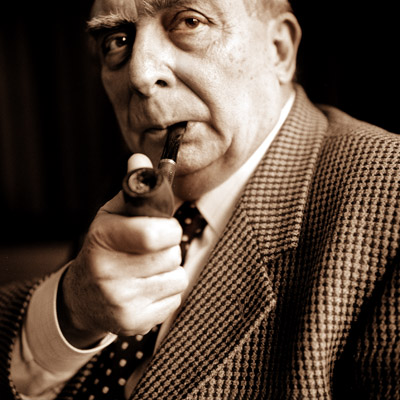
Claude Chabrol, RIP. The master at midpoint
Claude Chabrol, who died Sunday, Sept. 12 at 80, was a founder of the New Wave and a giant of French cinema. This interview, which took place during the 1970 New York Film Festival, shows him at midpoint in his life, just as he had emerged from a period of neglect and was making some of his best films.
By Roger Ebert
NEW YORK — Claude Chabrol’s “This Man Must Die” is advertised as a thriller, but I found it more of a macabre study of human behavior. There’s no doubt as to the villain’s identity, and little doubt that he will die (although how he dies is left deliciously ambiguous).
Unlike previous masters of thrillers like Hitchcock, Chabrol goes for mood and tone more than for plot. You get the notion that his killings and revenges are choreographed for a terribly observant camera and an ear that hears the slightest change in human speech.
For this reason, particularly, it’s necessary to put up a squawk and insisted on the film’s original subtitled version; without the rhythm of the sound track, the movie simply doesn’t work. New Yorkers saw the subtitles, of course, but Allied Artists apparently decided to let the rest of the country see a wretched botch of a dubbing job.
I wouldn’t be surprised if the dubbed version flopped; “Z” ran for months in its exquisite subtitled version, but flopped in the neighborhoods because a lousy dubbed version was substituted.
Let’s face it. Movies by director like Chabrol or Costa-Gavras are intended for the more literate section of the movie audience. You can dub a spaghetti Western and nobody cares, but mess with Chabrol and you’re eliminating the very quality audiences respond to in his work.
In any event, we’re seeing the good version here, and it is one of the best Chabrol films since he began his new career as a student of murder. With Godard veering ever more erratically into left field, and Truffaut exhibiting an alarming tendency to get cute, it’s actually beginning to appear that Chabrol will become the front-running French director of the 1970s – commercially, and maybe even artistically.
Yet as recently as 1967, in his “Interviews with Film Directors,” Andrew Sarris was actually able to write about Chabrol in the past tense: “He quickly became one of the forgotten figures of the nouvelle vague . . . Chabrol found himself so demode by the mid-1960s that he was forced to accept commissioned projects to keep his hand in.”
But just then, when his career as a serious director seemed most in doubt, Chabrol arrived at the 1968 New York Film Festival with “Les Biches.” It was an artful combination of lesbianism and very Chabrolian irony, with a nice bit of murder at the end, which forced you to re-think all the characters. And Chabrol, the first of the New Wave directors to be hailed and the first to be dismissed, was very clearly back in business again.
Les Biches
“Les Biches” was the first film Chabrol made with Andre Genovese, a young Parisian who is, Chabrol says, the only producer he has ever been able to work happily with. They followed it with “La Femme Infidele” (1969), Chabrol’s greatest critical success since “Les Cousins” a decade earlier. Then came “This Man Must Die,” “Le Boucher,” one of the hits of this year’s New York Film Festival, and “Le Rupture,” still unseen in the United States. (“We’re certainly going to have to change that title for the American release,” Chabrol notes cheerfully.)
Taken together, this group of films seems to announce that, at 40, Chabrol is finally realizing the great promise of his early career, There have been 18 Chabrol features so far, and they reflect a distinctly erratic chapter in the history of the New Wave. Chabrol was there at the very beginning, first as a critic for Cahiers du Cinema and then as the director of perhaps the first New Wave film. His “Le Beau Serge” (1958) preceded Truffaut’s “The 400 Blows” by a few months, and when Godard’s “Breathless” appeared the original triumvirate of New Wave directors was established. It still rules.
Chabrol’s sensationally successful “Les Cousins” followed, also in 1958, and the next year he made “A Double Tour” and “Les Bonnes Femmes.”
Although he was by then routinely linked with Truffaut and Godard, his style and taste in material didn’t resemble theirs (nor did they resemble each other, of course, although they made a convenient grouping because of their common disregard for the existing writer-dominated French cinema.)
Chabrol’s 1962 “Landru,” from a screenplay by Francoise Sagan about a World War I mass murderer, can be seen in hindsight as characteristically Chabrolian but having little connection with the concerns of other New Wave directors. It was coolly professional and exhibited the fascination with murder that has been his subject in all the recent films produced by Genovese.
Le Boucher
“Landru” was a commercial and critical success, but “Ophelia” the same year was a failure, beginning a period of involuntary idleness for Chabrol. He married the actress Stephane Audran in 1962 (she was Jean-Louis Trintignant’s former wife and had starred in “Les Cousins”). And then he announced a number of projects, but nothing came of them. In 1964 he directed the first of three comedy thrillers he considers potboilers.
All three were frankly jobs done for money, and if some auteur critics defended them, not many others found them worthy of Chabrol. A 1967 “comeback” project for Universal’s European production division, “The Champagne Murders,” starred Anthony Perkins and was praised in France. But the mutilated U.S. version was a disaster.
One night recently, Chabrol sipped a Scotch and soda in the Greenwich Village apartment of a friend, and talked about it.
“How do you become a director? First, you must start. Second, you must find a producer who is a human being. Andre Genovese is a human being. I can say of all my previous producers that I hated them and they hated me. Just before I met Andre, things were at their blackest. I was doing ‘The Champagne Murders,’ and the producer, so called, was a young man named Jay Kanter who was in charge of Universal’s operation over there.
“He was a good agent, they told me. Why not? But as a producer he was a joke. After I finished the film, they brought in an editor who was described as a ‘doctor.’ He was supposed to make a film out of my film. So what did he do? He made a hodgepodge. For the English version, he cut out 20 -minutes, and inevitably they were the exact 20 minutes for which I made the film.”
Chabrol spread his hands in a gesture of futility. “Editors have an uncanny ability to find what you feel is most important, and cut it out,” he said. “I could have made a stink, but I wasn’t in a very strong position just then. At least they let me have the final cut for the French version. Perhaps I’m not the purist I ought to be. When we were all writing for Cahiers, we looked at Hollywood films that everyone thought were commercial, and we discovered art and morality in them. Fifteen years later, with these recent films of mine, perhaps I’m taking art and morality and making them commercial . . .”
In a sense he’s correct, although “commercial” is a word too negatively charged to describe the exquisite subtlety of “Le Boucher” or “This Man Must Die” (even if they are advertised as thrillers).
Perhaps professionalism is the quality that ought to be substituted; the early Cahiers critics appreciated that quality to such a degree that they actually prized directors whom accepted routine assignments and turned them out competently. Even today, when the budget is not exactly critical, Chabrol makes a point of telling you that John Ford shunned covering shots, and that every shot Chabrol takes is in the film.
Because Genovese respects this, Chabrol says, he gives Chabrol a free hand in making his films, and that, you see, is why the last three years have been so productive for Chabrol.
“Most of the French producers,” Chabrol explained, “are like Zanuck. No, not like Zanuck. Like a little Zanuck. I have a certain regard for Zanuck himself. You know I used to work for him. That’s right! I was the Paris publicity man for 20th Century-Fox in 1955.”
Chabrol sipped his Scotch very seriously, for comic timing, and then allowed himself to grin. “When I quit,” he said, “you’ll never guess who got my job. I gave it to Jean-Luc Godard. Of course he was even worse as a publicity man than I was.
“He always made sure to have the lavatory key. He would come into the office and look busy for an hour, and then say he was sick. Then he would lock himself in the lavatory and read scripts. I know the feeling because I like to read all the time myself, when I’m not watching movies. During the war I was sent out into the country — I must have been about 10 at the time — and I read detective novels all day.
Ten Day’s Wonder
“It was at that time I first read ‘Ten Days Wonder,’ by Ellery Queen, which will be my next film. In writing the script, I worked from the very same copy of Ellery Queen that I read 30 years ago.
“When I wasn’t reading I was going to the movies. I saw ‘Snow ‘White’ at least 10 times between 1937 and 1940 and I think it influenced my work, a little. It was a good horror film. The death of the witch was the best thing Disney ever did. Of course, murder always heightens the interest in a film. Even a banal situation takes on importance when there’s a murder involved.
“I suppose that’s why I choose to work with murder so often. That’s the area of human activity where the choices are most crucial and have the greatest consequences. On the other hand, I’m not at all interested in who-done-its. If you conceal a character’s guilt, you imply that his guilt is the most important thing about him. I want the audience to know who the murderer is, so that we can consider his personality.”
Chabrol said he is rather happy right now about the way his career is going.
“With the films since ‘Les Biches,’ I think I’m on the right track. Not that I was ever on the wrong track, but I believe that period of idleness helped me think things over. You might consider a concert pianist, suddenly unable to give concerts. So he sits at home and practices for two or three years, until somebody hires him again. And then they don’t think about the two years, they think about how well he plays . . .
“Certainly I’m happy right now making these films about murder. My interest isn’t in solving puzzles, but in studying human behavior. Nothing else interests me so much. I’m not a chansonnier, a man obsessed with the events of the day. I am a Communist, certainly, but that doesn’t mean I have to make films about the wheat harvest. I think Godard’s political films have been messy. Right now, Jean-Luc seems to be going through a bachelor’s crisis: Should I marry politics or remain free?”
Chabrol leaned forward to share a confidence.
“I’ll tell you a Party secret,” he said. “Spiro Agnew is a double agent. Of course, he doesn’t know it, but that’s the best kind of agent there is — because he can never blow his own cover!”
His face opened into a beatific smile. He finished his Scotch. He sighed. “Now we go back to France to make a film about murder again,” he said. “In this one, I kill everyone, but it’s no big deal. They’re living at the beginning and dead at the end. In between, there’s a story about a man who breaks the Ten Commandments, one by one. Catherine Deneuve will star, and of course Orson Welles will play God.”
I have many Chabrol reviews online. Use Search on my home page. Here is my Great Movies Collection review of Le Boucher.
From the Telegraph, the best Chabrol obituary..
Chabrol’s 50th and final film: “Inspector Bellamy” (2009)
☑ All of my TwitterPages are linked under the category Pages in the right margin of this page.
var a2a_config = a2a_config || {};
a2a_config.linkname = “Roger Ebert’s Journal”;
a2a_config.linkurl = “http://blogs.suntimes.com/ebert/”;
a2a_config.num_services = 8;

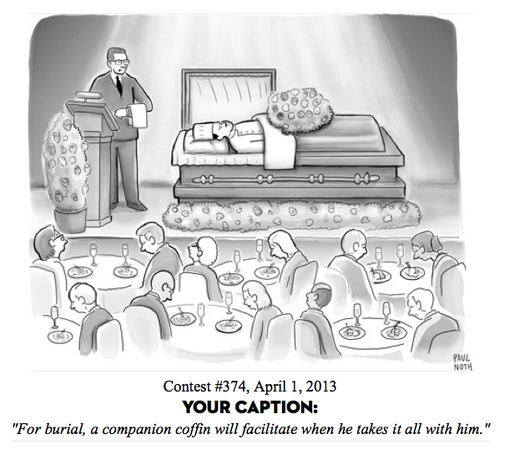
Many of my losing entries in the New Yorker’s daunting Cartoon Caption Contest
It has become a ritual for me to enter the New Yorker’s weekly Cartoon Caption Contest. I won only once, long ago in April 2011, and the magazine’s cartoon editor, Robert Mankoff, wrote a blog about that. In his blog he included three of my losing submissions he enjoyed…and one that was too tumescent, perhaps, to get past the magazine’s board of editors. I believe that one (above) was the funniest I’ve ever submitted. But look over these losers and I’ll link Mankoff’s blog down at the bottom
Go here for Robert Mankoff’s blog.
And click here to enter this week’s contest.
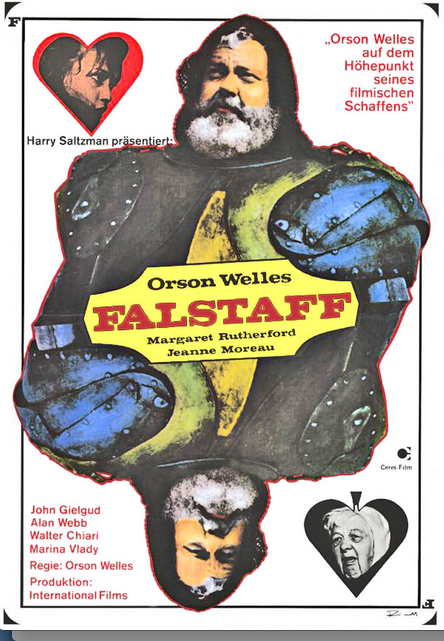
We have heard the chimes at midnight. “Falstaff,” by Orson Welles, free online
Great Movie / Roger Ebert / June 4, 2006
There live not three good men unhanged in England. And one of them is fat and grows old.
How can it be that there is an Orson Welles masterpiece that remains all but unseen? I refer not to incomplete or abandoned projects that have gathered legends, but to “Chimes at Midnight” (1965), his film about Falstaff, which has survived in acceptable prints and is ripe for restoration. I saw the film in early 1968, put it on my list of that year’s best films, saw it again on 16mm in a Welles class I taught, and then could not see it for 35 years.
It dropped so completely out of sight that there is no video version in America, Britain or France. Preparing to attend the epic production of both parts of Shakespeare’s “Henry IV” at the Chicago Shakespeare Theater, I wanted to see it again and found it available on DVD from Spain and Brazil. Both versions carry the original English-language soundtrack; the Brazilian disc is clear enough and a thing of beauty. What luck that Welles shot in black-and-white, so there was no color to fade.
This is a magnificent film, clearly among Welles’ greatest work, joining “Citizen Kane,” “The Magnificent Ambersons,” “Touch of Evil” and (I would argue) “The Trial.” It is also magnificent Shakespeare, focusing on Falstaff through the two “Henry IV” plays to his offstage death in “Henry V.” Although the plays are much abridged, it is said there is not a word in the film not written by Shakespeare.
Falstaff, “this huge hill of flesh,” is one of Shakespeare’s greatest characters — the equal, argues Harold Bloom, of Hamlet. He so dominates the Henry IV plays that although Shakespeare promised he would return in Henry V, he reconsidered; the fat knight would have sounded the wrong note in that heroic tale, and so we learn from Mistress Quickly of his death, as he “babbl’d of green fields.”
Welles was born to play Falstaff, not only because of the physical similarity but because of the rich voice, sonorous and amused, and the shared life experience. Both men lived long and too well, were at odds with the powers at court and were constantly in debt. Both knew disappointment, and one of the most sublime moments in Welles’ career is simply the expression on his face at the coronation of Henry V, when he cries out “God save thee, my sweet boy,” and the new king replies, “I know thee not, old man.”
Prince Hal, later Henry V, is played in the film by Keith Baxter, who looks dissolute enough in the roistering at the Boars Head Tavern, but as early as Act 1, Scene 2 is an unpleasant hypocrite in the monologue where he admits his present misdeeds but promises to reform at the right time. In Shakespeare, this is a soliloquy; in Welles, Falstaff listens in the back of the shot and is forewarned. Later, in an echo of that composition, the prince looks impatiently toward the field of battle as Falstaff, behind him, questions the concept of honor. That each man hears the other’s intended soliloquy adds a dimension to both.
Welles as director uses some of his familiar visual strategies; the vast interiors of Henry IV’s castles contrast with the low ceilings and cluttered rooms of bawdy houses, just as the vast space of Kane’s great hall contrasts with the low ceilings and dancing girls of the New York Inquirer. Royalty in “Chimes at Midnight” is framed by vast cathedral vaults, with high windows casting diagonals of light. Welles uses dramatic camera angles, craning to look up at the trumpeters atop the battlements as Henry IV rides off to battle.
At Mistress Quickly’s, on the other hand, Falstaff and his roisterers have great freedom of movement involving doorways and posts, barrels and vertiginous staircases, barking dogs and laughing wenches. He and other actors circle verticals and one another as they speak, just as Welles and Joseph Cotten circled in “Citizen Kane” and “The Third Man.” And watch the use of deep focus when he begins a shot with Hal seated in the background and, as news of his father’s death is conveyed, Hal stands and moves forward, finally looming over the camera in foreground. All one shot.
The scene of the battle of Shrewsbury is justly famous. It lasts fully 10 minutes, chaotic action at a brutal pitch, horses and men confused in smoke and fog, steel crashing against steel, cries of pain, desperate struggles, confused limbs caked in mud and blood, men falling exhausted or dead. Barbara Leaming, one of Welles’ biographers, says the scene was created by careful framing; Welles at no time had more than about 100 extras, yet seems to have a multitude, and the violence of the struggle was studied by Mel Gibson before he directed “Braveheart.”
The battle is intercut with shots of a fat man in armor, hurrying and scurrying out of the way and finally playing dead. When Hal finds Falstaff flat on his back, he cries out, “What, old acquaintance! Could not all this flesh keep in a little life?” We know Falstaff is not dead, and Welles finds a way to let Hal know, too: the frost on the old man’s breath puffs out from beneath his visor. Yes, it was cold. Welles shot on location in Spain, in winter; his first shot shows Falstaff as a tiny figure in a vast field of snow, his last shows Falstaff’s coffin being pushed across snow toward his grave, and in several of John Gielgud’s speeches as Henry IV, we can see the frost on his breath.
That Gielgud played the king and others such as Margaret Rutherford (Mistress Quickly) Jeanne Moreau (Doll Tearsheet) and Fernando Rey (Worcester) also appeared in the film is a tribute to Welles’ reputation, for on a budget of less than $1 million he was, like Falstaff, not prompt to pay. Gielgud plays Henry IV as a dying man almost from his earliest scenes, plagued with guilt because of how he won his throne. His son is no consolation; the king envies Northumberland his son Henry Percy, known as Hotspur (Norman Rodway), and wishes “would I have his Harry, and he mine.” He excoriates the thief and whoremonger Hal and his low companions, none lower in deportment or loftier in essential humanity than Falstaff.
How good is Falstaff? Consider the way warm affection illuminates the face of Jeanne Moreau as Doll Tearsheet caresses and tickles her beloved old rogue. Note the boundless affection Falstaff has for all around him, so real that even Quickly forgives his debts and allows him to contract new ones.
Such scenes illuminate the life Welles poured into “Chimes at Midnight.” He came early to Shakespeare; he edited and published editions of some of the plays while still at prep school. On stage and screen, he was also Othello and Macbeth, his voice fell naturally into iambic rumbles, he was large enough for heroes and so small he could disappear before Henry V’s scorn. He once asked an audience, reduced by a snowstorm: “Why are there so many of me and so few of you?”
There was not something Falstaffian about Welles, there was everything. As a young man he conquered all that came before him (at Shrewsbury a knight meekly surrenders to the old man, awed by his leftover reputation). Welles grew fat and in debt, took jobs unworthy of him, was trailed by sycophants and leeches, yet was loved by good women and honored by those who could see him clearly. And he battled on, Quixotic as well as Falstaffian, commencing grand schemes and sometimes actually finishing them (indeed, his “Don Quixote” can now be seen in intriguing but incomplete form).
The crucial point about “Chimes at Midnight” is that although it was rejected by audiences and many critics on its release, although some of the dialogue is out of sync and needs to be adjusted, although many of the actors become doubles whenever they turn their backs, although he dubbed many of the voices himself, although the film was assembled painstakingly from scenes shot when he found the cash — although all of these things are true, it is a finished film, it realizes his vision, it is the Falstaff he was born to direct and play, and it is a masterpiece. Now to restore it and give it back to the world.
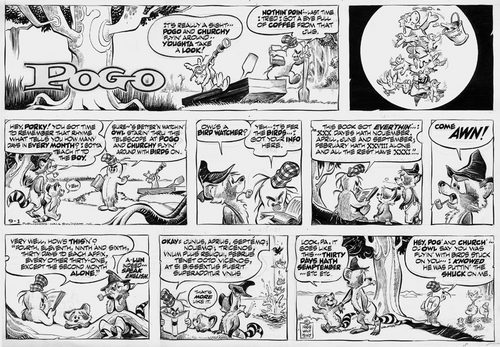
Walt Kelly, an immortal
The creator of “Pogo” died on this day in 1973.
☑ Click to expand.
var a2a_config = a2a_config || {};
a2a_config.linkname = “Roger Ebert’s Journal”;
a2a_config.linkurl = “http://blogs.suntimes.com/ebert/”;
a2a_config.num_services = 8;

Werner Herzog reads “Go the F**k to Sleep”
var a2a_config = a2a_config || {};
a2a_config.linkname = “Roger Ebert’s Journal”;
a2a_config.linkurl = “http://blogs.suntimes.com/ebert/”;
a2a_config.num_services = 8;
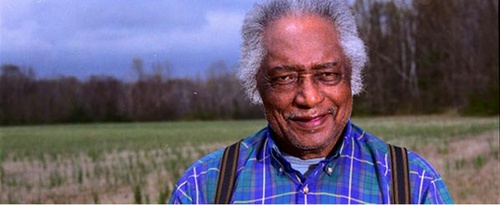
R. L. Burnside: A something man
I don’t like to link to music vidos that are only slideshows, without live performance footage. But this first clip is my favorite Burnside song, and I think it’s appropriate for hard times.
R. L. Burnside on Wikipedia.

The triumph of the day-fly
Thanks to my reader Carl Appleton for the link.
var a2a_config = a2a_config || {};
a2a_config.linkname = “Roger Ebert’s Journal”;
a2a_config.linkurl = “http://blogs.suntimes.com/ebert/”;
a2a_config.num_services = 8;
How Michael Caine Speaks
My interview with Michael Caine in Budapest: “The hardest thing for an actor to do is to do nothing.”.
var a2a_config = a2a_config || {};
a2a_config.linkname = “Roger Ebert’s Journal”;
a2a_config.linkurl = “http://blogs.suntimes.com/ebert/”;
a2a_config.num_services = 8;

The Best B-Rated Movie Trailers Ever!
Each year, as film critics publish their top 10 lists, I can’t help but feel a pang of genuine empathy for those who go unheralded – all those hard working wannabes and former television stars who’d poured their heart and souls into making the best bad movie they could, dammit. Seriously, there’s an art to making crap and I think we should celebrate it! And so for what it’s worth, here’s my top 10 list of “The Best B-Rated Movie Trailers Ever!” – Marie Haws, Ebert Club Secretary.
10 – Message from Space (1978)
Happiness is being on the road again
By Roger Ebert
November 16, 1986
Most people who are on the road all the time seem to be running from something. Willie Nelson seems to be looking for it. One of his best friends says Willie can’t be happy for long unless he’s going somewhere – by plane, car, train, bus, foot; it doesn’t matter, just as long as he’s in motion. One recent rainy day, Willie flew out of Austin, Texas, and spent some time in Chicago, and later that night laid his head to rest in New York City.
“I guess I’m just restless,” he said here, stirring sugar into his black coffee in the middle of the afternoon. “It’s difficult for me to stay in one spot for long. I really do like to get up and go somewhere, maybe because I’ve done it all my life. Billy Joe Schaffer has a line, about being so restless that moving’s the closest thing to being free.”
Nelson was wearing a trimmed-down version of the bushy beard he grew for “Red-Headed Stranger,” his new movie, and he had his long hair in two braids — he’s letting it grow again, after cutting it short a few years ago. He was in Chicago to promote the movie, a labor of love that he filmed on his Texas ranch with the help of friends, neighbors, and a mysterious Boston woman who turned up one day with a check for $50,000. (The film’s distributor has yet to book a Chicago area theater.)
He is a big star and he doesn’t travel light. There must have been a half dozen business partners, assistants, publicists, movie distributors and old pals who checked into the hotel with him, but it was all so low-key I figured they took their tone from him, and he never seemed in a hurry about anything. I asked him if he still used the bus that was the co-star of “Honeysuckle Rose,” or if he only used private planes now.
“I love the bus,” he said. “You know you’ve been somewhere. Ham and eggs at dawn in some truck stop somewhere, if that’s what you’re hungry for. We live in the bus or in hotels a lot, and we like it. My life is very close to the autobiographical movies, `Honeysuckle Rose’ and `Songwriter.’ “
Those two movies demonstrated Nelson’s strange ability, as a movie actor, to create a powerful character while scarcely seeming to raise his voice. Neither one was a box office hit; indeed, Willie Nelson’s movie career has consisted of sleepers and lost films and projects producers lost interest in.
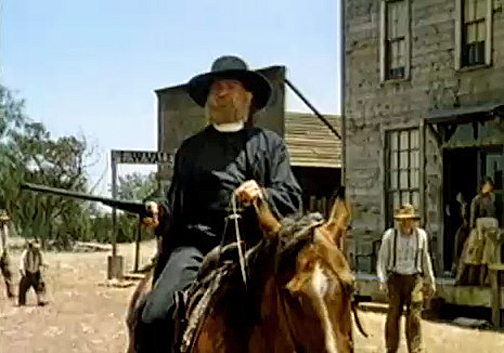
His first starring role was “Honeysuckle Rose,” the 1980 saga of a hard-drinking country music star and the tug-of-war between his wife (Dyan Cannon) and girl friend (Amy Irving). Then came “Barbarosa” (1982), an offbeat Western about two legendary cowboys and their feud with a Mexican land baron. The studio didn’t even want to release that one, even though co-star Gary Busey had recently won an Oscar nomination for “The Buddy Holly Story.” Then in 1984 came “Songwriter,” with Nelson and Kris Kristofferson in the story of a man determined to regain his independence from the pressures of the recording industry. And now here is “Red-Headed Stranger,” inspired by Nelson’s album of 11 years ago which tells the story of a preacher who tries t o tame an evil town, is abandoned by his wife, kills his wife and her lover, and then spends years in exile in the wilderness before riding back in to meet his fate in that same town.
Whatever it is that Nelson has as a movie actor, a lot of important directors have been attracted to it. The first movie was directed by Jerry (“Scarecrow”) Schatzberg, the second by Fred (“Chant of Jimmy Blacksmith”) Schepisi, the third by Alan (“Choose Me”) Rudolph, and this one is the directorial debut of Bill Wittliff, who wrote the first two. In all of them, Nelson plays a recognizable version of himself, as a weathered, quiet, gentle man who gives hints of having suffered more than he should have, and being more cheerful than he has reason to be.
“The movie thing all started after a party one night in Nashville,” Nelson said, remembering. “It was a fund-raiser for some ecological project Robert Redford was sponsoring, and the next day I found myself on the same plane with Redford, flying back to Los Angeles. He asked me if I had ever wanted to be in the movies, and I said, well, yeah, sure, I supposed so. I guess he already had me in mind for something.”
That would have been Redford’s “Electric Horseman” (1979), where Nelson’s official film acting debut was short but unforgettable (he described a woman as being “able to suck the chrome off a trailer hitch”). Even after four starring roles, he said he’s still not happy while he’s making a movie: “It’s difficult for me to sit in one spot for three months.”
And it was difficult to make “Red-Headed Stranger,” he added, because the role was so different from himself. “In the songwriter movies, I was basically just being myself. This one I had to stretch a little. But I wanted to make it. When I wrote the album for some reason I could see a movie being made of it. And I just felt like if it were to be made into a movie, I could probably play that character as well as anybody. I used to sing the song to my kids as a bedtime story.”
It’s kind of a grim story, with the preacher starting out with his high ideals and then murdering what he loved, and descending into self-destruction before he finally gets it together again.
“I think it shows how far down a person can go and then come back, regardless of who he is. And that even a preacher, who is a human being, can drop to that depth and then come back. The thing I wanted to avoid was just turning the movie into one long music video. There was plenty of music available, enough that we could put a song under every scene if we wanted to, but I fought with Wittliff over that. He wanted a lot of music. At first, I didn’t want any music at all. I guess we met in the middle somewhere.”
The result: an odd Western road picture, somewhat strangely cast (Morgan Fairchild plays Nelson’s first wife, and Katharine Ross makes a rare film appearance as the widow who gives him new hope). Nelson spent years trying to finance the project. He described his troubles: “The movie calls for a raging black stallion and a dancing bay pony, and I bought them both when I started the project, but by the time I got the movie made, the dancing bay pony wasn’t dancing too much and the raging black stallion wasn’t raging too much.”
Finally, he said, he and Wittliff pared the budget down to rock bottom and built the sets out back on Nelson’s Texas ranch, and started shooting. One example of cutting corners: In the original script, the bad guys blew up the town’s water tower, but in the finished version, they just open the tap and drain the water – saving the cost of a $40,000 explosion.
“To keep the thing going, we were writing hot checks at one point,” Nelson said. “None of them bounced, though. I guess the people that got them just had enough faith to hold onto them until they figured they were good.”
But you have a lot of money, don’t you? You’re rich and famous.
“Rich, I don’t know about. I don’t have that much money. I make a lot of money and I spend a lot of money. I have a lot of expenses. The music business brings the money in, and the ranches and various real estate that I have take the money out again. My ranch in Texas is not what you’d describe as a money-making proposition. I keep some pleasure horses there and I enjoy the hell out of it, but it’s not a working ranch.”
He poured himself some more coffee and smiled to himself.
“With `Red-Headed Stranger,’ what saved us was the generosity of a woman in Boston named Carolyn Musar. I only mention her name because she hates it whenever I do. She happened to be a fan of mine, and she heard somewhere that we were short of money to finish this movie, and she told her lawyer, “Find out how much those guys need,’ and she was on the set two days later with a $50,000 check as a loan. It came at just the crucial moment.”
Nelson, who said he wasn’t sure when the film would be released, said he was keeping busy. He was featured in a recent “Miami Vice” episode, he went to New York to be honored as “Man of the Year” by the Jewish United Fund, he was planning a tour, and he was still active on the follow-through for Farm-Aid (the fund- and consciousness-raising extravaganza he produced last summer in Champaign-Urbana, Ill.). All of this for a country singer who likes to call himself an outlaw. I asked him what “outlaw” meant to him, now that he was part of the establishment that had once rejected him.
“Freedom,” he said simply. “Freedom to decide for yourself, whatever it is. I think that’s why the term caught on so much with the public; it’s not going the way someone tells you to go.”
It also meant, for a lot of people during Nelson’s earlier days, the wild-and-woolly lifestyle that he celebrated in “Honeysuckle Rose” (which was renamed “On the Road Again” for its TV and video reincarnation). In the movie, as – some said – in real life, Nelson and his sidekicks drank and partied their way from one stop to another, leaving a trail of empty bottles and broken hearts behind. But now the wild life has settled down considerably for many of country music’s outlaws — Nelson’s pals Johnny Cash, Kris Kristofferson and Waylon Jennings have all gone public with their decisions to stop drinking and/or drugging, and Hank Williams Jr. even wrote a song about how his rowdy old friends had mellowed. I asked Nelson if he would mind a question about his wild reputation.
“I’ll answer any question.”
Well, then, do you still live in the style that made “outlaw” famous?
“I drink less, much less. Moderation is the key. I used to overdo everything.”
Is it hard to make the tours and live the life on the bus when you’re cleaning up your act?
“I think it’s important that you surround yourself with a bunch of guys who have the same head that you do, so you’re all on a somewhat similar level, or when you hit the bandstand it’s not gonna be right. The important thing is that we really do enjoy performing. Other people may call it work. I’m not happy for long unless I’m singing somewhere. Every show is different.”
How do you write a song?
“The way it begins is in my head. A lot of things won’t let you not write them. I don’t actually write anything down for a long time, and so the test is, if I can remember it, it must be worth writing down. If I get out the pencil and paper, I’m already sold on it. But also, I have a belief that any song, if it was good once, it’s still good. That’s why I like to record a lot of other people’s songs, standards, things like the `Stardust’ album (a best seller from 1978).”
Did you get criticism in the country music world for recording “Stardust” and the other pop classics? Did people think that wasn’t pure enough, from a country point of view?
“Not so much criticism as dubiousness. The `Stardust’ album was not thought to be the greatest idea by a lot of people. But these were the songs I’d been playing all my life anyway. And in clubs, people would request `Stardust’ and `Harbor Lights’ and then turn right around and ask for `Fraulein,’ `San Antonio Rose’ or `Whiskey River.’ People just like good music, a lot of different kinds of music. And I was singing `Stardust’ a long time before I was singing country.”
Somehow that doesn’t fit the image.
“Oh, but it’s true. I learned music from my grandparents, and they learned it by mail order from a place called,” Nelson said, pausing, “I think the return envelopes said it was called the Chicago Musical Institution. They’d study under kerosene lamps every night. I watched them, they’d have their lessons out of the mail-order books, and then send them back through the mail, and finally they got their degrees. They were about 60 years old then. Sixty years old and still taking their lessons, still young enough to learn something. They had great spirit. I thought so.
“My granddad died when I was 6. He’d taught me some chords on the guitar. My grandmother played the piano and organ a little, but she was getting old and had arthritis. She taught my sister Bobbie how to play the piano, and I learned from her. I’d play guitar and she’d play piano, and that’s when I first sang ‘Stardust.’ I learned it from her.
“I’ve been singing it since before I knew what it meant.”
Did your grandmother live long enough to see you perform in public?
“Yes, she did. She would come to a place in Fort Worth called the Panther Hall Ballroom whenever I’d play there. She was in her 80s.”
The afternoon was growing dark, and the rain was starting up again. Before long it would be time for Willie Nelson to head out for the airport again, and fly to New York. I asked him how it felt to be “Man of the Year.”
“If they’ve named me that, there must be a few things they don’t know about me,” he said, and chuckled. “I guess I got it because of the Farm Aid thing, which is really one of the things I’ve done in my life that was a great thing. When I first got into the issue of family farms, I had no idea the problem was as severe as it was. I thought we’d do a benefit to call attention to the farmer thing, and Washington would say, `Oh, they’re having a problem,’ and the next day the whole thing would be worked out. But the problem is getting worse. Hundreds of farmers are going under every week.”
Have you ever thought of running for office?
“Yeah. A long time ago. I was approached to run for senator from Texas, and I had to decide, and I decided not to. I’m an entertainer, and so the very fact that in order to become a politician you have to piss off half of the country didn’t seem very smart. Why chop off half of your audience just so you could walk around and say, “I’m a senator’?”
And so that’s how America lost its chance at the first outlaw senator. What about retirement?
“Yeah, I suppose I’ll hang it up someday. Everybody does. But not this year or the next. When I do, I’d like to maybe buy me a little one-pump gas station somewhere in south Texas. You know, pretty far from town, and without much traffic.”
If you’re a Comcast customer, “Red-Headed Stranger” is streaming.
Some 200 of my TwitterPages are linked at the right.
var a2a_config = a2a_config || {};
a2a_config.linkname = “Roger Ebert’s Journal”;
a2a_config.linkurl = “http://blogs.suntimes.com/ebert/”;
a2a_config.num_services = 8;

Manuel de Oliveira is 102: A tribute
The first three scenes from “A Talking Picture” (2003)
The complete film is streaming on Netflix Instant, which introduces it: “A beautiful history professor (Leonor da Silveira) and her 8-year-old daughter embark on a Mediterranean cruise from Lisbon to Bombay. Along the way, they talk about myths, legends and the milestones of Mediterranean civilization. Their compelling discourse about the history of Western civilization eventually includes the ship’s captain, Comandante John Walesa (John Malkovich). Also stars Catherine Deneuve, Irene Papas and Stefania Sandrelli.”
Three other films by de Oliveira are streaming on Netflix.
var a2a_config = a2a_config || {};
a2a_config.linkname = “Roger Ebert’s Journal”;
a2a_config.linkurl = “http://blogs.suntimes.com/ebert/”;
a2a_config.num_services = 8;
