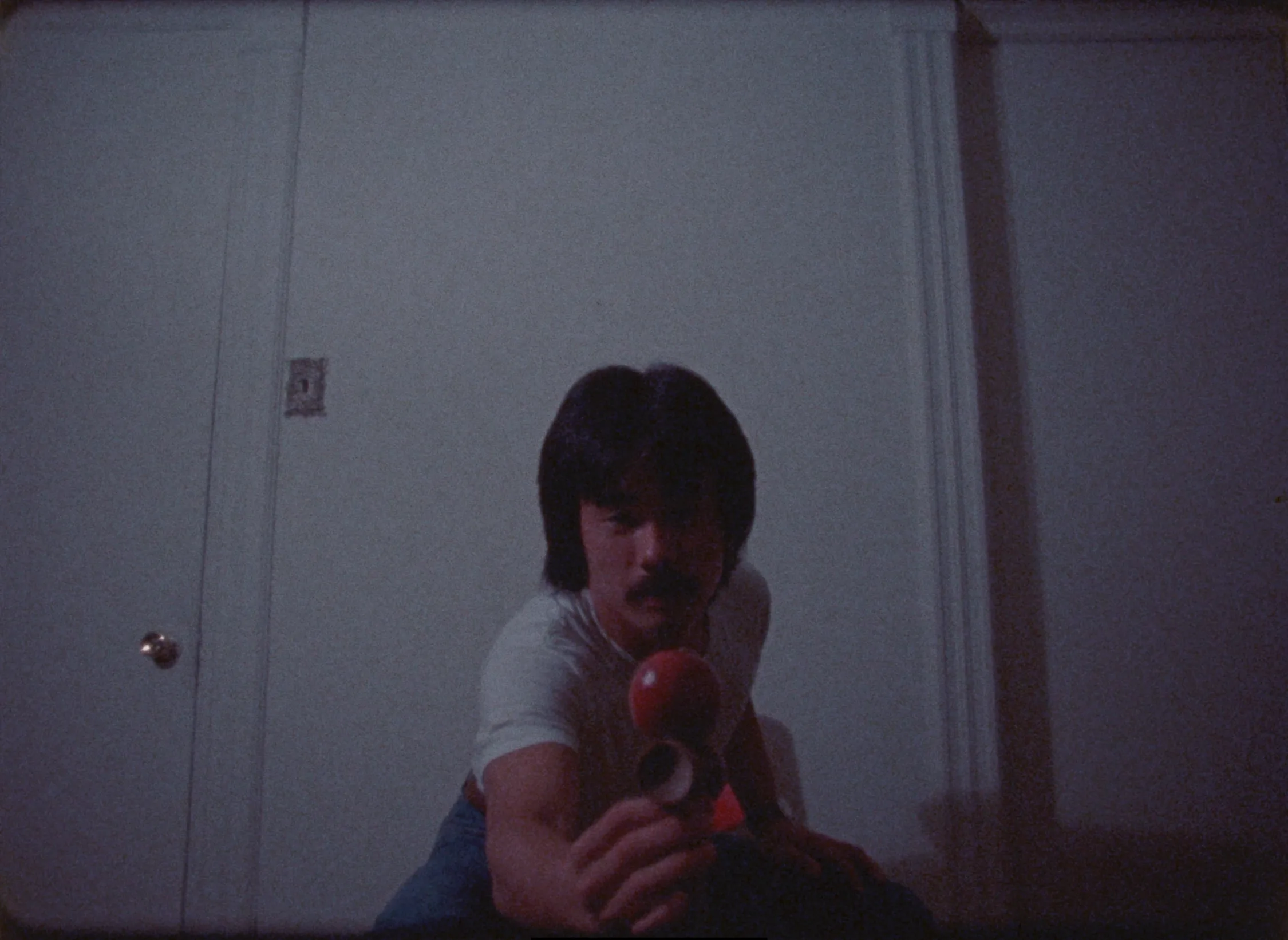
I first heard of Tatsu Aoki, the Tokyo-born, Chicago-based musician, teacher, and filmmaker, through Carson Wang, a then UChicago master’s student studying Asian American political film. A passionate political organizer and friend, Carson’s then future thesis spotlighted one of Aoki’s early films, “3725,” as an example of “local filmmaking on the periphery of the Asian American Movement.”
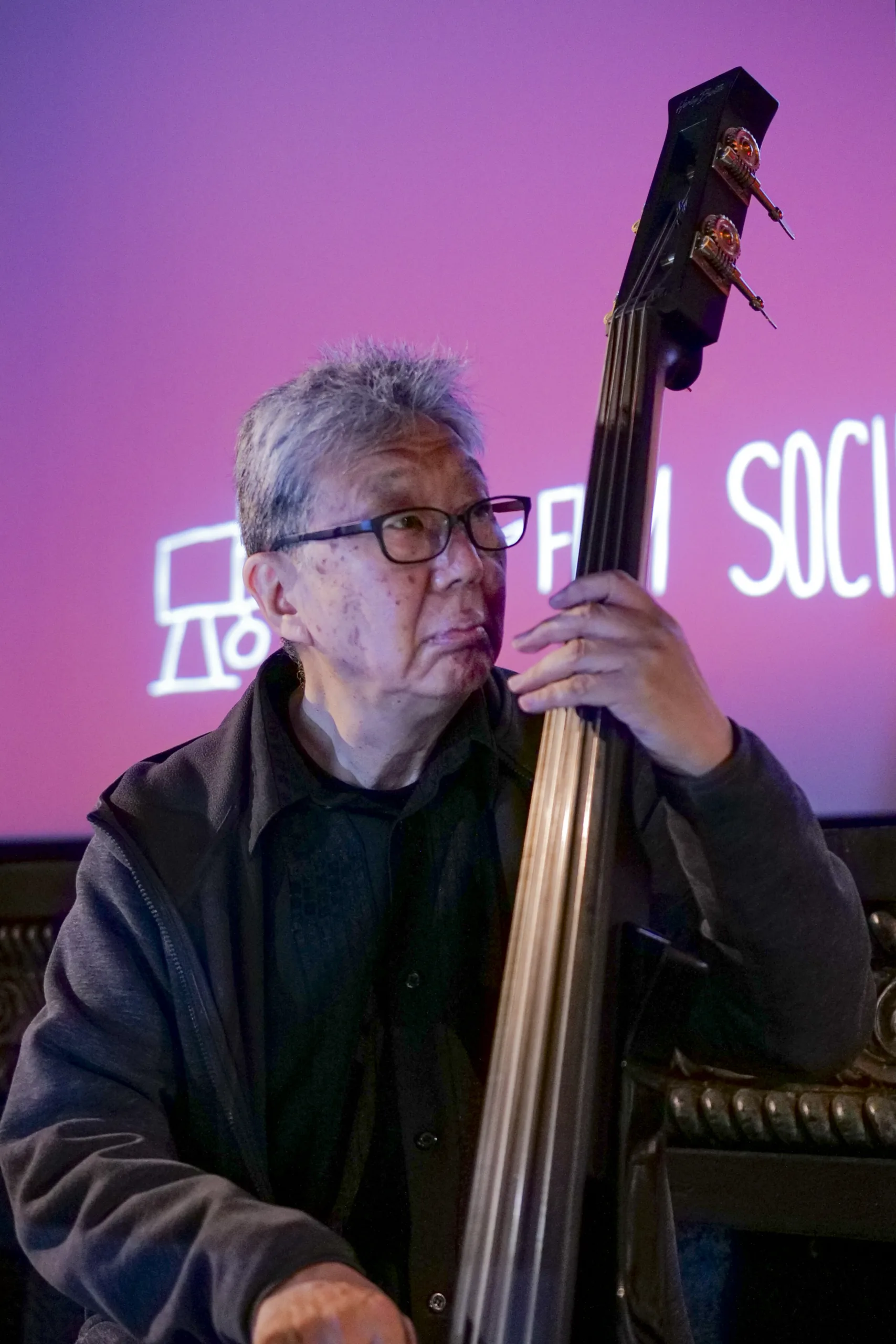
Aoki himself has been front and center in the Chicago jazz scene for decades, maintaining a longstanding musical partnership with Chicago jazz legend Fred Anderson and founding the Chicago Asian-American Jazz Festival. He has also been an integral part of the Chicago Asian American arts community at large, founding Asian Improv aRts MidWest (AIRMW) and directing the Tsukasa Taiko Legacy group and the Toyoaki Shamisen arts residency projects. With all his achievements, it’s not totally surprising that most people are not aware of his filmography, even hardcore cinephiles.
Consequently, Carson had been planning a larger showcase/retrospective of Aoki’s films for over a year and a half, determined that his filmmaking would not remain an accidentally well-kept secret. Chicago cinephiles, Japanese-American artists, UChicago faculty, Tatsu’s colleagues, students, and fans of his music all showed up to see his films presented with the reverence and excitement they greatly deserve. Many of the works shown that night had never been shown to an audience, much less to a ‘sold-out’ crowd (attendance was free, but it was a full house).
Tatsu Aoki was present at the event and had two talkbacks with Jaqueline Stewart, a film scholar and UChicago professor, about the films shown and his filmmaking process. Presented by Tien-Tien Jong and Carson Wang as part of the Film Studies Center Graduate Student Curatorial Selection, the showcase included 6 short films by the filmmaker, including a 10-minute selection from Aoki’s upcoming film, “Flamingo’s Cousin.”
Four of the six films shown had been recently restored by the Chicago Film Society through the National Film Preservation Foundation’s Avant-Garde Masters grant. The event was also presented with support from Asian American Midwest Progressives and Asian Americans Advancing Justice | Chicago, two political organizations doing critical work in the Midwest.
The audience at the Logan Center was completely enraptured by Aoki’s films, by his balance of humor, eeriness, and seemingly free-wheeling use of sound. He spoke with RogerEbert.com about his origins, inspirations, and the Chicago avant-garde film scene.
This interview has been condensed for clarity.
In previous interviews, you’ve talked about growing up in a geisha house with your mother and having a movie-producer father. I was wondering how that shaped you as an artist.
When you’re born into geisha culture, you don’t really see your biological father all the time. Your daddy comes to visit you maybe once or twice a month. So that’s the kind of cycle you get to see your father in. And I think my father kind of piggybacked meeting me, and also going to see his favorite movie or something. So, I’ve been going to movies ever since I was in kindergarten. I was born in 1958. We saw movies like Fantastic Voyage. Gangster movies, both Japanese and American, European movies– movies that were inappropriate for little kids.
Of course, along with these adult, grown-up movies, I would watch “Godzilla.” My first Godzilla movie was, I think, the fourth one, maybe. “Godzilla vs. Mothra,” 1963-ish, right? Then there are “The Blind Swordsman” movie from the ’60s, Samurai movies, and Kurosawa movies. All these movies I saw when I was a small kid. Then, being in the geisha house and seeing a woman in just underwear was normal for me because I was playing in their dressing rooms. That was nothing strange to me, and I also saw violence and romance in movies. I was watching everything, and they were all a big influence on me.
Then I was given a regular eight camera. I learned to kind of shoot things, take the film to the camera store to be developed. I also had a projector. So I would make a kind of movie.
What kind of movies were you making?
Oh, fake samurai movies… G.I. Joe today is very tiny, but in my time, G.I. Joe was this big [places his hands about two feet apart]. And it came with a lot of soldier costumes, so I would make a little puppet G.I. Joe thing, and make monster movies. Not experimental.
Just sort of copying what you saw and liked.
Yeah. I did not know the difference between independently produced movies and commercial movies. The movies were all the same thing. I probably didn’t even know the difference between a home movie and a commercial. I was thinking that it’s the same thing format-wise. I think people like [Hiroshi] Teshigahara were an awakening for me because their movies were definitely different from Godzilla, definitely different from Ozu or Toshiro Mifune Samurai movies.
And that difference drew you in.
Right. In the 1970s, Shintaro Katsu, who is a Zatoichi actor, “The Blind Swordsman” actor, made his own independent movie. A detective movie called “Kaoyaku.” A detective movie, but it’s shot all in close-up. So you feel really claustrophobic. I would say that “Kwaidan ” and “Kwaidan” were among the most experimental films I saw at the time. Aside from “[Battleship] Potemkin,” aside from “Oktober [Ten Days That Shook the World],” aside from “[A] Page of Madness.” It’s a mob gangster movie, a Yakuza movie. One of the drivers is being assassinated by the gangster, but what you see is six minutes of a close-up of the back mirror in the car. They have a conversation in the car, but you only see the rearview mirror, and it has a crack. That’s the car accident. I remember that scene very vividly, going, “Whoa, you know, this is really cool.”
By 16 or 17, I was in this avant-garde theater group, playing strange music. By that time, our theater group was already performing this piece with or without dialogue. I think that came from American culture from New York. Being able to go, wow, a movie could do that? Are you allowed to actually make movies using only shadow or light? Even out of focus, what is that?! Then I got really into it.
Then I knew, okay, this is a Super 8 movie. This is the regular 8 movie. I had a single 8-camera and a Kodak Super 8 camera at the age of 15 or 16. Then I discovered that there was an independent movie world, that people in the 70s were making a lot of Super 8 narrative movies. So I started to make these movies.
At the Logan Center Screening, you talked about how, for your film “Puzzle 2000,” you had CDs of sounds, and the projectionist could decide when to play the soundtrack. Is that how you like to merge your jazz and your filmmaking? Or is it just something that came out of practicing both art forms?
That’s a very interesting question. I think movies should have fixed sound. But the way fixed sound occurs can vary each time. And so the double system really worked. Because the particular sound and the music we create are for that movie. So it remains the same in terms of its integrity. But how it happens could be different. And improvising on the spot is also interesting because I’ve been doing a lot of music box and Japanese film scoring live. So, that’s also interesting. But I like this… kind of a variation on the fixed thing.
It worked so well on the day; the timing of the projectionist’s choice to play it was really affecting. It felt surprising, even though we didn’t know till after that it wasn’t fixed.
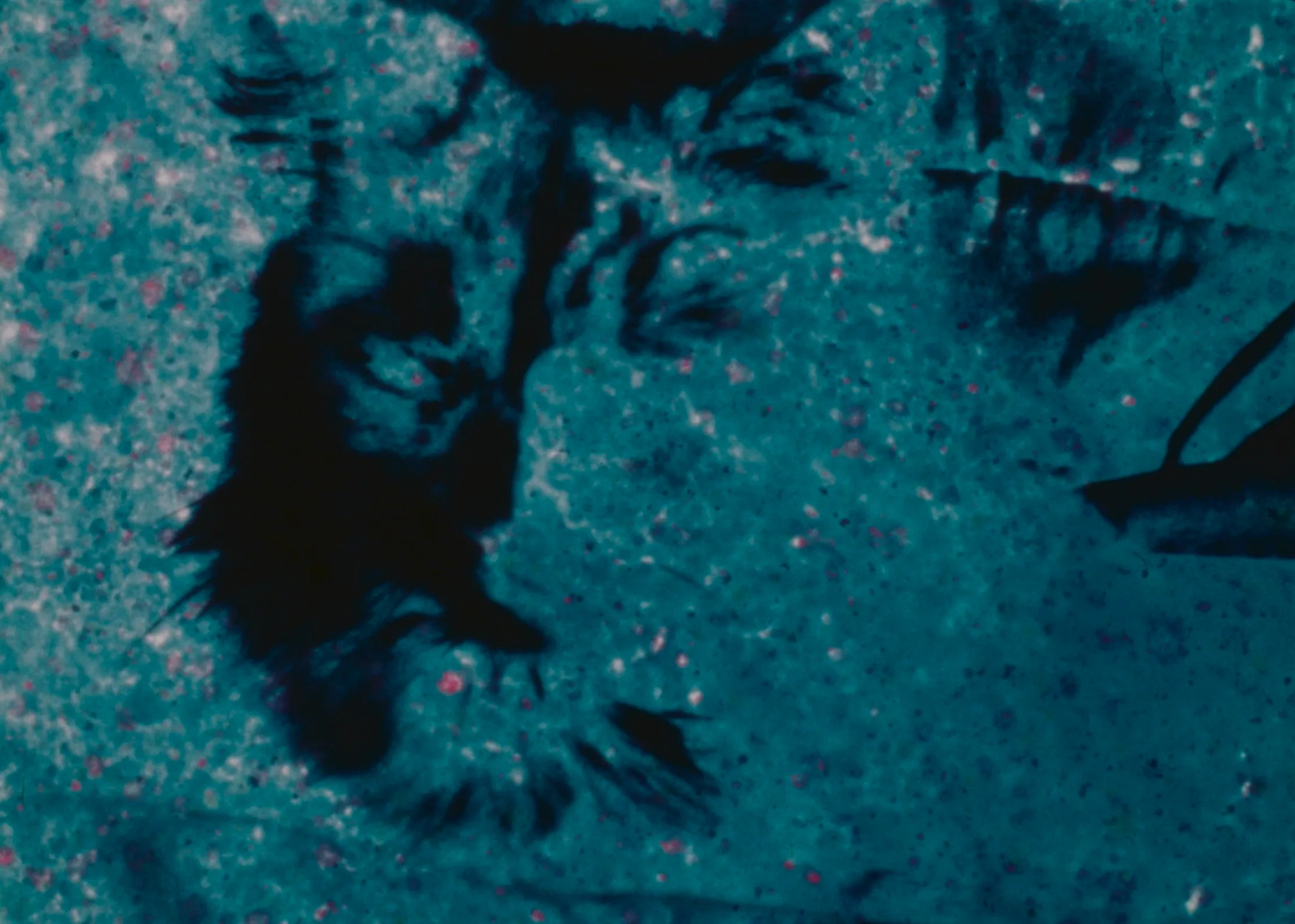
The basic idea for me is… You can improvise something to eat from your refrigerator. But you still have to know how to peel the onion and how to prepare the carrots. Those are the basic things you must know. And that’s the repetition. You know it. But if you don’t know it, you can’t really improvise the food. So it is very much similar to how I feel about music. The improvised music happens in the moment, but they do practice because you have to know how to cut the onion. “Puzzle 2000” is the same pattern, but with a different color combination. Even though you can randomly take a walk. You have to know how to put your shoes on to turn the corner. You have to stop at certain places. It’s structurally bound, but you have a variation. That, to me, is urban life. So we’re not really free, like nature-free. But we could be free within these structural variations. So that was the main thing about “Puzzle.”
During the Logan Center Q&A with Jackie Stewart, you talked a lot about your process and the equipment you used, but not so much about what the images are ‘supposed’ to mean or what they were ‘supposed’ to say. Is that how you approach your work when you’re making it, or is that just how you like to talk about your work?
I generally have an idea of, oh, I want to do this image. Then I will create it. Because many of the images I’m generating have post-production schemes. I will imagine, oh, I’m going to have these little dots moving around here. Then I’m going to put the flower in here. Then, after the images are made, I look at them and think, “What does this image say?” Sometimes it’s the same image I thought I was expressing, and sometimes it’s different. Then I decide whether to use this image elsewhere in the movie.
A movie like “Local Color” is one example I thought of, and it did exactly what I wanted to do. Then films like the cat movie [Dreamworks] and “3725” were very difficult for me because, when I shot and produced the images, they turned out very different from what I had in mind. So I had to reconsider how I’m going to arrange the movie. And a lot of the newest movie, “Flamingo’s Cousin,” was the same way. I had reasons for putting these images together, but some of them didn’t say what I wanted them to. So, I’m still adjusting a little bit. But I like the movie.
So many of your films are shot in Chicago and are firmly about Chicago. What about this city specifically inspires you to keep making films?
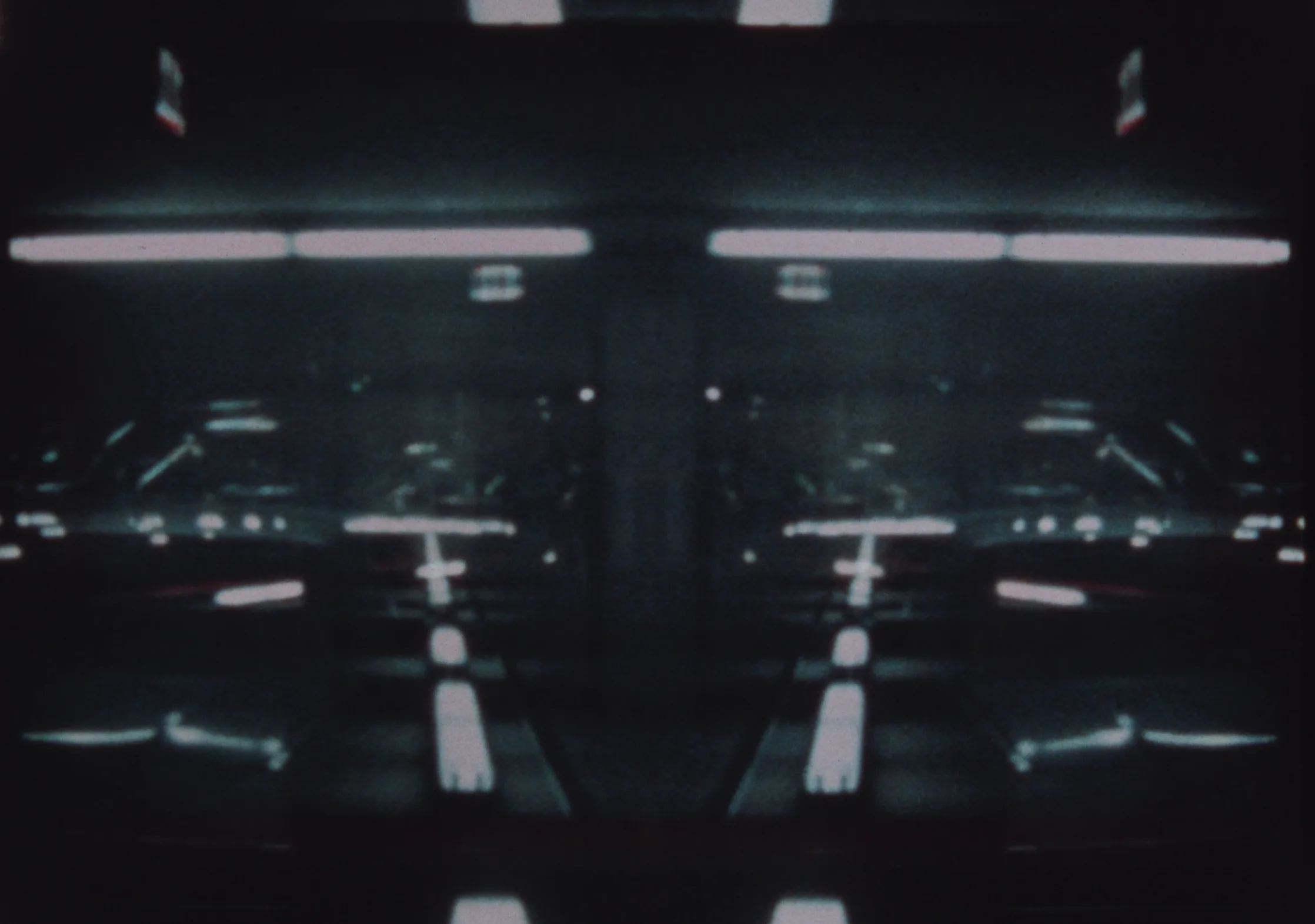
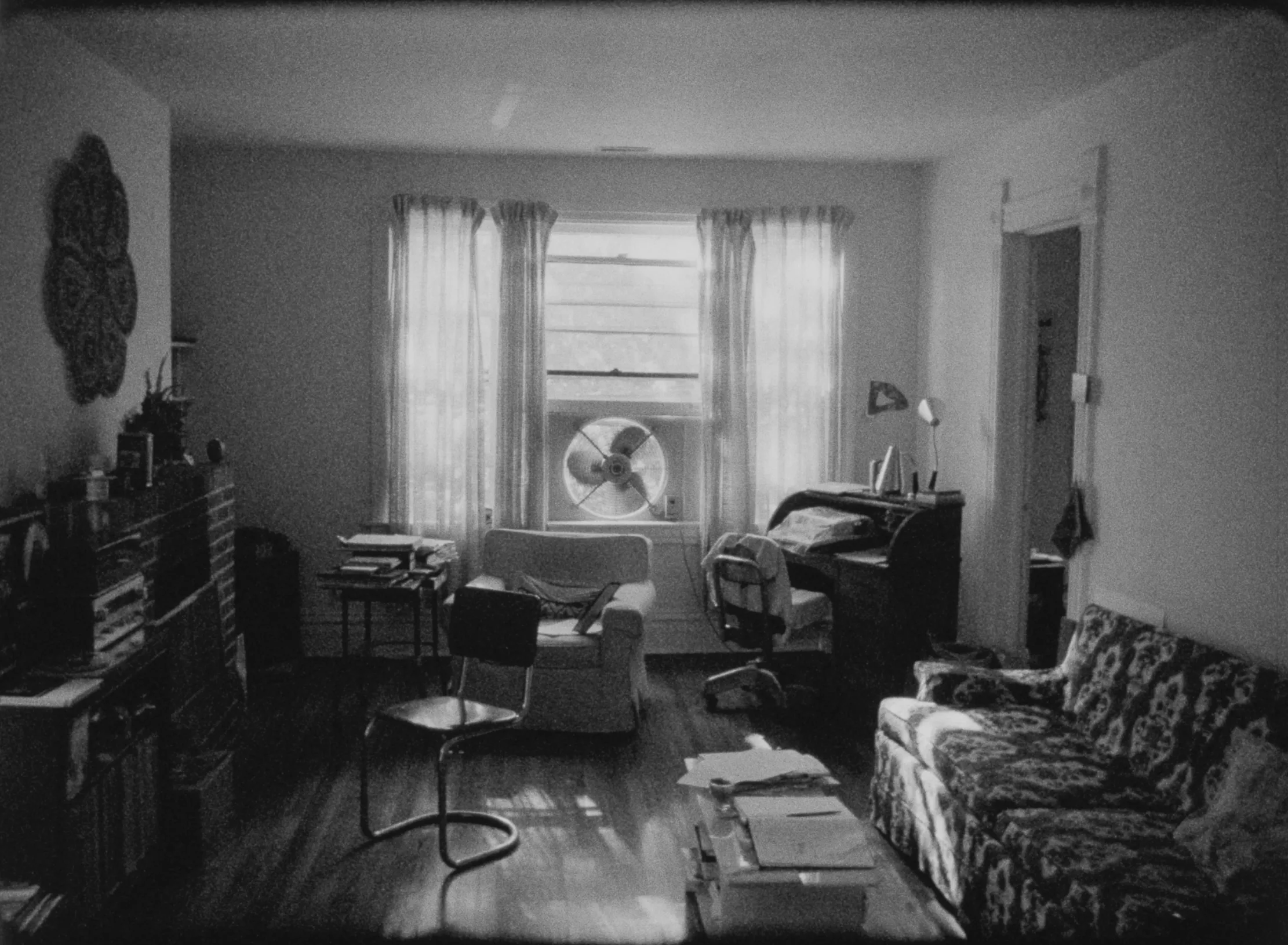
I think that comes from the 1970s diaristic film tradition. Because I’m looking at my environment. Mine’s a little bit more abstract, but it is not so different in concept from a diary film. I do make diary films. Notice that “3725” and the cat movie are shot in the same apartment. That’s in some ways a diaristic idea. Being roommates with somebody and they leave, but their cat is still there. Then I made a movie about the cat. “Local Color” was a street I crossed on my way from the train to school. And later on, “Rapturous” is the parking lot that I park in every day. And “Puzzle 2000” was the path from my house to the zoo. And “Flamingo’s Cousin” is really about what I inherited from Sharon Cousin and Shelley Fleming, you know, about this really convoluted friction between the faculty members that I was in the middle of. To me, that’s no different than Jonas Mekas’ diary films.
At times during the Logan Center Q&A, you seemed to be directly talking to your SAIC students in the audience. “This is what I used, and this is how you could use it.” Do you think your filmmaking and the way you talk about it have changed because you’re a teacher, or have you always talked about your process in that way?
I think teaching has expanded my image-making, because I learn a lot of stuff from the students as I teach. I wouldn’t have been able to make a “Puzzle 2000” without teaching the kids. They made a mistake while loading the Bolex, and that became a discovery. Like, okay, if you just do 20 seconds of that, it becomes an experiment. There are many times in that. As in “Flamingo’s Cousin,” some of the city sequences were shot by a student as a class assignment. I really loved the way it looked, so I went back and shot those same things. Sometimes the students will have an interesting camera movement, and I will study it and go, “All right, great.” I want to go out and do that.
I especially learned this idea of recklessness from them. You lose that when becoming a teacher. You forget about it. because you’re kind of focused on technical stuff, but the students are reckless. So you go, okay, don’t forget that! Don’t forget that kind of raw material! And it’s the same thing in music. The more you teach, the more conscientious you become about the technical stuff for the student, and you forget how raw some of these things should be.
You’ve been in the avant-garde filmmaking scene in Chicago for so long, and also the art scene in general. How do you feel about the community here? Do you feel like you see a lot of upcoming younger artists or people just a few generations behind you also working?
I think right now there’s, surprisingly, a lot of interesting things happening in experimental film. The difference is that I think younger people today ask for more public exposure than our generation did. We had a different pride of being black boxed. So it was okay to have a small Chicago filmmaker show my movie or the Collective for Living Cinema in New York. I think the new generation is a lot more… They want to have SMS distribute their experimental film. I think that’s a big difference. And maybe they will do better in distributing these movies. But I’m not sure about this.
There is an idea of the sacred nature of this kind of film. Would it be the same with the mass-produced attention? I think if you are going to do this, it’s kind of like Instagram. Your experimental film must be 15 seconds long. But it is a commitment for experimental filmmakers to look at something that is 10, 20, or 30 minutes. Would they be able to do this on their personal devices? So I still think micro-cinemas should be the main focus of avant-garde cinema. Like the screening at the Film Studies Center, I think that’s a really perfect place to watch this kind of film. But I think younger people are asking for more distribution. More exposure. So I’m not sure that more exposure will sustain the culture of experimental film.
Do you think it survives better when it’s going from one cinema club to another?
Yeah. I think the experimental film could be happier that way. But that may be because I come from a certain generation. So the new generation may feel differently about that. But I grew up in this small experimental gallery. I mean, it’s not small; I’ve had 150 people come to my shop. So not small, but it’s smaller. In this SMS culture. But then again, this whole idea of the internet, because of that, I think people like Carson, or you, found out about my movies. So I’m not sure.
I belong to the era of experimental film in the 1970s and 1980s. I think I forgot which famous filmmaker said, “Well, you know, these avant-garde experimental films are not for everybody. So, make no mistake about that. It’s not for the general public to see.” I understand what that means.
At the Logan Center, you also talked about how excited you were about the new intros for your restoration. You even said the restoration announcement was now your favorite part of the films. What did it mean for you to have those new restorations?
I think that’s my honor. Because, as artists, we don’t know whether we are producing something good. Then when you have a process like this… That’s something that happened 40 years ago. If somebody’s restoring, that means I may have done something okay. Right? If not the greatest, but it meant something in the history of the art. So I feel good about it. It’s my honor to have that restoration.
How was that process? Were you nervous at all or just excited?
It was new to me because they took all my original prints, digitized them at 4K, and printed them on film. So all the color correction and sound correction were done digitally on the 4K platform. Film Society: I think Julian Antos was in charge of that process, and he walked through some of it. I think my surprise was that when I did the color correction on the restored print, I’d never seen my 16mm grain that sharp. Then they said, “Well, by the time we bring it down to 16mm, it’ll look like your original 16mm print.” And it did. It was something unknown to me. So I was consistently surprised. It looked so great. I was really happy about that.
At the Logan Center, you introduced your daughter as a third-generation filmmaker. I was wondering how you felt about passing down that legacy to her and seeing her make her own art.
I grew up in the same format. I performed with my mother. I performed with my grandmother. I grew up in a family in music and entertainment. People who have that tradition, having your kids do that is very natural. Three of my kids have been performing with me all their lives. So her taking over some of the film culture is nothing really strange to me. I’m hoping that she’s happy doing that. Looks like she’s happy doing that! She’s doing a residency at the Light Works in New Jersey right now. She just had a show last semester at the Gene Siskel with her film. She’s a hardcore silent black-and-white filmmaker.
So, to me, it’s not that strange for my daughter to work in the same environment. That’s what the traditional artisan family does. Maybe it’s a little strange to people who aren’t part of that culture. But if you look at the kabuki dance traditional musicals, they’re all like that. I perform with my parents, my auntie, my uncle, everybody else, all my life. Then I had a getaway plan to move away from that for a while, then I came back to it.