When Sam Neill’s family shared news of his passing today, the outpouring of affection online was breathtaking. The death of a movie star often comes with waves of the clips that helped make them famous in the first place, but the response to the loss of Neill felt more personal. Yes, you could easily find scenes from “Jurassic Park,” “The Piano,” “In the Mouth of Madness,” “Event Horizon,” and many more, but you could also stumble upon footage of Neill cuddling a duck, taking a farm selfie, standing up for what he believed in, or speaking about mental health and depression. He was more than an actor; he felt like a friend. When we say that an actor will be missed, we often mean the actor’s work. In this case, it truly feels like we will miss the person who was Sam Neill.
The key to understanding Sam Neill lies in how he brought that humanity to every role he played, whether hero or villain. He was never flashy, but he was as consistent as they come. There may be bad Sam Neill movies; there aren’t any bad Sam Neill performances.
And the list of the most memorable ones spans a wide range of budgets and intents. Most people today will point to his incredible one-two punch in 1993, when he starred in two of the most essential films of their era: “Jurassic Park” and “The Piano.” Given the genuine affability of a man who loved his farm more than the red carpet, Neill had a striking career in horror, appearing in essential works like “Possession,” “Dead Calm,” “In the Mouth of Madness,” “Event Horizon,” and more. He could ground out-there concepts with what felt like genuine intellect. We believed his characters were smart, and there’s something scarier about the smartest guy in the room being unable to stop the madness of a horror film.
Neill was born Nigel John Dermot Neill in Northern Ireland to an English mother and a New Zealand father. They moved back to New Zealand in 1954, catching the acting bug (and taking the name Sam) in productions at the University of Canterbury. He made his acting debut in a TV film in New Zealand in 1971, but his international breakthrough came six years later in Roger Donaldson’s excellent “Sleeping Dogs,” often cited as the first feature-length film produced entirely in New Zealand. Two years later, Neill appeared in “My Brilliant Career,” alongside Judy Davis in Gillian Armstrong’s Oscar nominee.
From there, the parts came consistently. After the success of “Omen III: The Final Conflict,” “Possession,” and “Ivanhoe,” Sam Neill was in contention to step into James Bond’s shoes after Roger Moore exited the franchise. Timothy Dalton got the job, but the screen test below is truly worth watching to wonder how different movie history could have been.
The rest of the ‘80s included memorable turns in “Dead Calm” and “A Cry in the Dark,” but he really became a household name in the ‘90s. “The Hunt for Red October,” “Until the End of the World,” “Sirens,” “In the Mouth of Madness,” and “Event Horizon” are all great, but it was the ’93 double feature that displayed Neill’s range as an actor who could look at home in any genre, in any period.
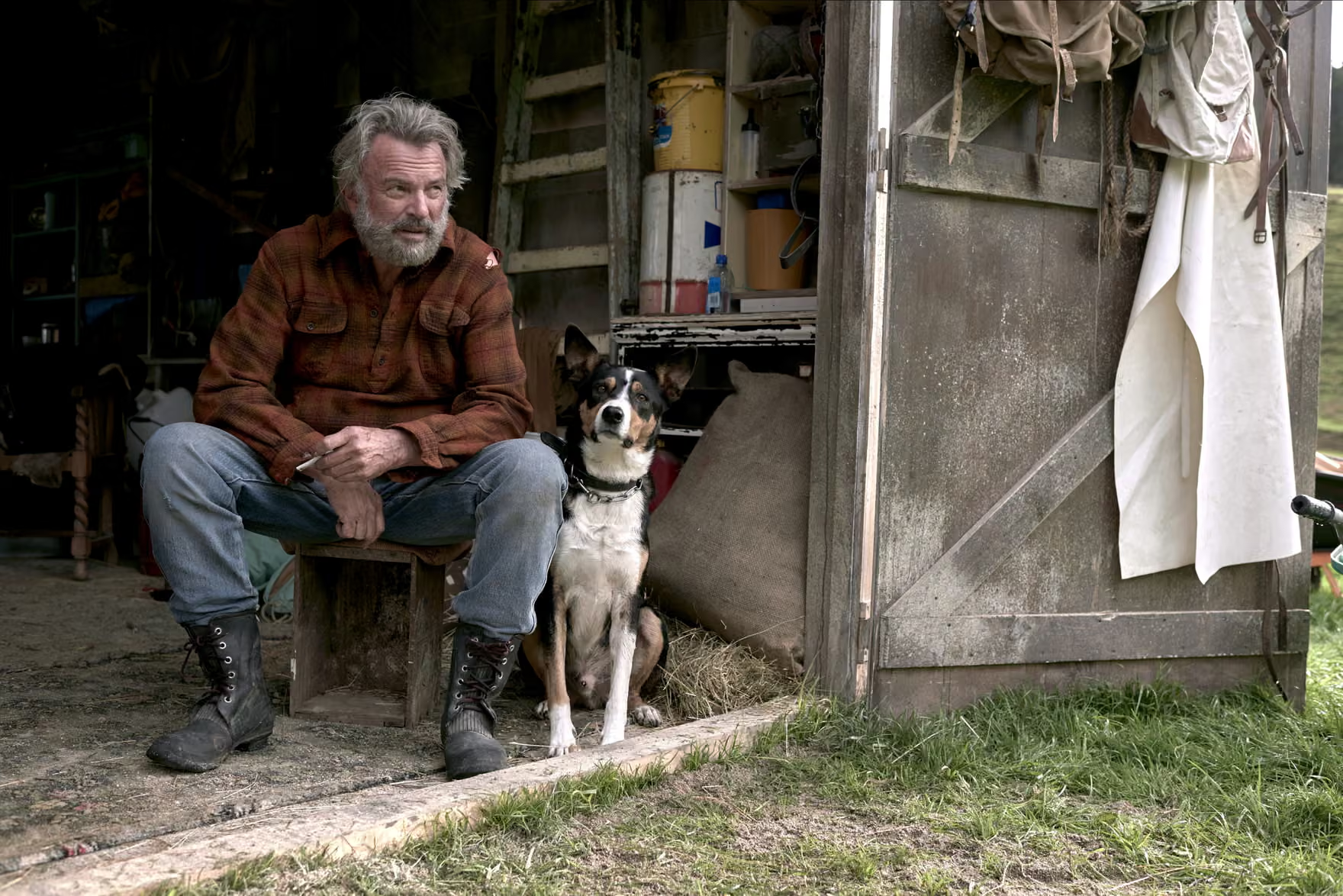
One of the best films to watch today to appreciate Sam Neill is Taika Waititi’s “Hunt for the Wilderpeople,” in which Neill’s deep humanity comes through in his character’s gruff exterior. It’s a lovely performance in a great comedy.
There were so many great little turns throughout Neill’s career. There are TV fans out there today mourning what they loved about “Merlin,” “Peaky Blinders,” and even the recent “Untamed,” too. He felt like one of those actors who only took parts that truly interested him, or opportunities to elevate specific creators. He was politically active in New Zealand in his support of Aboriginal causes, and open about his battles with cancer in the last few years (although his family made clear his passing was cancer-free).
In one of Sam Neill’s final interviews for The Guardian, he was once again remarkably open and deeply human. He says in there that he’s “had to overcome the ordinariness of [his] appearance.” It’s a funny thought for someone so magnetic on-screen to consider himself ordinary, but it speaks to how Neill went through the world, never thinking that he was above anyone else because he happened to be a movie star. He was just as much an activist, a farmer, and a friend. And a heck of a good duck cuddler.