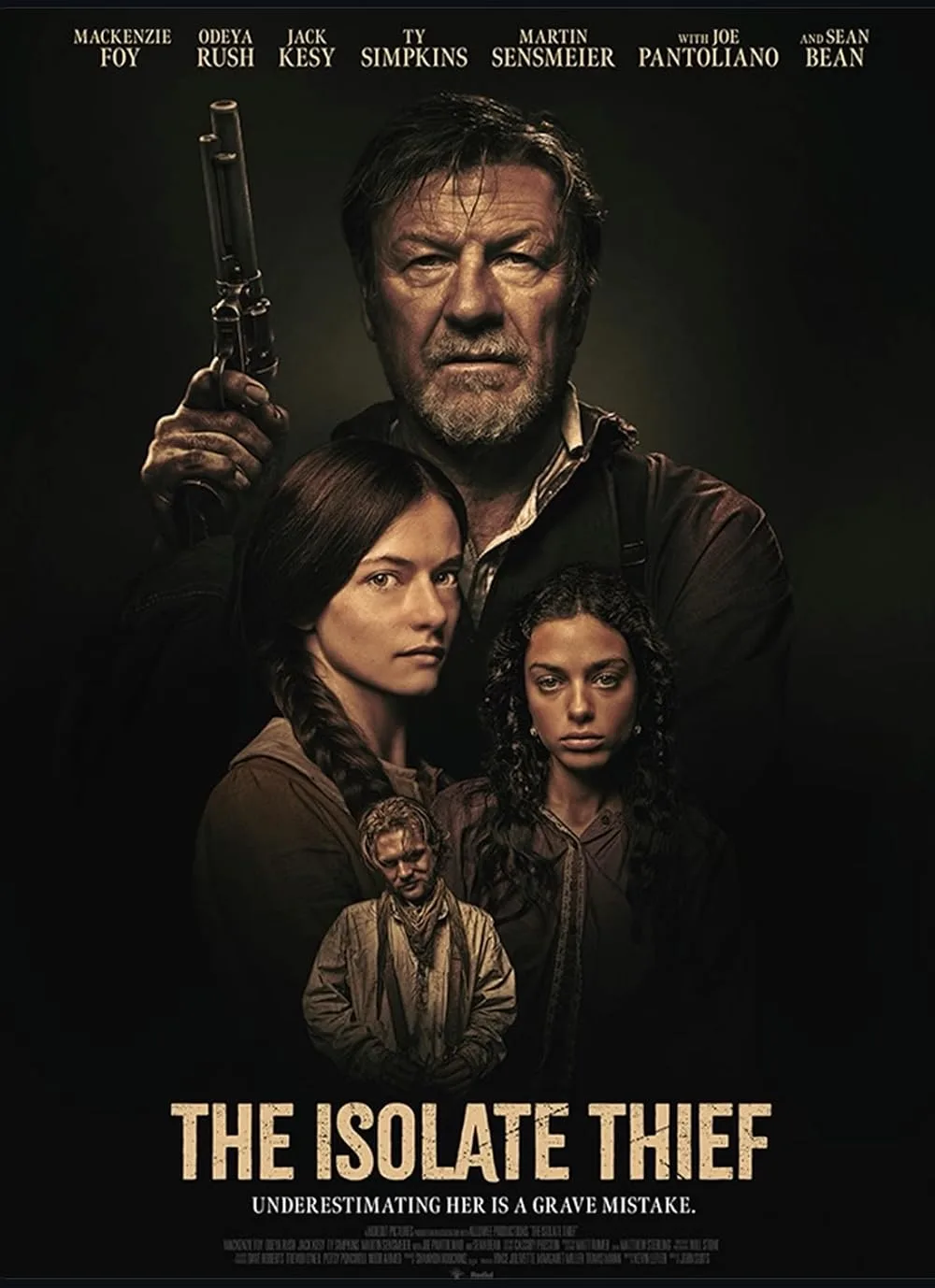

“The Isolate Thief” is a tough, grisly Western that overplays the grisliness a little too often for its own good; towards the end you’ll be thinking, “So-and-so’s now got HOW many bullet wounds and sounds like they’re breathing through a really major bronchial infection, so how are they still alive?” but like they sometimes say, movies can be all about suspension of disbelief.
Set in the winter of 1865 (cinematographer Will Stone shoots almost everything through a blue filter or something similar to convey that icy, mentholated feeling), the movie begins with delicate yet steely Ada Elizabeth Horn (Mackenzie Foy) burying her dad, who ran a Union outpost. The Civil War isn’t over yet, but things are pretty quiet around these parts, at least until a frantic fellow played by Joe Pantoliano (all but unrecognizable, except that he’s frantic in that Joe Pantoliano way) turns up jabbering. Soon, a gang of what seems to be Union soldiers comes looking for the guy.
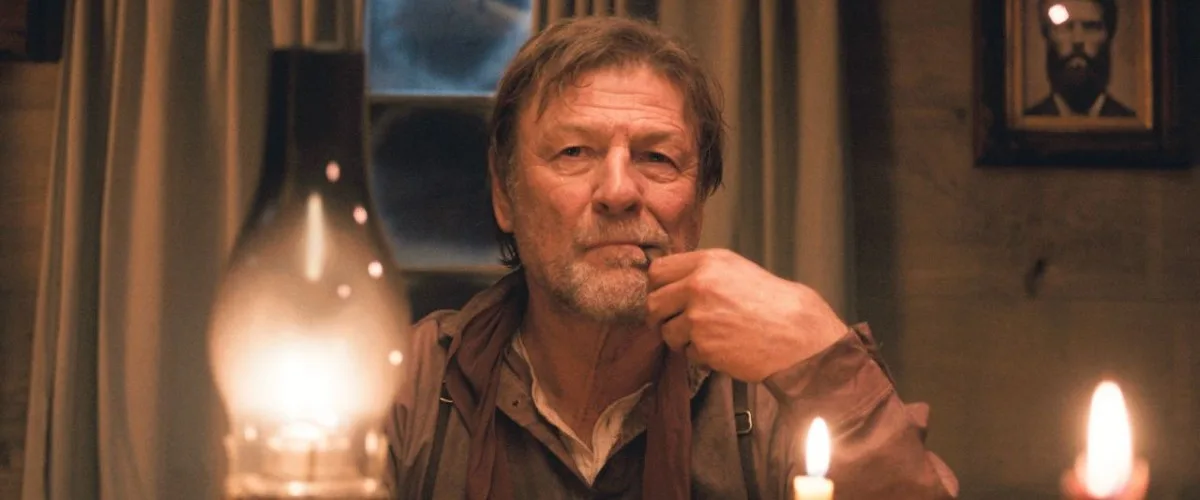
Sean Bean as Fiddler John Good is their leader; he is this piece’s Big Bad Wolf and an indefatigable fellow, to say the least. “We have business in these woods,” he tells Ada, while trying to stay cagey about the nature of that business. Part of his business involves lynching Pantoliano’s character, an event which he compels Ada to witness.
Having found the gold that Pantoliano’s character had buried, Ada knows just what that business is, but she’s not going to give anything away; the money is her ticket out of this “outpost” that no longer serves any purpose anyway—she intends to pay her way to San Francisco with it. And she’s not too shabby at playing it cagey herself. He tries to butter her up a bit: “Maybe one day you will grow into a great outlaw yourself.” At moments like these, he recalls his performance as Boromir in “The Lord of the Rings: The Fellowship of the Ring.” Whereas elsewhere, he’s as driven as his “Patriot Games” villain.
Fiddler John’s gang is not quite as sophisticated as he is, and they are rather hard to tell apart; truth to tell, they all look like what would happen to Jason Kelce if you left him out in the woods for a few nights. And while Ada may be able to outfox them at times, she is terribly naïve in other matters, which comes to light when Fiddler John’s gang introduces a not entirely willing female consort to the party. Emily, a prostitute played by Odeya Rush, is obliged not only to clue Ada in on feminine hygiene, but to let her know just the kind of men she’s now hosting. Once she understands, the two women share a kind of silent conspiracy as they cater to the gang in different ways.
The movie, scripted by Kevin Leffler (whose screenplay won acclaim from the pro assessment group The Black List back in 2009, when its protagonist was male rather than female) and directed by John Suits, grows replete with pregnant pauses at this juncture. The women suffer all manner of assault and maiming—Ada actually gets a knife put through her hand, thankfully not her shooting one—before they get the opportunity to turn the tables. At which point there are a lot of gnarly wounds and “how many shots has he/she got” speculation, as the 19th-century weaponry they’re working with does its work crudely and also has its limits. The wolf who’s been lurking around the hills surrounding Ada’s outpost, an on-the-nose metaphor for sure, gets to chime in before the picture ends as well.