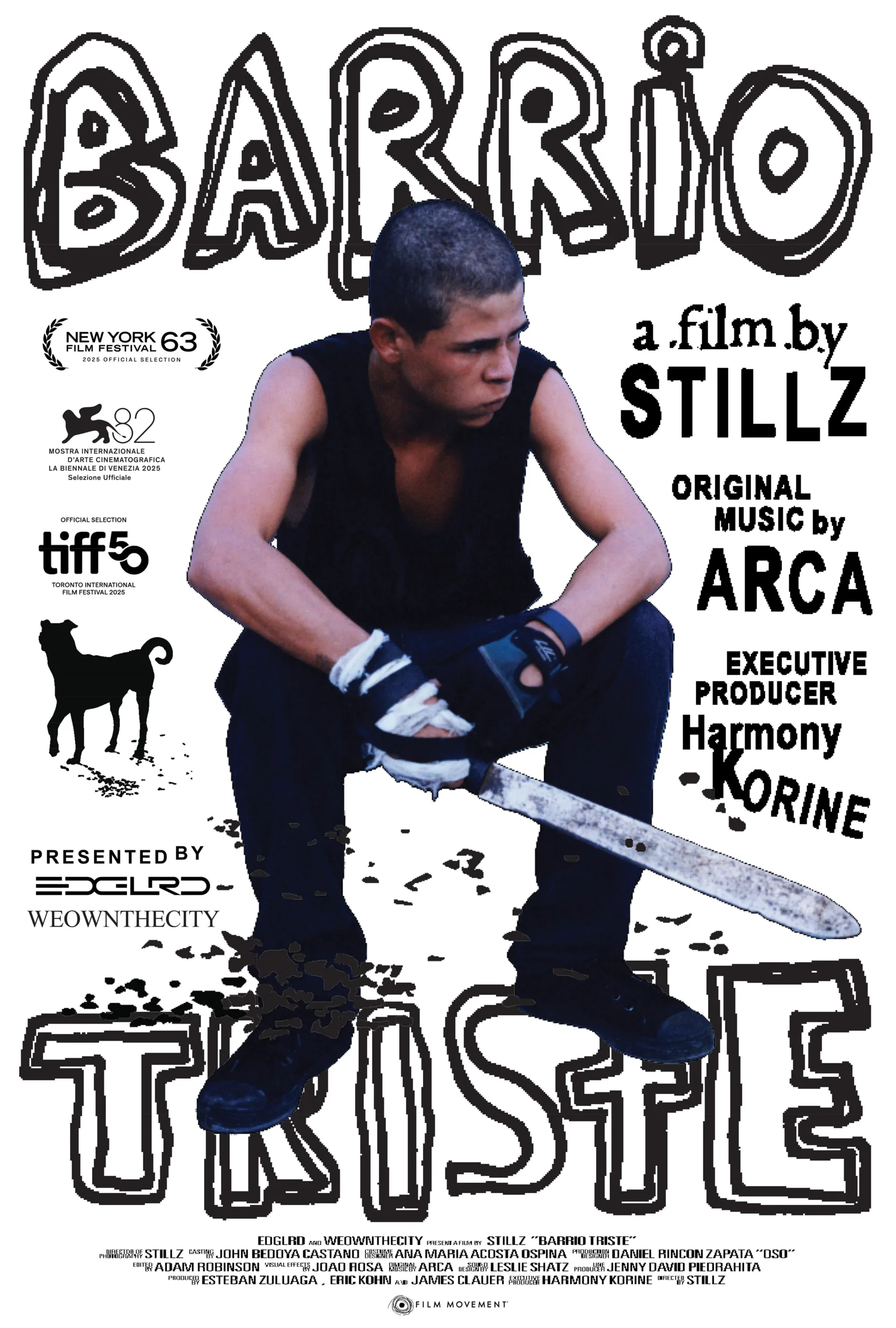
Crucially, “Barrio Triste” opens with an on-camera newscaster being beaten by a group of teenage thieves, who then take his camera and begin filming their lives in 1990s Medellín, Colombia. This communicates two key aspects of Colombian-American photographer and music video director Stillz’s debut feature: the world we’re about to plunge into is one where violence can happen brutally and suddenly, and this will be a tale told by voiceless outcasts who seize their own means to tell their story. Its abrasive tone, bleak outlook, and propensity to oscillate between brutal violence and melancholy meandering may not be for everyone. But for those with the patience and grace to tune to this film’s wavelength, you’ll find a story that acts as an ode to the power of telling stories on your own terms.
What anchors the film in its forays into various genres (the devil and extraterrestrials somehow factor in) is the palpable glee these boys feel once the camera is in their hands; Prometheus most likely didn’t have this much joy when he stole the gods’ fire. Viewers take on the perspective of a cameraman who follows these boys’ escapades, and everything is presented with a pixellated wash, as if these are images we’re not meant to see.
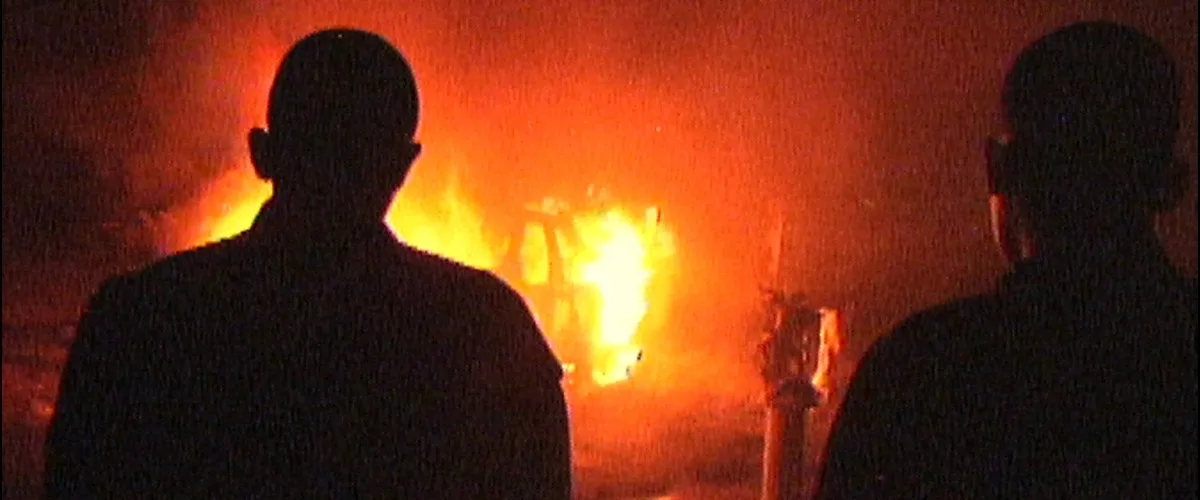
This renders the familiar refreshingly new, from a pack of barking dogs that appear more vicious to town streets that seem more vibrant as we pass by. There’s a later sequence where the camera documents a burning car that feels more folkloric than mundane, as the boys dance and fight, illuminated by its scorched light. Not too long after stealing the camera, we see them execute a bank robbery that goes horribly wrong, and they have to take shelter. We learn that many people have gone missing, and that it may have to do with extraterrestrials. This does little to faze the boys, who view disappearance and death as just part of the cursed air they have to breathe.
If this plot sounds vague and incoherent, that’s because it is. But “Barrio Triste” works best when reconsidered as an immersive artifact from the marginalized who are learning the grammar of self-expression. This is a film that understands that the truest picture of society comes from the eyes of those it neglects, courtesy of the outcasts who plunder airtime from the State itself. Arca provides a rattling score that embodies the fraught world these men find themselves in, often serving as a diegetic blanket for the boys when they’re given a rare moment of reprieve, or as a warning call when they use their free will to terrorize those around them.
It’s not all carefree, though; between these escapades, we witness interrogation-style interviews with one of the boys, who answers questions that only grow more existential. These are boys who view death as a form of salvation from the hardships of life, who have a hard time articulating their dreams for fear that, be it aliens, the devil, or life’s unfairness, they’ll never be realized. Stillz isn’t trying to offer any answers or hope for these characters, but perhaps hopes that, through raw depiction, it might instill empathy for those who wrestle with such universal struggles.
Harmony Korine‘s EDGELRD produces the film, and it’s not hard to see how Stillz’s features share so much grammar with the company’s projects. There’s something grittier and more urgent about “Barrio Triste,” though that makes it harder to forgive, given that it’s not solely experimental. It assaults with a style that doesn’t always feel honed, and it can seem like it’s trying to be trippy and inaccessible just because that’s the Korine style. Stillz gathers a unique group of actors who can convey deep pathos in quieter moments that would often be better served by camera choices that honor it rather than actively subvert it. There are moments in the film when the coterie shares a somber moment, and the frame quivers spasmodically. This feels less like a choice that benefits the moment’s volatility and more like a trippy visual flourish borne of insecurity.
If “Barrio Triste” never quite makes sense or fully congeals its rugged, on-the-boots found-footage side with its loftier aspirations. But such discordance is a feature, not a bug. We don’t all come out of the crib recording like Sammy Fabelman; there’s a gift in witnessing a crew that realizes the power of seeing themselves and their stories on-screen.