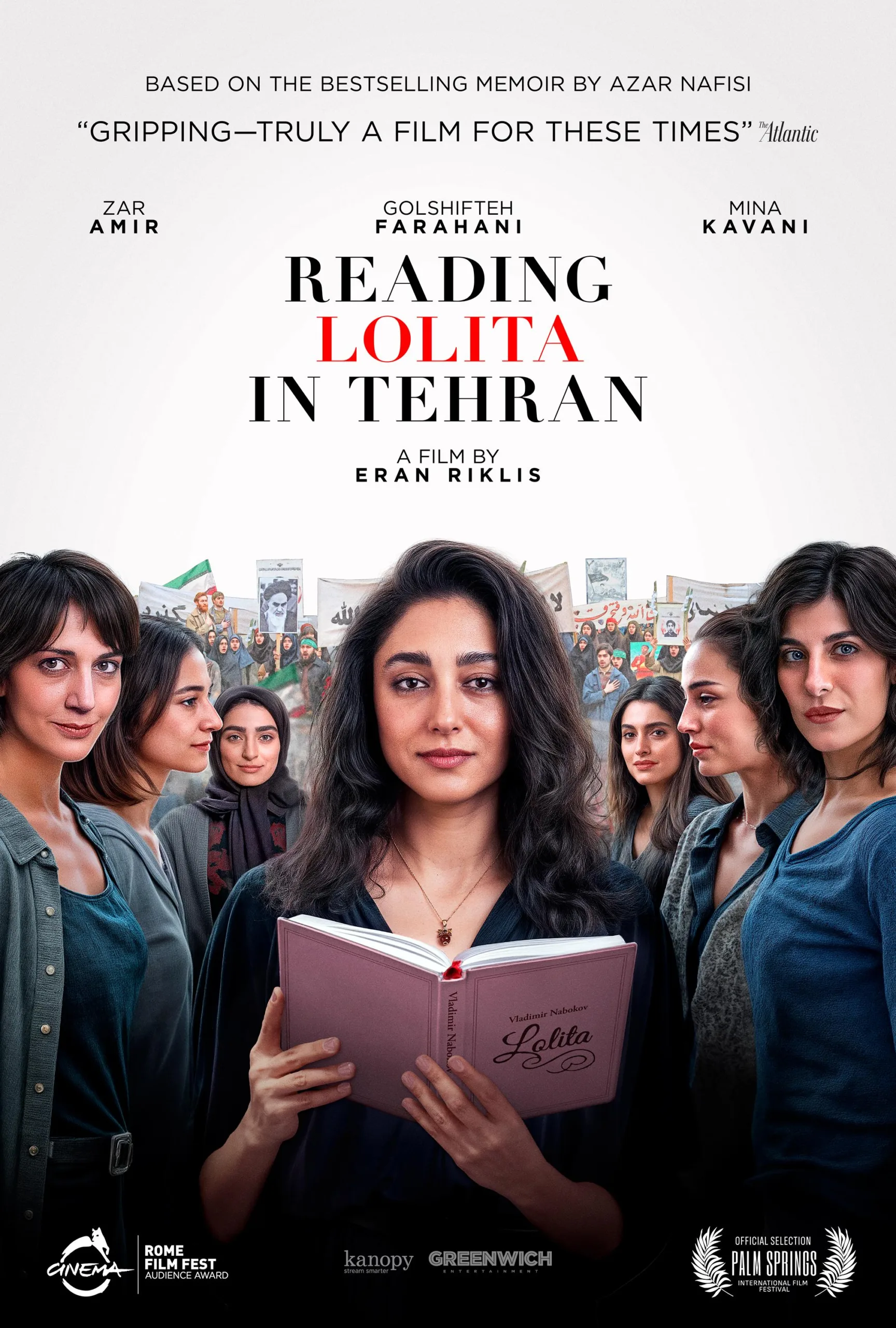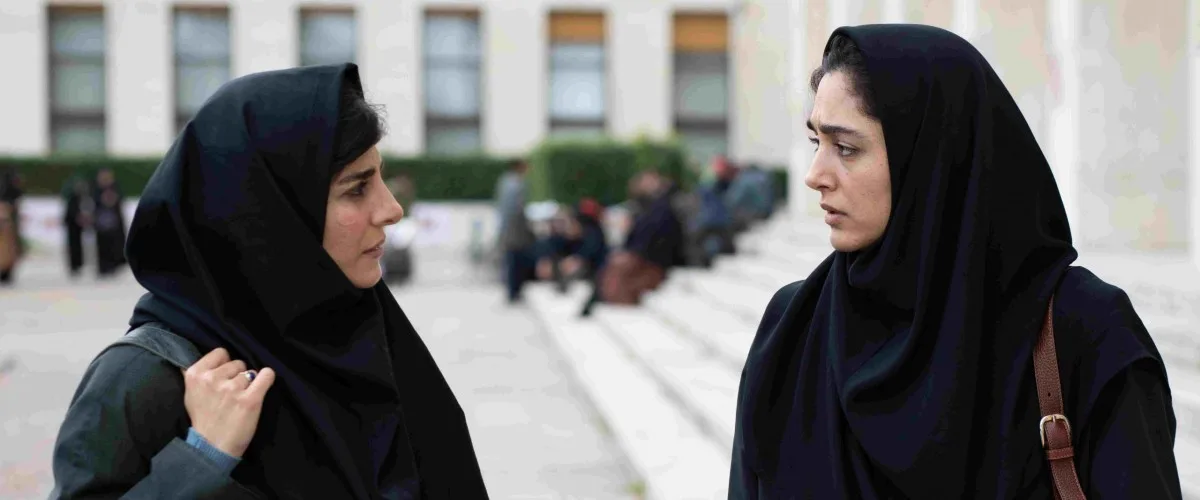
Iranian-American writer Azar Nafisi is the central figure of Eran Riklis’s adaptation of her memoir, “Reading Lolita in Tehran.” A professor of English literature, Nafisi (Golshifteh Farahani), has just returned to Iran from the United States when the film begins in 1979. The Islamic Revolution has just begun, and as she arrives through customs, officers cut their eyes at the novels in her possession, which include Vladimir Nabokov’s Lolita and Jane Austen’s Pride and Prejudice. They allow her to keep them, but the tone has already been set.
As she begins teaching at the University of Tehran, her students’ attitudes diverge, largely (though not entirely) by gender. Outspoken male students criticize the character of Daisy Buchanan in The Great Gatsby, labeling her as a plainly immoral woman, and turning up their noses at any moral forgiveness Nafisi and female students offer her. Further, the conversation spirals, not just forbidding nuance in character discussion, but in the existence of the books at all. In an exercise, they put the book on trial, asking the question whether novels can be criminal.
This intellectual activity marks the start of a tipping point. “Reading Lolita in Tehran” takes place over about 25 years, spanning the start of polarizing conversations to revolution, secret acts of rebellion, and eventual immigration. The chapters of the film, of which there are four, are named after the controversial novels Nafisi teaches and bookmarked by the year of the film’s events: The Great Gatsby for 1979, Lolita for 1995, Daisy Miller, which takes us back in time to 1988, and Pride and Prejudice, which jumps forward to 1996. The film’s epilogue of sorts takes place in 2003.
Riklis’s adaptation comes at a poignant time, when America, the nation the film’s women strive to escape to, is itself enacting effective book bans. These parallels are impactful on their own, but Riklis and co-writer Marjorie David’s screenplay is routinely heavy-handed in making its points. It pleads for what is already in plain sight, cheapening the sense of authenticity required to tell a story as personal as this.
Among the film’s chapters, the second, named after Lolita, is the strongest. In this chapter, most of the runtime is dedicated to Nafisi’s secret teaching sessions. In her apartment, the woman finds respite from the patriarchal misogyny and violence they can’t escape elsewhere. They gather once a week, bringing flowers, food, and their books, not only to find parallels between the text and their realities, but also to revel in typical “girl’s night” energy: singing, dancing, and riffing on sex and relationships.
These scenes of sisterhood are where “Reading Lolita in Tehran” is most tangible. There are a number of even more shocking scenes of protest and subjugation on both sides of the aisle, but the delivery of them, unfortunately, slips further into melodrama than necessary. Male allies, like Nafisi’s husband, Bijan (Arash Marandi), student, Bahri (Reza Diako), and a fellow professor (Shahbaz Noshir) are peripheral to women’s stories, but ultimately strengthen them.
Riklis’s film effectively depicts the acts, both small and large, that fuel both oppression and liberation. The film’s perspective is crystal clear, but it does not equate its values with impenetrable solutions. It is neither hopeful nor hopeless. It’s inspiring, more a testament to the strength of rebellious women than a program on how to reach the summit. It loses its handle on its pacing and shows its hand far too often, but despite these formal missteps, it delivers a cross-cultural tale that is both timely and timeless.