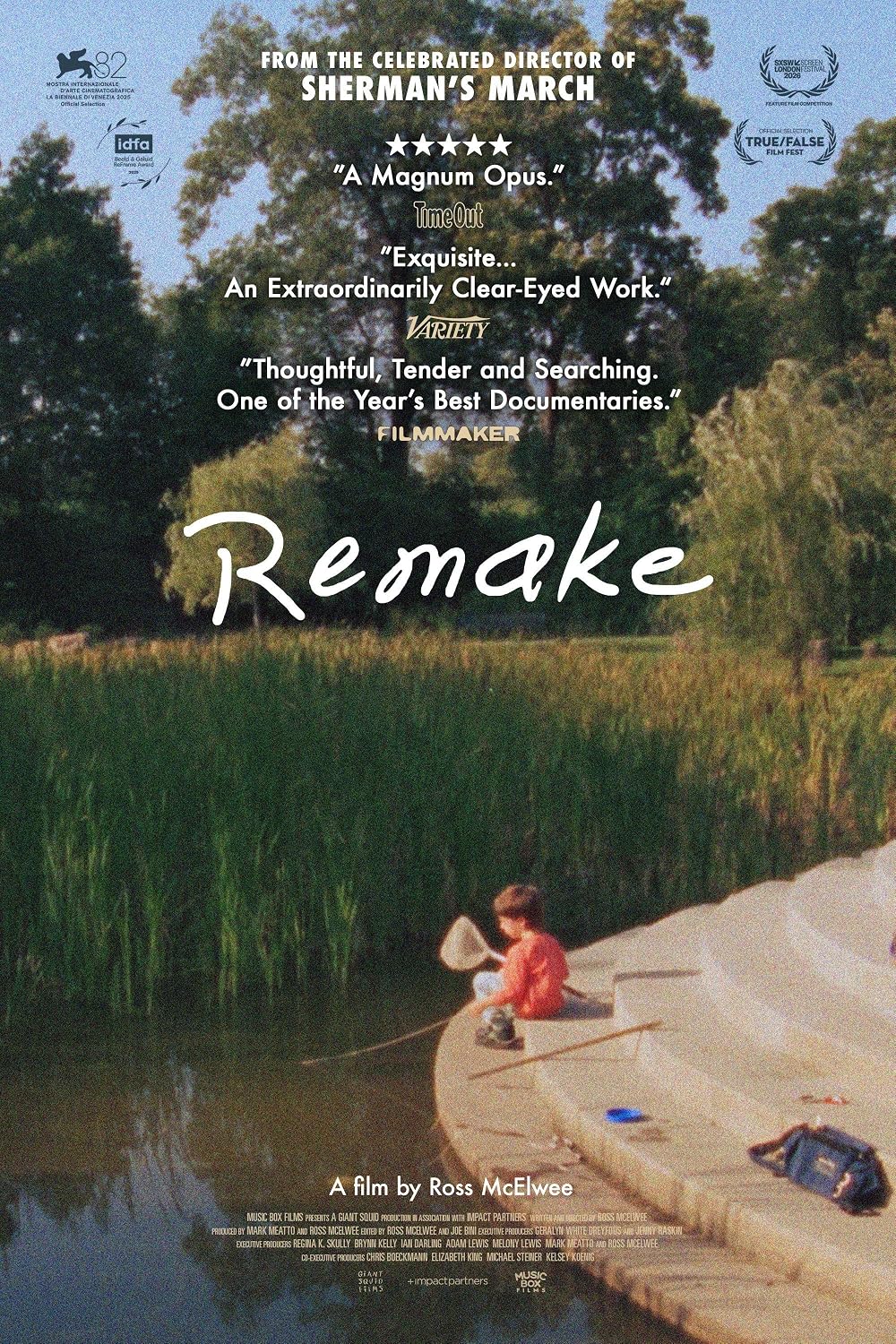

Ross McElwee’s new documentary, “Remake,” which premiered at the 2025 Venice Film Festival, suggests, by its very title, a return of sorts to a prior property. Such market expectations wouldn’t be wholly wrong: the film began as a making-of project of Steve Carr’s hopes for remaking McElwee’s landmark documentary “Sherman’s March,” a candid essayist film about romantic relationships and existential fears, into a narrative feature. Like “Sherman’s March,” however, what instigated McElwee to develop “Remake” isn’t wholly what this startlingly raw and openly reflective film is about. This documentary is a crushing essay film as a cinematic apology to a departed subject: The director’s son, Adrian McElwee.
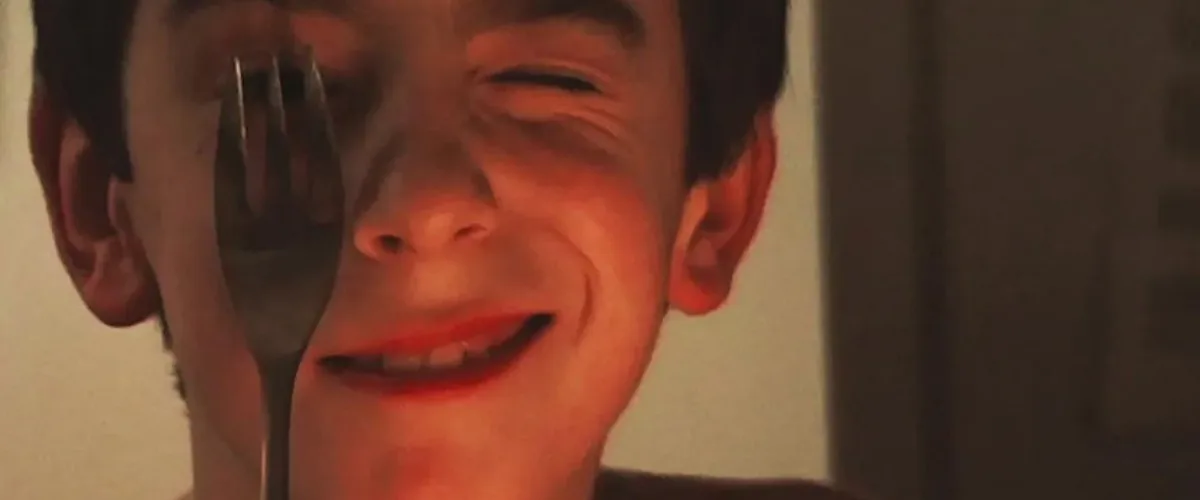
In 2016, Adrian died of a fentanyl overdose in McElwee’s home. He’d battled substance abuse, ranging from alcohol to ecstasy to oxycodone to heroin, but that version of Adrian isn’t the one McElwee initially (re)introduces to viewers. He begins with images of Adrian as a sweet, ingenious kid fishing for prawns. McElwee tells us that since Adrian’s childhood, he’d casually filmed his son for a few minutes a day every few months. This leaves him now, decades later, with a considerable amount of footage that unconsciously documented him as Adrian ever so slowly grew up and moved away, physically and emotionally. McElwee’s parsing of these remembrances is deftly interwoven with McElwee’s documentation of the fitful, planned adaptation of “Sherman’s March.” The three lenses—“Sherman’s March,” its potential remake, and Adrian’s story—arrestingly reflect off one another, capturing a director questioning his dual role of filmmaker and father.
Nevertheless, watching “Sherman’s March” isn’t necessarily a requirement to see “Remake.” The prior documentary floats on the edges of this film along with “In Paraguay,” which documented McElwee and his wife Marilyn’s journey to adopt their now-daughter Mariah from the South American country, and “Photographic Memory.” Each film reintroduces us to McElwee’s biography while setting up the hardships that would come: the director’s fight with brain cancer, his painful divorce from his wife, and the struggles that piled on Adrian as he grew older.
Consequently, McElwee persistently doubles back into the films he made and the effects they had on the people who participated in them. He visits Charleen Swansea, who was not only the subject of his film “Charleen” but also features in memorable portions of “Sherman’s March.” Due to Alzheimer’s, she can’t remember making either film. But she critiques the ugliness of McElwee’s camera not solely for its aesthetics, but because it creates a distance between the director and reality.
McElwee becomes more aware of that separation through conversations with Adrian, who, as the potential commerce of the “Sherman’s March” remake begin to diminish—it goes from being pitched as a narrative feature to a limited series to a half-hour sitcom—begins to be more enamored with the perception the camera has created of himself: He wants to match the famous, party-boy lifestyle of a commercially minded filmmaker. His desires are also, of course, partly fueled by his substance abuse, making it difficult for McElwee to know what language to use with him: the camera or his words? At various points, he struggles to strike the right balance with Adrian: should he be supportive, stern, or forgiving? One of the tragedies of “Remake” is that no matter how hard McElwee looks through the camera, the answer simply isn’t there.
Once the prospects for the adaptation of “Sherman’s March” fade, however, one wonders exactly what McElwee is remaking in “Remake.” Is he most obviously attempting to relive memories of his son through this footage? Does he hope that by pursuing this difficult self-reflection, he can, in some way, alter the loving yet tenuous relationship he shared with Adrian? Early in the film, McElwee comments that, when he watches moments he filmed over the years, Adrian feels alive and gone at the same time. In some respects, the very act of “remaking” anything suggests the acknowledgment that a faint shadow of a former form still exists in the new reality. In this documentary, it’s that destabilizing doubleness that McElwee grapples with nakedly.
Considering that all of the director’s documentaries are firmly informed by the shadow of the films he made before, his wandering between projects and memory isn’t merely second nature for him, but also an exercise of creative muscles whose wariness and fatigue he makes clear. To tell this story, he must reach for the only tool he knows—the camera—but by the end he comes to question how it can both inspire and distort the subject. In Adrian’s case, what does it mean for a child to know that the lens will always turn to him? And more importantly, how healthy is it to build a relationship with an object that can only reflect an altered version of yourself back at you?
The second half of the film works through these regrets and doubts not only as a public search for answers by the director/father, but also as a look inward and outward. The former stems from McElwee’s self-interrogation, which begins with his recalling the events surrounding “Photographic Memory,” the 2011 documentary about McElwee and Adrian’s tricky relationship, which has been strained by online spaces. McElwee notes how one journalist at the Venice Film Festival, where the film premiered, said the director was too hard on his son in the film, an observation that haunts McElwee.
For the outward components, McElwee turns to Adrian’s own camera. A little over two years before his death, Adrian moved to Colorado, where he hoped to set up a media company. Instead, he sank deeper into addiction. As he began to fight his habit, he started making a documentary of sorts to track his slow progress toward sobriety. This footage and casual videos—like Adrian capturing himself skiing in Colorado—provide McElwee and us with an unvarnished vision of Adrian.
As the camera turns from father to son and back again, “heartbreaking” becomes too flat a word to describe this contemplative film. In fact, part of the honesty of “Remake” is accepting that words and images often come up short in capturing the moment. And, similar to other recent personal films, like “Blue Heron” and “Romeria,” McElwee’s documentary readily accepts that a movie alone cannot fill the void left by loss or redo the many decisions made along the way. It can only ease the lived present by revisiting the recorded past, allowing time to stop, kindly but briefly. For McElwee, those photographic pauses offer a chance to say, “I’m sorry.” For the viewer, who should take in the devastating mirror to grief that is “Remake,” it’s an opportunity to offer solace by intently witnessing the footage of an observer whose imperfect gaze fills the frame with agonizing remorse.