Do filmmakers have nightmares about generative AI?
Curry Barker’s “Obsession” and Kane Parsons’ “Backrooms” have exceeded most critical and just about every commercial expectation leading up to their release. Their respective directors have been the subject of much discourse due to their young ages and the fact that they both got their start making content online. Barker was writing and performing in sketch comedy videos prior to making “Obsession,” accruing over 1.2 million followers on platforms like YouTube and TikTok. Parsons created the viral web series version of “Backrooms,” which served as the basis for the feature film.
This has spurred excitement in the culture at large via the idea that the internet can offer an alternative pathway for the next generation of filmmakers, but there is an uncanny elephant in the room: the social media platforms that have given people real artistic opportunities are also riddled with generative AI, created by the same tech companies that own these very websites. The potential for any artist’s dreams to be realized is paired with a myriad of nightmarish consequences for the World Wide Web.
It is unsurprising, then, that Barker and Parsons, two young directors who have come of age in this digital era, have, intentionally or not, created films that serve as effective metaphors for the horrors AI wreaks upon us.
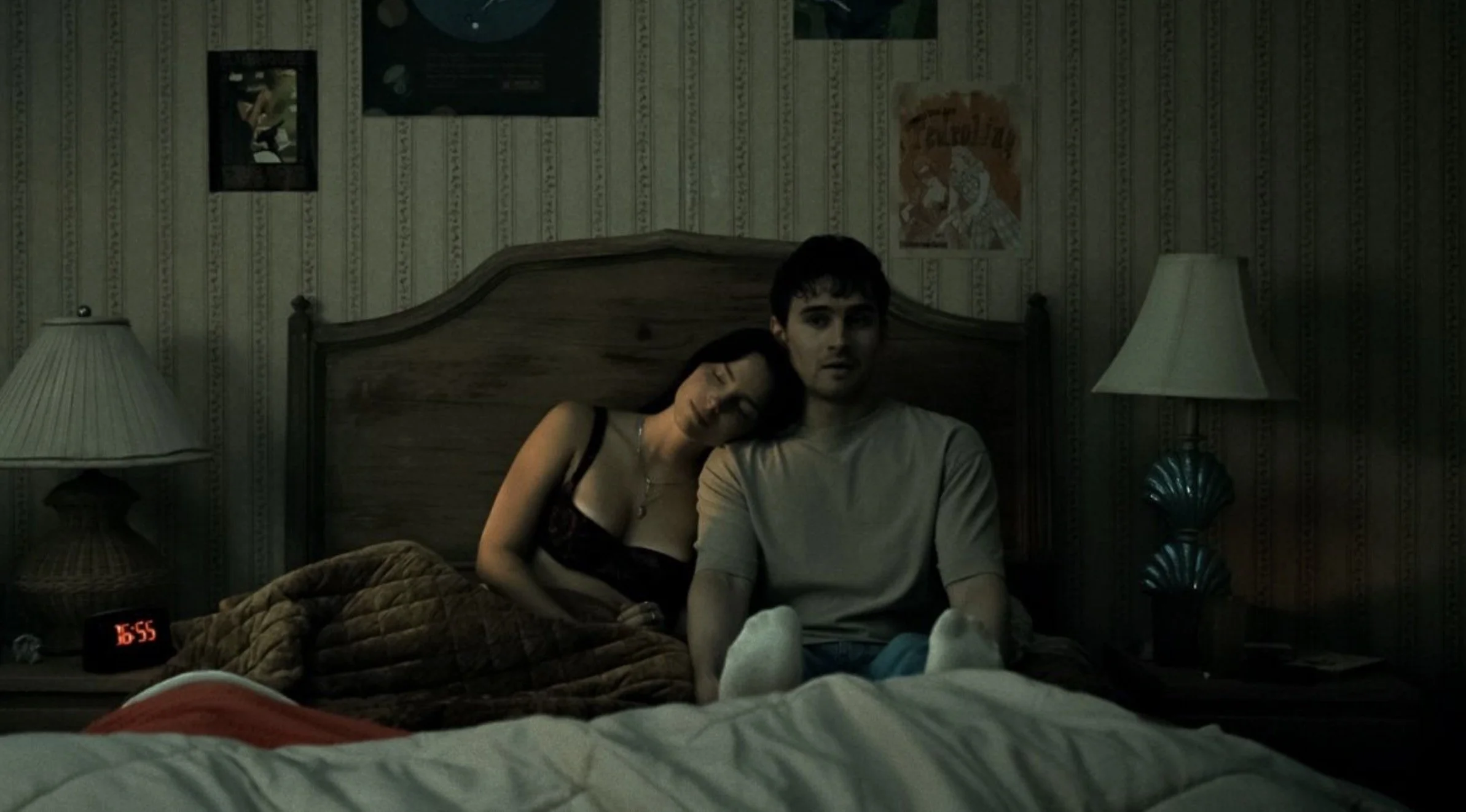
In “Obsession,” Bear (Michael Johnston) is hopelessly crushing on his friend and co-worker Nikki (Inde Navarette). He lacks the courage to confess his feelings, and in a moment of frustration, wishes on a supernatural toy for Nikki to fall in love with him. He soon discovers that the toy, a “One Wish Willow,” has actually made his wish a reality, but in doing so, it has caused Nikki to be possessed by a demonic presence. Many have interpreted “Obsession” as condemning the “nice guy stuck in the friendzone” mentality that has become a cliché amongst entitled men, with Bear being the clear villain of the story. But the film also explores the psychology of men with AI girlfriends.
In an early scene, after the fake Nikki lies about drug use to explain her erratic behavior, Bear asks a chatbot with a user interface strikingly similar to ChatGPT about the effects of MDMA. This establishes Bear as someone already prone to using AI, and, in many ways, the One Wish Willow has the same appeal. Instead of putting in the work to achieve something yourself, this magical shortcut automatically generates whatever you want reality to be. According to a study by Male Allies UK, a major incentive for men and teen boys to use dating chatbots is that it is easier to “control the conversation” with an AI partner. This has rightfully caused worry, as normalizing such relationships can easily bolster misogynistic beliefs of having a completely subservient partner.
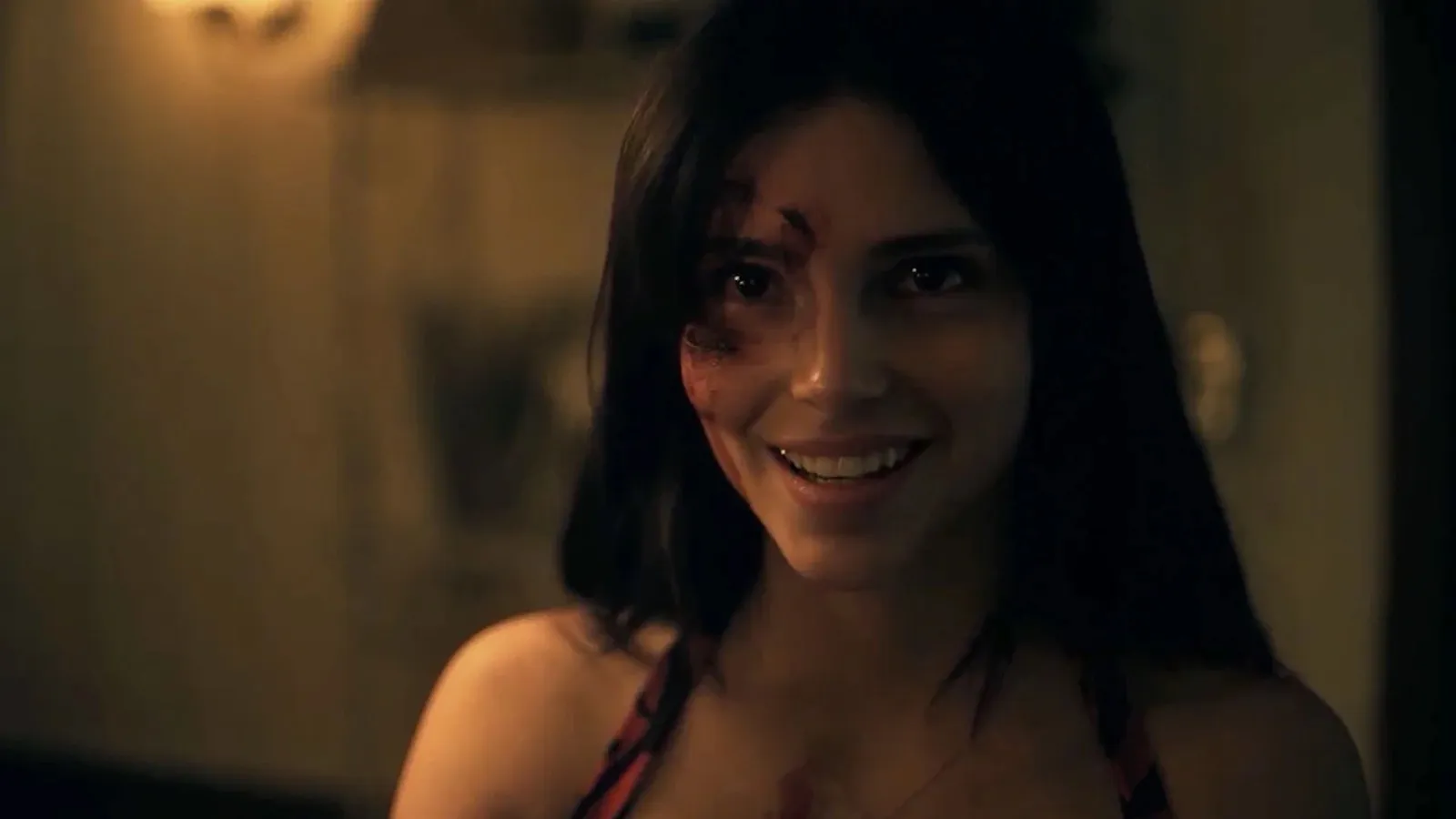
Like these men, Bear desires a relationship that requires no real effort on his part and no agency from his partner. The possessed Nikki behaves like a sycophantic chatbot, constantly fawning over Bear and desperately doing anything to make him happy. Much like AI, this demonic presence is also imperfect, with this version of Nikki never being able to perform a believable simulacrum of ordinary human behavior. During a party scene, this becomes apparent to Bear’s entire friend group as the fake Nikki behaves in an extremely off-putting way. Just like those in the real world who are dating a robot, Bear would rather keep this relationship behind closed doors.
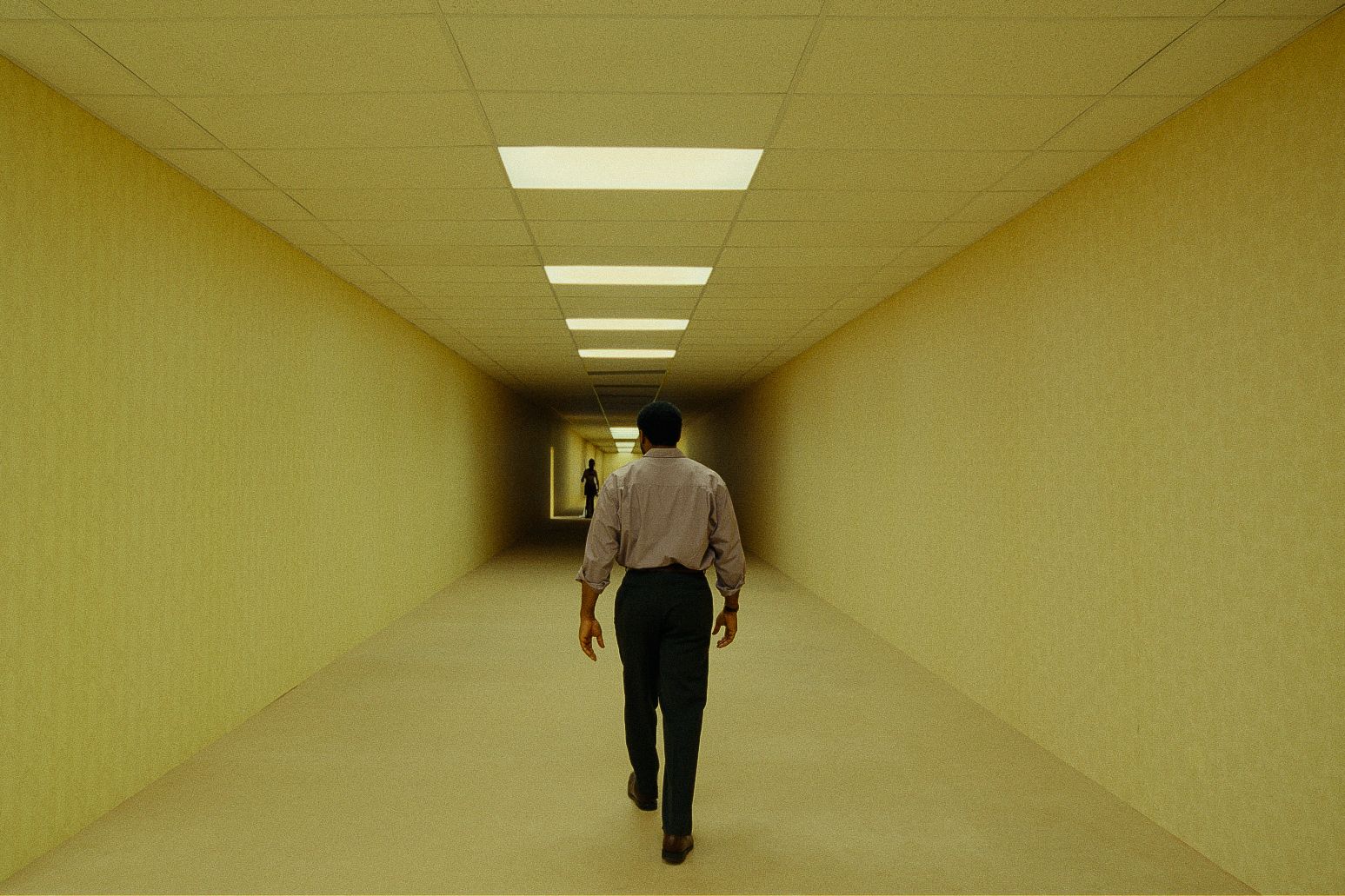
While “Obsession” allegorizes AI through an uncanny individual under a spell, “Backrooms” does so through setting. Clark (Chiwetel Ejiofor) is a furniture store owner struggling with his finances and life prospects after his divorce when he discovers a secret doorway to a strange, seemingly infinite alternate dimension. After he becomes obsessed with this liminal space, his therapist Mary (Renate Reinsve) goes in to locate him.
The film explains that the backrooms replicate and generate the outside world within these rooms, as if from a bad memory. We frequently see various objects and pieces of furniture that have been created, but they are always off-kilter approximations that “glitch” through the floor and walls. Characters attempt to explain the dimension by saying it is “like describing a dog to someone who’s never seen one, then asking them to draw one.”
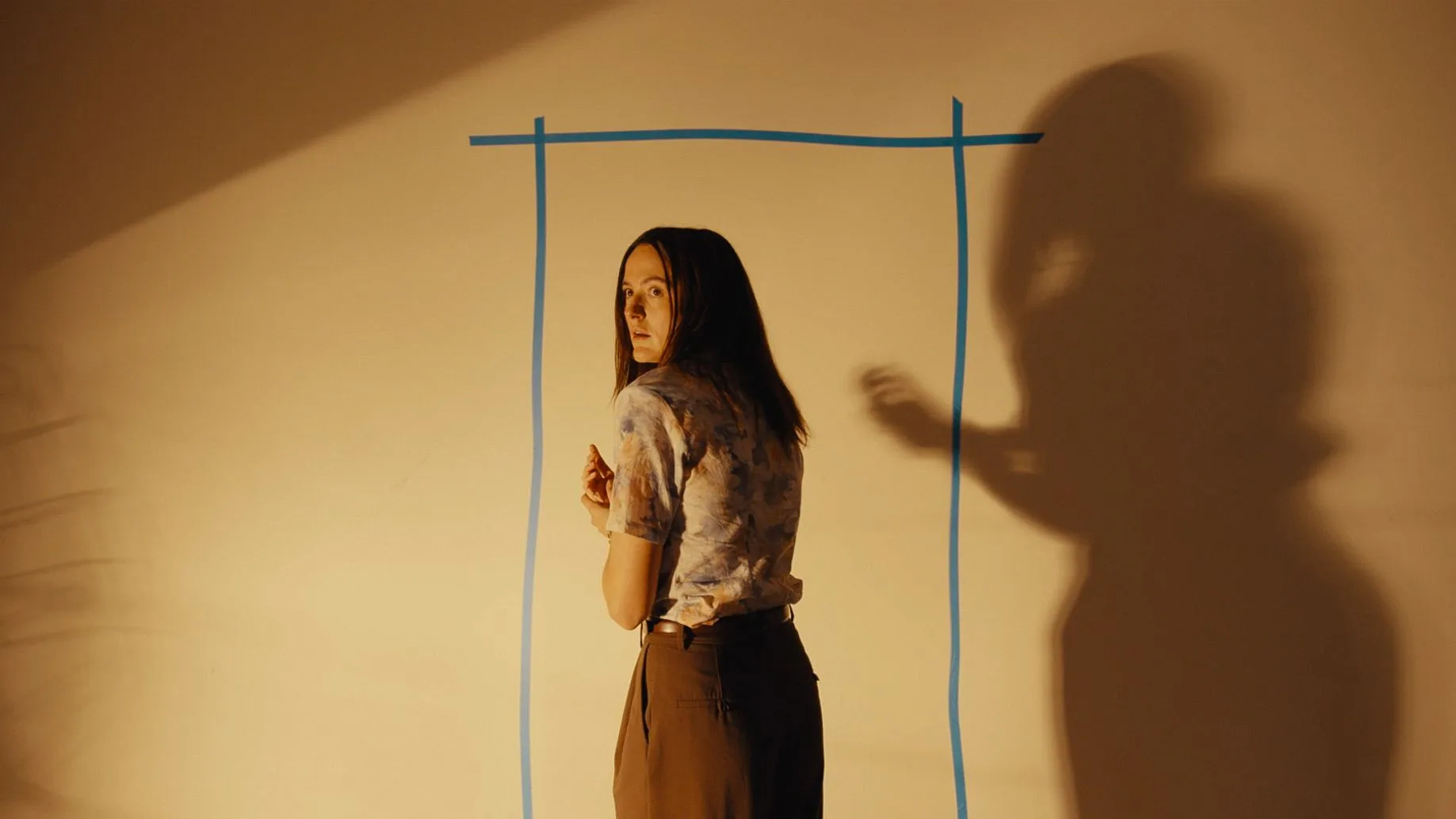
It should be obvious that this directly mirrors how AI hallucinates when creating images from prompts. This connection is especially apparent in the film when we see the entities that inhabit the backrooms, many of which are doppelgängers of characters, but are riddled with errors. The entities have too many eyes or too many fingers, a historically common flaw that helps one discern if an image was created using generative AI. By the end of the film, Clark confesses that he doesn’t want to return to the real world, preferring this bizarro land where he feels he has more control over his life. In this way, Clark has essentially succumbed to AI psychosis, losing touch with objective reality and driven to hysteria for the machine and its recreations.
Thankfully, Kane Parsons has voiced criticisms of AI and says he has no interest in using it himself. But even though artificial intelligence is not being used to create these films, it is clear that the omnipresence of this technology has been imprinted onto our unconscious, lurking in the background and informing the images we humans organically create when we imagine something terrifying.
Hollywood is at war with itself over this new supposed “tool,” with lines being drawn in the sand as various filmmakers come out either in support or opposition of AI. Before this pair of cultural phenomena, films such as “Afraid” and “M3GAN” have tried, albeit unsuccessfully, to directly exploit our neuroses about smart digital assistants to tell a story. As people continue to resist this harmful invention, it is inevitable that our art will respond, both implicitly and explicitly, to the increasingly frightening mutations of the abominable machine.