
The moment I finished watching “Miss You, Love You” for the first time, I immediately restarted the film. Not only is it one of the best films I’ve seen in a long time, but its every barb, every declaration, every insult changes dramatically once you and its characters know everything they fought and failed to conceal. It’s a film that changes every time you, the viewer, lose the chance to be fully present for someone you love.
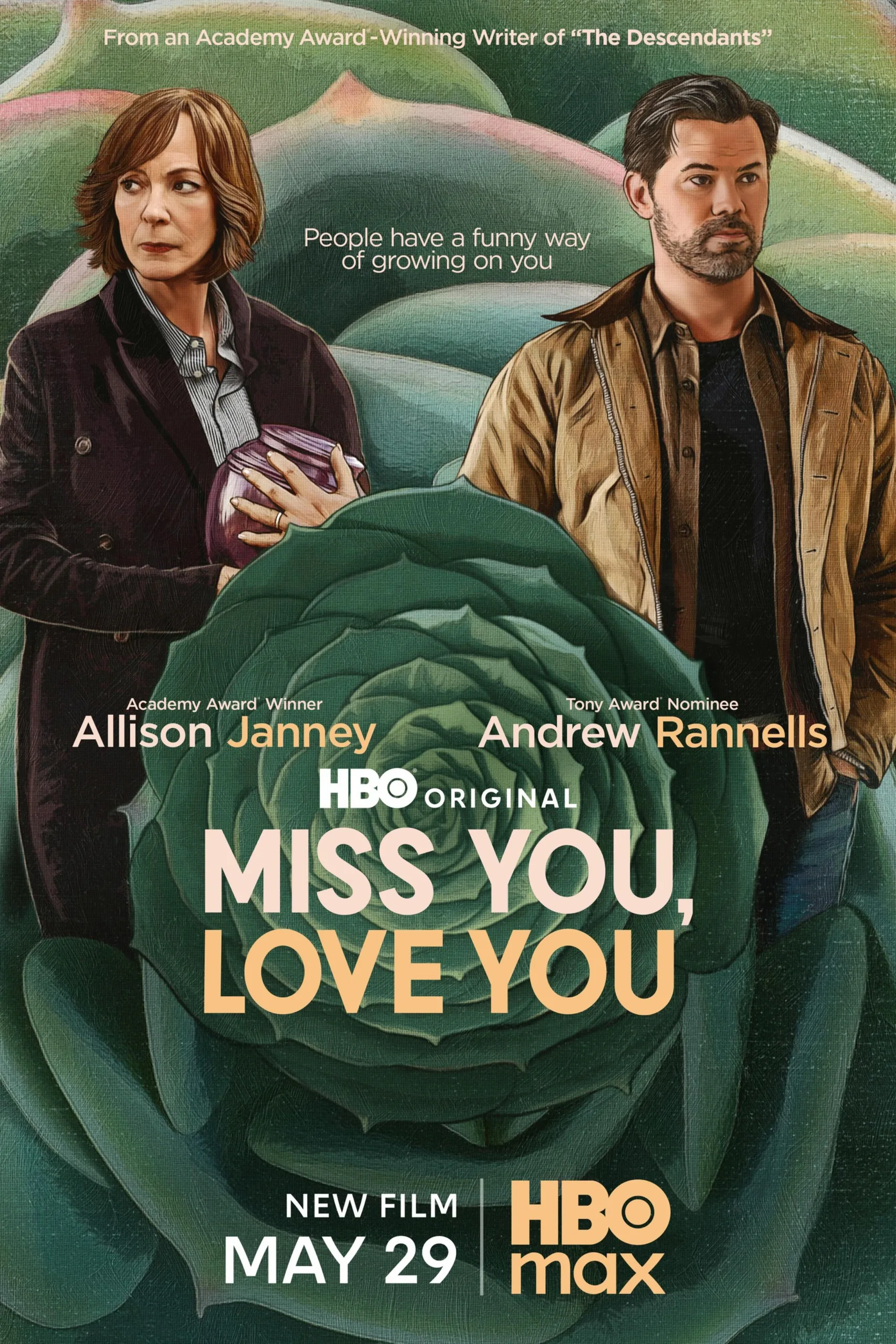
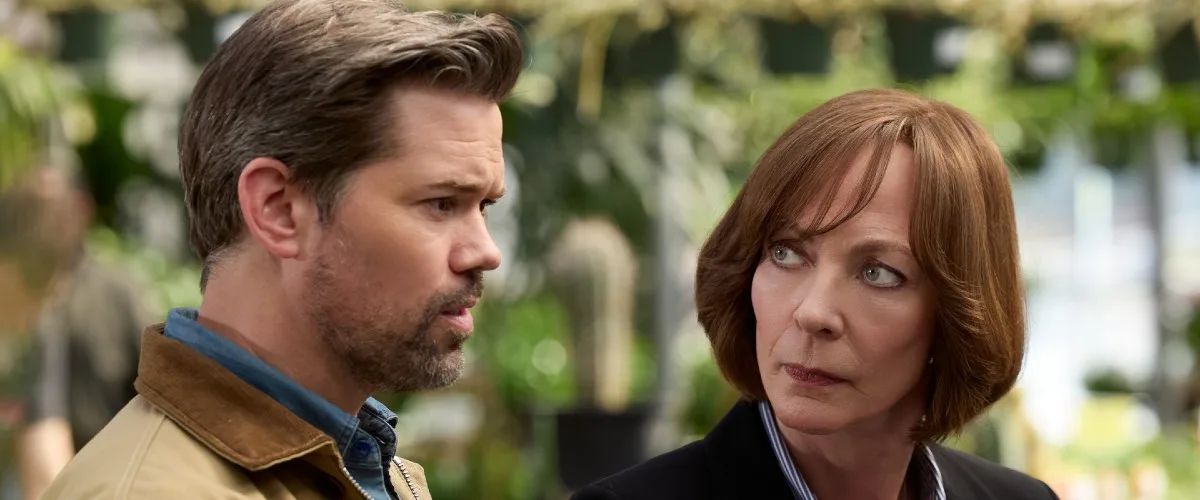
Diane (Allison Janney) is distraught. Her husband, Henry, has died of Parkinson’s. To add insult to injury, he died in New Mexico, the sun-drenched state to which they moved from New York City, a place she loved and hated to leave. Her son Tyler, from her first marriage and someone present in the film—and, it appears, in Diane’s life—only via text messages, is unable to attend the funeral. In his place, he sends his assistant Jamie (Andrew Rannells).
And thus an immovable object meets an unstoppable force. But which is which? At first, it feels like Diane has the upper hand, her grief and hurt dominating the prickly contours of their conversation, while Jamie listens and periodically attempts to defuse her wrath. Underneath his calm politesse, however, is a spring of determination; he is here to help, with whatever Diane needs, even if it is just Henry’s struggling succulent.
Writer and director Jim Rash first conceived this story at his own father’s funeral, to which his unavailable sister sent her own assistant. “Miss You, Love You” was first written and pitched as a play. This narrative lineage can feel stilted in a feature film, but not if you have two theatre-trained actors handling the material. (And not if, like Rash, you have an excellent ear for the verbal diarrhea that is unleashed after a loved one’s death.) Janney, unsurprisingly, is a powerhouse, skating from one stage of the Kubler-Ross model to the next, and back again, in a nanosecond.
One of her greatest feats is when and where she chooses to draw breath, lowering or heightening her intonation to emphasize imperiousness, display vulnerability, or expose a raw nerve. It’s a masterclass in holding a character’s cards tightly to her chest: is this person manipulative and entitled, or is this just grief, crashing over them like incessant tidal waves? Perhaps some mangled combination of both? Who, really, is this woman, underneath the hurt?
Rannells, for his part, becomes the best counterpoint to Janney’s indomitable spirit. As with his recent turn in season two of “Deli Boys,” he shows in “Miss You, Love You” that there is really no limit to his range. At times, Jamie’s empathy for Diane borders on a maniacal desire to please, but as their dynamic gains rhythm, Rannells uses his impeccable timing to syncopate the beats of conversations, extending shorter words to fill a silence, speaking faster to bypass an awkward moment. Janney is in charge, and Rannells defers to her dramatic beats, but it’s his emotional core that rounds out the harshness, like savoury notes in a plate of food balancing acidity. Being mean and being nice, it turns out, have more in common than you’d think.
The setting gets more of a say than the supporting cast. Oscar Nunez is deeply irritating (and therefore quite funny) as the supercilious minister of Henry’s church—if this was Rash commenting on how the smarmy steamroll the grieving, he nailed it—and Bonnie Hunt is spot-on as the quintessential nosey neighbor covered in turquoise. But my partner is from New Mexico, and we have traveled there regularly in the last seven years: the Moon-like environs of the coral-colored desert do not let you hide. There are no skyscrapers, no sunsets at 4 PM behind bridges. The vastness of space is calming only if you, too, are calm. If not, it can feel like you’re in a borderless chasm filled with every negative thought you’ve ever had—a perfect reflection of Diane’s discomfort.
If there is significant criticism of Rash’s direction, it’s that more exterior shots could have been a more intriguing way to show instead of tell. Doc Crotzer’s careful editing, however, does a great deal to make up for the lack of outdoor settings.
There are a lot of familiar indie beats here: two characters who don’t know each other, brought together via a specious link through the absences of two others (Tyler and Henry), giving and accepting help during an emotionally turbulent time. The promotional materials for the film describe Jamie and Diane’s week together as “an unlikely conduit for connection, laughter, and healing for this mother and her unexpected surrogate son.” But the truth is far more prickly, not so easily summed up.
“Miss You, Love You” is just as much about what we choose to say as what we choose to hold back, in this moment and in every moment that came before. This is not a story about someone begrudgingly accepting someone’s help, nor someone freely offering it. It is a story about two people struggling, being forced to connect, and finding that that connection may not be sufficient either. The answer lies inward and onward.