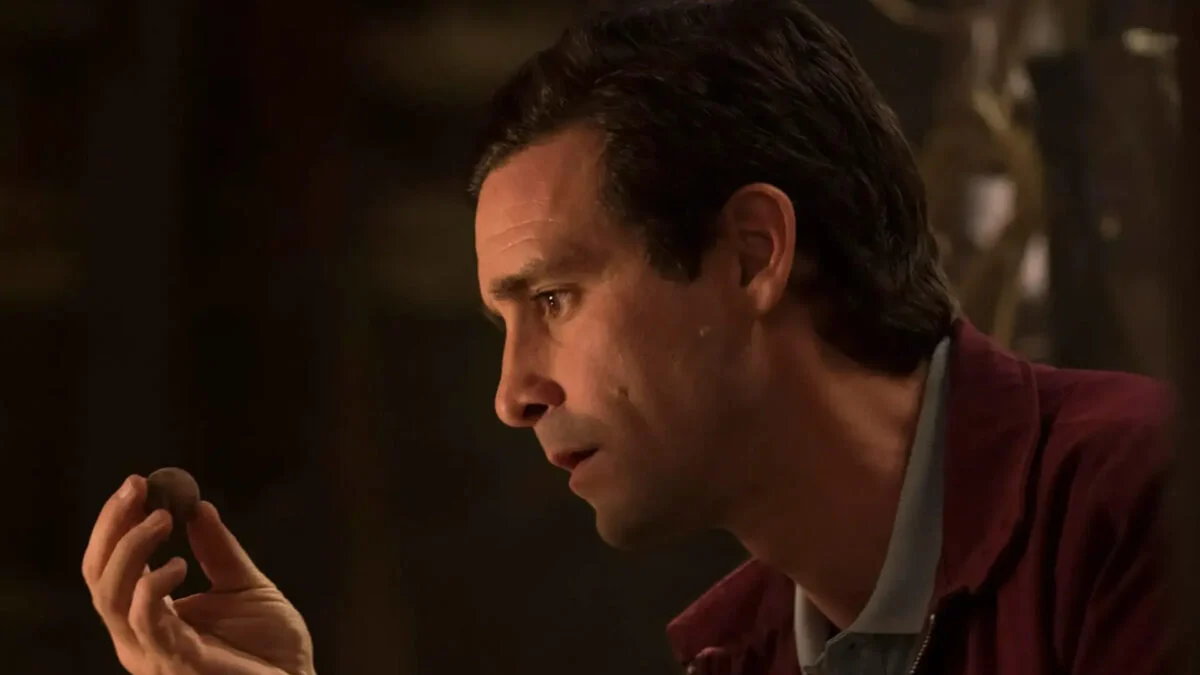
I first remember seeing James Ransone on my screen when I was eleven, while watching Larry Clark’s “Ken Park” on a tiny television screen with some of my childhood friends. We were all too young to be watching the film, but we were also too young to have gone through what many of us had. Addiction, abuse, and neglect plagued all of our homes to some degree, and I now can’t help but think that this may have been the first time any of us had seen ourselves on screen.
James “PJ” Ransone was born on June 2, 1979, in Baltimore, Maryland. He attended the George Washington Carver Center for Arts and Technology and then the School of Visual Arts in Manhattan for one year before dropping out. Before becoming a staple in Sean Baker’s early filmography, Ransone’s breakout role as Chester Karol “Ziggy” Sobotka in the second season of HBO’s “The Wire” set up his reputation as not only someone who disappeared into roles, but an actor who was consumed by them. Watching Ziggy was like watching a live-wire pulse back and forth; he’s loud and brash in a way that feels quintessential to HBO’s 2000s endeavors, as if his nerves have been frayed along the edges. Ransone inhabited him with a mania-driven fervency, like he did many of his characters. It was an edge that often propelled his voice to rise many octaves and forced his body to shake with various tics.
He went on to star in another David Simon production, “Generation Kill.” In it, Ransone played Corporal Josh Ray Person, a wisecracking young Marine whose age is often overshadowed by his wit, which surpasses the older comrades around him. His boyish face and rail-thin body resembled the real men the series was meant to showcase, giving us a startling reminder of how war often corrupts young men into monsters.
Throughout his career, Ransone often played characters who were brash and, at times, uncomfortable to watch. They simultaneously reminded you of the worst people you knew, before emulating the raw flickers of goodness that exist within even the worst of us. His on-screen charisma and the magnetism of each performance transformed the characters he played into fascinatingly complex figures. In the mid 2010s, after meeting director Sean Baker at a 24-hour emergency vet clinic in Chelsea, Ransone’s presence in “Starlet” and “Tangerine” propelled him into a realm of indie-stardom.
Under the pointed lens of Baker’s camera, the actors’ eyes often looked like they were rimmed with black kohl, feverish and dizzying in the same way that Baker’s earlier films were. His performances in each were peeled back so far that they exposed the tender underbelly of his characters’ rough lives, not only inhabiting them but also giving them a living, breathing weight behind their presence. These performances, like so much of the actor’s work, permeated the entire film, no matter how long or how little Ransone was on screen.
Ransone later starred in Scott Derrickson’s “Sinister” opposite Ethan Hawke, playing timid detective Deputy So-and-So, who Hawke’s character employs to get to the bottom of the 8mm snuff films left in his attic. Up against an acting titan, Ransone stole the show out from under Hawke’s feet, so much so that the film’s sequel, “Sinister 2,” became the actor’s first leading role in a blockbuster film. Continuing as one of modern cinema’s defining scream kings, Ransone was later cast as the older Eddie Kaspbrak in “It: Chapter 2.”
As Eddie, the actor appears child-like from his first appearance, as if the character, now in his 40s, has been stunted by the events of the first film. His brown eyes appear so dark with fear that the camera’s lens almost makes them look black, and his hands fly to his pocket, where his inhaler lies. Ransone seemed to have a penchant for playing unapologetically broken characters that society often threatened to swallow. These men had seen hardship, from wars to poverty, and were characters who, under another actor’s authority, could have come off as caricatures. Instead, Ransone inhabited each role with a startling degree of empathy, an air that was often so overwhelming that his eyes felt as if they could pierce the invisible veil between the screen and its audience.
On screen, Ransone was a hypnotizing and magnetic actor. Off-screen, he was a force of nature who unabashedly spoke about his struggles with alcohol and heroin addictions, the latter that he kicked right before shooting “Generation Kill,” and in 2021, he shared in a now-deleted Instagram post that he was sexually abused by a former tutor who worked in Maryland public schools. The actor stated that the abuse was a factor in the addictions with which he later grappled, and although he reported the abuse, law enforcement would not be moving forward with pressing charges. I remember reading this post in the darkness of my bedroom after a 9-hour shift at my then day-job, which was so strenuous on my body that I began to cope by further abusing alcohol than I already had been for years.
Like every addict, I knew I had a problem, but I didn’t know where that problem started, and where I as a person ended. I felt intertwined with my addiction, just as much as I felt submerged in fragmented memories of a horrific childhood that to this day, I still can’t fully comprehend. Ransone’s post became a fundamental pillar in my journey to uncover what these memories hinted at, and it also became the sole force behind the long journey of managing my sobriety. If someone whose work I have tattooed on the crook of my inner elbow, someone whose life was startlingly similar to mine, could heal in some way from their traumas, why couldn’t I?
When I think of James Ransone, I often find echoes of my entire life in his filmography. From “Ken Park” to “It: Chapter 2” to the other TV shows and horror films that became staples of every high school sleepover I attended, his work shifted not only how I consumed media but also how I understood my own life. Although he never reached international stardom, his presence on screen always superseded the time in which he was on it, becoming one with these characters and their stories, unlike any actor I’ve ever seen.
Character actors often pop up in films and television shows only to be whisked out of frame as quickly as they came. Yet, with Ransone, his presence always lingered, his image fused upon the screen and into the narrative of each role he took. He had a voice that sounded incredibly young, yet when he spoke, it carried a cadence that belonged to someone decades older. Each time he would look forward at the camera, it felt like my chest was being pierced by his gaze, as if a part of me was looking back at myself through the screen. His presence, whether in small indie films or prestige television, was one I always welcomed, one that irrevocably changed my life, and one I will miss for the rest of it.