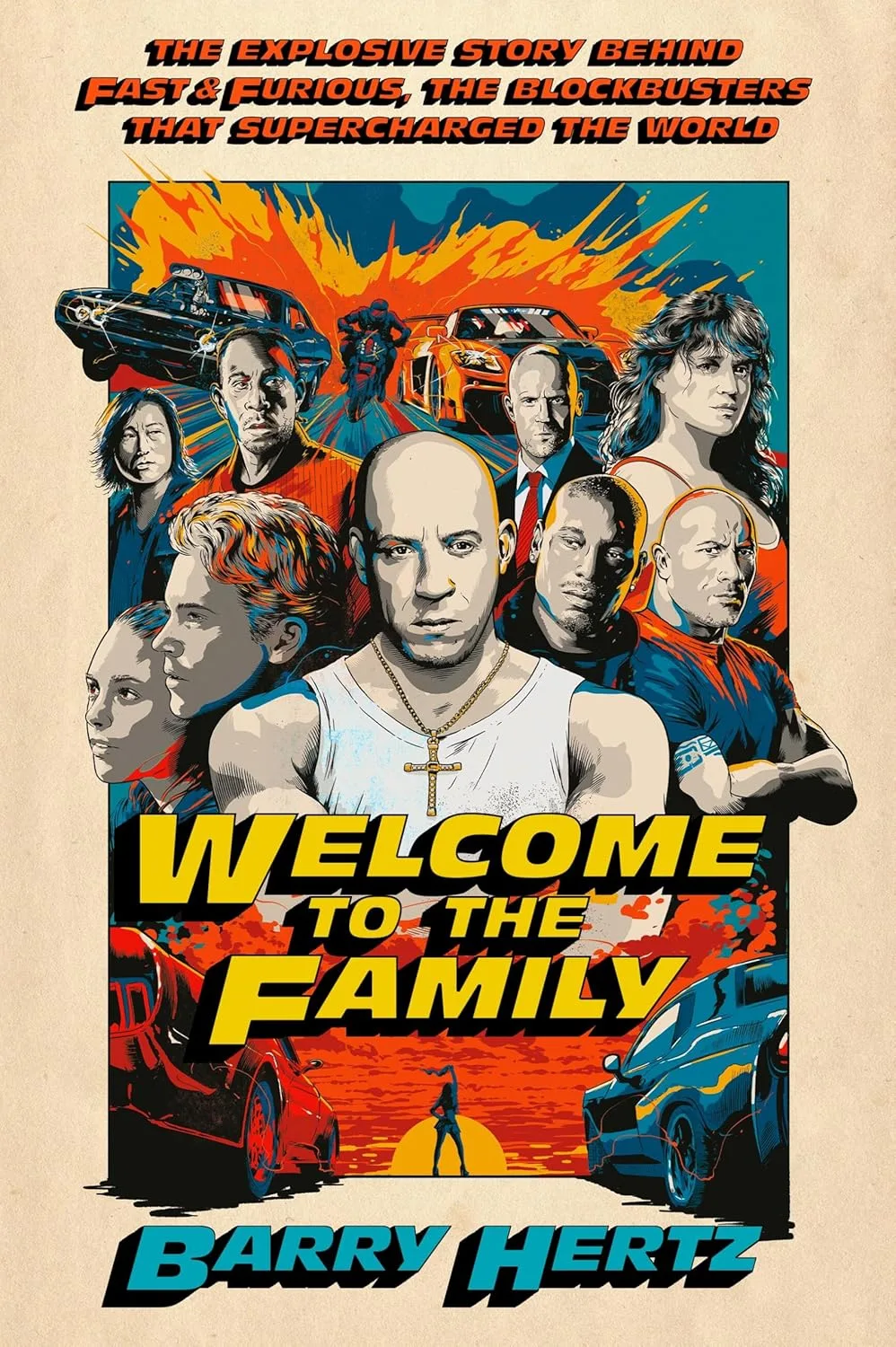
An author needs to meet a subject on its own terms to find the right tone for the story being told. For example, you expect a different sort of cultural and philosophical unpacking of the work of Ingmar Bergman than you do Michael Bay. It’s not to say one is more “important” than the other, but that an author becomes a sort of dance partner with his or her subject, not only to match reader expectations but to enhance the tone of what’s being discussed. This is all to say that Barry Hertz becomes “family” with the “Fast and the Furious” franchise in his excellent and engaging Welcome to the Family: The Explosive Story Behind Fast & Furious, The Blockbusters That Supercharged the World, now available.
If you think about it, there are so many stories to tell about this unexpectedly huge franchise from the relatively humble origins of an adaptation of a Vibe magazine article by Ken Li to the drama around star Vin Diesel choosing to make “The Chronicles of Riddick” instead of “2 Fast 2 Furious” to the infamous cameo at the end of “Tokyo Drift” to the revitalization of the franchise with Dwayne Johnson’s arrival on the team to more and more and more. And that’s just the first half of the series. Hertz eventually gets into the drama around Diesel v. Johnson, as well as the strange limbo the franchise now finds itself in after “Fast X” became too expensive to ever be a hit. While we’re in this pit stop, with no guarantee that it will ever hit the track again, take the time to cycle through this franchise’s history with Hertz, the chief film critic for Toronto’s The Globe and Mail.
Hertz finds the perfect tonal balance for Welcome to the Family, never talking down to his subject while also recognizing that a book like this needs to be fun. He has a propulsive approach to the material, coming in relatively brief at just under 400 pages, given how many stories there are to tell. He’s very deft at not lingering too long on an anecdote or behind-the-scenes detail, giving the book the momentum it truly needed to succeed. The truth is that people who read film books can sometimes look down on franchises like “Fast and the Furious.” Still, Hertz makes the case for the franchise’s cultural and even representational importance not by over-explaining either, but by approaching it with just the right balance of reverence and whimsy.
And Hertz makes the case that those who easily dismiss these movies as popcorn escapism are missing why they’ve been so popular and the machines that have been built around them. They tap into audiences that too rarely see themselves depicted in action movies, especially in the wake of the superhero boom. Sure, most people can’t pull off the impossible driving stunts in the later films, but there’s a core element of makeshift families that clearly struck a chord with millions. The stunts are cool, but people are also coming back for the characters they love.
Of course, Hertz also gets into the behind-the-scenes stuff that reshaped the entire Hollywood machine, including how well these films understood the publicity game and how the series pivoted after losing one of its biggest stars. How “Fast and the Furious” survived for a quarter-century, and how it now faces a roadblock that it may not be able to pass, are two essential stories of pop culture in the modern era: the explosion of an unexpected hit that then became too big to survive.
Maybe. We’ll see. Never count out Dom and his family.