Over the past couple of decades, Werner Herzog has gone from a filmmaker revered by cineastes the world over for his challenging and audacious works (and the astounding circumstances that went into their often-arduous productions) to a legitimate pop culture phenomenon. With all of this newfound public acceptance from a mass audience that has likely never even heard of the likes of “Aguirre, the Wrath of God” or “Fitzcarraldo,” let alone seen them, some of his longstanding admirers might be worried that the obsessive nature that drove him and his work over his decades-long career might have dulled as a result.
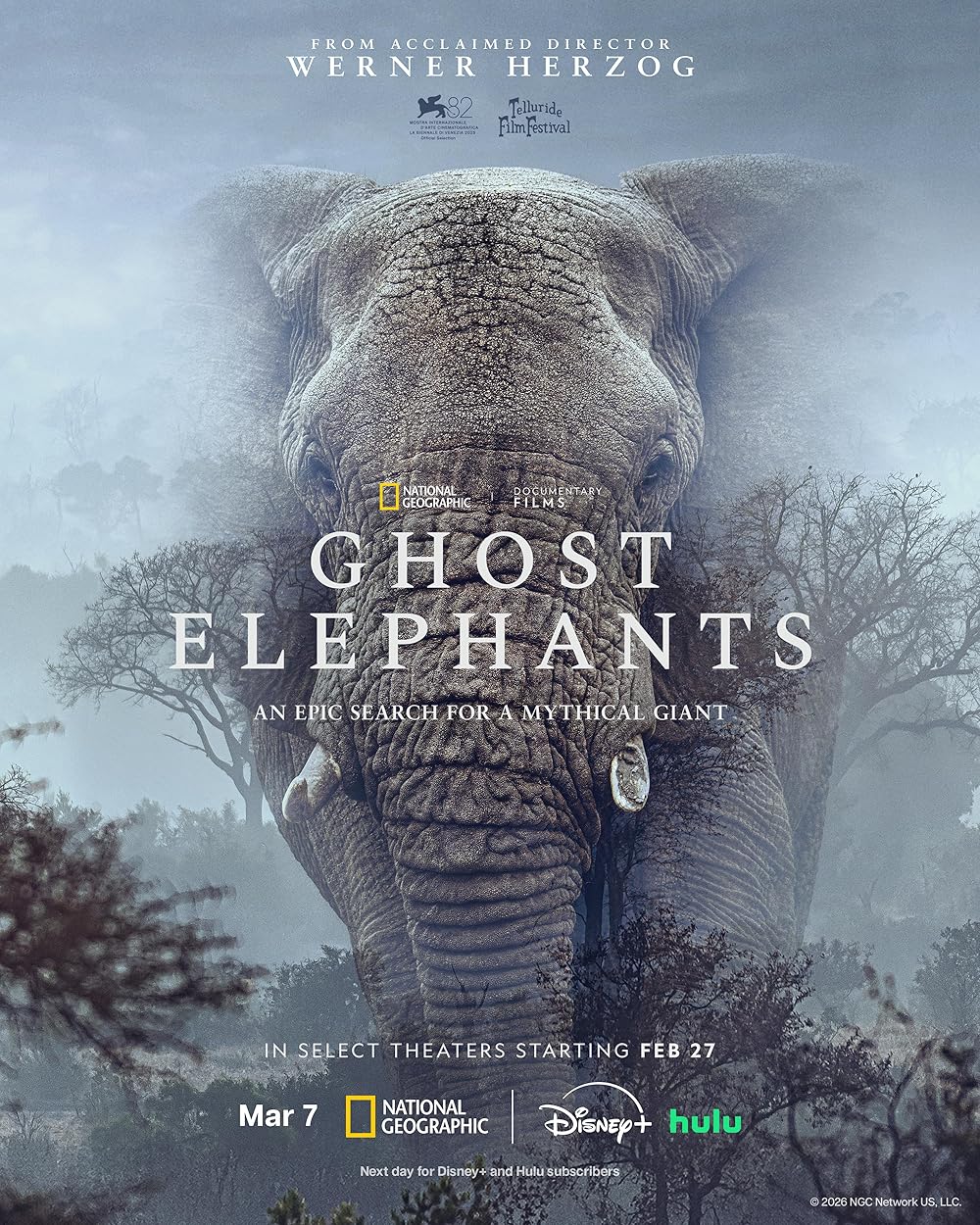
Happily, as his latest film, the extraordinary new documentary “Ghost Elephants,” plainly shows, that is not the case. At an age when most filmmakers have either retired to the Lifetime Achievement Award circuit or are doing projects little more than rehashes of material and themes they covered more effectively earlier in their careers, he is still doing bold, ambitious, and daring work. Here, he takes what could have been a blandly serviceable documentary one might expect from National Geographic and transforms it into a fascinating, haunting meditation on Man’s obsessive pursuit of knowledge and experience. Here, we see the lengths they will go to accomplish those goals, and the question of what happens to those who actually manage to bring their obsessions to a conclusion and are then struck by what happens next.
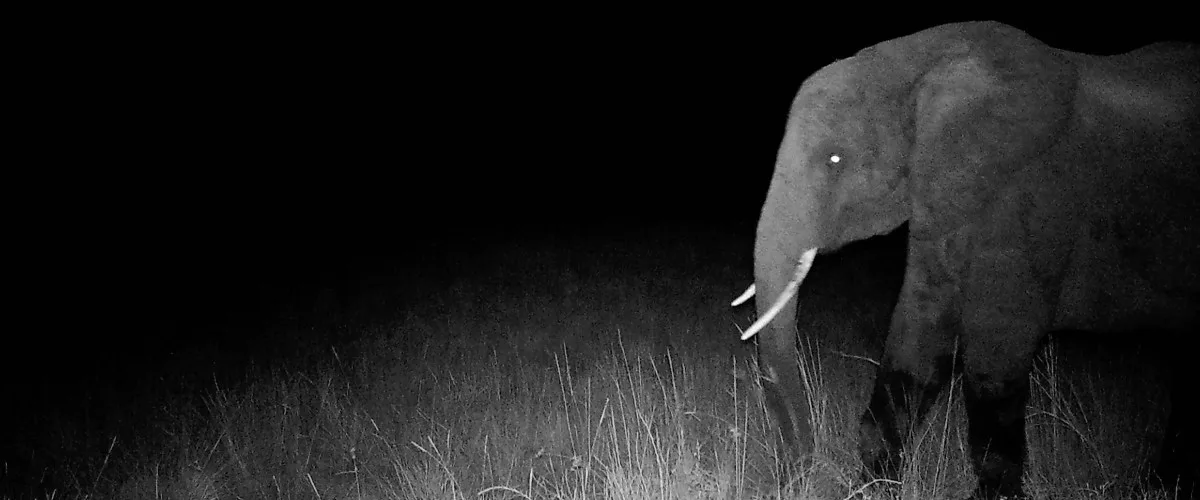
The subject of Herzog’s fascination this time around is South African naturalist Dr. Steve Boyes, and while he seems perfectly staid and affable at first sight, he has an obsession within him that has consumed his life to such an extent that if he didn’t actually exist, Herzog might have had to invent him. The focus of his fascination is a species of giant elephant residing in the highlands of Angola, known as “ghost elephants” for their apparent ability to avoid detection. Indeed, not only has Boyes never actually seen one of these creatures with his own eyes, but he is not even certain that such creatures exist—the closest he has come is a massive elephant shot near that area in Angola in 1955, now on display at the Smithsonian.
Although he has no concrete proof to back up his belief, Boyes is convinced that these giant creatures, said to be 1 1/2 times larger than the one on display at the Smithsonian, do exist and that they have a genetic connection to the one on display. To prove it, he sets out for Namibia with Herzog and a camera crew in tow, recruits trackers from the villages to help him on his quest to the Angolan highlands to find the ghost elephants and retrieve DNA samples to bring back to the Smithsonian, and finally prove his theory.
Of course, by focusing solely on Boyes and his trek, the film risks becoming yet another narrative about the familiar myth of the Great White Hunter and everything it represents. Herzog is far too clever a filmmaker for that, and while Boyes is the film’s central focus, he adds elements to give it more complexity. He spends a lot of time, for example, observing the customs and actions of the bush trackers and villagers that he encounters on his journey—playing music on ancient musical instruments, recounting stories that point to the mythical aspects that elephants hold in their culture, and creating an instantly deadly poison to be put in their darts.
Herzog also underscores the amount of damage that mankind has already done to the elephants and other species, both directly (there is horrifying footage of a ‘60s-era hunt in which we see elephants gunned down by people firing from a helicopter) and indirectly, as when the animals inadvertently step on the land mines that had been put in the ground during times of war. At one point, an anthropologist states, “Man is on a mission to destroy what he’s part of.” While he doesn’t come right out and say it, Herzog clearly believes this sentiment to be true.
As the film goes on, it becomes obvious that Herzog, although perfectly game to follow Boyes along on his journey, is not interested so much in the quest itself as he is in the human desire to seek answers to the questions that are driving him and, by extension, the universal need we all have to have similar questions answered in our own lives. More importantly, he is curious about what happens when the questions driving us have been settled once and for all.
Suppose that Boyes does find definitive proof that the ghost elephants do or do not exist, the question that has obsessed him for years—once that has been accomplished, where does he go from there? Is there a chance that, when all is said and done, he would almost rather go on with his search and not know the answers over having the answers but bringing the thing that has driven his life to a definitive conclusion at the same time? At one point, Herzog poses these very questions to Boye,s and his considered response is fascinating to listen to as he contemplates what comes next if he succeeds.
Along the way, Herzog supplies a number of alternately gorgeous and haunting images (shots of elephants moving underwater in slow motion), moments of great and unexpected humor (despite the celebration of the old ways, that most ubiquitous of modern conveniences ends up saving the day at one key point) and moments that might seem like digressions at first glance that, upon reflection, I cannot imagine the film being without.
“Ghost Elephants” is a portrait of obsession that, while gentler than some of Herzog’s other works, is mesmerizing from the first moment to the last, yet another title of note in what remains one of the most incredible filmographies of our time.