Hanging it up: Rock stars, Nazis,stunt drivers and the Palm de Whiskers

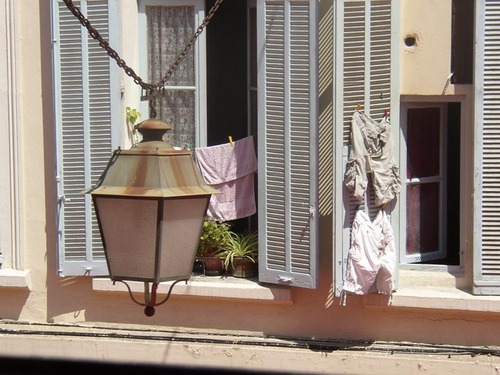
The 64th Festival de Cannes is winding down, and the signs are everywhere. The hand-laundry of festival-goers hangs from the shutters of the windows opposite my hotel (somebody is running out of clean clothes). The streets seem emptier in the early morning, and the area around the press mailboxes in the Palais is starting to have a vacant feeling.

Just five minutes before Sean Penn’s scheduled arrival at the press conference to discuss Paolo Sorrentino’s competition film “This Must Be the Place,” the room still had dozens of empty seats. The number of photographers gathered expectantly in front of Penn’s place at the table onstage was only a meager 23, unlike the mob for Brad Pitt just a few days earlier. It only meant that many journalists have already gone home or were playing hooky today.

Accompanied by the director and producers of “This Must Be the Place,” and Irish actress Eve Hewson, Penn strolled in looking pleased with himself. He’s deeply tanned and nonchalantly chewing gum, his hands stuffed in the front pockets of his jeans. He credits director Sorrentino with “a magic hand” in shaping his performance as an eccentric American rock star living in retirement in Ireland. About the film, Sorrentino said, “The idea of the story came from a Nazi criminal. I wanted to write a story about a 50-year-old rock star who remains a child, and have these two confront each other.
December 14, 2012

Gangsters, renegades and rebels

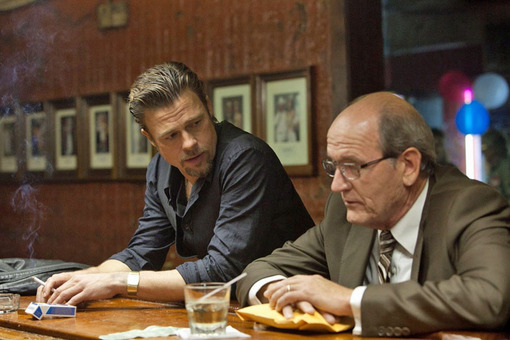
Today looks to be a day of renegades and gangsters from the start, with “Killing Them Softly” by Andrew Dominik, the second American film to premier in competition, first thing in the morning. The all-male cast is headlined by Brad Pitt, who also starred in the director’s Oscar-nominated “The Assassination of Jesse James by the Coward Robert Ford. ” This is a talky tough-guy movie that is heavy on long interchanges among thugs with odd accents and/or speech impediments. Talking like a tough guy means modifying every noun with the f-word (and I wonder what the grand total would be for this film).

“Killing Them Softly” is set in New Orleans, although pains are taken to avoid any distinctly identifying landmarks. The grey, wet, boarded-up desolation of the landscape could only be the post-Katrina lower 9th Ward, and I found the film’s fleeting glimpses of that more electrifying than the introduction of Frankie (Scoot McNairy) and Russell (Ben Mendelsohn), a pair of lowlifes setting up a robbery with Squirrel (Vincent Curatola).

The two bumblers manage, just barely, to pull off the robbery of a high-stakes poker game, which makes it only a matter of time before they’re marked men. It also makes Markie (Ray Liotta), the pudgy mid-level gangster who was running the game a suspect. Whatever higher authority these thugs answer to calls in its enforcer Jackie Cogan (Brad Pitt) to sort it out.

The first and only woman, who is also the first and only black person in the story, makes her appearance one hour into the film. She’s a prostitute who’s treated like garbage in her approximately two minutes on the screen. This is not only a man’s world, it’s a white man’s world.

December 14, 2012

Shadows on the screen: The angel and the devil

There’s a slide that appears on the big screen in the Debussy Theatre while audiences file in for screenings for the A Certain Regard section of the festival. Two figures in profile, one of them with horns on his head, are shown in silhouette against a light background. It’s actually a photo of this year’s Cannes jury president Tim Burton with Batman, but I continue to see it as an angel and a devil.

December 14, 2012

Welcome laughs, courtesy Aki Kaurismaki

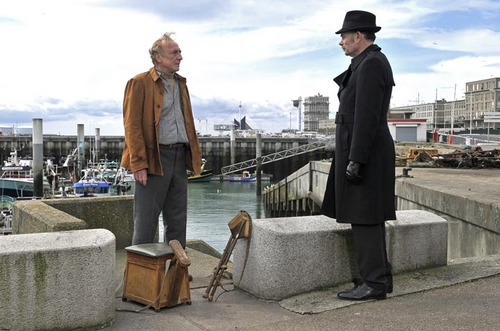
Finally Cannes delivers some real laughs! This morning I saw “Le Havre” by Finnish director Aki Kaurismki, screening in competition. After several days of grim and serious films about people who lead grim and twisted lives, I wanted to cry for joy at this funny and good-hearted film. I would normally be wary of a film that anyone describes as heart-warming but this is the real deal.

Kaurismaki (“Lights in the Dusk,” “The Man Without a Past” “Drifting Clouds,” “The Match Factory Girl”) is a master of deadpan comedy. His central characters are often glum, non-verbal types and naive innocents duped by tricksters or beaten down by a world they don’t understand. The humor in his films is rooted in the deepest irony. “Le Havre” blithely portrays life as we might wish it to be, and that is the funniest irony of all.

The shoeshine man Marcel Marx is seen plying his trade at the Le Havre train station in the opening scenes of “Le Havre.” He makes very little money, and the routine of his daily walk home establishes the fact that he has an overdue tab running everywhere he stops–the bakery, the grocery store, and the corner bistro. He can be a bit of a charmer with the ladies, but his long-suffering wife Arletty (Kati Outinen, a longtime Kaurismaki regular) describes him as “a big child” when she cautions her doctor not to reveal that she is about to die.

December 14, 2012

And the Palme d’Whiskers goes to…

Entry to the Grande Theatre Lumiere for the press premiere of Rachid Bouchareb’s “Outside of the Law” was considerably delayed on Friday morning by heightened security. Heavily-armed members of the French National Guard were stationed in the street and on the red carpet. Water bottles were confiscated by guards; men got full-body pat-downs from head to toe; and women had bags exhaustively inspected at two different points. This was in addition to the usual electronic wanding that we are all subject to upon entering any part of the Palais.

December 14, 2012

5/14: Swanky 3-D goggles for the chic cineaste

The programming director of the Gene Siskel Film Center in Chicago is blogging from Cannes for us.

Thursday, May 14–You can’t beat the weather here in Cannes. After the cold rain and dark skies in Frankfurt, where I changed planes yesterday, the perfect, summery temperatures and extravagant displays of flowers makes this town seem even more like a Mediterranean paradise than usual.

The festival kicked off to the world Wednesday night with the first red-carpet walk by the jury, and the Pixar folks with their 3-D animated feature “Up”, but for most of us in film-industry jobs, the

festival is already well underway with press screenings, market screenings, and press conferences.

December 14, 2012

“Midnight in Paris” but Cannes has just begun

Arriving in Cannes by bus from the Nice airport provides a thumbnail tour of the town, from the more seedy homes on the outskirts to the swanky hotels on the waterfront. The palms lining the Croisette, the festival’s de facto main drag, may be the ubiquitous symbol of city, but a few blocks away the plane trees, cypresses, and the prolific climbing roses of Provence are a more common sight. Walk a short distance from the Festival Palais and there are conspicuously un-chic restaurants where local cops congregate for dinner in the back room and retired couples hang out for a smoke and an evening beer, more often than not, with a fluffy mutt under the table.

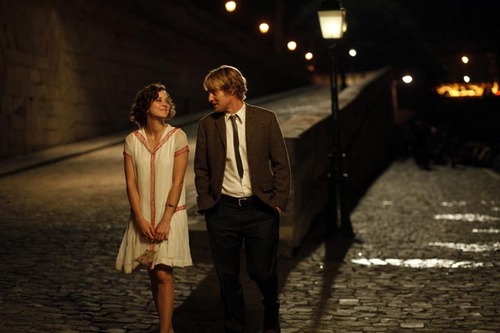
In a way, my first reminders yesterday of everyday life in everyday France were a bracing counterpoint to this morning’s press screening of Woody Allen’s romantic fantasy “Midnight in Paris.” The festival’s opening night film is a colorful valentine to Paris, indulging and gorgeously illustrating the director’s every memory and cherished illusion of the city. I’ve never been a big Woody Allen fan, but “Midnight in Paris” is loads of fun.

The film opens with a morning-to-night sequence of views of the city’s most iconic sights: Montmartre and the Moulin Rouge, the Seine, the Arc de Triomphe and the Champs-Elysees, the narrow streets of the Left Bank, and the Eiffel Tower. That opening alone is a tourist board’s dream. At the press conference later, a journalist asked Allen, who mentioned that he thought of the title long before he had a story, whether these postcard-worthy views were his own impressions of Paris, or were meant to represent the point of view of his characters. Perhaps the French questioner was hoping for the latter, but Allen replied, “I learned about Paris the way all Americans do–from the movies. I wanted to show the city emotionally, not realistically, but through my eyes.

December 14, 2012

“There’s a fungus between my toes that speaks to me.”

by Barbara Scharres

Cannes has become hot and uncomfortably muggy in a way that has me thinking longingly of the blankets and socks of earlier in the week. As the festival closes in on the final days, I’m hoping for some big excitement on the screen.

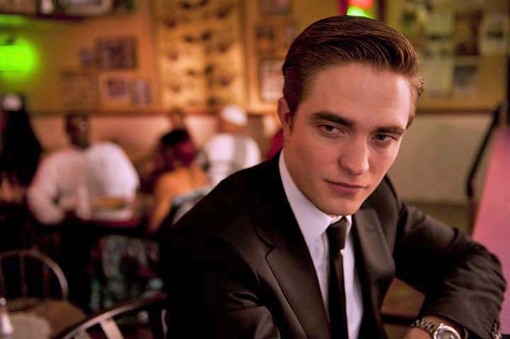
When the stiff, futuristic Brandon Cronenberg film “Antiviral” played a few days ago, it gave me cause to look forward even more to today’s premiere of “Cosmopolis” by his father David Cronenberg, anticipating that the contrast between generations would also point up the difference between a wannabe and a seasoned master. Boy, was I wrong. I’m sorry to say that they’re both among the worst films I’ve seen here this year. I’ve never been this disappointed in a David Cronenberg film.

“Cosmopolis” opens with a shot of a row of white stretch limos parked on a city street. The interior of one of them will become a primary location in this film, functioning as the office away from the office for mega-millionaire money manager Eric Packer (Robert Pattinson), an arrogant and powerful 28-year-old. Seemingly inspired by the Occupy movement in the U. S., the story is set in New York in the near future (although what we see of the urban landscape never looks like anything but Toronto; even the CN Tower is seen in the background). The president of the United States is due at any moment, a situation tying up the streets with blockades and large-scale protests.

December 14, 2012

Of popes and poissons and Kim Ki-duk

It’s Friday the 13th in Cannes, and that has got to mean something good. An overcast sky threatening rain means that there couldn’t be a more perfect day to stay inside and watch movies.

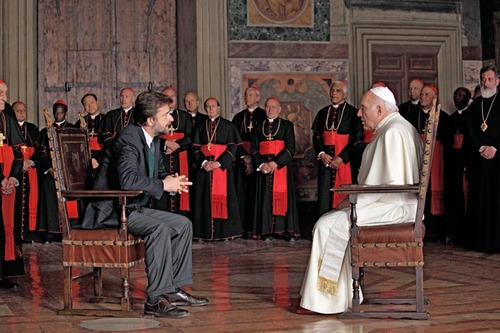
The morning began with the 8:30 am press screening of Nanni Moretti’s “We Have a Pope.” Hmm…a comedy/drama about the Vatican by a self-professed Italian atheist? Moretti is known primarily for his wry, intellectual, and largely autobiographical approach to comedy in films including “My Diary” and “April, ” but also for serious drama in films including his 2001 Palme d’Or winner “The Son’s Room.” Subjects he has often lampooned include leftist politics, psychoanalysis, water-polo, and the cinema itself.

In “We Have a Pope,” the funeral of a dead pope has just taken place and the College of Cardinals is convening to elect the new pontiff from among their number. Moretti goes to great lengths to represent this ritual gathering with great accuracy, but injecting an escalating number of comic moments as the film traverses from the ceremonial pomp of its opening scenes to take on a lighter tone.

As if the voting for a pope were an elementary school spelling test, the prelates cross out names on their ballots, look to heaven for guidance, and even cheat, some slyly spying on what a neighbor seated to the left or right is writing. After a few rounds of voting, the winner is revealed to be a candidate who was not even in the running, a stunned Cardinal Melville (surely Moretti’s tip of the hat to iconic French director Jean-Pierre Melville), played by veteran French star Michel Piccoli.

December 14, 2012

Robbers and strippers, battles and burlesque

The volcano gods were in a snit on Monday, and I arrived in Cannes on Tuesday six hours later than planned, following some frustrating encounters with ticket agents in Frankfurt Airport. Chicago Tribune critic Michael Phillips was on my flight from Chicago, having had his entire original reservation canceled due to drifting volcano ash. I heard delay stories everywhere, and figured I got off easy.

After fast dash to the Palais des Festivals five minutes before the office that issues accreditation badges closed, I picked up my press badge and film market badge. The Cannes skies were dark and threatening, with fog hanging over the distant mountains. I hoped that this wasn’t a sign of weather gloom to come.

December 14, 2012

A precious American girl, a Japanese love doll, Iranian rockers, and a Korean vampire

May 15, 2009–The most gutsy, powerful film I’ve seen here so far is without doubt “Precious” by African-American director Lee Daniels. “Precious” already had its world premiere at Sundance in February, where it was greatly acclaimed by audiences and critics alike. If the comments I’ve heard today are any indication, it promises to be an even bigger success in Cannes.

Based on the novel Push, by Sapphire, “Precious” is the story of a Harlem teenager who is severely abused by her mother, habitually raped and twice impregnated by her father, and treated like garbage by just about everyone in her life. The one thing Precious’s abusers don’t succeed in killing is her imagination, and for instance, while being raped, in her mind’s eye she sees herself making a grand entrance at a film premiere. The pictures in her photo album talk to her, and this large, awkward girl looks in the mirror and sees a beauty queen with cascading blonde hair. This is not a preachy film, but one that grabs you from beginning to end as Precious comes back from the edge of desolation to discover the immovable force of her own willpower.

After seeing “Precious” last night at an invitational press screening, this afternoon I attended the press roundtable interview event with director Lee Daniels, screenwriter Damien Paul, and actors Gabourey Sidibe, Mariah Carrey, Lenny Kravitz, and Paula Patton. It was held at the outdoor restaurant Beach VitaminWater, which I can’t say without laughing. Typical of these events, a lavish lunch is served, and the talent is brought in.

December 14, 2012

Sitting on the Croisette, watching the auteurs go by…

It’s another day for umbrellas and rain slickers, not to mention sweaters. The Riviera is just not delivering the usual idyllic sunshine and warm Mediterranean breezes this year. The film market stands that border the beach in little cabanas have their doors closed for protection from the wet, and their inviting tables and deck chairs on the sand are vacant and dripping.

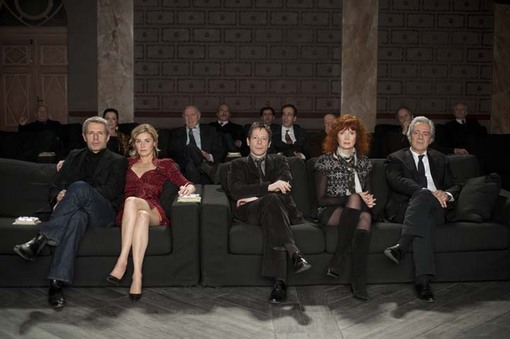
The first film in competition this morning, “You Ain’t Seen Nothin’ Yet” by Alain Resnais, didn’t deliver either, and I can only hope that the title is prophetic, and that the revered 90-year-old director (“Hiroshima Mon Amour,” “Last Year at Marienbad”) has some future masterpieces in store for us yet.

For “You Ain’t Seen Nothin’ Yet,” Resnais assembled a large cast of famous French actors with whom he’s worked over the years, including Sabine Azema, Anne Cosigny, Mathieu Amalric, Michel Piccoli and Lambert Wilson. This distinguished cast was supplemented by the young stage actors of the fledgling theater company Colombe. The visual techniques and acting style of the stage are pertinent to the look of “You Ain’t Seen Nothin’ Yet.” In the film’s press book, Resnais says, “In my films, I’m constantly looking for a theater-style language and musical dialogue that invites the actors to get away from the realism of everyday life and move closer to a more offbeat performance.”

December 14, 2012

If it’s springtime, it must be Cannes

In just a week the French Riviera will come alive with the hoopla of the 65th Cannes International Film Festival, running this year from May 16 through 27. Despite the international proliferation of film festivals, like it or not, Cannes remains the biggest, most hyped, glitziest and most diverse event the world of film has to offer, the envy of every other festival.

As if the world at large also trembled at the import of the approaching festivities, previous Cannes festivals have been prefaced by volcanic eruptions, hurricane-force storms, national strikes, and bomb threats. What can we expect this year, when the festival officially becomes a senior citizen? Don’t look for any rocking chairs along the Croisette, for one thing. Judging by the lineup of major directors represented in the Competition and other official sections, it’s more likely that major revelations will be rocking the Palais. And if it’s like other years, we can expect the festival will manage to rock a headline-grabbing major controversy or two as well.

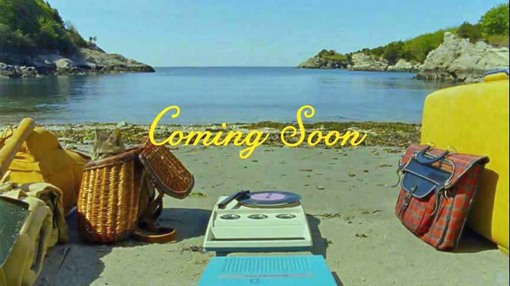
For the fourth year in a row, Cannes will open with an American production, Wes Anderson’s “Moonrise Kingdom,” guaranteeing that name stars including Bruce Willis, Bill Murray, Edward Norton, Frances McDormand, and Tilda Swinton will be gracing the red carpet on Wednesday, May 16 for a glamorous kick-off. Judging by the trailer available online, the real stars may be the large cast of kids in a comedy/drama that looks to be strong on surreal wackiness.

Even a quick glance at the list of films in competition yields an eye-popping number of famous names, including David Cronenberg (Canada), Michael Haneke (Austria), Abbas Kiarostami (Iran), Ken Loach (UK), Cristian Mungiu (Romania), Alain Resnais France), Carlos Reygadas (Mexico), Walter Salles (Brazil), and many more. This competition could be a veritable Olympics of the cinema gods…or not, as sometimes happen, because even world-class filmmakers and certified masters can disappoint.

December 14, 2012

Raunchy comedy, brutal sex, bloody violence

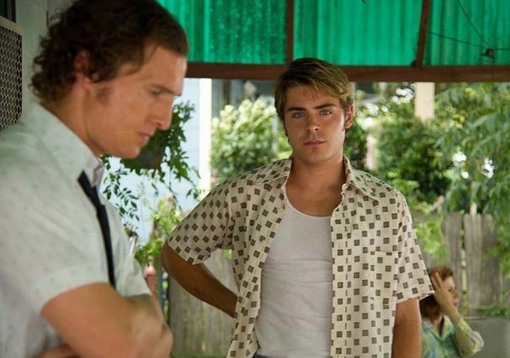
Big stars were out to shine this morning in Cannes, when “The Paperboy” by Lee Daniels premiered in competition, with a cast that includes Matthew McConaughey, Zac Efron, Nicole Kidman, David Oyelowo, John Cusack, and Grammy Award-winning R&B singer Macy Gray. Daniels had a massive hit with his previous film “Precious,” which premiered here in 2009 and went on to earn six Oscar nominations with two wins, and countless other awards worldwide.

A director with that kind of success in his recent past has got to have a lot of hopes and fears riding on his next film. Daniels certainly had star power in his corner on “The Paperboy,” but the film got a mixed reaction this morning in the Palais, and I’m not sure it’s headed for a repeat of the acclaim that “Precious” experienced.

“The Paperboy” is adapted by Pete Dexter and Daniels from Dexter’s novel of the same title. The film reportedly takes a few deviations from the source novel (which I haven’t read) to result in pretty much a whole new story. There are many shifts of tone, making the film simultaneously a comedy, a mystery/thriller, and a Southern gothic potboiler. It’s amusing and frustrating; hilarious and tense; awkward in its construction yet featuring bursts of gripping acting.

December 14, 2012

Hush now, baby, don’t you cry

May 17, 2009–Yesterday’s most blazingly good (and funny) film was Bong Joon-ho’s “Mother,” another dark comedy from Korea. Although he had a cult hit in the U.S. with his 2006 film “The Host,” his earlier features “Barking Dogs Never Bite” and “Memories of Murder” have only been seen on the festival circuit or in cinematheques. “Mother” is very likely to open a few more theater doors in the West.

“Mother” opens with actress Kim Hye-ja, a woman beyond middle-age, incongruously dancing in a grassy field, and ends with her even more incongruously carefree dance in the aisle of a tour bus as the full effect of Bong’s narrative sleight-of-hand sinks in. He leads us on, plays with our sympathies, and makes us pay big-time for falling for Kim’s irresistibly eccentric Mom. Mom owns an herb shop in a small town, practices acupuncture without a license on the side, and lives for her grown, but not grown-up, son Do-joon, a young man blessed with a beautiful face and a dim brain. She’s doting and ditzy and given to nonsensical platitudes like “Always eat well after coming back from the police station.”

December 14, 2012

The long and winding road

The sun is finally shining, and Cannes becomes a resort town once again. Aside from the thousands of film industry visitors, this place is clogged with tourists of all nations and in all manner of beach attire, many of them senior citizens. As far as I can tell, the main thing they do is promenade.

They stroll up and down the Croisette on the waterfront side and then the window-shopping side. They walk up and down the town’s main drag, the Rue d’Antibes. They eat ice cream cones; they buy red, caramelized peanuts hot from the vendors’ pans, and gummi bears and licorice; they watch costumed mimes perform under the palm trees; and they walk their little ankle-biter dogs, of which there are hundreds. It’s a people-watching festival in itself.

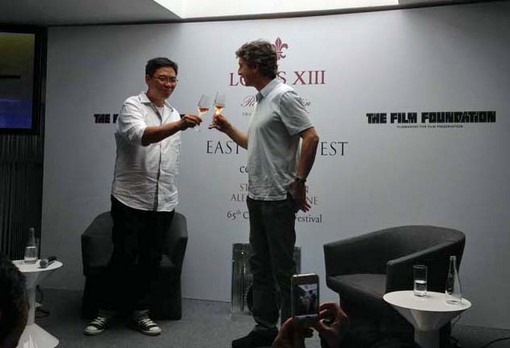
Another invitation appeared in my mailbox. This one was on heavy cream-colored paper with fancy gilt lettering. As a result, I went to “East Meets West,” an afternoon conversation between Hong Kong director Stanley Kwan, best known for “Rouge” and “Center Stage,” and Cannes jury member Alexander Payne, recent Oscar winner for “The Descendants.” Sponsored by The Film Foundation, it took place in a pavilion at the beach of the Majestic Hotel, where the sound of waves lapping at the sand in the background was a constant reminder of the setting.

December 14, 2012

Cannes 2011: All eyes forward

As the opening night of the Cannes International Film Festival approaches, a host of Riviera amenities and services hope to lure my business via solicitous e-mails. Would Madame perhaps like to hire a helicopter for the journey from the Nice airport to the Festival Palais? Rent a limousine with a multilingual driver? Charter a yacht or rent a fully staffed villa with swimming pool (photos handily attached)?

Me, I’m just in the market to rent a no-frills mobile phone with a European SIM card, and I’ll be taking an inter-city bus from the airport, but you get the picture. The sparkling goodies of this playground of millionaires are dangled before the thousands of accredited journalists, theater programmers, film buyers, and filmmakers soon to be heading for the legendary festival. Most of us will be pinching the Euros until they scream, but nonetheless enjoying the nonstop spectacle provided by those who get to ride around in helicopters.

The festival opens the night of Wednesday, May 11 with Woody Allen’s “Midnight in Paris.” “Monsieur Woodee,” as the French are wont to call him, made his first visit ever to Cannes in 2002, when his “Hollywood Endings” opened the festival. Although the film was disappointingly lackluster, it certainly made no difference to his French fans, who hailed him like an emperor. I watched Allen on that occasion from a seat among the hyper-excited audience, marveling at his frail stature, almost inaudible voice, and the shrinking body language that made him seem an incongruous god of cinema.

December 14, 2012

La Palme d’Or et la Palme d’ Whiskers

May 22, 2009–One of the trade papers on Thursday was touting the French film “A Prophet” by Jacques Audiard, which received excellent reviews early in the festival, as a hot contender for the Palme d’Or. Rumors of this sort seldom mean anything here, but to me this was one of those scratch-my-head moments. “The Prophet” is a well-crafted, well-acted prison movie, but I feel like of seen variations on this story and its predictable trajectory too many times in too many other movies.

Malik, a young, vulnerable Arab-French man arrives at prison to serve a six-year sentence and is immediately targeted by the ruthless Corsican gang that controls virtually everything in the establishment, including who lives and who dies. Forced under threat of death to do the gang’s dirty work, including a murder, he waits and learns to better his oppressors at their own game.

Tahar Rahim, star of “Un prophète”

As good and mainstream as this film is, there were few variations on the expected details: the body searches and humiliations of prisoners; the cruel intimidation of the weak by the strong; and Malikís inevitable rise to power as a force within the prison and as a drug lord on the outside. I guess I always hope that films in competition will be extraordinary in some way, and “A Prophet” just didn’t seem to have that quality.

December 14, 2012

Almodovar’s limp noodle, Panahi’s home movie

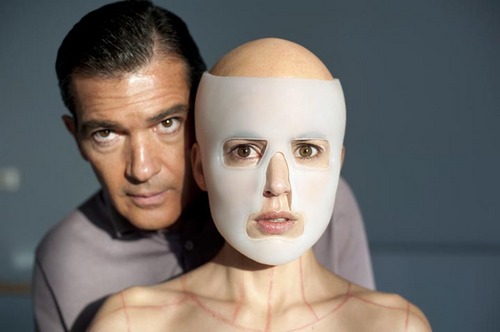
This morning, Pedro Almodovar, Spain’s biggest big-cheese filmmaker, handed us a limp noodle with “The Skin I Live In,” his entry in the Cannes competition. The film stars Antonio Banderas (who began his career in Almodovar’s early films) and Elena Anaya, who looks like a cross between Penelope Cruz and Audrey Hepburn. Even a second-best Almodovar film has its delicious moments, but “The Skin I Live In” is flat compared with his best work, including “Broken Embraces,” “Volver,” and his Oscar winner “All about My Mother.”

Typical of Almodovar, the film is a melodramatic farce. Although it’s based on the novel “Mygale” (“Tarantula” in English) by Thierry Jonquet, the story is also strongly reminiscent of the 1960 French horror classic “Eyes without a Face” by Georges Franju. In the Franju film, a surgeon kidnaps women in order to graft their faces onto the head of his disfigured daughter. In “The Skin I Live In,” a plastic surgeon is engaged in highly experimental work in order to create synthetic skin as a tribute to his dead wife, who was burned to death in a car crash. He subsequently uses the results of his research in service of a unique punishment for his daughter’s rapist.

This story has a lot of twists, and the element of surprise is important. I don’t want to give away too much, especially since it’s due to open in the U.S. in the fall. I haven’t read “Mygale,” but I understand that the narrative is fragmented into sections that all come together in the end. In this, Almodovar appears to have followed the structure of the book, perhaps too closely. One of the principle weaknesses of “The Skin I Live In” is that the story is scattered in pieces. Characters and subplots are introduced then dropped. They are loosely but not completely tied together in the end.

December 14, 2012

Mysterious relationships in bits and pieces

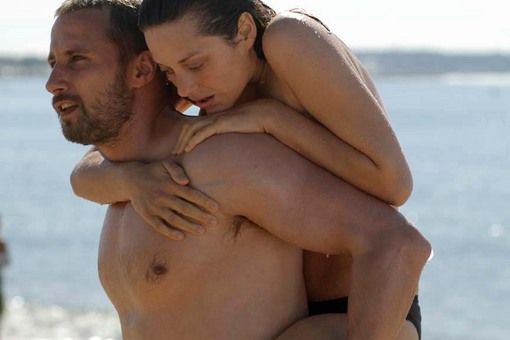
By accident or by design, today’s films premiering at Cannes, whether in competition, in the “A Certain Regard” section, or in special screenings out of competition, revolved around relationships, good, bad, or worse. Whether the bond is with a woman who has lost the will to live, an Orca whale (both seen in “Rust and Bone”), a cheating wife-beater (“Mystery”), a ghost (“Mekong Hotel”), or a male prostitute (“Paradise: Love”), things don’t always turn out for the best.

French director Jacques Audiard has enjoyed a high profile since his “A Prophet” made a splash at Cannes in 2009, winning the Grand Jury Prize. It seemed like just another prison movie to me, but others loved it. The film went on to win an Oscar nomination for Best Foreign Film and a host of festival prizes. Audiard is back with “Rust and Bone,” a star vehicle for Oscar-winning Marion Cotillard (“La Vie en Rose”) and Belgian actor Matthias Schoenaerts, who came to new visibility by starring in this year’s Oscar-nominated “Bullhead.”

I was especially looking forward to “Rust and Bone” because Schoenarts had given such a powerful performance in “Bullhead,” for which he had bulked up ala De Niro for his portrayal of a violent man whose life is defined by his steroid use. In “Rust and Bone” he’s Ali, an unemployed guy who moves to the seaside town of Antibes (just down the road from Cannes, actually) to camp out in his married sister’s garage after he’s suddenly saddled with the custody of his five-year-old son. A former amateur boxer, he gets a job as a nightclub bouncer.

December 14, 2012
subscribe icon

The best movie reviews, in your inbox