The 2026 Cannes Film Festival starts Tuesday, May 12th, running through May 24th. The Ebert team returns this year with coverage of all of the major films in review and video form. In this video dispatch, Scott Dummler interviews Managing Editor Brian Tallerico about “Club Kid,” “Paper Tiger,” “Clarissa,” and more. Then Chaz takes us back to the 2014 Cannes screening of “Life Itself” at the festival.
Chaz Ebert:
Welcome back to Cannes 2026. We’re about halfway through the festival, and so far, there hasn’t been one standout film that everyone agrees will win the Palme d’Or. However, that happens some years, but that doesn’t mean there aren’t many interesting films in the official selection. One of those films in the Un Certain Regard section is “Club Kid.”
Now, since its initial screening, it has been the subject of an intense bidding war. Our managing editor, Brian Tallerico, will tell you what he thinks of that film. Among some of the press, there is a lot of chatter about the lack of Hollywood films at Cannes this year. It’s not going to be an ongoing trend. Things change every year, but I can tell you that an American film that just played in competition is James Gray’s “Paper Tiger,” and it has star power.
Let’s hear what Brian Tallerico has to say about it.
Brian Tallerico:
The first film I want to talk about today is James Gray’s “Paper Tiger,” a late addition to the fest. This thriller sees Gray return to a festival that adores him. He’s played numerous films here over the years, so it’s nice to see him added at the last minute. Although the film itself has produced a bit of a divisive response after its premiere last night.
It stars Adam Driver and Miles Teller as brothers in New York in 1986 who decide to start a consulting company for construction workers, and kind of run afoul of the Russian mob as they do so. Scarlett Johansson co-stars as Miles Teller’s wife, who’s also dealing with her own issues that unfold over the course of the movie. This is James Gray returning to a sort of milieu that he’s used to after the arguably less-than-successful “Armageddon Time.”
It’s very similar to “We Own the Night” and “The Yards,” which are films he made about this kind of world, and to “Little Odessa,” which he made many years ago. Driver and Teller are playing characters we’d see in the 80s, played by Pacino and De Niro or Keitel, those kinds of people, these kinds of fidgety people who want a little more.
One wants a little more. One’s a family man. That would probably be on the Keitel part. Driver wants a little more and tries to bring his brother along, but they quickly get into serious trouble. It’s a lean, tight little film. There’s hardly any fat on it, and it’s got some of Gray’s most muscular filmmaking in terms of composition.
He uses close-up incredibly well. He gets a lot of mileage out of a couple of intense sequences, including one at night involving Teller and his kids, and then a late one set in some reeds. That is just a classic. It just reminds me of classics like “The Third Man” in terms of its structure, timing, location, and intensity.
It’s not a perfect film. It feels a little minor for Gray compared to some of his best movies, like “The Immigrant” or even “We Own The Night,” but it’s nice to see him back doing what he does well and directing Adam Driver to literally one of the best performances of his remarkable career. He takes a part that could have easily been fidgety over the top nonsense and plays it very straight.
It’s not a perfect film. It feels a little minor for Gray compared to some of his best movies, like “The Immigrant” or even “We Own The Night,” but it’s nice to see him back doing what he does well and directing Adam Driver to literally one of the best performances of his remarkable career. He takes a part that could have easily been fidgety over the top nonsense and plays it very straight.
He’s a no-nonsense former cop who’s going to get the job done, and he just doesn’t realize until it’s too late that he can’t fix this particular job.
Miles Teller:
There’s just something, you know, in this film, in a lot of James’ films, all my scenes are with my brother, my wife or my kids, and that’s rare. And I think that allows that allowed me to attach something so personal and deep from my own life and be able to share it.
But yeah, it felt very much like a family when we were on set. It was a small, tight-knit group, which I very much appreciated.
Adam Driver:
Miles is just an incredible actor. So he’s available, playful, and prepared. So it’s kind of easy. I just liked him immediately. So we didn’t have to work at it at all.
Scarlett, I’ve known you, you know, because we did a movie together before, so there was, you know, already a shorthand and intimacy and, you know, safety net. So it was very easy to, you know, to fall in love with Miles and James at the top…
Miles Teller:
You’re not so bad yourself.
Adam Driver:
…the one directive was, you know, so, so long as every choice for Gary is based on his love for his brother, we should be able to find the arc of the character.
James Gray:
My own view of the world today, because of where we are, is that when you cannot monetize integrity, the idea of being a good person that doesn’t actually make you money, what happens? You do get someone like the current American president, who is a symptom of what I’m talking about, totally transactional.
You know, how can I make the most money? Well, what’s wrong with that?
So, this ethos becomes everything. And what does that do to our souls? If you tell young people it doesn’t matter whether you’re a good person or not. The only thing that matters is to make a lot of money. Where does that leave them? It leaves them adrift. How come I’m not being rewarded for being good?
So the reason I set the movie in this time period is exactly for that. It was the beginning of the moment in which the market became God.
Brian Tallerico:
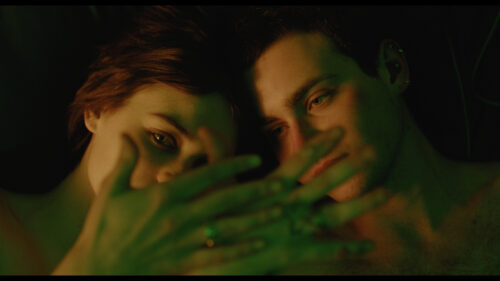
The next film I want to talk about is Jordan Firstman’s “Club Kid,” which has been the big breakout of the first few days of Cannes, premiering at the Debussy the other night and just exploding all over social media with a massive standing ovation.
Comparisons to Sean Baker in how it looks at people who might not have had the attention or the center of a film in other years or times, although it’s got a lot of its own energy and personality. Jordan Firstman, who also stars as the lead character, is a club party promoter in 2016. Originally, when we first meet him, he kind of doesn’t have his life together; he’s doing successful work building club parties and dealing drugs on the side, but he’s kind of miserable.
Ten years later, he’s even more miserable. Things are falling apart when someone shows up at his door with someone who’s actually his son, a roughly ten-year-old young man named Arlo. It’s complicated to explain how that happens, but it happens. Arlo ends up staying with our lead character for a long time, and they get to know each other.
And as cheesy as this sounds, this is kind of a film about how your kids can make you a better person. Peter discovers who he really could be, his own potential. We’ve seen a lot of movies about parents teaching kids about their own potential, but this kind of goes the other way. A great kid, and there’s no way to make it not sound cheesy, but it’s not.
It’s like really earnest. It’s really heartfelt. It’s really moving. It’s really funny. It’s really buoyant and energetic. It never feels manipulative, even though it could very easily. It avoids melodrama. It is a stunning debut, and it’s a stunning debut in terms of a triple threat. He wrote, directed, and starred. In almost every other case, when someone does those kinds of three things early off the bat, one of them falters.
Like, the acting isn’t as good because there’s no one there to direct them, or the writing isn’t as tight. In this case, all three elements are award-worthy. I think he is phenomenally good as a performer, bringing humanity to this character that we might see a little bit of ourselves in, even though they’re so different. Every performance is good.
The movie runs for two hours. It’s hard to believe it’s two hours long; it flies by, and it really gets to some deep emotional places about human potential, human connection, and the need for community, family, and hope.
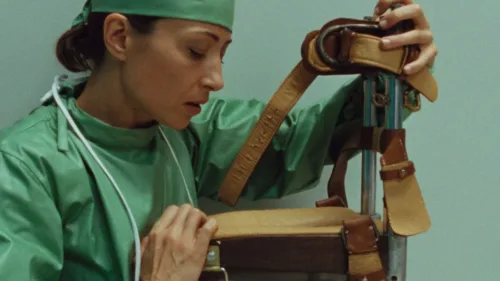
The next thing I want to talk about is “Clarissa,” which is the Director’s Fortnight program, and comes from Nigeria.
A pair of brothers named Esiri produced this film and directed this film. That’s an adaptation of Virginia Woolf’s Mrs. Dalloway, starring Sophie Okonedo, David Oyelowo, and a cadre of other phenomenal, familiar faces and new faces. The new faces here are the ones I’m really going to remember, including a young woman named India Amaretifio, who’s phenomenal as the young lead, playing a younger version of Sophie Okonedo.
If you’re not familiar with “Mrs. Dalloway,” it’s a complex piece about class and privilege, and this one, being set in Nigeria, weaves in colonialism and a few other fascinating themes. It’s also a gorgeous piece of filmmaking, with lots of use of nature, water, trees, and sand. We really feel like we’re not on a set with these people in their homes and in their place, a home that has changed over the years.
We see two timelines: Clarissa and her friends as youth, and as adults. And we get to see how they’ve changed and how the world around them has changed them. It is a beautiful movie. Also, in terms of casting, I have rarely believed that a young version and an older version are the same person more than in this film.
We don’t need de-aging. No Irishman. None of that nonsense. This is a perfect casting agent dream. Everyone connects, and it’s also the writing and the direction. We see a character named Peter, played by an actor from Ted Lasso early on, then by David Oyelowo later, and we can see the sadness start to form in him as a youth, then linger, melancholy as he’s older.
It’s just a beautiful, poetic piece of filmmaking filled with performances that I adore and filmmaking that I can’t stop talking about.
Chaz Ebert:
My late husband, Roger Ebert, loved the Cannes Film Festival. It was one of his favorite festivals to attend. In our Cannes flashback, we’re going to see 2014, when a group of his friends and fans stood in line for the Cannes Classic screening of Steve James’s film “Life Itself.”
Milos Stehlik:
The screening started out perfectly, with a packed house of old friends and lots of fans we had never met. You know, Roger was a great fan of things, and he became a fan of them when something touched his heart and kind of was one of those magical things that really reached him. Roger opened the world to Cannes, and they opened up their arms to him, which is amazing.
Barry Avrich:
I mean, if there’s a Mount Rushmore of film criticism, Roger’s face is right there in the center.
Fan:
So when I was a little kid, I saw Roger on television, and I loved how they were always arguing because it meant it wasn’t like in Britain and other places. They tell you this is what the film’s about.
They were always arguing about what something meant to someone. It was equally valid as what the other person got out of it, and that was very interesting.
Fan:
As a young person, I’m really excited to see this cut because I believe they’ve included some new footage about Cannes. And so, yeah, exactly.
Chaz Ebert:
And the film was introduced by none other than Festival head Mr. Thierry Fremaux.
That’s all for now, but keep checking back every day. And RogerEbert.com/festivals for reviews, reports, and reactions until then….see you next time.