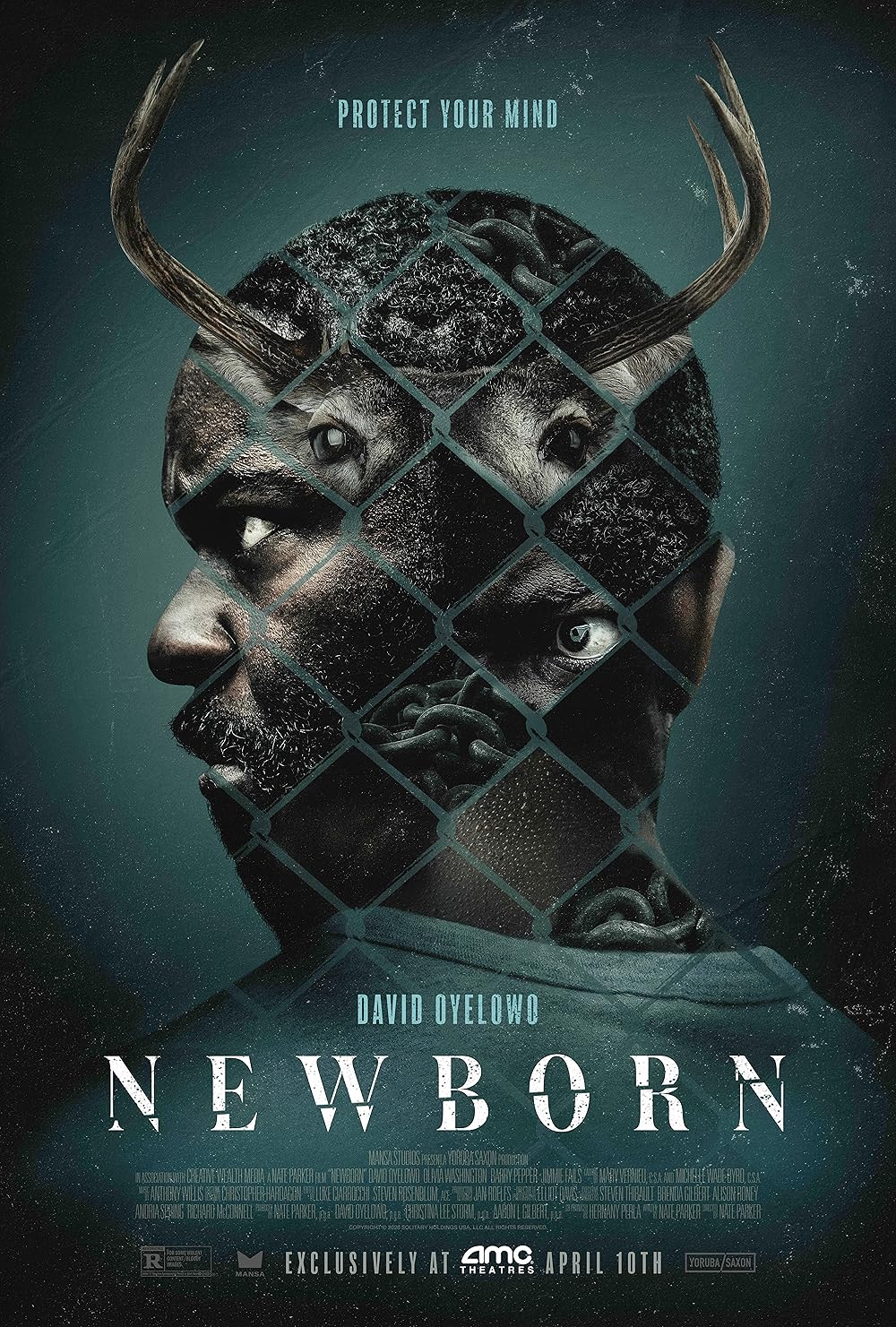
From the outset of “Newborn,” writer/director Nate Parker’s discombobulated psychological thriller opts for tawdry genre conventions over consistent human grounding. In the taxing opening, Chris (David Oyelowo, the film’s producer) is nestled with his wife Tara (Olivia Washington) in bed when his troubled brother Keith (Jimmy Fails) comes banging at his door. Seeing his brother bloodied and scarred from a deadly car crash of his own doing, Chris makes the rash decision of exchanging his shirt for his brother’s gory clothes. Chris doesn’t have a record, but Keith does. Al Green’s “Your Love is like the Morning Sun” slows; the sound of police sirens accelerates. A nonsensical scene, told with the visual subtlety of a single stroke, becomes the most organic moment in a film that often allows its gaudy style to overtake its potential substance.
For a while, Parker’s forceful approach does arouse interest. During the title card, images of a prison attack involving guards are projected on the wall behind Chris, who’s dressed in an orange jumpsuit. We learn that seven years ago, days before his potential release, he was framed for the murder of an incarcerated man by the correctional officers who actually perpetrated the killing. He was sentenced to nearly a decade of solitary confinement because of the crime. His punishment is interrupted when the Freedom Project discovers video evidence exonerating him. While now physically released from prison, mentally, Chris remains behind bars.
In these early scenes, one can guess Parker’s interest in the need for restorative justice and the psychological fissures that can’t quite be closed, even when freedom is found. If the film had remained within those topics, the director, who is admittedly capable of crafting some enrapturing images, would have had a powerful story in his hands. Instead, he opts to rework this social-justice subject into a blatant rip-off of “The Shining,” whose strained pastiche undercuts his film’s importance.
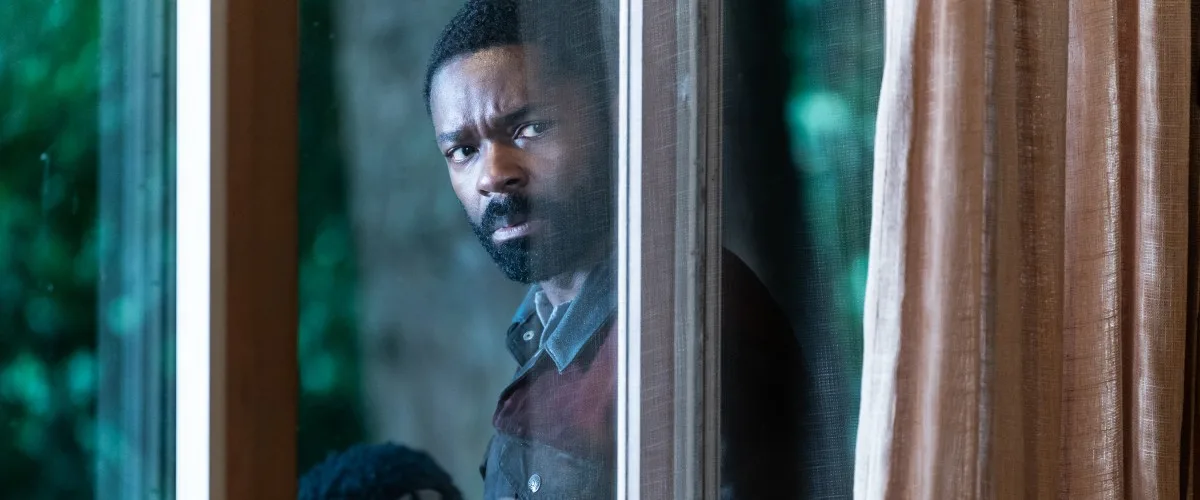
At the outset of his release, a supportive Tara tells a fragile Chris about an empty resort that her friend says they can stay at. The couple, along with their mute son Jake (Aiden Stoxx), who has a history of seizures, venture to the lavish hotel hidden in a blanket of forested mountains. Contrary to their quiet surroundings, Parker lives a loud life. He comes to believe he’s being followed; his son, Jake, is in danger; the groundskeeper, Hershey (Barry Pepper), might be hunting them. Chris takes up arms and begins constructing a safe space for himself. His brother, Keith, high on drugs, also appears at the resort. One immediately wonders how many of these sights are in his head.
Parker attempts to coyly play with these unstable possibilities by twisting reality. He transports us back to Chris’ cell, a blindingly white area so pointedly dimensionalless one can’t even make out the corners holding Chris in. Symbolic images take on a surrealist tenor: Black people are emptied and then taxidermied, others, dressed in orange jumpsuits, lurk in the woods, while more occupy innumerable open graves. These portrayals give aesthetic shape to the prison-industrial complex and the mental and bodily victims who slave through and under it.
These headier moments lose their importance as the film becomes more genre-based. The psychological twist pertaining to Chris exists on the surface, moving Chris toward empty madness rather than inspiring deeper conversations about the mental health of formerly incarcerated Black men. Chris’ insistence that he must protect Jake from what one assumes is the whole rotten, connivingly racist system lacks the personal touch required to make their looming separation effectively emotional. Tara is especially underwritten. What does she do for work? What are her likes, dislikes, favorite food, or musical tastes? We learn her favorite color in the opening scene, but nothing else about her.
“Newborn” becomes caught in between two modes of storytelling: the weighty drama and the destabilizing thriller. One wishes then that Parker either fully embraced his film’s genre or didn’t approach it at all. If not for Oyelowo’s actorly prowess, imbuing broad scenes of torment with palpable sadness, one would scarcely treat these serious issues with any consequence. But even Oyelowo eventually can’t protect the film from its creators, which, tellingly, includes himself. Leaning toward unrelenting shock, “Newborn” as a whole becomes something worse in the process: dishonest.