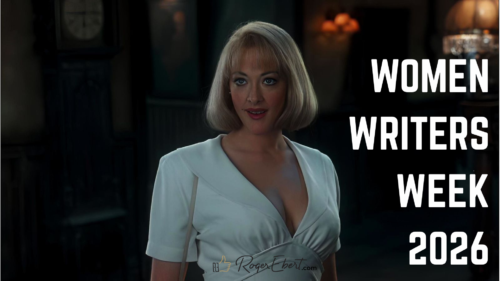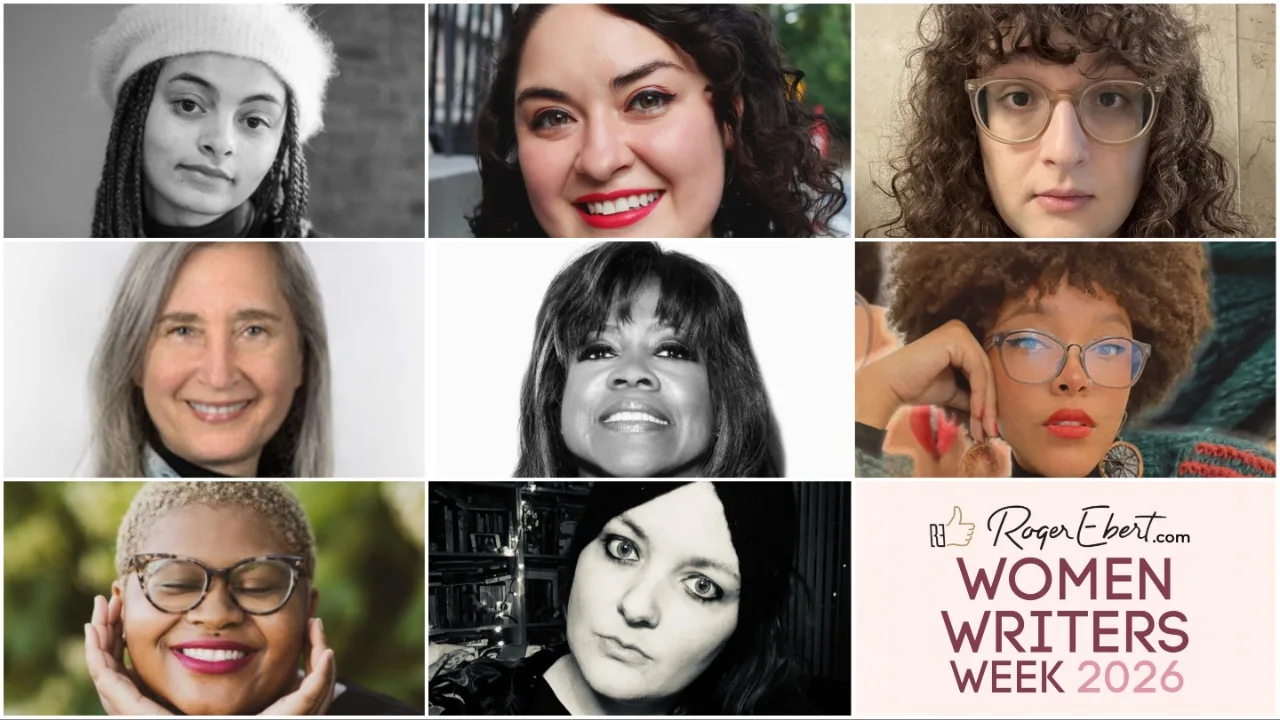
CHAZ EBERT: Women Writers Week has been one of my favorites on the calendar, since it gives me an opportunity at Rogerebert.com to spotlight a wealth of essential voices who deserve just as much attention as their male peers. And although I felt this week had always served a vital purpose since I instituted it in December of 2013, by March of 2024, I posed a question whether a Black Writers Week or Women Writers Week were in fact, quaint. But that’s because I did not have a crystal ball to foretell of the Administration’s coming war on concepts like equity, inclusion and diversity and even on reporting facts about our nation’s history, including the struggle for Civil rights and Voting rights and economic equality.
In 2025, we got a bigger peek behind the curtain of the Administration, and I realized that an annual showcase for Black writers and women writers was not quaint but has perhaps gained a newfound urgency. At that time, I abstractedly pondered whether the current administration under President Donald Trump and Elon Musk had cancelled Women’s History Month, or Black History Month? And whether their war against DEI…outlawed the use of words like “women,” “Black or African-American,” “Latina,” or concepts like “equality” or “LGBTQ+?”
My answer at that time was that for the time being, this is still America, the land of the free and the home of the brave. We have the Constitution and the courts and freedom of speech. And the only way to maintain that freedom is to defend it and exercise it vigorously. We now know that some were working on project papers to subvert those very foundational concepts.
And then I watched in horror as President Trump announced that he was doing away with DEI: Diversity, Equity and Inclusion—as if they were bad words rather than concepts put into place to make up for past discriminatory laws and practices. What was even more chilling was the reaction of some of our biggest and best universities, institutions and businesses that folded like cheap chairs, acquiescing to what? Going back to the days of segregation and Jim Crow laws and voting rights for only a few?
I love my country, but I also have to remember it is in my nation’s history that my ancestors were enslaved, that my forefathers were considered three-fifths a person in the Declaration of Independence, that in the 1970s I as a woman could not get a credit card without the signature of either my father or a husband, that the troops who fought for our freedom were in segregated units and did not have the same rights to education and housing when they returned to the country, that women did not get the right to vote until much later after men, that the Equal Employment Opportunity Commission was created because of the bold inequality that was sometimes not even hidden, that cemeteries were segregated as were water fountains, libraries, and so forth and so on. There were ample reasons that Diversity, Equity and Inclusion were instituted. Some may have carried these concepts to the extreme, but it did not negate the underlying necessity. We hoped for a post-racial society. Things are much better, and there is a fairer opportunity for most. But we cannot turn our back on facts and slip backwards into the past.
That may sound hyperbolic, but sometimes it is difficult for me to assess the endgame of this administration. Why did some in the military imply that we could no longer highlight the contributions of women soldiers or the achievements of the first Black military advancements? Why are we living under an ever-expanding growth of executive orders that confuse the borders between the Legislative, Executive and Judicial branches? Every day from varied corners around our nation the cry for maintaining and preserving our Constitution and our democracy grows louder and louder. And, overall, I just wonder, where is empathy?
It is the diversity and diverse contributions of our nation’s citizens that make America great. That is precisely what Roger and I sought to build with this site, a community of writers with different backgrounds and perspectives who respect and elevate one another. If art aims to expand our worldview by placing us in the shoes of another, then let us broaden critical discourse to more perspectives and cultures.
And now please permit me to leave the worldview to concentrate on Women Writers Week. Just as there have been great female filmmakers ever since the dawn of cinema, there have been great female writers about film. This week, we are thrilled to get you acquainted with a number of them. I thank our Legacy Editor Nell Minow for once again taking the lead on Women Writers Week!
NELL MINOW: At RogerEbert.com, we are very proud of our year-round commitment to women writers and of the superb reviews and features they write every week. And once a year, during Women’s History Month, the women take over for an entire week, and I am delighted to act as guest editor.
This year’s entries include a sumptuous variety of styles and perspectives. There are smart, funny, insightful reflections on movie and television history, shining light on often-underappreciated characters and details that deepen our connection to stories. An instantly iconic article of clothing in “Heated Rivalry,” a side character with main character significance in “Vampire Diaries.” and a nuanced take on the way Isabella Rossellini developed her character in “Blue Velvet.” We have an appreciation of invaluable character actress Joan Cusack and an interview with the author of a new book about Jane Fonda as an actress and filmmaker.
There are essays about of older films, some classic, some cult, some neglected, all deserving of a rewatch, and, for fans of murder mysteries from the clinical to the cozy, we have a helpful guide to finding some you may have missed. As always, there are discussions of complicated anti-heroines both based on real-life and fictional, and thoughts on monsters, both real and metaphoric. We are looking forward to sharing all of this and more from fierce and fearless writers who love to engage deeply with stories and what they reveal about being human.