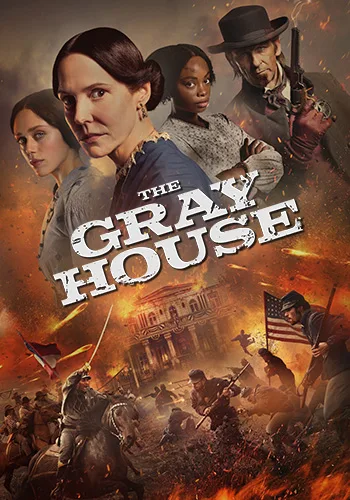
It’s going to take a little resolve for the viewer to go all-in on the impressively staged, dense, and character-rich Civil War historical drama “The Gray House,” given the massive info-dump. It’s not just a commitment; you’re practically taking up residency in the Richmond, VA, of the 1860s.
All eight chapters drop on Amazon Prime on February 26, with episodes ranging from 53 to 81 minutes. Discounting 20th century, maxi-series such as “War and Remembrance,” “Centennial” and “Roots,” the total running time of 522 minutes for “The Gray House” ranks among the longest self-contained sagas in modern time, just behind “Band of Brothers” and “The Pacific” and ahead of the likes of “John Adams” and “The Queen’s Gambit.”
Is it a bit bloated, with a handful of characters that could have been eliminated, a few subplots that could have been excised? Are there more than a few occasions when we’re yet again experiencing the dubious “Liberal White Woman Savior” trope as a storytelling device? Are some of the Southern accents more convincing than others? Do the reviewer’s rhetorical questions almost always lead to answers of “Yes?” Indeed.
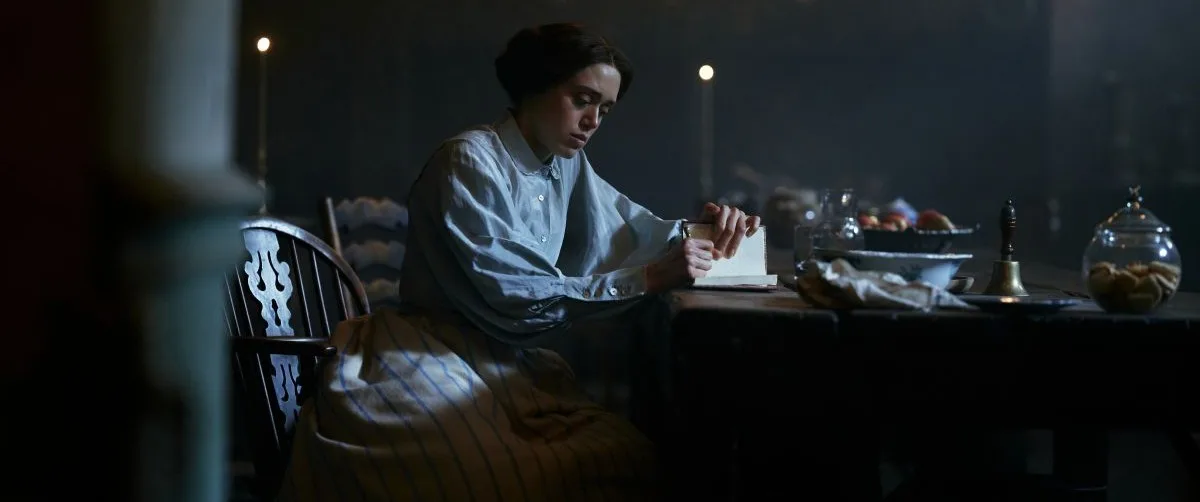
Still, “The Gray House” keeps us involved, from the opening scene-setter through the obligatory coda telling us what happened to the main characters who were based on real-life historical figures. It’s a richly filmed period piece with first-rate production design, costuming, editing, and cinematography. The blue-chip pedigree includes executive producers Kevin Costner and Morgan Freeman, an accomplished writing staff that includes John Sayles, and all eight episodes directed by Roland Joffé (“The Killing Fields” and “The Mission”).
“The Gray House” is a handsomely mounted production that doesn’t shy away from the horrors of war and the unbearable cruelty of slavery—though overall tone and handling of the content is more reminiscent of prestige network television à la the aforementioned “Roots,” with the violence and sexuality not necessarily toned down, but not as explicit and graphic as other 21st century streaming fare. (Speaking of “Roots” — nearly a half-century after playing Chicken George in that seminal series, the great Ben Vereen plays the formerly enslaved man Isham Worthy, who becomes a crucial operative in the Union spy network.)
Filmed on location, with Romania standing in for the United States of the 1860s (this on the heels of the James A. Garfield series “Death by Lightning” using Budapest to re-create the Washington, D.C., of the 1880s), “The Gray House” begins in Richmond, VA, on July 1, 1860. Exec producer/voice-of-God Freeman tells us in voice-over, “This story is inspired by true events.” (We don’t hear any further narration from him until the conclusion of the series—a wise choice, given his legendarily dulcet tones have been invoked to the point where it almost feels comedic to hear it.)
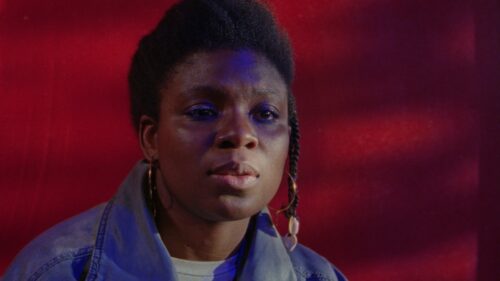
With Richmond as the primary Confederate stronghold and the nation ripped apart by the nascent Civil War, we’re introduced to four brave women who will risk everything to aid the Union cause: the genteel and wealthy widow socialite Eliza Van Lew (Mary-Louise Parker, outstanding); Eliza’s unmarried and opinionated daughter Elizabeth (the British actress Daisy Head, in full “I do declare!” mode); the formerly enslaved, well-educated and resourceful Mary Jane Richards (a screen-commanding Amethyst Davis); and the obligatory courtesan-with-a-heart-of-gold, Clara Parish (Hannah James, in a powerful performance that transcends the stereotype of the character).
As the war rages on with the battle lines edging ever closer to Richmond, much of “The Gray House” revolves around the espionage efforts of the aforementioned quartet and numerous other undercover allies, some of whom get close enough to overhear, intercept and decipher the strategies of Confederate States President Jefferson Davis (Sam Trammel) and Attorney General Judah Benjamin (Rob Morrow).
Interspersed with the cloak-and-dagger stuff are major set-piece battle sequences, e.g., the Battle of Roanoke Island, and overstuffed subplots involving peripheral characters who add little more than soap opera dramatics. The dialogue sometimes rings hokey, as when Elizabeth says to a handsome suitor, “Mr. Arsenault, you are incorrigible!” or when she says of a rival within her family, “That woman will be our undoing!”
On the plus side, “The Gray House” is brimming with terrific character actors delivering memorable supporting turns, including Christopher McDonald as a Richmond baker with a hidden past, Keith David as the fearless abolitionist and minister Henry Highland Garnet, and Charles Craddock as a narcissistic actor and fanatical pro-slavery activist named John Wilkes Booth.
Though often delving into familiar plot devices, and sometimes coming across as a historical theme park exhibit with all the glorified cameos—there’s General Grant! Here comes President Lincoln!—“The Gray House” delivers in its core mission to pay tribute to the women and their allies who made invaluable contributions in the battle to save the United States from the traitors who waged war against our country. By the time Freeman’s narration closes the book, we’re grateful we bought a timeshare in this series.
Whole series screened for review. Premieres on Prime Video on February 26, 2026.