Going to the last Sundance in Park City brought out nostalgic memories even before many of us arrived at the airport. From social media posts sharing lively photos of Sundances long ago to journalists and critics reminiscing on their experiences both good—like the roaring applause after an unforgettable premiere or the crowded Main Street parties you begged to get into—and the bad—like the miles of slippery ice and the late bus that left you out in the cold. Thankfully, there were a few more memories to be made and a few more movies to watch in Utah before heading back down the mountains one last time.
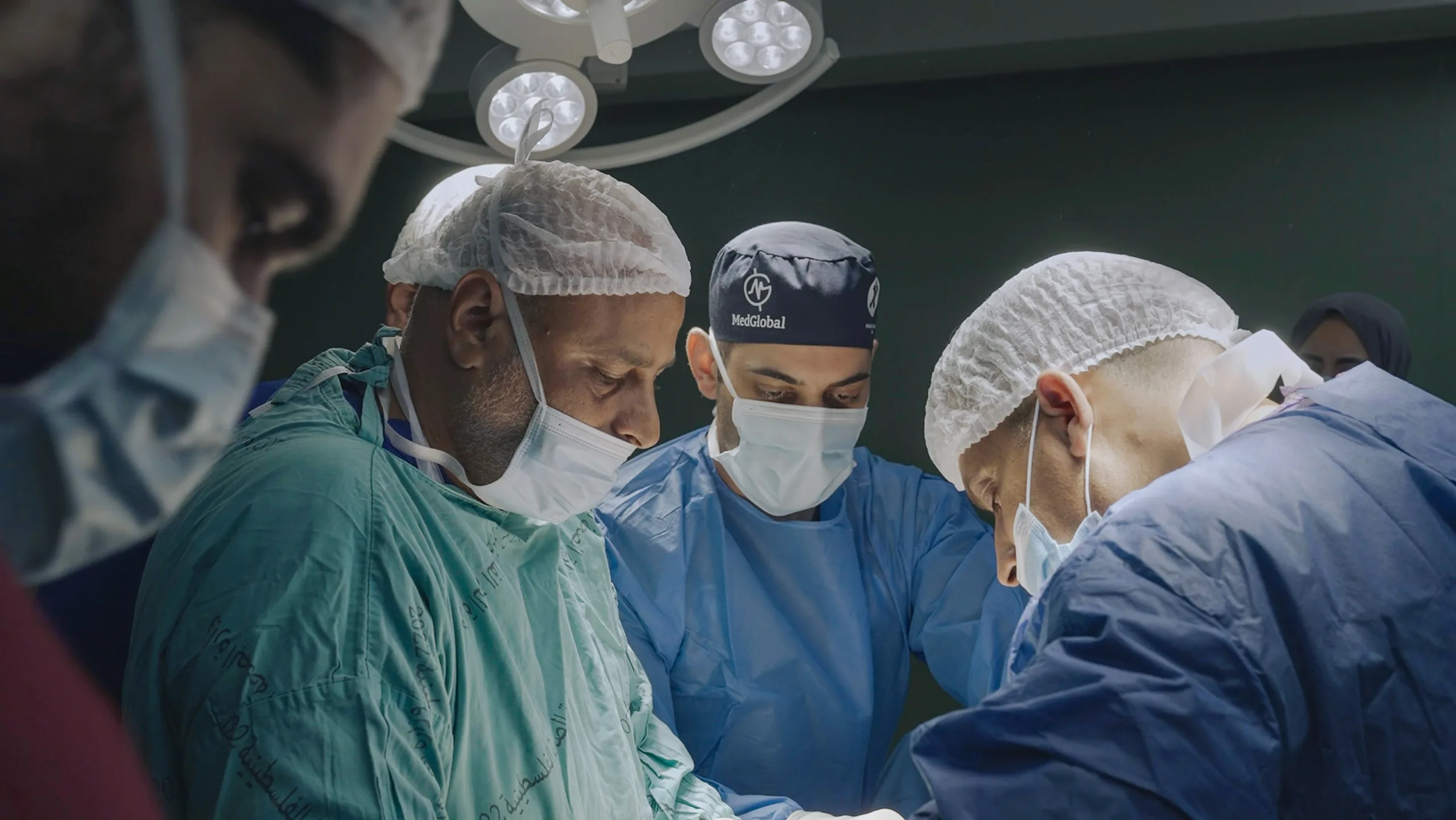
Poh Si Teng’s feature debut “American Doctor” offers a closer look on the still-developing story of what’s happening in Gaza. The documentary recounts the experiences of three American doctors: Dr. Thaer Ahmad, a thoughtful Palestinian-American physician desperate to help those in need in Gaza, Dr. Mark Perlmutter, an outspoken Jewish American surgeon outraged by his first-hand experience of Israel’s violence against Palestinians, and Dr. Feroze Sidhwa, a second-generation American surgeon moved to help the never ending stream of patients. It is a largely uncensored view of their experiences in Gaza, using the cameras to bear witness to the daily agonies and heartaches of both survivors and doctors working in one of Gaza’s few remaining hospitals (that has since been destroyed).
Each of Teng’s subjects offers their candid thoughts and stories to the camera, taking audiences to their frontlines of operating rooms low on supplies and hallways full of crying families. Occasionally, they pause their work to check to see how close an explosion sounds and if they need to rush patients to safety. On top of their medical duties, the trio feel like they are fighting an information war, practically begging for American news organizations to discuss that our tax dollars are contributing to the genocide they’re witnessing. For Dr. Ahmad, sharing his experience is almost the only thing he can do after Israel blocks him from returning home to help. It’s an exhausting cycle fighting the war on multiple fronts, one that gets on Dr. Perlmutter’s nerves. In an early scene, he demands Teng show a photo he took of a row of babies killed in a missile strike, asking her not to censor the gravity of the situation. The moment sets the tone for the rest of the film.
If you didn’t know the extent of the tragedy covered in “American Doctor,” the documentary will not let you forget it. It is a visceral view of the impossible task facing healthcare workers and hospitals targeted by the Israeli military in Gaza. It has a few first film issues, like music that overtakes certain scenes or a few moments that don’t add to the narrative, but it is a formidable debut, an unflinching view of a story we’ve heard about but might not fully understand unless our social media feeds show us these testimonies.
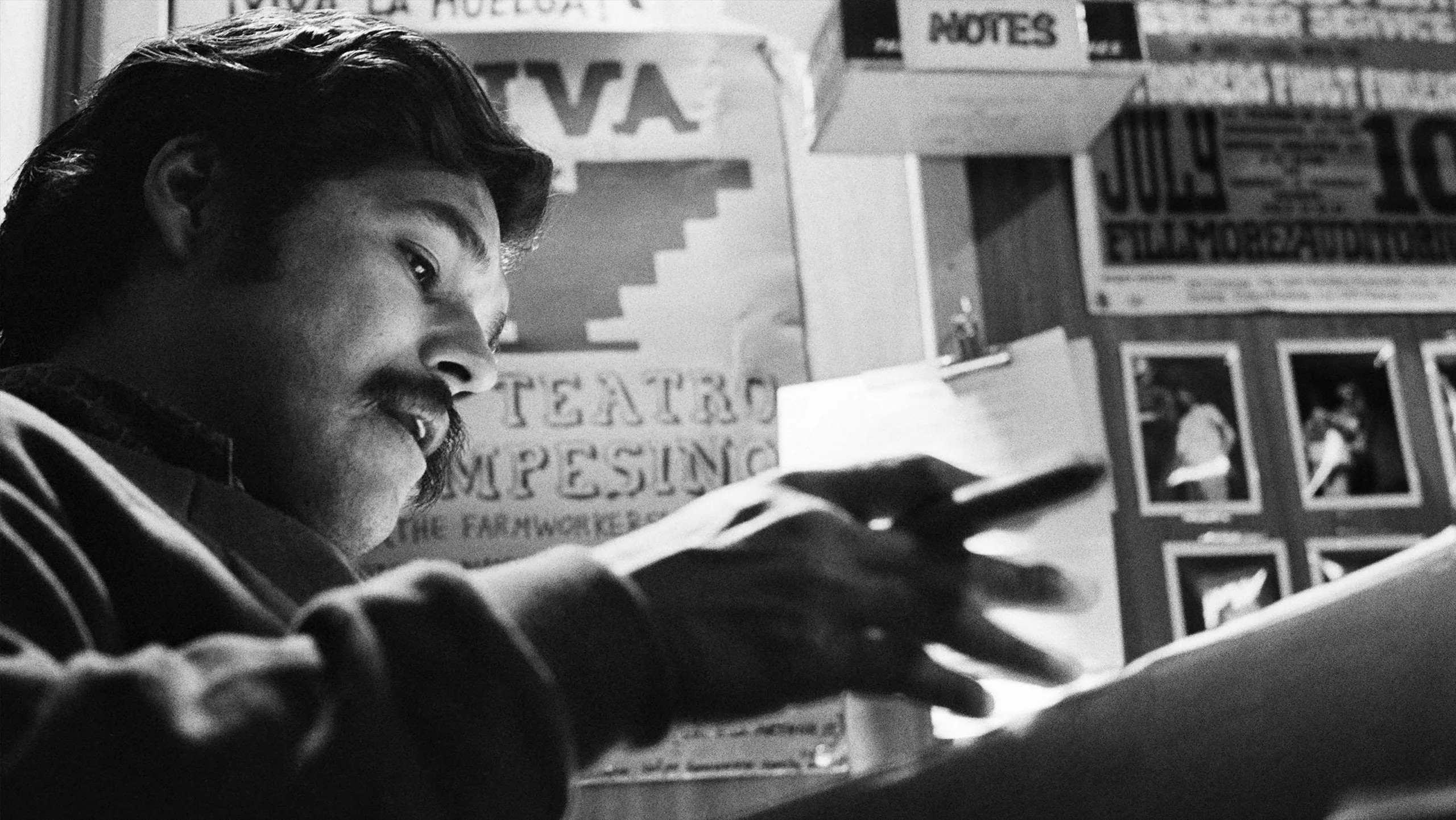
David Alvarado’s award-winning portrait of pioneering Chicano playwright and director Luis Valdez is a reminder of how our past is prologue, covering decades of history and how it inspired one of America’s celebrated theatrical artists. Although most of it follows the events of decades ago, “American Pachuco: The Legend of Luis Valdez” feels timely as ever. As many Latinos are currently being discriminated against and persecuted, Alvarado’s documentary turns into a defiant reminder of our past struggles, a celebration of our successes and progress, and a call to remain proud of one’s roots.
The legend of Luis Valdez, or “the Shakespeare of Chicano theater” as one commentator calls him, begins in the fields of California working alongside his family. While his brother seeks assimilation and success, Valdez seeks out activist theater, forming El Teatro Campesino to engage farmworkers in the growing labor movement led by Cesar Chavez. He left the movement for the stage, developing the groundbreaking Chicano play (later movie) “Zoot Suit” and elevating the stories of heroes like Ritchie Valens with “La Bamba.” His plays drew attention to social inequality, identity politics, and racism he saw firsthand as a laborer. Valdez was unafraid to confront ugly truths both in and outside his community. Luminaries like Dolores Huerta, Linda Ronstadt, Lou Diamond Phillips, and Cheech Marin add colorful commentary to Valdez’s story, while his longtime collaborator Edward James Olmos returns as the character of The Pachuco of “Zoot Suit” to narrate Valdez’s journey and give cultural context to the history that shaped them both.
“We make America strong because we are America,” says Valdez, and his words feel no less urgent than when he first broke into the national spotlight decades ago. Like its subject, Alverado’s documentary is unafraid to discuss difficult subjects and unpack their loaded significance, whether that’s explaining the inspiration of “Zoot Suit,” the Zoot Suit Riots that terrorized young Chicanos who dared to dress boldly, or Valdez’s own personal setbacks, like when Chavez asked him to give up El Teatro Campesino to focus on the movement or his disastrous foray to Broadway’s Winter Garden Theater where (mostly white) critics panned “Zoot Suit.” Part of me wanted the documentary to go deeper into Valdez’s illustrious work, as the film ends shortly after his comeback with “La Bamba,” but that will be my own journey to take.

Brydie O’Connor’s remarkable feature debut is a tribute to pioneering lesbian filmmaker Barbara Hammer that became one of my top favorites of the festival early on and never fell far from my mind. Another award winner in the U.S. Documentary Competition, “Barbara Forever” builds on O’Connor’s 2022 short “Love, Barbara,” which interviewed Hammer’s longtime partner Florrie Burke about Hammer. This time, Hammer narrates her life story through archival interviews, lectures, and her own works carefully stitched together by O’Connor and editor Matt Hixon.
Retracing her steps from childhood to her first marriage, and later divorce and sexual awakening, “Barbara Forever” introduces Hammer first as a person then as an artist who found almost no representation of herself or her lesbian community. When she picks up a camera, she begins to experiment with cinematic language, developing a queer aesthetic that centered joy and desire beyond conventional narrative trappings. Her voice leads viewers through her story with a frank openness and a sharp sense of humor.
If you only knew her work in excerpts or barely recognize Hammer’s name, then O’Connor’s documentary is nothing short of an exemplary introduction, the kind of documentary that inspires viewers to search out more of her work. Even if you are familiar with Hammer’s films, hearing her reminisce about certain periods in her life, the rich archival material that takes us to underground lesbian film screenings, the new queer cinema movement arriving at Sundance in the 90s, or Burke’s present day musings about their time together adds so much depth to understanding Hammer’s story. “I can’t even get out of the way of my own history!” she exclaims, and thank goodness she didn’t. Her work made history, but it needn’t remain in the past. Through O’Connor’s intimate documentary, a new generation will learn about Hammer’s persistence of vision, her technical process, unabashed sense of storytelling, and her fight for queer artists to be recognized alongside their straight contemporary peers. It’s an unparalleled tribute to an artist using her own words and medium to tell her story.